We remain fully operational. Our teams are working around the clock to ensure your deliveries continue safely.

DOWNLOAD THE APP


Customer Services
Copyright © 2025 Desertcart Holdings Limited
DOWNLOAD THE APP

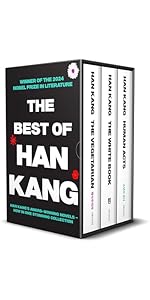
From the Publisher Han Kang, Winner of the 2024 Nobel Prize in Literature Review: Most devastating book i ever read - Book Name– The Vegetarian Author – Han Kang Genre – Fiction Translated by– Deborah Smith Hello lovelies!!!!! Here is another review of the book, but as always, let’s listen to my “story behind the book.” SBTB – Umm!! I guess it’s been more than 6 months since I bought this book. When it came into the spotlight as a winner of the Nobel Prize in Literature, I was intrigued and so excited to read it. But life happened in a good way, of course and this book remained on the shelf, waiting for its turn. And here it is! I finally took the time and finished this book in a week. So, let’s dive into the review. Book Review– This is the story of Yeong-hye, who was healthy and fine until one day she decided to become a vegetarian and refused to eat meat. Her family and husband forced her to eat meat, but she didn’t budge. Her condition worsened day by day. One day, her husband left her, and eventually, her family did too. Only her sister, In-hye, stayed by her side as a caregiver. As time passed, Yeong-hye became more disturbed, and her mental health deteriorated. She was eventually admitted to a psychiatric hospital. The way the story begins and unfolds is thrilling and painful to read. I found myself praying throughout the book, thinking, “Please Yeong-hye, hang in there, please?” Though the story becomes somewhat predictable, I still kept hoping for a twist that would change everything. This book felt like watching a psychological thriller drama shocking, heartbreaking, and intense on every page. QOTD – Since this month is Mental Health Awareness Month, tell me: What do you do when everything feels like too much, like you're about to break? Have you ever felt this way or seen someone go through it? Review: Haunting, meditative, and deeply spiritual in the most unsettling sense. - Reading The Vegetarian felt less like finishing a novel and more like passing through a quiet, unsettling spiritual experience. This is not spirituality rooted in religion or doctrine. It is the spirituality of negation, of refusal, of a soul trying to escape the violence embedded in everyday life. The protagonist’s decision to stop eating meat slowly becomes a rejection of the body, desire, social order, and finally language itself. What moved me most was how silence replaces explanation. There is no sermon here, only surrender. The book asks uncomfortable questions. What if enlightenment looks like withdrawal rather than awakening. What if purity is terrifying. What if becoming less human is the only way to remain true. It is haunting, meditative, and deeply spiritual in the most unsettling sense.




| Best Sellers Rank | #464 in Books ( See Top 100 in Books ) #26 in Crime, Thriller & Mystery (Books) #48 in Contemporary Fiction (Books) |
| Customer Reviews | 4.5 out of 5 stars 13,832 Reviews |
S**A
Most devastating book i ever read
Book Name– The Vegetarian Author – Han Kang Genre – Fiction Translated by– Deborah Smith Hello lovelies!!!!! Here is another review of the book, but as always, let’s listen to my “story behind the book.” SBTB – Umm!! I guess it’s been more than 6 months since I bought this book. When it came into the spotlight as a winner of the Nobel Prize in Literature, I was intrigued and so excited to read it. But life happened in a good way, of course and this book remained on the shelf, waiting for its turn. And here it is! I finally took the time and finished this book in a week. So, let’s dive into the review. Book Review– This is the story of Yeong-hye, who was healthy and fine until one day she decided to become a vegetarian and refused to eat meat. Her family and husband forced her to eat meat, but she didn’t budge. Her condition worsened day by day. One day, her husband left her, and eventually, her family did too. Only her sister, In-hye, stayed by her side as a caregiver. As time passed, Yeong-hye became more disturbed, and her mental health deteriorated. She was eventually admitted to a psychiatric hospital. The way the story begins and unfolds is thrilling and painful to read. I found myself praying throughout the book, thinking, “Please Yeong-hye, hang in there, please?” Though the story becomes somewhat predictable, I still kept hoping for a twist that would change everything. This book felt like watching a psychological thriller drama shocking, heartbreaking, and intense on every page. QOTD – Since this month is Mental Health Awareness Month, tell me: What do you do when everything feels like too much, like you're about to break? Have you ever felt this way or seen someone go through it?
R**L
Haunting, meditative, and deeply spiritual in the most unsettling sense.
Reading The Vegetarian felt less like finishing a novel and more like passing through a quiet, unsettling spiritual experience. This is not spirituality rooted in religion or doctrine. It is the spirituality of negation, of refusal, of a soul trying to escape the violence embedded in everyday life. The protagonist’s decision to stop eating meat slowly becomes a rejection of the body, desire, social order, and finally language itself. What moved me most was how silence replaces explanation. There is no sermon here, only surrender. The book asks uncomfortable questions. What if enlightenment looks like withdrawal rather than awakening. What if purity is terrifying. What if becoming less human is the only way to remain true. It is haunting, meditative, and deeply spiritual in the most unsettling sense.
N**I
weird & disturbing but thought provoking
The Vegetarian by Han Kang is a powerful and disturbing novel that explores themes of control, violence, identity, and freedom. The story follows Yeong-hye, a quiet woman who suddenly decides to stop eating meat. This small decision slowly turns into a complete rejection of society, family, and human life. The novel is divided into three parts, each told from a different point of view. The first part is narrated by Yeong-hye’s husband, who sees her decision as strange, embarrassing, and inconvenient. The second part is told through her brother-in-law, an artist who becomes obsessed with Yeong-hye and uses her body for his art. The third part focuses on Yeong-hye’s sister, In-hye, who tries to take care of her while questioning her own life and choices. Yeong-hye herself rarely speaks, which shows how her voice is ignored and controlled by others. The second part of the novel is especially striking and beautiful in a disturbing way. The imagery of flowers, paint, and the human body is delicate and dream-like. Even though the situation is morally troubling, the writing feels calm, slow, and visually rich. This part stands out because it shows how beauty can exist alongside cruelty, and how art can also become a form of violence. Violence is a central theme in the novel. Han Kang shows that violence is not only physical but also emotional and social. Yeong-hye is forced to eat meat, judged as abnormal, and treated as mentally ill because she refuses to follow social rules. Her vegetarianism becomes a symbol of resistance against a violent and controlling world. In-hye is one of the most important characters in the novel. Unlike Yeong-hye, she follows society’s rules and carries responsibility quietly. As she watches her sister suffer, she slowly becomes aware of her own exhaustion and suppressed pain. In-hye represents women who survive by enduring, not by resisting. By the end, she is emotionally broken but deeply aware, making her character tragic and powerful. Han Kang’s writing style is simple, calm, and unsettling. The quiet tone makes the disturbing events more shocking. The novel does not give clear answers or comfort. Instead, it forces the reader to question what is considered normal and who has the power to decide it. In conclusion, The Vegetarian is a dark, haunting, and thought-provoking novel. It challenges ideas of sanity, beauty, obedience, and freedom. Though difficult to read, it leaves a lasting impression and stays with the reader long after it ends.
S**I
A Must Read
What a thrilling read! I never expected this book to be such an amazing collection of mind boggling takes, different perspectives and varied lives. It's so so well written, it feels like you are inside the story and watching silently as an observer of all the things that unfold one by one. I loved this to every single bit. Beautiful, just beautiful, unexpected and serene while horrific at the same time. p.s i love the cover design a lot.
A**Y
An amazing book
BOOK REVIEW: "The Vegetarian" by Han Kang- winner of Nobel prize in literature 2024 Rating - ⭐⭐⭐⭐ THIS IS NOT ABOUT VEGETERIANISM When I started reading it I had no idea about what this book was going to show me. Like everyone else I thought it's about the struggles of becoming a vegetarian in Korean culture. But what I got was a powerful exploration about the struggles of being a woman in this patriarchal society. It's not about a woman deciding to go on a vegetarian diet, but rather about a woman deciding to do things in her own way. Told in three interconnected parts through the perspectives of those around the protagonist, Yeong-hye, the novel unspools like a fever dream—strange, unsettling, and unforgettable. Yeong-hye’s sudden rejection of meat is a catalyst—a symbolic rupture in a world defined by control, convention, and patriarchy. Her decision, triggered by a disturbing dream, is met with escalating hostility and confusion by her husband, her brother-in-law, and her sister, each of whom projects their own desires and expectations onto her body and choices. This shows how much power the people around us think they hold over our lives, our choices, our body. As the story progresses it exposes the brutal controlling nature of Yeong-hye's family. It's sad how her suffering couldn't catch their attention but the only thing that caught their attention is her deciding to become a vegetarian. The brutality that everyone showed towards her throughout all her life was heartbreaking and unsettling. What makes The Vegetarian so powerful is its refusal to explain or moralize. Yeong-hye's transformation is not a parable—it’s a question. A challenge. A wound. This is not an easy read, nor is it meant to be. It is brutal, poetic, and eerily quiet in its rage. Anyone who loves literature is bound to fall in love with this whole book.
A**R
The Vegetarian - Book Review❤️🩹
{ ⚠️TW - Trauma, Sexual Abuse, Rape, Anorexia, Mental Health Illness, Schizophrenia, Self-Harm⚠️ } This book left me traumatized, mind-boggled, and utterly lost. The title may deceive you into thinking it's a story centered around vegetarianism, but it's so much more. It delves into the darkest corners of human behavior, societal norms, and mental health, leaving the reader with more questions than answers. The Simple Part- The story revolves around Yeong-hye, a woman who, after years of consuming meat as part of South Korean culture, decides to adopt vegetarianism. This seemingly small decision sends shockwaves through her life. Her husband, Mr. Cheong, her rigid father, and her entire family are unable to comprehend her choice. In their culture, vegetarianism is almost unheard of, and they go to disturbing lengths to force her back into conformity. One of the most harrowing moments in the book is when Yeong-hye's father-portrayed as an authoritarian figure-attempts to shove meat into her mouth during a family gathering, in front of everyone, including her husband and siblings. Yeong-hye's retaliation leads her to self-harm, eventually landing her in a mental institution, where she's labeled a patient too complex to fit into a single category. The Complex Part - The narrative is divided into three chapters, each told from the perspective of a different character: her husband -Mr. Cheong, her brother-in-law, and her sister-In-hye. Her Husband: He represents a typical patriarchal figure who views his wife as an object meant to serve his needs. His inability to respect her choices or even acknowledge her "no" is unsettling and suggestive of a deeper societal issue. Her Brother-in-Law: A deeply disturbing character, he becomes obsessed with Yeong-hye due to a birthmark (a Mongolian mark) mentioned casually by his wife. His fixation leads him to objectify and sexualize Yeong-hye in ways that are both bizarre and horrifying. Her Sister, In-hye: While In-hye appears to care for her younger sister, her actions suggest otherwise. She never truly understands Yeong-hye's struggles or trauma, a failure rooted in their shared, unresolved childhood pain. Final Thoughts - This book is entirely open-ended, leaving readers to interpret its layers in their own way. For me, it was a challenging read-brilliant in its craft but emotionally exhausting. It confronts you with uncomfortable truths about gender, societal norms, and mental health while offering no easy resolutions. It’s a ⭐️⭐️⭐️.5 for me! While I can appreciate its brilliance, it's not the type of book I would enjoy revisiting or decoding further.
R**L
Brutal yet beautiful
The Vegetarian" by Han Kang is a thought-provoking novel that tells the story of Yeong-hye,a womàn who decides to stop eating meat after experiencing disturbing dreams which results in remarkable changes in her life. The novel is divided into three parts, each narrated from different perspectives: Yeong-hye's husband, her brother-in-law, and her sister. The impact of Yeong-hye's transformation has multiple angles, highlighting the complexities of human relationships and societal expectation. Han Kang's intense and poetic prose, which vividly conveys the emotional and psychological turmoil of the characters,making it a powerful and haunting read. Overall, "The Vegetarian" has ability to provoke deep reflection on the nature of identity and freedom. It's a novel that stays with you long after you've finishedreading.
N**E
Go for it
Loved this book
Trustpilot
2 months ago
1 day ago