We remain fully operational. Our teams are working around the clock to ensure your deliveries continue safely.

DOWNLOAD THE APP


Customer Services
Copyright © 2025 Desertcart Holdings Limited
DOWNLOAD THE APP
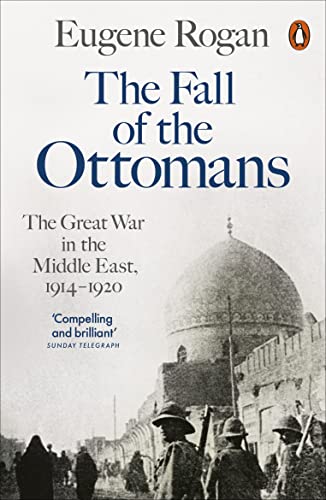
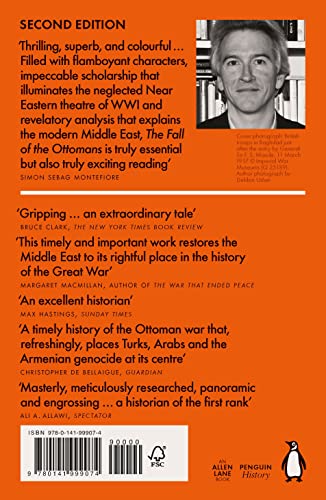


Buy The Fall of the Ottomans: The Great War in the Middle East, 1914-1920 by Rogan, Eugene (ISBN: 9780141999074) from desertcart's Book Store. Everyday low prices and free delivery on eligible orders. Review: Excellent, informative, eye-opening account - This book was recommended to me by a friend who said it really helped him understand the historical background to a lot of today’s politics. He also said the writing was such that one just wanted to keep turning the pages to read on. Having read this book, I agree with him on both points. I love reading and watching history related material. This is an exceptional book and I learnt so much on a topic I thought I already knew quite a lot about. This book has really changed a lot of my previous (incorrect) understandings of what caused World War 1 and the significance of the Eastern Front of the Great War. I also learnt more about the Armenian genocide than I had ever known. The book contains moving anecdotes of sparks of humane behaviour between soldiers fighting each other in trench warfare that is surprising to read and not the kind of stuff normally covered in standard histories. The tempo of the book and stle of writing is like if a really exciting thriller. I kept wanting to just keep reading on and on. Importantly, the book covers both perspectives of Allied Poerws and Central Powers. Unbiased account. This book is clearly an example of history telling at its very best. I highly recoomend this book. Review: The clash of two empires through the eyes of the (fleeting) victors - There’s a ton of information and loads of opinion in this beautifully written book, but not terribly much cohesion when it comes to the telling of the story itself. Rather, what we have here is a collation of twelve very separate chapters about the six theaters of war that transformed the Great War into WWI: the Caucasian front, the European front (chiefly the Dardenelles), the North African front, the Arab Peninsula, Mesopotamia and what we call today the Middle East. You also get a chapter about the Armenian Genocide. On the plus side, each chapter stands on its own and can be read separately. On the minus side, stuff gets repeated unnecessarily and you’re often left asking yourself questions along the lines of “this al Askari fellow who’s leading the Arabs against the Ottomans, is he the same guy who was fighting the British earlier in the book in North Africa?” A bit more of an effort could have gone into turning this book into a narrative. No idea what some of the reviewers are talking about here, the angle is 110% British. It’s not a whitewash, it’s not an attempt to make the British look good, but it’s told by a Brit to other Brits and you’re invited to listen in if you care. For all the personal accounts included, it is most definitely NOT a history of WWI from the Ottoman perspective. That said, with the exception of two and a half fronts (the Caucasian front, the Hijaz and Libya) this is the story of a war between the British and Ottoman Empires, so the British angle is far from inappropriate. No attempt is made to glorify war. The author admires many of the protagonists and does a very good job of giving their background and explaining their motivations. He does an even better job of conveying the horrors of trench warfare, the divided loyalties of the Ottoman subjects and the plight of the civilians who played host to the two warring empires. Apart from the harrowing descriptions of what it was like to be in the trenches and what it was like to be an Armenian or a POW marched to one’s death, the heart-rending story of the civilians caught in the crossfire in Kut also stands out. The annihilation of Gaza some 100 years ago is quite poignant too. What I most liked about the book is that the author says it how he sees it. No wishy-washy stuff here. In no particular order, here’s a selection of views: • Churchill is poorly served by history. Yes, he ordered the original naval attack on the Dardanelles, but the Gallipoli disaster is pretty much down to one man, Kitchener. • The time honored British technique of naming places with reference to ancient history is outlined, with the example of Cresiphon given, near Baghdad. The author does not mince words about the motivations: it is to take the focus away from the Muslim religion that tied together the subjects of the Empire and toward the ancient history that often divided them. (The author keeps quiet when it comes to the word Palestine, on the other hand) • Sykes Picot, the Balfour Declaration and the promises made to the Hashemites and the Iraqis were shameful, alright, but that’s easy to say after the fact. In practice, they all amounted to the same thing: in order to beat the Germans and the Ottomans, the British repeatedly promised the same piece of land to multiple sets of people; after the war was over they did what they could to accommodate them all as best they could. (Yes, probably a bit too convenient an explanation, but a brave view nonetheless) • Laurence of Arabia was a self-promoting buffoon with a good Oxford accent, a solid command of Arabic and a knack for turning up at the right place at the right time, rather than a pivotal character; similarly, if the spoils of war are due to those who have spilt the most blood, the Arabs he occasionally escorted do not truly deserve to feel cheated out of their entitlements. • The Armenians were clearly targeted for death, they were not merely marched out of their homeland; but their extermination has to be seen under the light of an empire that was facing dismemberment at best and annihilation at worst. While this does not excuse genocide, it provides insight as to what motivated the death marches. The author does not quite say “it was war,” but he comes close. • The Kurds are invariably depicted as bloodthirsty bandits and looters who did the dirtywork of the Ottomans. • When they are not singled out as undisciplined looters, the Bedouin tribes are depicted as fickle allies to the Arabs, the Ottomans or the British. This judgement I personally could not square with the understanding the author shows for the very similar behavior of other locals who had no choice other than to bow to the latest conqueror of their territory. • Indians and Anzacs are a supporting act. The author only ever goes into any detail about them to quote letters they are sending home from the front or to recount Kiwi rowdiness. While I don’t necessarily buy all these views, and even though they are all rather Anglo-centric, I have to say they are probably what I’ll be left with after having read “The Fall of the Ottomans.” Overall, this book has kept me excellent company for the last ten days. My recommendation would be “read it, but take notes along the way.”
| Best Sellers Rank | 144,976 in Books ( See Top 100 in Books ) 7,926 in History (Books) |
| Customer reviews | 4.4 4.4 out of 5 stars (2,313) |
| Dimensions | 13 x 2.1 x 19.8 cm |
| ISBN-10 | 0141999071 |
| ISBN-13 | 978-0141999074 |
| Item weight | 360 g |
| Language | English |
| Print length | 528 pages |
| Publication date | 28 July 2022 |
| Publisher | Penguin |
S**R
Excellent, informative, eye-opening account
This book was recommended to me by a friend who said it really helped him understand the historical background to a lot of today’s politics. He also said the writing was such that one just wanted to keep turning the pages to read on. Having read this book, I agree with him on both points. I love reading and watching history related material. This is an exceptional book and I learnt so much on a topic I thought I already knew quite a lot about. This book has really changed a lot of my previous (incorrect) understandings of what caused World War 1 and the significance of the Eastern Front of the Great War. I also learnt more about the Armenian genocide than I had ever known. The book contains moving anecdotes of sparks of humane behaviour between soldiers fighting each other in trench warfare that is surprising to read and not the kind of stuff normally covered in standard histories. The tempo of the book and stle of writing is like if a really exciting thriller. I kept wanting to just keep reading on and on. Importantly, the book covers both perspectives of Allied Poerws and Central Powers. Unbiased account. This book is clearly an example of history telling at its very best. I highly recoomend this book.
A**N
The clash of two empires through the eyes of the (fleeting) victors
There’s a ton of information and loads of opinion in this beautifully written book, but not terribly much cohesion when it comes to the telling of the story itself. Rather, what we have here is a collation of twelve very separate chapters about the six theaters of war that transformed the Great War into WWI: the Caucasian front, the European front (chiefly the Dardenelles), the North African front, the Arab Peninsula, Mesopotamia and what we call today the Middle East. You also get a chapter about the Armenian Genocide. On the plus side, each chapter stands on its own and can be read separately. On the minus side, stuff gets repeated unnecessarily and you’re often left asking yourself questions along the lines of “this al Askari fellow who’s leading the Arabs against the Ottomans, is he the same guy who was fighting the British earlier in the book in North Africa?” A bit more of an effort could have gone into turning this book into a narrative. No idea what some of the reviewers are talking about here, the angle is 110% British. It’s not a whitewash, it’s not an attempt to make the British look good, but it’s told by a Brit to other Brits and you’re invited to listen in if you care. For all the personal accounts included, it is most definitely NOT a history of WWI from the Ottoman perspective. That said, with the exception of two and a half fronts (the Caucasian front, the Hijaz and Libya) this is the story of a war between the British and Ottoman Empires, so the British angle is far from inappropriate. No attempt is made to glorify war. The author admires many of the protagonists and does a very good job of giving their background and explaining their motivations. He does an even better job of conveying the horrors of trench warfare, the divided loyalties of the Ottoman subjects and the plight of the civilians who played host to the two warring empires. Apart from the harrowing descriptions of what it was like to be in the trenches and what it was like to be an Armenian or a POW marched to one’s death, the heart-rending story of the civilians caught in the crossfire in Kut also stands out. The annihilation of Gaza some 100 years ago is quite poignant too. What I most liked about the book is that the author says it how he sees it. No wishy-washy stuff here. In no particular order, here’s a selection of views: • Churchill is poorly served by history. Yes, he ordered the original naval attack on the Dardanelles, but the Gallipoli disaster is pretty much down to one man, Kitchener. • The time honored British technique of naming places with reference to ancient history is outlined, with the example of Cresiphon given, near Baghdad. The author does not mince words about the motivations: it is to take the focus away from the Muslim religion that tied together the subjects of the Empire and toward the ancient history that often divided them. (The author keeps quiet when it comes to the word Palestine, on the other hand) • Sykes Picot, the Balfour Declaration and the promises made to the Hashemites and the Iraqis were shameful, alright, but that’s easy to say after the fact. In practice, they all amounted to the same thing: in order to beat the Germans and the Ottomans, the British repeatedly promised the same piece of land to multiple sets of people; after the war was over they did what they could to accommodate them all as best they could. (Yes, probably a bit too convenient an explanation, but a brave view nonetheless) • Laurence of Arabia was a self-promoting buffoon with a good Oxford accent, a solid command of Arabic and a knack for turning up at the right place at the right time, rather than a pivotal character; similarly, if the spoils of war are due to those who have spilt the most blood, the Arabs he occasionally escorted do not truly deserve to feel cheated out of their entitlements. • The Armenians were clearly targeted for death, they were not merely marched out of their homeland; but their extermination has to be seen under the light of an empire that was facing dismemberment at best and annihilation at worst. While this does not excuse genocide, it provides insight as to what motivated the death marches. The author does not quite say “it was war,” but he comes close. • The Kurds are invariably depicted as bloodthirsty bandits and looters who did the dirtywork of the Ottomans. • When they are not singled out as undisciplined looters, the Bedouin tribes are depicted as fickle allies to the Arabs, the Ottomans or the British. This judgement I personally could not square with the understanding the author shows for the very similar behavior of other locals who had no choice other than to bow to the latest conqueror of their territory. • Indians and Anzacs are a supporting act. The author only ever goes into any detail about them to quote letters they are sending home from the front or to recount Kiwi rowdiness. While I don’t necessarily buy all these views, and even though they are all rather Anglo-centric, I have to say they are probably what I’ll be left with after having read “The Fall of the Ottomans.” Overall, this book has kept me excellent company for the last ten days. My recommendation would be “read it, but take notes along the way.”
C**W
A part on the First World War that is often overlooked
An interesting book about Turkey during and after the First World War. Very well researched particularly on the massacres of the Armenians which appears inaccurately in the newspapers from time to time Highly recommended
S**N
A fascinating, well written , insightful page turner.
A fascinating page turner. This is a very well written and interesting book on a less well known , but important, aspect of the First World War. The declining Ottoman Empire ,supported by Germany, fighting off Great Britain (when it was still Great) , France and Russia. Underestimated by the British , and French, whose forces, especially Commonwealth/Colonial forces had a very tough time in the Dardanelles before being evacuated having gained little but sacrificed much.It was also revealing to see how the then mighty Royal Navy was somewhat humiliated in the same campaign. German led Ottoman forces sometimes performed well but then just when things were looking quite bleak for them the Russian revolution broke out giving the Ottomans and the Germans a further boost.The double dealing of the British and French whilst dealing with Arab nationalists and creating problems that exist to this day.This book also describes the horrific genocide of the Armenians in an analytical but well written way. 100 years on this is a must read book.
G**O
This was my introduction to the Middle Eastern front in the Great War, and it turned out to be one of the most interesting books I have read in quite some time. The author presents the facts from both sides, and manages to do so in a detailed manner without the book ever feeling tedious or excessive, despite the amount and seriousness of the topics covered. I absolutely recommend it to anyone willing to explore this often forgotten side of the first world war, which still matters greatly to this day for the immense changes it brought.
A**N
The fall of the Ottomans - The great war in the Middle East presents an engaging history of the final years of the Ottoman Empire which was dismantled at the end of the first world war. The book gives a comprehensive overview of the political environment both prior to and during the war. It provides details on the major battles fought as well as an overview on the tragedy of the Armenian genocide that occurred. It is highly readable and the author has the readers attention throughout the entire book. The dismantling of the Ottoman Empire and the forming of the modern Middle East is of fundamental historic importance and much of what decided that is contained in this book. The Fall of the Ottomans begins while the empire is in terminal decline The weak Ottoman state had been in decline for a long time but the author begins with the domestically politically challenging period of 1908-13 while the Sultan had reclaimed authority due to a weak parliamentary government. The author introduces the political movement of the Young Turks who were focused on bringing back the parliamentary process to Turkey and create a stronger national voice for the people. The author details how the weakness of the state and the hostile borders the Ottomans faced led to a Young Turk bargain with the Germans's after the start of the first world war to become allies. In particular Turkey felt threatened by Russia which had long outstanding border and citizen disputes due to orthodox and muslim rivalries near Serbia. The author gives the reader insight into the German's perspective on the value of the Ottomans and in particular how a jihad could help catalyze local rebellions throughout the colonial empires of France and in particular Great Britain. The author discusses how the Turkish helped disrupt the Italian conquest of Libya initially with the help of religious ties (though this ended badly) and how such a model was seen as a force that could help throughout the war. The author then starts giving the details of the major battles in the Near East between the Allies and the Turks. The Turks initially lost a sequence of battles and territory in Egypt and modern Iraq. The perspective that the Turks were a military liability for the Germans and an easy target for the Allies led to the move to take Istanbul via the Dardanelles. The strategy and history is given of Gallipoli is then given which marks the turning point for the Turks. The battles were horrific for both sides with mass loss of life on both sides but the retreat by the British at Gallipoli was a major setback. The author discusses how the fractured Ottoman empire was creating rifts in the local populations where people's allegiances were torn. In particular many Orthodox Armenians favored Allied victory as they felt repressed and underrepresented in the empire. The move to resettle orthodox christians took place in small communities near Greece but with the Armenians the policy took a most sinister turn and the Turks undertook the first modern genocide and through death marches and outright killing, decimated the Armenian population in the empire. The details are horrifying and the author spends time going through how the events unfolded as well as the nonetheless inexcusable outcome as well as the modern day issues that still surround the events. The author then moves back to the middle east where Turkey first lost major territory and gives a history of Kut, where the English took the city but then had to surrender due to exhaustion of resources. The horrors of the war and the starvation and conditions endured are given along with some photos. The author spends quite a bit of time as well on the Arab revolt and Lawrence of Arabia. The mixed allegiances of the Arab sub populations and the lack of affiliation with the Ottoman based Caliphate goes to show that the initial belief in the power of a call to jihad was misplaced. The author also spends time discussing the Sykes-Picot Agreement and in particular how the Arab revolt and alliance with the Allies was based of a subsequent territorial understanding of what the post war landscape would be, which was liberated and under the rule of Amir Faysal and his sons. The Ottomans of course lost the war and the author goes into how that took place. The ending was quick and the dismantling of the Ottoman Empire was entire. All of the Middle East was carved up and into what we see today. The author gives the reader the political reasons for the need to create a zionist Palestine and how it was and continues to be bitterly disputed. The Turks got a buffer between themselves and Russia with the creation of new nation states and kept Constantinople and Anatolia. The author is careful to discuss how the modern map of the region was effectively created in those weeks and their repercussions lie with us today. The Fall of the Ottomans was really enjoyable to read and it completely refreshed my understanding of the last days of the Ottoman Empire as well as the events in the first world war that led to its dissolution. For all interested in the forming of the modern middle east, the first world war or the Ottoman empire, this book is a must read. Even without those interests this book will hold your attention!
M**A
Pesquisa histórica apurada, didático e interessantíssimo.
M**A
A remarkably clear and concise picture of Ottoman collapse and its impact on the Middle East. The book sheds light on the fate of the last Ottoman ruler, the rise of Kemal Ataturk, the genesis of the Middle Eastern imbroglio - starting with an analysis of Turkish tenacity, the reason for its ties with Kaiser's Germany, the precarious victories of the Entente powers, the preservation of Turkish nationalism and its reclamation of conquered territory in the Caucasus from the Russians who withdrew from the War with the start of the Communist revolution. It tells us how the buffer states of Georgia, Azerbaijan, Armenia came to be and foreshadowed the instability in Iraq and The Arab Israeli wars. The tragedy of Great Power politics and the endurance of the bitter conflicts till the present day lies in unfolding of history and the follies and foibles of Generals, Statesmen and the determination and heroism of those who picked up the gauntlet to steer a different course to set right the derailed trajectories of a positive and equitable outcome. A moving and well paced, fair and clear account of events. It left me wanting to know ore about the subject. It served as a more than adequate introduction on a vital subject! Hence the five stars.
B**H
A precise history of the last years of the Ottoman empire, concentrating mainly on the 4 years of war (1914-1918), although there is a short introduction covering the years 1900-1914 and the riseof the young turks. The book lacks to cover the very end of this story (1918-22), which is summarized into a very brief chapter. All aspects of these four years are thoroughly covered : the first ottoman offensives in Caucasus and Egypt ; the Bassorah landing ; the Gallipoli campaign, the siege of Kut ; The Hashemit insurrection (some call it the arab uprising) ; the last British offensive in Mesopotamia and Palestine, and the final defeat of ottoman. The author write in a fluid and rigorous style and give a necessary perspective to understand the near east now, so many years after Sykes-Picot and the Balfour declaration.
Trustpilot
5 days ago
1 month ago