We remain fully operational. Our teams are working around the clock to ensure your deliveries continue safely.

DOWNLOAD THE APP


Customer Services
Copyright © 2025 Desertcart Holdings Limited
DOWNLOAD THE APP
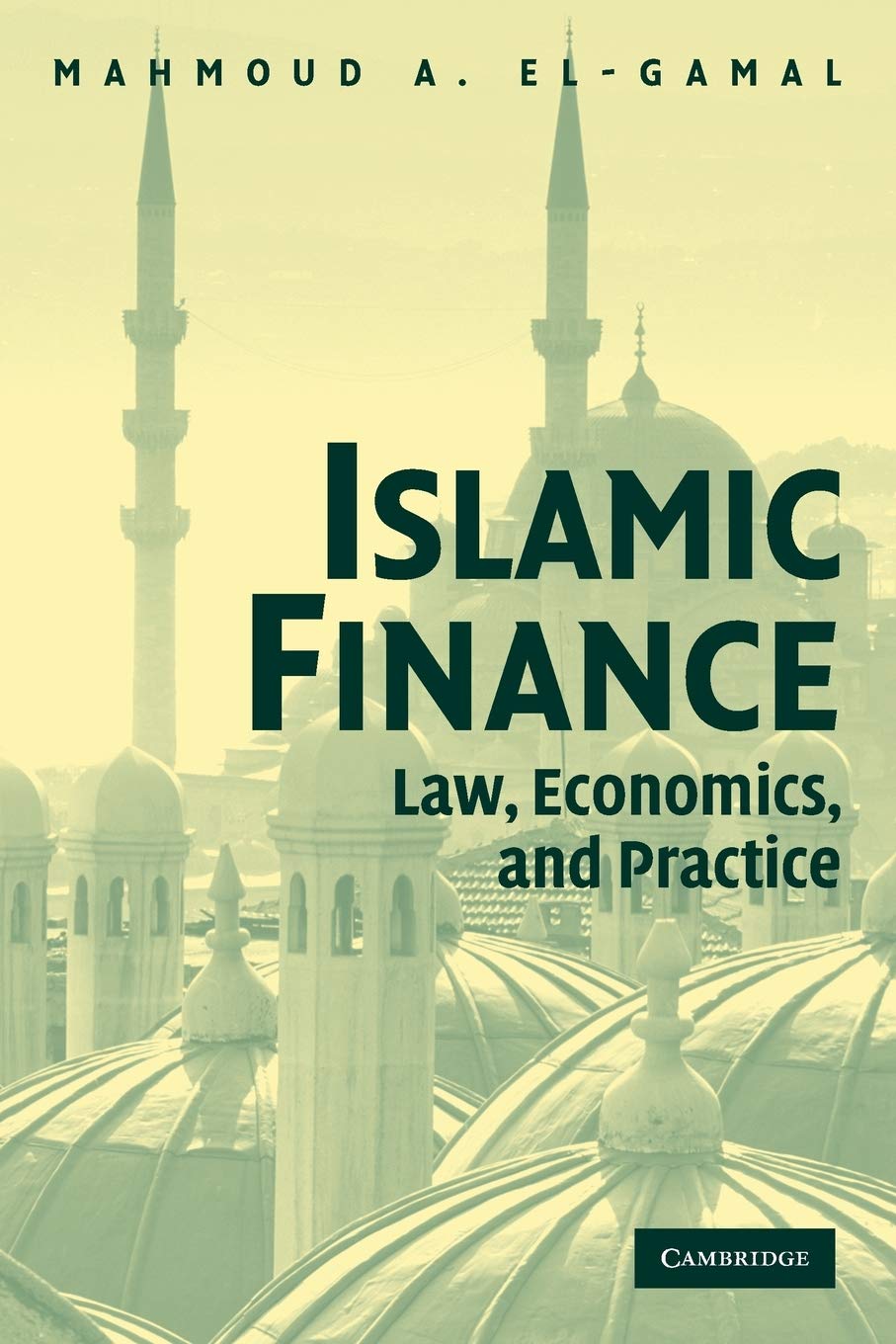
Buy Islamic Finance: Law, Economics, and Practice by El-Gamal, Mahmoud A. online on desertcart.ae at best prices. ✓ Fast and free shipping ✓ free returns ✓ cash on delivery available on eligible purchase. Review: Prof. Mahmoud is one of the few scholars who are well versed in Shari'a and economics. He provides a plausible account of the faults of the existing models of Islamic finance "IF", most of which comply with the letter but not the spirit of Islam. The term Shari'a arbitrage, which he coins, is simply is the practice of adding fees for making superficial modifications to a conventional product to make it comply with the formalistic aspects of the Shari'a without altering its unjust economic effect. Unfortunately, Mahmoud's skepticism was ill-received by the Islamic finance industry and those who benefit from Shari'a arbitrage. Those who turned out to be quite dogmatic, exclusionary, and inexplicably sensitive to criticism. Rather than challenging his thesis in a civilized and academic manner, influential Islamic economists preferred to act in contrary to the precepts of Islam by simply alienating him for no valid reason. They tend to take the best of both worlds, theoretically they persistently emphasize that IF is all about risk-sharing and justice, while practically even the Islamic Development Bank, which is presumably the most Islamic of all, has little to no risk-sharing composition of its loan portfolio as shown in its annual reports. In any event, Islamic Finance Law, Economics and Practice is a must read for those interested in genuine, neutral, edifying insights into the realm of Islamic finance. Among all books on IF, it provides a balanced approach to the topic calling for mutuality as a possible alternative framework that for all its faults is more compliant with the Shari'a than than the existing framework. IF is doomed to fail unless views of scholars like Mahmoud are taken into consideration to formulate better practices and policies as it grows to maturity. Review: I found this book quite organized with systematic approach to the issues faced by Islamic Finance practice today. Author has given powerful arguments against current practice of Islamic Finance with substantial evidence both from contractual and "spirit of the law" perspective. It is insightful piece of work, which sheds light into many "suspicious" products of Islamic Banks branded "Islamic". El-Gamal rightly emphasized the "substance over form" issue in his book, which is fundamental for Islamic Finance to achieve its determined purpose as a value-based financing model. However, author doesn't provide much discussion about riba and his view on legitimacy of current conventional finance practice from Islamic point of view. He provides inspiring solutions in the last chapter, which gives a good food for thought. This book is worth to read, but it is not quite balanced.
| Best Sellers Rank | #86,561 in Books ( See Top 100 in Books ) #115 in Banks & Banking #1,049 in Finance #8,302 in Higher & Continuing Education Textbooks |
| Customer reviews | 4.8 4.8 out of 5 stars (23) |
| Dimensions | 15.24 x 1.4 x 22.86 cm |
| Edition | Illustrated |
| ISBN-10 | 0521741262 |
| ISBN-13 | 978-0521741262 |
| Item weight | 336 g |
| Language | English |
| Print length | 240 pages |
| Publication date | 18 October 2022 |
| Publisher | Cambridge University Press |
T**T
Prof. Mahmoud is one of the few scholars who are well versed in Shari'a and economics. He provides a plausible account of the faults of the existing models of Islamic finance "IF", most of which comply with the letter but not the spirit of Islam. The term Shari'a arbitrage, which he coins, is simply is the practice of adding fees for making superficial modifications to a conventional product to make it comply with the formalistic aspects of the Shari'a without altering its unjust economic effect. Unfortunately, Mahmoud's skepticism was ill-received by the Islamic finance industry and those who benefit from Shari'a arbitrage. Those who turned out to be quite dogmatic, exclusionary, and inexplicably sensitive to criticism. Rather than challenging his thesis in a civilized and academic manner, influential Islamic economists preferred to act in contrary to the precepts of Islam by simply alienating him for no valid reason. They tend to take the best of both worlds, theoretically they persistently emphasize that IF is all about risk-sharing and justice, while practically even the Islamic Development Bank, which is presumably the most Islamic of all, has little to no risk-sharing composition of its loan portfolio as shown in its annual reports. In any event, Islamic Finance Law, Economics and Practice is a must read for those interested in genuine, neutral, edifying insights into the realm of Islamic finance. Among all books on IF, it provides a balanced approach to the topic calling for mutuality as a possible alternative framework that for all its faults is more compliant with the Shari'a than than the existing framework. IF is doomed to fail unless views of scholars like Mahmoud are taken into consideration to formulate better practices and policies as it grows to maturity.
T**.
I found this book quite organized with systematic approach to the issues faced by Islamic Finance practice today. Author has given powerful arguments against current practice of Islamic Finance with substantial evidence both from contractual and "spirit of the law" perspective. It is insightful piece of work, which sheds light into many "suspicious" products of Islamic Banks branded "Islamic". El-Gamal rightly emphasized the "substance over form" issue in his book, which is fundamental for Islamic Finance to achieve its determined purpose as a value-based financing model. However, author doesn't provide much discussion about riba and his view on legitimacy of current conventional finance practice from Islamic point of view. He provides inspiring solutions in the last chapter, which gives a good food for thought. This book is worth to read, but it is not quite balanced.
Y**A
The reason it's 4 stars and not 5 is because the subject is so complex and the book focused on explaining why and left me with the need to read more books to get it...
W**S
The best form of banking on the planet.
Trustpilot
1 month ago
2 weeks ago