
DOWNLOAD THE APP


Customer Support

Desert Online General Trading LLC
Warehouse # 7, 4th Street, Umm Ramool, Dubai, 30183, Dubai
Desert Online General Trading LLC
Warehouse # 7, 4th Street, Umm Ramool, Dubai, 30183, Dubai
DOWNLOAD THE APP
Customer Support
Desert Online General Trading LLC
Warehouse # 7, 4th Street, Umm Ramool, Dubai, 30183, Dubai
Desert Online General Trading LLC
Warehouse # 7, 4th Street, Umm Ramool, Dubai, 30183, Dubai
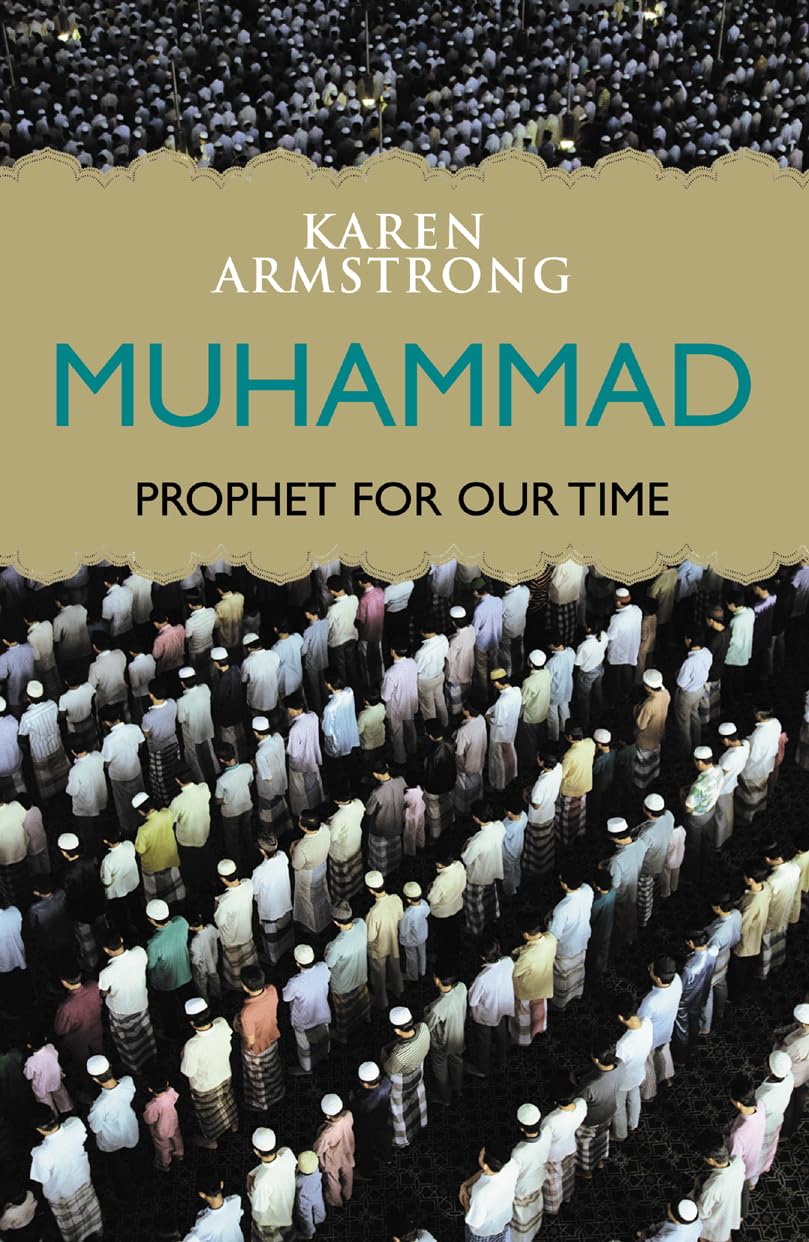
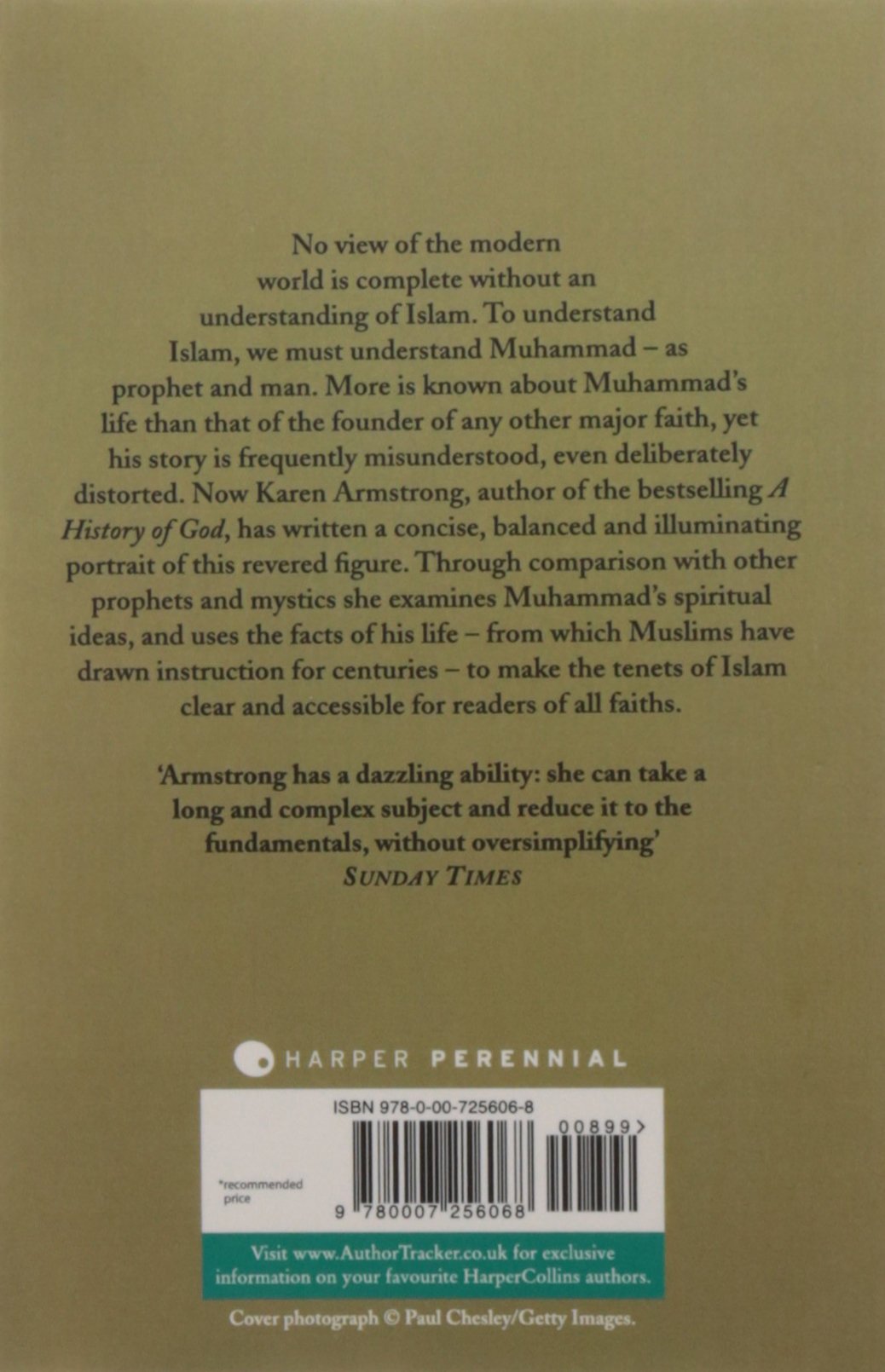
Full description not available
A**K
Balanced, Well Researched, and Contextually Aware
The mark of a good biography is always contextual awareness coupled with historical accuracy. And Karen Armstrong has managed to do both with equal tenacity and vigour.The Prophet has always been subject of immense controversy in popular media, particularly among the non-Arab historians - and while it is easy to dismiss them as racially prejudiced, it’s important to understand how complex and nuanced history really is.Karen Armstrong has managed to make this work though - and she’s done it using references that are often irrefutable - both from Muslim as well as western scholars and historians. This balanced approach, while understandably controversial from orthodox perspectives, is a refreshing read for anyone who’s academically inclined about a man who’s personal life is the subject of much reverence as well as ridicule by different groups today.All in all - it’s a beautifully written book - and I’d argue a must read for anyone who’s interested in understanding Muslims, or Arab culture in the 6th and seventh century. It’s written objectively, yet kindly and respectfully and is a very heartening read indeed.
K**D
A humanistic perspective
Karen Armstrong tells the story of Muhammad's life with sympathy and compassion, and a sense of what the modern reader, the recipient of such a text, feels, values, believes. This is thus suited to be an introductory book on the prophet's life, and does well to serve that purpose.For those familiar with the story, there is still enough that is evocative and interesting to read, particularly in the way that Muhammad is portrayed as all too human, and as much as the book attends to his depth of vision, his commitment to truth, his mastery of administrative and military matters, it also highlights his sorrows, confusions, despair, disappointment and desire.At the same time as he is emerging as the most powerful chieftain in Arabia, he also weeps bitterly at the death of his little son Ibrahim. While he has effectively executed the expulsion of enemy tribes from Medina, he is also riddled with confusion and sorrow about how, instead of bringing peace to the area, his plans for limited and defensive warfare have got him embroiled in the same cycle of unending violence that has been a characteristic of Arab society for centuries before him.As a humane, sensitive portrait of Muhammad, this book is a valuable contribution to seerah literature. For a more rigorous analysis of the material forces that shaped the prophet's life, Montgomery Watt's books would be suggested. For a profound immersion into how the prophet may be seen from the eyes of those who have faith, the biography by Martin Lings is perhaps unmatched, and that by Tariq Ramadan also being a fairly educative read. Armstrong's book is somewhere between these two dimensions, navigating both the material and the spiritual, not reaching the degree of thoroughness or profundity of either kind of work, yet communicating some of the essence of each.
M**
A compassionate account of the last prophet
Brings out in true effect the circumstances of that time and Mohammed's deft navigation through it by erring on the side of peace instead of belligerence. Ofcourse all under GOD'S guidance through his revelations. A book highly recommended. It will bring tears to the eyes.
A**A
A must read for both followers of Islam and readers of comparative religions.
Gives a lot of insights into the context of the society where Muhammed started his journey as a prophet. For those who are trying to understand Islam in an age when misconceptions about the religion is strife within and outside of the system.At one level, this book gives a lot of areas for Muslims to look at the history of the contexts of some of the seemingly controversial vantage points which is used by ultra conservative sects.For those outside, this book makes a very balanced look at the evolution of Muhammed as a prophet and also the evolution of the religion. For the discerning reader, it may help clear some of the widespread misconceptions.
R**I
A must read for the western world
This is the 3rd Karen Armstrong book I have read. As she did with the biography of the prophet this book is extremely well articulated. The prophet played many different rolesIn his life and I feel the book encapsulates the role of a statesman that he played more aptly than others.
A**D
An objective analysis of Muhammad's prophetic mission.
Well, the concluding paragraph of the book tells it all, what you will get out of reading this book. Muhammad founded the religion called 'Islam' in truth and didn't bring it from heaven. The book is definitely of help to those with objective minds.The brief history of the twenty-first century shows that neither side has mastered these lessons. If we are to avoid catastrophe, the Muslim and Western worlds must learn not merely to tolerate but to appreciate one another. A good place to start is with the figure of Muhammad: a complex man, who resists facile, ideologically-driven categorization, who sometimes did things that were difficult or impossible for us to accept, but who had profound genius and founded a religion and cultural tradition that was not based on the sword but whose name—“Islam”—signified peace and reconciliation.Armstrong, Karen. Muhammad: Prophet for Our Time (p. 170). HarperCollins Publishers. Kindle Edition.
Trustpilot
4 days ago
2 months ago