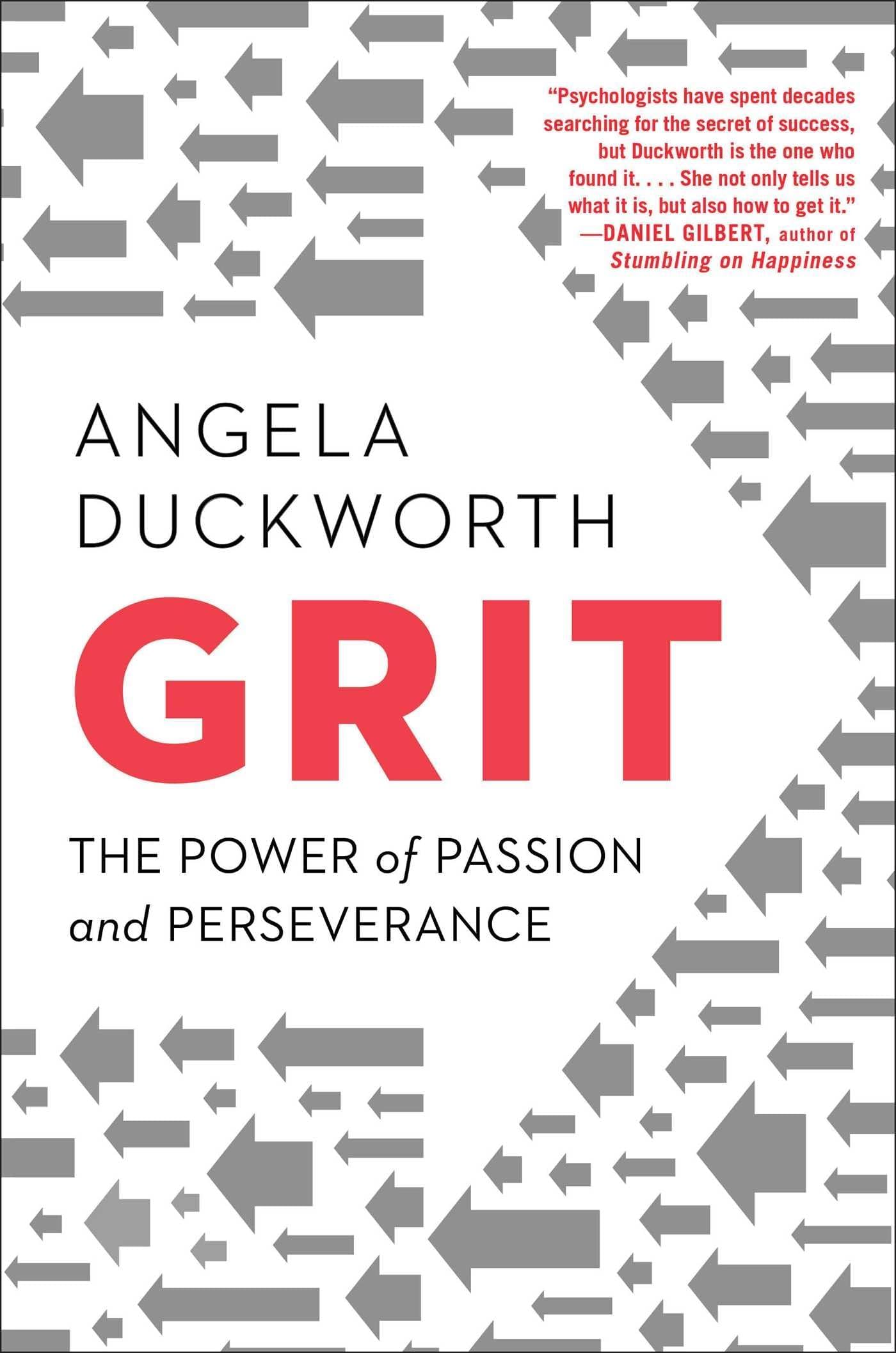


Grit: The Power of Passion and Perseverance [Duckworth, Angela] on desertcart.com. *FREE* shipping on qualifying offers. Grit: The Power of Passion and Perseverance Review: A Motivating Book That Redefines What Success Really Takes - Grit was a great read and really changed how I think about long-term success. The core idea — that passion and perseverance matter more than raw talent — really hit home. Angela Duckworth does a great job showing that people who stick with something, put in the work, and stay committed over time usually outperform those who rely only on natural ability. It made me reflect on the areas in my own life where I’ve pushed through challenges versus the times I gave up too early. What I liked most is how the book mixes research with real stories from athletes, students, business leaders, and everyday people who pushed past setbacks. It feels motivating without being cheesy, and it reminds you that consistency matters far more than we usually give it credit for. The message is simple but powerful: effort counts twice. If I had one critique, it’s that some of the stories and examples start to overlap as the book goes on, and if you’ve read other personal development books, a few ideas may feel familiar. Still, the way Duckworth explains grit — breaking it down into passion, practice, purpose, and persistence — makes it easy to apply in real life. Overall, Grit is a meaningful, encouraging read. It pushes you to rethink what really drives achievement and helps you see that building perseverance is just as important as having talent. If you’re working toward big goals or want a mindset boost, this book is definitely worth your time. Review: Instant Must Read For Every Teacher, Parent, Coach, Athlete, and Caregiver - To: All parents, teachers, coaches, athletes, students, and caregivers: Re: the book Grit: The Power of Passion and Perseverance by Dr. Angela Duckworth Buy it. Read it slowly and deliberately. If you listen to it on Audible, set the speed at 50%. After many years of writing book reviews primarily for friends and executives at YPO, I have have finally found a recommendation to give to this esteemed group. It is fitting Dr. Duckworth’s inaugural book debuted the week of the Kentucky Derby as I am fortunate enough to live around and know several jockeys whom I would ascribe the greatest exemplars of grit the world has ever known-what professor Duckworth refers to as grit paragons. What Lean In did to encourage less timidity for women in the workplace, Grit will inculcate and elevate passion and perseverance for long term goals should you choose to accept the practical applications of years of related and transportable research. By this time, you have undoubtedly heard of “grit” the construct coined, developed, and researched by Dr. Duckworth with contributions from notable colleagues along the way including the late Dr. Chris Peterson of “other people matter” fame. After validating the grit scale, she has gone on and tested tons of interesting groups from West Pointers and national spelling bee participants to teachers and athletes. The concept appears to be fairly intuitive until you get the very deep dive into the details of what passion and perseverance over the long term really mean. Is grit nature or nurture? Can you develop it? Can you have too much of it? Dr. Duckworth’s fresh writing is able to distill very difficult psychological concepts and present them in a way that anybody can explain them on the back of a napkin which is a tribute to her as both a teacher and writer. The short TED video by the author from 2013 provides a great introduction and motivation to read the book. The polished TED presentation though is a result from one of the many transformative topics in her book-the confluence of painful effort, feedback, and immense pleasure through deliberate practice (search youtube for rehearsals pre-TED talk). The beauty of this book is that it is really a “book of books”. It interweaves numerous related research activities and concepts, contributions of luminaries in psychology, and solid parenting guidelines (in particular the “hard thing rule”). Here is a short list of the concepts and legends that you will meet: flow, hope, resiliency, fixed vs. growth mindset, learned optimism, Sisu, talent (overrated), cognitive bias’ including “naturalness", goal setting, positive self-talk, passion, purpose, job, career, calling, William James, Nietzsche, Aristotle, Adam Grant, Martin Seligman,Anders Ericsson, Mihaly Csiksgentmihalyi, David Yeager, Amy Wrzesniewski, Justin Berg,Jane Dutton, Aaron Beck, Emilia Lahti, Carolyn Dweck, and even Seattle Seahawks coach Pete Carroll. . As a former student of hers in the MAPP Program at University of Pennsylvania, I felt like I had I had just done a refresher course. (side note: physical therapy mentioned two different times in the book, would automatically would get a 5 star rating from me!). My biggest personal takeaway is the influence of culture in the environment and workplace and how this alone can foster and make one “gritty”. To that end, I am proud of our healthcare company’s strategic intent: "Our Success is through meaningful work that impacts lives” and perhaps even more so one of our ten commitments that we formed in October of 2014: I commit to Sisu – I will face challenges head-on. “In my life and work, I refuse to be derailed by people or circumstances and will face them with valor. I acknowledge ‘stuff’ can and will happen but choose to ‘power on’ even when it appears that I have reached the limits of my mental and physical capabilities.” Thank you Dr. Duckworth for being a terrific writer, teacher, and example of this profound concept and having an impact far in excess of what I believe you ever imagined. Undoubtedly, those who read it will be driven to further a life of passion, meaning, and prosocial concerns for the long term.
| Best Sellers Rank | #4,676 in Books ( See Top 100 in Books ) #7 in Popular Applied Psychology #13 in Popular Psychology Personality Study #158 in Success Self-Help |
| Customer Reviews | 4.6 4.6 out of 5 stars (20,458) |
| Dimensions | 6 x 1.2 x 9 inches |
| Edition | 1st |
| ISBN-10 | 1501111108 |
| ISBN-13 | 978-1501111105 |
| Item Weight | 2.31 pounds |
| Language | English |
| Print length | 352 pages |
| Publication date | May 3, 2016 |
| Publisher | Scribner |
S**M
A Motivating Book That Redefines What Success Really Takes
Grit was a great read and really changed how I think about long-term success. The core idea — that passion and perseverance matter more than raw talent — really hit home. Angela Duckworth does a great job showing that people who stick with something, put in the work, and stay committed over time usually outperform those who rely only on natural ability. It made me reflect on the areas in my own life where I’ve pushed through challenges versus the times I gave up too early. What I liked most is how the book mixes research with real stories from athletes, students, business leaders, and everyday people who pushed past setbacks. It feels motivating without being cheesy, and it reminds you that consistency matters far more than we usually give it credit for. The message is simple but powerful: effort counts twice. If I had one critique, it’s that some of the stories and examples start to overlap as the book goes on, and if you’ve read other personal development books, a few ideas may feel familiar. Still, the way Duckworth explains grit — breaking it down into passion, practice, purpose, and persistence — makes it easy to apply in real life. Overall, Grit is a meaningful, encouraging read. It pushes you to rethink what really drives achievement and helps you see that building perseverance is just as important as having talent. If you’re working toward big goals or want a mindset boost, this book is definitely worth your time.
L**Z
Instant Must Read For Every Teacher, Parent, Coach, Athlete, and Caregiver
To: All parents, teachers, coaches, athletes, students, and caregivers: Re: the book Grit: The Power of Passion and Perseverance by Dr. Angela Duckworth Buy it. Read it slowly and deliberately. If you listen to it on Audible, set the speed at 50%. After many years of writing book reviews primarily for friends and executives at YPO, I have have finally found a recommendation to give to this esteemed group. It is fitting Dr. Duckworth’s inaugural book debuted the week of the Kentucky Derby as I am fortunate enough to live around and know several jockeys whom I would ascribe the greatest exemplars of grit the world has ever known-what professor Duckworth refers to as grit paragons. What Lean In did to encourage less timidity for women in the workplace, Grit will inculcate and elevate passion and perseverance for long term goals should you choose to accept the practical applications of years of related and transportable research. By this time, you have undoubtedly heard of “grit” the construct coined, developed, and researched by Dr. Duckworth with contributions from notable colleagues along the way including the late Dr. Chris Peterson of “other people matter” fame. After validating the grit scale, she has gone on and tested tons of interesting groups from West Pointers and national spelling bee participants to teachers and athletes. The concept appears to be fairly intuitive until you get the very deep dive into the details of what passion and perseverance over the long term really mean. Is grit nature or nurture? Can you develop it? Can you have too much of it? Dr. Duckworth’s fresh writing is able to distill very difficult psychological concepts and present them in a way that anybody can explain them on the back of a napkin which is a tribute to her as both a teacher and writer. The short TED video by the author from 2013 provides a great introduction and motivation to read the book. The polished TED presentation though is a result from one of the many transformative topics in her book-the confluence of painful effort, feedback, and immense pleasure through deliberate practice (search youtube for rehearsals pre-TED talk). The beauty of this book is that it is really a “book of books”. It interweaves numerous related research activities and concepts, contributions of luminaries in psychology, and solid parenting guidelines (in particular the “hard thing rule”). Here is a short list of the concepts and legends that you will meet: flow, hope, resiliency, fixed vs. growth mindset, learned optimism, Sisu, talent (overrated), cognitive bias’ including “naturalness", goal setting, positive self-talk, passion, purpose, job, career, calling, William James, Nietzsche, Aristotle, Adam Grant, Martin Seligman,Anders Ericsson, Mihaly Csiksgentmihalyi, David Yeager, Amy Wrzesniewski, Justin Berg,Jane Dutton, Aaron Beck, Emilia Lahti, Carolyn Dweck, and even Seattle Seahawks coach Pete Carroll. . As a former student of hers in the MAPP Program at University of Pennsylvania, I felt like I had I had just done a refresher course. (side note: physical therapy mentioned two different times in the book, would automatically would get a 5 star rating from me!). My biggest personal takeaway is the influence of culture in the environment and workplace and how this alone can foster and make one “gritty”. To that end, I am proud of our healthcare company’s strategic intent: "Our Success is through meaningful work that impacts lives” and perhaps even more so one of our ten commitments that we formed in October of 2014: I commit to Sisu – I will face challenges head-on. “In my life and work, I refuse to be derailed by people or circumstances and will face them with valor. I acknowledge ‘stuff’ can and will happen but choose to ‘power on’ even when it appears that I have reached the limits of my mental and physical capabilities.” Thank you Dr. Duckworth for being a terrific writer, teacher, and example of this profound concept and having an impact far in excess of what I believe you ever imagined. Undoubtedly, those who read it will be driven to further a life of passion, meaning, and prosocial concerns for the long term.
A**Y
Not really earth-shattering, but a readable overview of fascinating topic (why some succeed and other don't) from an expert
In “Grit”, leading researcher Angela Duckworth accounts the latest academic thinking concerning the formidable topic of the “psychology of human achievement” -- the question of why some people achieve so much, and others don’t. Duckworth’s answer (spoiler alert: it’s grit) is unlikely to seem that surprising to those who have dabbled in pop-psychology books like “Outliers”, “Talent is Overrated”, “Peak”, or “Why Children Succeed,” and much of the material may feel a bit stale to those who have read extensively in this space. Nonetheless, it covers a fair range of ground in a readable and well-organized package, so is worth the price for a one-stop review or a first-read on the topic. Duckworth splits the book into 3 parts: Part I looks at what grit, part 2 discusses how one can acquire more of it, and part 3 looks at how to infuse it in others. In Part I, Duckworth gets to the core of what her research has added to the conversation about human achievment. While others have shown that what differentiates experts from others is hours of deliberate practice (rather than talent), Duckworth has identified the personality characteristic -- grit -- that seems to predict who will stick to it enough to do the hours (and therefore become the experts). Of course that those that stick to tasks have “grit” does not take a huge flight of the imagination -- in some ways it’s the very definition of the word. But Duckworth has also created a way to measure what grit actually is and quantify how much of it people have in the form of a “grit scale.” This then allows researchers to do all kinds of studies on it, which Duckworth has done and shown that it correlates with everything from graduation from West Point to sticking with a high pressure sales job. From a quantitative standpoint, it seems it would be pretty easy to pick apart the “grit scale”, were one so inclined. It is all self-assessed, includes such questions as “I don’t give up easily”, seems it may reflect self-view / self-confidence as much as “grit”, and hardly seems the stuff of analytical rigor. Nonetheless, Duckworth has contributed to the literature by at least proposing a standardized definition of what it means to have grit. In short, it has two parts: passion (sticking to what is important to you) plus perseverance (the ability to get back up once you have fallen). With the core of the argument defined, Parts 2 and 3 mostly rehash material I had already read elsewhere -- but I still found both to be worthwhile reads. Part 2 looks at how we can grow grit “from within.” The takeaway: find a passion, develop it through extensive practice, find smaller and smaller nuances and practice them until you master them, and develop it all into a larger purpose. Duckworth offers some useful tactical advice such as: “passion” does not happen in an institute and is not developed introspectively, it only happens over much time and interaction with the outside world. The chapter on “practice” is a rehash of the “deliberate practice” research that is featured in many other books (“Peak” by Ericsson if you want it straight from the source). In the perseverance section she touches on the fixed vs. growth mindset that characterizes optimistic people (who believe intelligence and ability can grow and therefore seek out challenge) from fixed-mindsetters who believe traits do not change, so are liable to shy away from challenges. To develop a “growth” mindset in others, one key is to praise for effort rather than ability. Finally in the third section Duckworth talks about how to develop grit in others. The most interesting chapter to me was on parenting. The best parenting style according to most researchers and the successful people Duckworth has interviewed is to be supportive (emotionally, etc) but also demanding (have high expectations, set and enforce clear rules, recognize the child isn’t always mature enough to have their own interest in mind), in contrast to being merely permissive (supportive but not demanding) or authoritarian (demanding and not supportive). To build grit, we should also encourage children to master new skills that are hard for them. Duckworth has a useful “hard thing” rule in her family where everyone has to commit to doing one “hard thing” (violin, soccer, etc.) and has to stick to it for a year. The next year they can pick a different one. Like much of the book, I’m not clear that this is really breaking new intellectual frontiers, but it’s still some useful thinking that I will adapt in my own life.
K**S
Great book, well documented, eye opening. I wish I had this book when I was 15 or 20 [now I’m 73]. I’ve had a great life and a lot of success, the concepts in this book might have made it easier. I have no doubt that grit played a large role in my successes, but with this book as a 15 year old the development of my grit would have been smoother and sooner.
J**N
As expected
O**Y
Great book. Informative. Enlightening. I have a few problems with it which I've put below. I don't think I'm the intended audience and I hope anyone else who feels like me will read it with some warning. It's an interesting read, but as someone who is neurodivergent (adhd) it was a little discouraging in some parts. The definition of grit from the beginning felt unfair. Basically it described someone who doesn't have adhd. I would also like to understand why certain people have more grit than others or how to go from not having it to having it. Do upbringing, financial position or support networks have anything to do with it? I don't see how those crucial aspects were fully investigated. I think this book is encouraging if you're already a natural achiever and don't struggle with executive functions. Maybe you just need a kick to keep going or a reminder to persevere. I didn't see much about getting through the difficult circumstances in life that you need to overcome before you can even dream of achieving things, like homelessness or unemployment without any support. I think surviving those things is a whole other kind of grit and requires the same tenacity it does to do things considered to be success in the book.
K**L
Kaliteli baski. Kusursuz urun.
S**O
Excellent livre. Je n’avais aucune connaissance préalable sur le sujet et j’en ai beaucoup appris. Anglais simple et compréhensible, très bonne explication du sujet, de la base scientifique et de son application au quotidien. Il est cité par de nombreuses autres sources. A lire!
Trustpilot
2 days ago
3 weeks ago