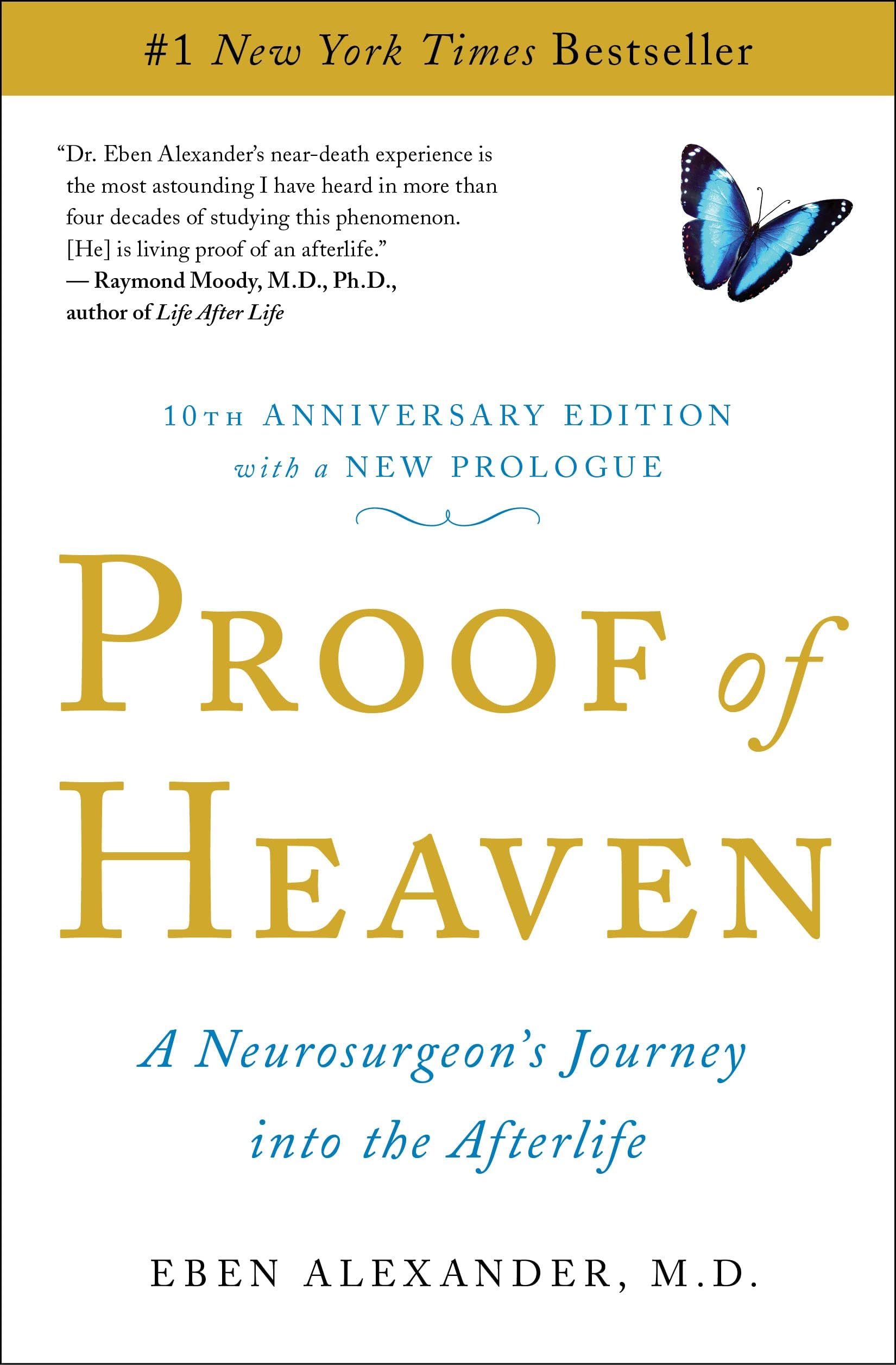

Proof of Heaven: A Neurosurgeon's Journey into the Afterlife
Product ID: 199517
🌌Explores the afterlife
📖300+ pages of insights
🧠Neuroscience meets spirituality
Buy anything from 5,000+ international stores. One checkout price. No surprise fees. Join 2M+ shoppers on Desertcart.
Desertcart purchases this item on your behalf and handles shipping, customs, and support to Vietnam.
🌟 Discover the Unseen: A Journey Beyond the Ordinary!
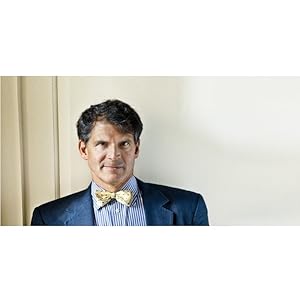
Proof of Heaven is a groundbreaking memoir by neurosurgeon Dr. Eben Alexander, detailing his near-death experience and the profound insights he gained about consciousness, spirituality, and the afterlife. This compelling narrative invites readers to explore the intersection of science and the metaphysical, challenging traditional views on life and death.
| Best Sellers Rank | #3,064 in Books ( See Top 100 in Books ) #4 in Near-Death Experiences (Books) #4 in Reincarnation (Books) #7 in Christian Eschatology (Books) |
| Customer Reviews | 4.4 4.4 out of 5 stars (25,305) |
| Dimensions | 5.5 x 0.64 x 8.38 inches |
| Edition | 1st |
| ISBN-10 | 1451695195 |
| ISBN-13 | 978-1451695199 |
| Item Weight | 2.31 pounds |
| Language | English |
| Print length | 196 pages |
| Publication date | October 23, 2012 |
| Publisher | Simon & Schuster |
P**R
Beyond Science and Religion...Endorsement and Support from another NDE survivor
As someone who has experienced an NDE, and struggled with many of the same things that Eben discusses here, I am not surprised at the response that many are having to this book. To say "people who have NDE experiences often find the telling of their story, while trying to impart the information they receive during their experience, a difficult task," would be an understatement as vast as the universe. The clinical aspects of Dr. Alexander's experience are what make this story unique, along with his outright conversion from a "Scientific Reductionist" to someone who sees clearly that consciousness and the vast majority of "what is," are found outside of our space/time universe and current medical or science books. To get the most out of any book on NDEs, and especially one that intertwines a very personal journey to find family and self, you must start with an open mind and heart. Unfortunately, those who have already hardened their views on both sides of the spectrums of Science and Religion, will dismiss much of what anyone writes on this topic, because it doesn't fit their narrow, dogmatic view of the world. Even worse, it forces them to look outside of their safe little boxes, and take the effort to learn, while being open to the possibility that current models of both science and faith are a good starting point, but not the ENTIRE answer. Einstein's quote at the beginning of the chapter "A Final Dilemma" says it best... "I must be willing to give up what I am in order to become what I will be." Whether you begin as a Christian, a Buddhist, Quantum Physicist or a simple seeker of knowledge beyond current understanding, moving outside of the constructs of your current ways of thinking is imperative to discovery. Fundamentalism, whether it be religious or scientific, is really no different than intellectual bigotry, closed to expanded thoughts, or encompassing new ways of looking for expanded information. Eben's book embraces both worlds, and does so gracefully, without discounting any specific ideology. Eben's experience was certainly deeper, and far more expansive than most I have read (including my own NDE). I do agree that the lack of detail about his time in "heaven" (a term that I find limiting) is frustrating to a point. And yet, the need to spend much of this book on the technical side of his coma, his quest and victory regarding his family (past and present), as well as touching on the scientific aspects of the current science regarding external consciousness, make this short book an excellent jumping-off point for deeper study and discussion. And there's the rub... After experiencing my own NDE (in 1996), I spent almost two obsessive years trying in vain to "connect the dots of knowledge imparted to me," before putting it all back "in a box" so that I could get on with living my life. Through a series of events over the past two years, I find myself very much back into "telling the story." I now realize that no book, video, or movie is able to even scratch the surface of answering the great questions of life after death, consciousness, and how they all relate to quantum theory. Expecting "the answers" from a book of this size and configuration is naïve and lazy at best. There is a reason that the section in this book called "Reading List" is expansive. Much has been written on this topic from both the spiritual and scientific approach. If you are a true seeker of the truth, you will not start or end your journey for knowledge with Eben's book. Instead, you will appreciate the facts of his experience, the unique medical reality of his coma, and the amazing revelations about family, love and the eternal nature of consciousness, as the BEGINNING of the journey to true understanding. While this book in not an expansive, all-inclusive answer to the melding of Science and Religion, I give it 5 stars for being an important, unique story, bringing focus to the need for a global change in the perception and understanding of reality, consciousness and the interconnectedness of everything in creation.
R**O
from a Roman Catholic layman
Nota Bene: I am ASSUMING for the sake of this comment that the account rendered in the book is real, i.e. it is a sincere effort by a real human being with a real MD degree to relate, in good faith, an experience he believes in good faith that he had. I am ASSUMING that this book and story are not a cynical fabrication by someone who is looking to fool the gullible, nor an attempt to make a quick buck writing about something that will sell books. I have not made a *substantial* attempt to verify the existence of Eben Alexander nor to verify his degree and positions. I have not had a NDE myself. Whatever knowledge I have of them is strictly based on those of other people, often obtained quite indirectly. The first NDE I had heard about while I was on a retreat in 1968. It was a "negative" -- meaning frightening -- NDE. Eben Alexander's account of a NDE is of particular interest because it occurred in a hospital setting while the subject was under intense scrutiny and because the subject is a neurosurgeon. That he entered the experience more-or-less as an unbeliever makes it even more interesting. The book is also interesting about what it says about Eben himself and his family. He comes across as a very good man who is surrounded by a very loving family. Having said that, I will say that I found his account of his vision (I say "vision" as his story is an attempt to relate the audio-visual aspects of a memory of an event that was presumably not "audio-visual" in the usual sense of the word, as his sense organs were not functioning, and the experience no doubt transcended "audio-visual-olfactory-tactile" experience.) to be a bit amusing. I say "amusing" not in a disrespectful way, but to convey the, well, amusement, I guess, of seeing a grown, educated, American man find out, via a truly extraordinary experience which certainly appears to be a gift from God, that which the Catholic and Eastern Orthodox churches have been trying to tell people for the past 2000 years, and Protestant churches for the past 500: God is Love. God LOVES us. Eye has not seen nor has ear heard what God the Father has in store for us. God's love is universal. God transcends what we call time and space. (Actually, philosophers have been telling us THAT for a VERY long time.) There are non-corporeal beings who know, love, and serve God. Evil in the World is a consequence of free will. Etc. etc. These are things we all SHOULD have learned in Catechism and had reinforced through our own lives of prayer and particular relationship with God through the person -- at least for Christians -- of Christ Jesus. That the good Lord saw fit to arrange this particular experience for Dr. Alexander both speaks to the love of God, and to the difficulty Man has discerning His purpose in particular instances. While his experience and vision are extremely interesting, there are no surprises for a Christian, and probably none for a Jew either. (I am not sure how most Muslims would think of this, so I won't try to guess.) Also, Eben's NDE was tailored for his particular needs, apparently, as appears to generally be the case for the more credible NDEs. He saw and heard (and felt and was made aware of and was infused with) the things to which he, in particular, needed to be so exposed. Regarding the book itself: it is an easy read, but very moving. Toward the end I found myself blubbering like a baby, as I related to an experience one of his sons had. There is something like a surprise ending that, of course, I will not reveal. The book makes some recommendations in terms of websites (including one started by Dr. Eben Alexander and an associate) for those who wish to learn more about NDEs and other spiritually transforming experiences. He also includes a book list that is quite broad in its scope. It includes books by the Dali Lama, Douglas Hofstadter (a strict materialist), Francis Collins (a life scientist and a believer) and many others in a variety of fields. Oddly, his list does NOT include Christian mystics like St. Theresa of Avila and St. John of the Cross, nor anything about Heaven by someone like Peter Kreeft. I suspect that Dr. Eben Alexander is not familiar with these authors. Buy it. Read it. Spend some time on your knees.
P**S
I asked someone, who was of the Faith, do you believe in people coming back from the dead, of the dead being raised? And he said a loud "NO. Well, only one in a million." I unfortunately replied, "I'm shocked, you are a doubting Thomas"....after all, we had just discussed that Jesus was alive and dead at the same time. It's easy to understand why, when reading this book. Doctors have all been told, it's not possible, yet Acts 26:8 Says that God will raise the dead, it does not give an answer of how many, it says it is not a thing that is incredible. The Bible is from God, written long ago, so the number now is incalculable, how many, or will be, it happens every day. The author himself exposes this and the adage "Nothing ventured, nothing gained." ....you'll love this book!
P**E
Un livre passionnant et empreint de spiritualité. Je le recommande vivement à tous ceux qui sont curieux d'en apprendre plus sur les NDE ou expériences de mort imminente. Le docteur Eben Alexander arrive bien à mettre en mot sa fabuleuse expérience, et à en tirer des conclusions pertinentes.
S**A
It is an easy reading, the content is Amazing, very straight to the point, destinos not the end, we re here expeciencing and we ll go Back home.
T**R
In this book, Dr. Eben Alexander describes his astonishing Near Death Experience (NDE), which according to the author stands out quite a lot compared to other peoples' NDEs documented in the past. As a regarded and experienced neurosurgeon, Alexander has a vast knowledge of the brain, and has performed many operations on patients brains over the years of his career. Up until it happened to himself, Dr. Alexander believed that NDEs were complex phenomena produced by the brain, as he thought (as most materialists) that consciousness is a (yet unexplained) phenomenon produced by the brain. His own Near Death Experience, which he had for the duration of about 7 days when he fell into a coma due to a very rare and potentially deadly E coli infection, turned Dr. Alexander's materialist world view up side down. It's a very personal, well written and edited book. In short chapters the author alternates between accounts of his NDE, the parallel events unfolding in the Intensive Care Unit and detailed medical reports on his condition, as well as personal accounts of the events unfolding with his family at this time. Skillfully he weaves in personal stories which at first glance seem unrelated, yet in the end masterfully complete the picture. Dr. Alexander does a great job in the effort of putting his emotions and accounts on paper. The reader feels a if he/she really gets to know the author, especially from an emotional side. In the Appendix at the end of the book, infectious disease specialist Dr. Scott Wade, who treated Dr. Alexander during his coma gives his medical report and opinion on the matter. Dr. Alexander's NDE and the circumstances of his recovery appear to be outstanding in the following regards: ------------------------------------------------------------------------------------------------------------- - He is a trained & experienced neurosurgeon (cutting edge of science on the brain) - His particular type of E coli (menengitis) infection was pretty unique in regards to the very low probability of infection and his miraculous and full recovery - The Infection switched off almost 100% of the Doctor's brain activity - The long duration of the NDE - The lack of rememberence of his own personality during the NDE The only negative point I have to raise: As with most American prints, the paper quality moderate, quite frankly, even with the hardcover edition. The book jacket however is beautiful to look at and very well designed. Summary ------------- An great & inspiring book that should be part of everyone's library.
V**L
Interessantissimo libro da leggere, che consiglio vivamente. L'originale in inglese è sicuramente preferibile, per chi conosce bene la lingua, alla versione in italiano, che, come tutte le traduzioni, non riesce a rendere a pieno il contenuto. La storia esperenziale del Dott. Eben Alexander è, nell'ambito della bibliografia sulle EPM, sui generis. Si tratta del racconto di quanto accadutogli durante un coma di 7 giorni, descritto con l'essenzialita' e la sobrietà tipica dello scienziato che, per natura, vuole descrivere i fatti... Un bel libro da rileggere di tanto in tanto. Lo consiglio a gutti.
Trustpilot
1 month ago
1 month ago