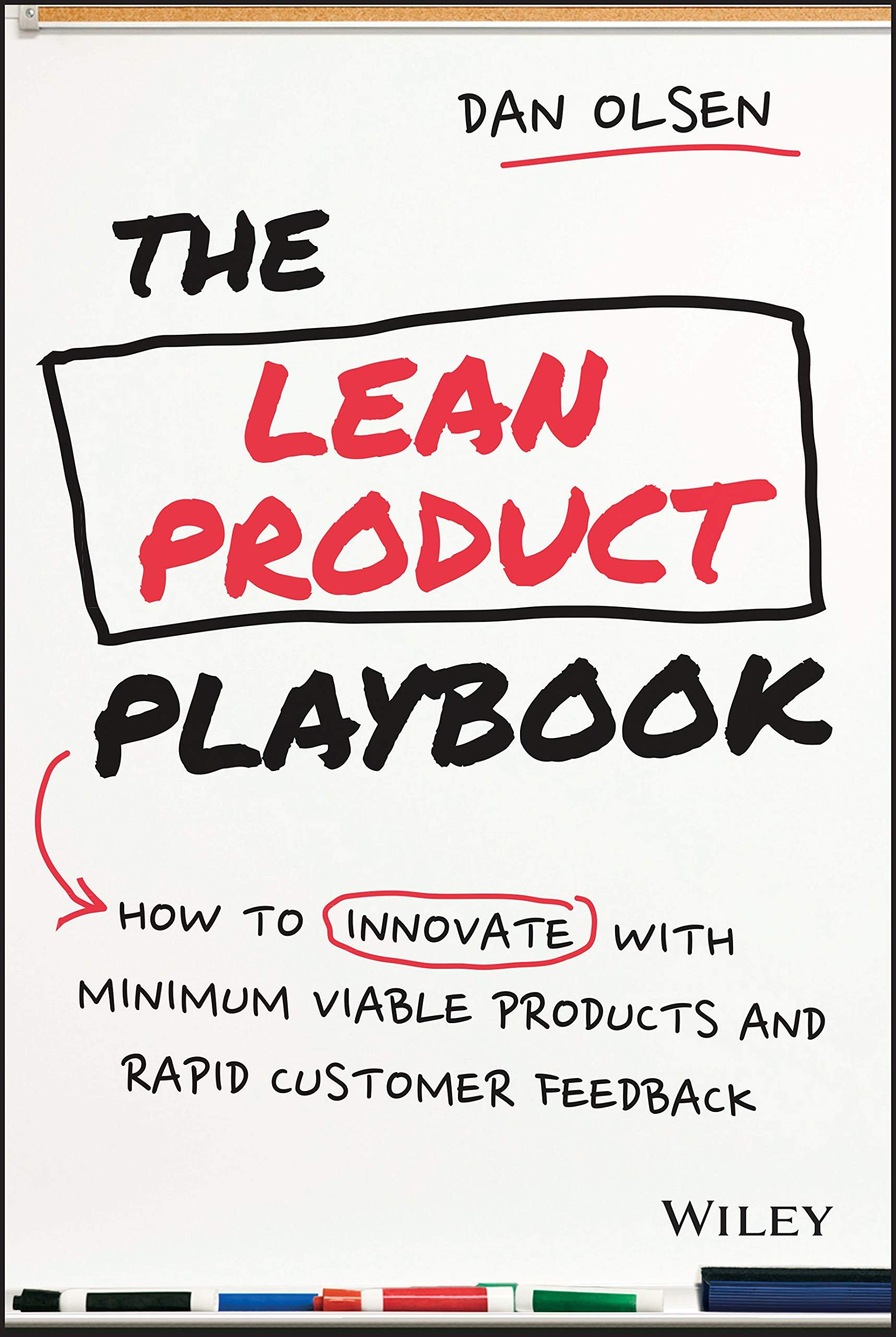
The Lean Product Playbook: How to Innovate with Minimum Viable Products and Rapid Customer Feedback
Product ID: 14992831
Buy anything from 5,000+ international stores. One checkout price. No surprise fees. Join 2M+ shoppers on Desertcart.
Desertcart purchases this item on your behalf and handles shipping, customs, and support to Vietnam.
desertcart.com: The Lean Product Playbook: How to Innovate with Minimum Viable Products and Rapid Customer Feedback: 9781118960875: Olsen, Dan: Books Review: You need this book if you want to go Lean - I’m a product manager who has been involved in the creation of a wide range of web and mobile products. Some have been great and some have bombed (unfortunately like many new products). The Lean Startup movement was a breakthrough for me and many others who work on technology products as it provided a framework for creating products that customers actually want. There are a lot of great Lean books that I’ve read including The Lean Startup, Running Lean, and The Four Steps to the Epiphany. The Lean Product Playbook is unique in that it takes the perspective of an entrepreneur or product manager and has a lot of very practical advice for putting the Lean principles into practice. The other Lean books provide some great information about Lean concepts, but I found that it was often hard to translate these concepts into real world actions. The Lean Product Playbook provides very practical advice for doing so. This book gives the reader a rare glimpse into what it takes to define a successful technology product. Most product leaders have to learn these lessons the hard way by just doing it and seeing what works and what doesn’t…..the school of hard knocks. This book would be ideal for anybody who is taking the lead in defining a new tech product, but would also be useful for entrepreneurs, designers, and developers. Its good for pretty much anybody involved in the process of creating products. There are some great concepts from the book that I have already started utilizing in my work. Some include: - Problem space vs. Solution space - many product teams get these concepts confused. This book has a great discussion and examples that describe how you can identify a problem and a solution that meets the problem. The approach taken in this book is nuanced and very practical compared to other Lean books which tend to be much more dogmatic about how you identify the solution. - Lean Product Process - the author walks you through a step-by-step process for achieving product / market fit. - Feature selection - There is also a lot of great discussion about how you pick which features to include in the product. This is one of the hardest things to figure out as a product owner. - User testing on a Ramen budget - some great ideas for doing user testing on the cheap. Some of the ideas in this book can be found in other places, but this book does an amazing job of integrating those ideas + mixing in some great new ideas in a way that makes it easy to get going on your next great idea. I highly recommend this book! Review: A clear, concise, well-written guide to Lean Product Principles - This book is without a doubt one of the most useful guides I’ve ever read when it comes to applying Lean Product concepts to real-life situations. It guides you through a step by step (it’s a playbook!) strategy for helping you build better, more innovative products, and while you are reading it, it gives you key examples and engaging stories to illuminate each of the steps. Contrary to other “business” books I’ve read, this one is directed and insightful (and entertaining!), making me want to continue reading, and more importantly, enabled me to immediately utilize the strategies. The book offers a combined discussion of Lean Product process, UX Design, Agile Development, and Analytics, which truly covers everything you need to know to build great products that customers will love. One of the key ideas of the book revolves around Product-Market fit, and how to achieve it using a 6-step process. The steps are clear and concise, and the examples and included figures are very tangible and easy to understand. Additionally, this is one of the few books I’ve come across that clearly explains and puts into the proper context how to think about things such as UX design (a 4-layer model of conceptual design, information architecture, interaction design and visual design), User testing (and various methods of doing it quickly and cheaply), Personas, the Kano model, Kanban, and Scrum, to name a few. Whether you’ve already successfully implemented Lean Product principles, are looking to start, are having trouble applying the concepts, or maybe you just aren’t sure where to begin, I highly recommend this book.

| Best Sellers Rank | #65,889 in Books ( See Top 100 in Books ) #13 in Production & Operations #184 in Entrepreneurship (Books) #379 in Business Management (Books) |
| Customer Reviews | 4.6 4.6 out of 5 stars (1,440) |
| Dimensions | 6.2 x 1.2 x 9.1 inches |
| Edition | 1st |
| ISBN-10 | 1118960874 |
| ISBN-13 | 978-1118960875 |
| Item Weight | 1.2 pounds |
| Language | English |
| Print length | 336 pages |
| Publication date | June 2, 2015 |
| Publisher | Wiley |
P**Y
You need this book if you want to go Lean
I’m a product manager who has been involved in the creation of a wide range of web and mobile products. Some have been great and some have bombed (unfortunately like many new products). The Lean Startup movement was a breakthrough for me and many others who work on technology products as it provided a framework for creating products that customers actually want. There are a lot of great Lean books that I’ve read including The Lean Startup, Running Lean, and The Four Steps to the Epiphany. The Lean Product Playbook is unique in that it takes the perspective of an entrepreneur or product manager and has a lot of very practical advice for putting the Lean principles into practice. The other Lean books provide some great information about Lean concepts, but I found that it was often hard to translate these concepts into real world actions. The Lean Product Playbook provides very practical advice for doing so. This book gives the reader a rare glimpse into what it takes to define a successful technology product. Most product leaders have to learn these lessons the hard way by just doing it and seeing what works and what doesn’t…..the school of hard knocks. This book would be ideal for anybody who is taking the lead in defining a new tech product, but would also be useful for entrepreneurs, designers, and developers. Its good for pretty much anybody involved in the process of creating products. There are some great concepts from the book that I have already started utilizing in my work. Some include: - Problem space vs. Solution space - many product teams get these concepts confused. This book has a great discussion and examples that describe how you can identify a problem and a solution that meets the problem. The approach taken in this book is nuanced and very practical compared to other Lean books which tend to be much more dogmatic about how you identify the solution. - Lean Product Process - the author walks you through a step-by-step process for achieving product / market fit. - Feature selection - There is also a lot of great discussion about how you pick which features to include in the product. This is one of the hardest things to figure out as a product owner. - User testing on a Ramen budget - some great ideas for doing user testing on the cheap. Some of the ideas in this book can be found in other places, but this book does an amazing job of integrating those ideas + mixing in some great new ideas in a way that makes it easy to get going on your next great idea. I highly recommend this book!
A**I
A clear, concise, well-written guide to Lean Product Principles
This book is without a doubt one of the most useful guides I’ve ever read when it comes to applying Lean Product concepts to real-life situations. It guides you through a step by step (it’s a playbook!) strategy for helping you build better, more innovative products, and while you are reading it, it gives you key examples and engaging stories to illuminate each of the steps. Contrary to other “business” books I’ve read, this one is directed and insightful (and entertaining!), making me want to continue reading, and more importantly, enabled me to immediately utilize the strategies. The book offers a combined discussion of Lean Product process, UX Design, Agile Development, and Analytics, which truly covers everything you need to know to build great products that customers will love. One of the key ideas of the book revolves around Product-Market fit, and how to achieve it using a 6-step process. The steps are clear and concise, and the examples and included figures are very tangible and easy to understand. Additionally, this is one of the few books I’ve come across that clearly explains and puts into the proper context how to think about things such as UX design (a 4-layer model of conceptual design, information architecture, interaction design and visual design), User testing (and various methods of doing it quickly and cheaply), Personas, the Kano model, Kanban, and Scrum, to name a few. Whether you’ve already successfully implemented Lean Product principles, are looking to start, are having trouble applying the concepts, or maybe you just aren’t sure where to begin, I highly recommend this book.
J**N
How to be a (modern) product manager.
I have worked as a director of engineering at a brand-name post-IPO tech company. I have worked with product managers and group product managers, including people we hired from Microsoft, Spotify, Google, etc. I worked there for 8 years, from before we had a single product manager, and watched the product management discipline evolve. I didn't learn anything new from this book, since it captures (more or less) how we work. But that doesn't mean it doesn't have value. This is the best one-book summary of how a modern product manager should approach building a product. I would happily give this to every product management new hire. It captures the current zeitgeist and, especially in the first half of the book, provides the execution details that are sometimes missing from otherwise great but theory-laden product development books. (I'm looking at you Principles of Product Development Flow!!!) I knocked off a star because the book has some flaws that could be rectified in a future edition. Some topics are covered so superficially you'd almost be better served just by a link to the relevant wikipedia page (this was most noticeable in the sections on execution covering Scrum, Kanban, Continuous Integration, and Continuous Deployment). I would rather these sections be either shorter (just a reference to a more definitive book on the subject) or longer (and have more of a focus on how a product manager is affected by the topic or should drive change). There were several sections where I felt the writing belabored obvious points and what was explained in 5 or 10 pages probably could have been done in 1 or 2. For instance, the example of "waves" of user testing that gradually refine the product or the examples of "equations" for business metrics. But again, take my opinion on this with a grain of salt because all of this stuff is how I'm used to working. Possibly readers who are newer to this approach NEED the long-winded explanations to see how it works in practice. Due to the above two points, the last 1/3 of the book I skimmed large sections. But the first half or two-thirds of the book are really, really good.
Y**L
Great book, has all of the key info organized.
R**N
After reading "The Lean Startup", I did have a good idea on the lean movement and pattern that founders should follow to build theirs products. What I was lacking, however, is more of a step-by-step breakdown of what the process actually looks like starting from the idea to the first release. In his book, Dan covers a lot of those concepts with practical examples from identifying target customers to testing your MVP and iterating. I also found a lean product case study and agile tips in the end of the book incredibly helpful! I highly recommend Dan's book to people who are after building great meaningful products and am very thankful to have come across it myself.
S**.
Uno dei libri più completi ed efficaci che abbia mai letto. Tecnico ma scorrevole, adatto anche a chi è all’inizio.
K**R
I liked the practical approach rather than theories. Makes you reason at each step. Book is cleanly divided so you can focus on what you want from it. In Dan's term which chapter will give you the highest ROI or improvement I'm the way you are working or what particular area you want to focus on improving. But ideally you should read it from front to end to grasp the whole gravity of Dan's teaching.
P**S
Um livro muito bem escrito pelo Olsen. Completo, informativo, com bons relatos pessoais da experiência do autor e ótimo aos interessados no tema Lean Startup. Dan no entrega um bom método para criar produtos. Certamente é um livro tão bom de se ter como referência constante quanto Lean Startup do Eric Ries. Um livro onde cada capítulo entrega bons guias para os empreendedores. Dica para capitulos que falam sobre Identify Underserver Customer Needs, sobre Value Proposition, sobre MVP e sobre Métricas.
Trustpilot
1 month ago
1 month ago