
DOWNLOAD THE APP


Customer Services
Copyright © 2025 Desertcart Holdings Limited
DOWNLOAD THE APP
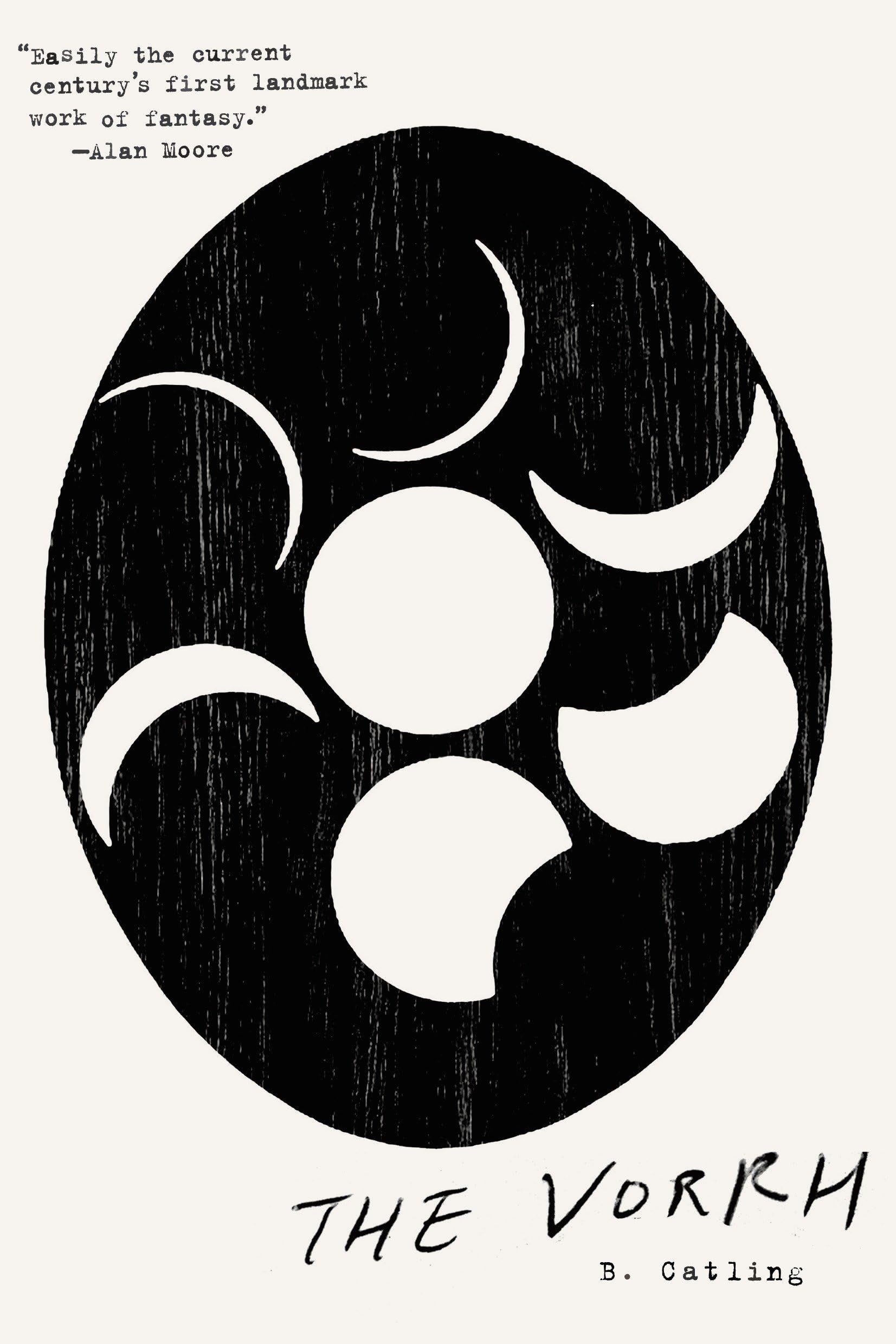
desertcart.com: The Vorrh (The Vorrh Trilogy): 9781101873786: Catling, Brian: Books Review: THE VORRH stands alone in my memory of fantasy novels. - By page 34 we learn all about this thing called THE VORRH: "For years it was said that nobody had ever reached the centre of the Vorrh. Or, if they had, then they had never returned.... It was the mother of forests; ancient beyond language, older than every known species, and, some said, propagator of them all, locked in its own system of evolution and climate. The banded foliage and vast trees that breathed its rich air offered much to humans but could also devour a thousand of their little lives in a microsecond of their uninterrupted, unfathomable time. So vast was its acreage, it also made its demands of time, splitting the toiling sun into zones outside of normal calibration; a theoretical traveler, passing through its entire breadth on foot, would have to stop at its centre and wait at least a week for his soul to catch up. So dense was it breathing, it dented the surrounding climate. Swirling clouds interacted with its shadow. Its massive transpiration sucked at the nearby city that fed from it, sipping from the lungs of its inhabitants and filling the skies with oxygen. It brought in storms and unparalleled shifts of weather. Sometimes it mimicked Europe, smuggling a fake winter for a week or two, dropping temperatures and making the city look and feel like its progenitor. Then it spun winds and heat to make the masonry crack after the tightness of the impossible frost... All its pathways turned to overgrowth, jungle, and ambush. The tribes that were rumoured to live there were barely human -- some said the anthropophagi still roamed. Creatures beyond hope. Heads growing below their shoulders. Horrors." [34] So begins a very unusual, dense and complex, beautifully written, fantasy/alternate history novel. This immense, mysterious forest called THE VORRH is the focal point of the novel, the point around which all the various stories and characters revolve. Catling fills his novel with a myriad of characters, some historical, some not. In some cases their paths cross, in others, not. There is Edward Muybridge (1830-1904) the famous English photographer and creator of the zoopraxiscope -- who hasn't seen his galloping horse photos? And William Gull (1816-1890) English physician to the Prince of Wales and Queen Victoria, and also a real suspect in the Jack the Ripper slayings in Whitechapel (though this fact isn't part of the book). There is also the Frenchman, Raymond Roussel (1877-1933), poet and novelist who wrote "Impressions of Africa" (and actually mentions the Vorrh) -- it is reported that Roussel's book was the inspiration for THE VORRH. To this cast of historical characters is added: Peter Williams, an enigmatic Englishman, veteran of the Great War trenches, possessed of a magical bow constructed from the physical remains of Irrinipeste, a woman of the True People. The arrows he shoots guides him through the Vorrh; Tsungali, a strange, scarified native who years before had started the Possession Wars, now hunts Williams to prevent him from venturing through the Vorrh; Ishmael, a young cyclops boy, raised by robots in the basement of an otherwise abandoned house, with supplies delivered by Sigmund Mutter; two women, Cyrena Lohr, and Ghertrude Tulp, both in love with Ishmael, but for different reasons. These, and many other characters make up THE VORRH. At the edge of the Vorrh, stands the colonial city of Essenwald, moved there brick by brick by brick from its original location in Europe. Here many of the characters live, die, pass through. Essenwald survives on the timber of the Vorrh, carefully harvested from the periphery, for no one dare spend too much time in the Vorrh -- it erases your memory and drives men mad. The harvesting is done by slaves, the Limboia, an apparently hollow and soulless race. Whether they are born that way, or it is the Vorrh which made them that way, is not clear. What shines in THE VORRH above all else, above all the dizzying number of characters and plot lines, is Catling's sensuous, dreamlike prose. One reviewer said it the best: Catling didn't so much write THE VORRH, as paint it. THE VORRH stands alone in my memory of fantasy novels. I've never read anything quite like it. Review: Magnificent, disgusting, disappointing. - Expect to the impressed with the quality of the writing. Expect to be disgusted by what happens in this story. Expect not to have an answer at the end. This book is worth reading for the journey it puts you through, not in search of answers. Actually, that is the point of the book. If you look for definitive purpose in this book, you are just like the fools who think knowledge can be found on a tree in the center of The Vorrh. Instead, you will find an endless mire.
| Best Sellers Rank | #165,789 in Books ( See Top 100 in Books ) #2,420 in Paranormal Fantasy Books #3,691 in Action & Adventure Fantasy (Books) #5,646 in Literary Fiction (Books) |
| Book 1 of 3 | The Vorrh Trilogy |
| Customer Reviews | 4.0 4.0 out of 5 stars (1,126) |
| Dimensions | 5.46 x 1.06 x 8.26 inches |
| ISBN-10 | 1101873787 |
| ISBN-13 | 978-1101873786 |
| Item Weight | 13.6 ounces |
| Language | English |
| Print length | 512 pages |
| Publication date | April 28, 2015 |
| Publisher | Vintage |
M**N
THE VORRH stands alone in my memory of fantasy novels.
By page 34 we learn all about this thing called THE VORRH: "For years it was said that nobody had ever reached the centre of the Vorrh. Or, if they had, then they had never returned.... It was the mother of forests; ancient beyond language, older than every known species, and, some said, propagator of them all, locked in its own system of evolution and climate. The banded foliage and vast trees that breathed its rich air offered much to humans but could also devour a thousand of their little lives in a microsecond of their uninterrupted, unfathomable time. So vast was its acreage, it also made its demands of time, splitting the toiling sun into zones outside of normal calibration; a theoretical traveler, passing through its entire breadth on foot, would have to stop at its centre and wait at least a week for his soul to catch up. So dense was it breathing, it dented the surrounding climate. Swirling clouds interacted with its shadow. Its massive transpiration sucked at the nearby city that fed from it, sipping from the lungs of its inhabitants and filling the skies with oxygen. It brought in storms and unparalleled shifts of weather. Sometimes it mimicked Europe, smuggling a fake winter for a week or two, dropping temperatures and making the city look and feel like its progenitor. Then it spun winds and heat to make the masonry crack after the tightness of the impossible frost... All its pathways turned to overgrowth, jungle, and ambush. The tribes that were rumoured to live there were barely human -- some said the anthropophagi still roamed. Creatures beyond hope. Heads growing below their shoulders. Horrors." [34] So begins a very unusual, dense and complex, beautifully written, fantasy/alternate history novel. This immense, mysterious forest called THE VORRH is the focal point of the novel, the point around which all the various stories and characters revolve. Catling fills his novel with a myriad of characters, some historical, some not. In some cases their paths cross, in others, not. There is Edward Muybridge (1830-1904) the famous English photographer and creator of the zoopraxiscope -- who hasn't seen his galloping horse photos? And William Gull (1816-1890) English physician to the Prince of Wales and Queen Victoria, and also a real suspect in the Jack the Ripper slayings in Whitechapel (though this fact isn't part of the book). There is also the Frenchman, Raymond Roussel (1877-1933), poet and novelist who wrote "Impressions of Africa" (and actually mentions the Vorrh) -- it is reported that Roussel's book was the inspiration for THE VORRH. To this cast of historical characters is added: Peter Williams, an enigmatic Englishman, veteran of the Great War trenches, possessed of a magical bow constructed from the physical remains of Irrinipeste, a woman of the True People. The arrows he shoots guides him through the Vorrh; Tsungali, a strange, scarified native who years before had started the Possession Wars, now hunts Williams to prevent him from venturing through the Vorrh; Ishmael, a young cyclops boy, raised by robots in the basement of an otherwise abandoned house, with supplies delivered by Sigmund Mutter; two women, Cyrena Lohr, and Ghertrude Tulp, both in love with Ishmael, but for different reasons. These, and many other characters make up THE VORRH. At the edge of the Vorrh, stands the colonial city of Essenwald, moved there brick by brick by brick from its original location in Europe. Here many of the characters live, die, pass through. Essenwald survives on the timber of the Vorrh, carefully harvested from the periphery, for no one dare spend too much time in the Vorrh -- it erases your memory and drives men mad. The harvesting is done by slaves, the Limboia, an apparently hollow and soulless race. Whether they are born that way, or it is the Vorrh which made them that way, is not clear. What shines in THE VORRH above all else, above all the dizzying number of characters and plot lines, is Catling's sensuous, dreamlike prose. One reviewer said it the best: Catling didn't so much write THE VORRH, as paint it. THE VORRH stands alone in my memory of fantasy novels. I've never read anything quite like it.
A**N
Magnificent, disgusting, disappointing.
Expect to the impressed with the quality of the writing. Expect to be disgusted by what happens in this story. Expect not to have an answer at the end. This book is worth reading for the journey it puts you through, not in search of answers. Actually, that is the point of the book. If you look for definitive purpose in this book, you are just like the fools who think knowledge can be found on a tree in the center of The Vorrh. Instead, you will find an endless mire.
K**R
Not for me.
It is probably a very well written and very interesting Victorian era fantasy novel. Really, the characters are well fleshed out, the plot has twists and turns and it's a good mix of magic and Victorian era science. So if you're into that sort of thing, great! The language, at times, almost becomes a character. It changes depending on the setting and what character is being narrated. That was interesting, but very inconsistent. It seemed like I could tell it "meant" something, but I couldn't really determine what or why. So in the end it only added confusion. But.... me... well, I kept waiting for the steam-punk type stuff to show up, it never did. I kept waiting for a character to rise that I could either identify with, or like, it never came or was so minor in comparison to the whole that it wasn't enough to keep my interest. I didn't feel like working (yes, reading it felt a bit like work) through the stories of characters I really didn't like at all, to get to the parts with the characters I did like. Usually, a book like this establishes a set of narratives which start off being separate, and part of the enjoyment of reading the story is seeing those narratives slowly converge to a focal point and sometimes eventually merge... this... not really, there was no feeling or progression. i had a hard time with this book. I just didn't "get it", and it certainly didn't get me.
A**N
One of the few fantasy novels that reaches into the sublime.
This is one of the most strikingly beautiful books I've read in several years. Catling is a poet and a performance artist, and his prose within The Vorrh has the shock of spontaneous street theatre and the heartbreak of well crafted verse. This is the kind of novel that propels fantasy, the poor maligned genre of human imagination, into the sublime territory of literature. There is something nearly Shakespearean about his writing - hyperbolic blasphemy probably but it really is a profound investigation of the human character. Catling has the Bard's gift of distilling life and emotion into words and punctuation. There are pages here that stand to be framed. They should adorns the walls of the households of the English speaking world. Getting out what you put in is true here, the book is not always easy to read. Sentences need multiple readings, but the rewards are constant throughout the book. In many ways he reminds me of a more direct Gene Wolfe. The prose is as dense, but he doesn't play minds games with his narratives in the way Wolfe does. You can trust Catlings narrators. The plot isn't worth describing, it's surrealistic fantasy grounded in historical realism, and half the fun of the book is seeing where everything goes. Catling is currently working on parts 2 and 3, and I wait for them with bated breathe.
K**N
Not for everyone...or even a few...
120 pages in and NOTHING IMPORTANT HAS HAPPENED YET. I'm a patient person and have a love of well-written books, even of those with dense prose and twisted plots (Lovecraft, Book Of The New Sun, Gormenghast, "Little, Big", et al...), but this just feels like an exercise in deliberate "I'm going to write a literary fantasy that is so bewildering, it'll be thought of as good."
L**O
Excelente escrita, apesar de densa. Será, concerteza, a próxima grande adaptação de uma obra literária à TV. Terry Gilliam fala enormidades destes livros. O Lore e o mundo por detrás disto é fantástico.
P**S
I ordered Brian Catling's The Vorrh trilogy on Wednesday and received it on Friday. Absolutely recommend Amazon Prime. Great service all round. As for Brian Catling's writing; I've been entranced by his poetic mastery since reading the first sentence of The Vorrh. Catling is one of those writers I occasionally enjoy reading aloud just for the sheer pleasure of hearing the potent musicality of his work. The rhythmic cadence of sentences rich with metaphorical imagery leads the reader on an intoxicating, mysterious odyssey whose ending is, after a thousand pages, as yet tantalizingly unresolved. One of those literary journeys one wishes would never end.
T**N
I'm not going to say this is the best book I've read in a long time, even though it is. You'd have to know what other books I've read to make sense of such a statement. I will say this: 'The Vorrh' is sublime. It is evocative, the language is beautiful with inventive phrasing and whole paragraphs that just sing at you. It does not hold back. The violence is violent, the sex is sexual and the magic is truly mystical. Nothing here feels like it has been done before. Some of the events are so original that you will gasp. I have to say when I finished reading it my first thought was 'where has this writer been hiding?' This is a book I will read again and again. I will think about it in quiet hours. I will wonder. I mean, what the hell do you make of passages like this: "It was said that he was hunting stillness, and that instead of picks or shovels, guns or maps, he carried an empty box on his back, a box with a single eye which ate time." In the last quarter of the book I thought the dialogue suffered from an excess of exclamation points, but this is a quibble. Just read it. You won't be sorry.
A**R
A bit all over the place, but somehow remarkably entrancing
T**2
A few general points to start with: 1. This is the first book in a trilogy, so if you have made it to the end and wonder why there are a number of loose ends do not despair, there is more to come. 2. At 500 pages it's not exactly a light read, especially as the next 2 instalments are likely to be a similar length 3. It really is not a book for everyone, but you will be able to tell that from the mixed reviews on here anyway. So, this is what happens when an artist sets out to write a fantasy trilogy. Essentially it becomes more about the landscape, in this case a huge, largely impenetrable forest that appears to be sentient and is certainly a character in it's own right. It draws people in and wipes them clean of memories, allows civilization to nibble at it's exterior as a trade off to keeping it out of the interior, and houses a plethora of historical or biblical cast-offs and forgotten individuals. It is bizarre and other-worldly in short, but forms the centre of the novel while the human, or nearly-human, elements roam around on the outskirts and sometimes venture into the Vorrh, but rarely to their benefit. There is an obvious visual theme throughout the novel with a cyclops playing a major part, a real-life 19th century photographer taking up a number of chapters, and this novel is certainly more about the visual elements of the world that the author has envisaged than it is about an obvious, driving, plot. The language is heavy with adjectives, flowery at times, stunningly visual and evocative at others, and the multiple strands of this story, following a whole host of strange characters in various parts of the world doing unconnected tasks, appear at times to be excuses for elaborate visual descriptions. You will at many times question where it is all heading - the obvious answer is towards the Vorrh, which appears to have it's own gravitational pull on people and things - and the lack of coherent plot-arc and definite purpose can be off-putting. Essentially, if you think that the likes of Will Self and Cormac McCarthy use too many long words, or pointlessly elaborate phrases, prepare to dislike this novel. It has lines in every single chapter that are unnecessarily ostentatious, but at the same time these lines can flow in a way that may sound beautiful and will certainly appeal to the poets and those who love to hear language more for it's rhythm and sound than it's logical content. Sentences can confuse, contradict and frustrate in their attempt to convey feeling and emotion, and to read 500 pages of this may in fact be to understand the pull of the physical Vorrh itself - you either get captured in the bewildering narrative and stumble towards the centre, or run away to safety. I made it to the end, of this first instalment, and don't regret the journey, but there were a number of times where I re-read a passage that hadn't sunk in the first time and still wasn't sure if what I had just read made any sense. Still, there is beauty in abundance here and enough to suggest that there will be resolution and the coming together of the scattered character arcs as the Vorrh gathers in it's captive minds in the next two books.
Trustpilot
1 month ago
2 weeks ago