We remain fully operational. Our teams are working around the clock to ensure your deliveries continue safely.

DOWNLOAD THE APP


Customer Services
Copyright © 2025 Desertcart Holdings Limited
DOWNLOAD THE APP
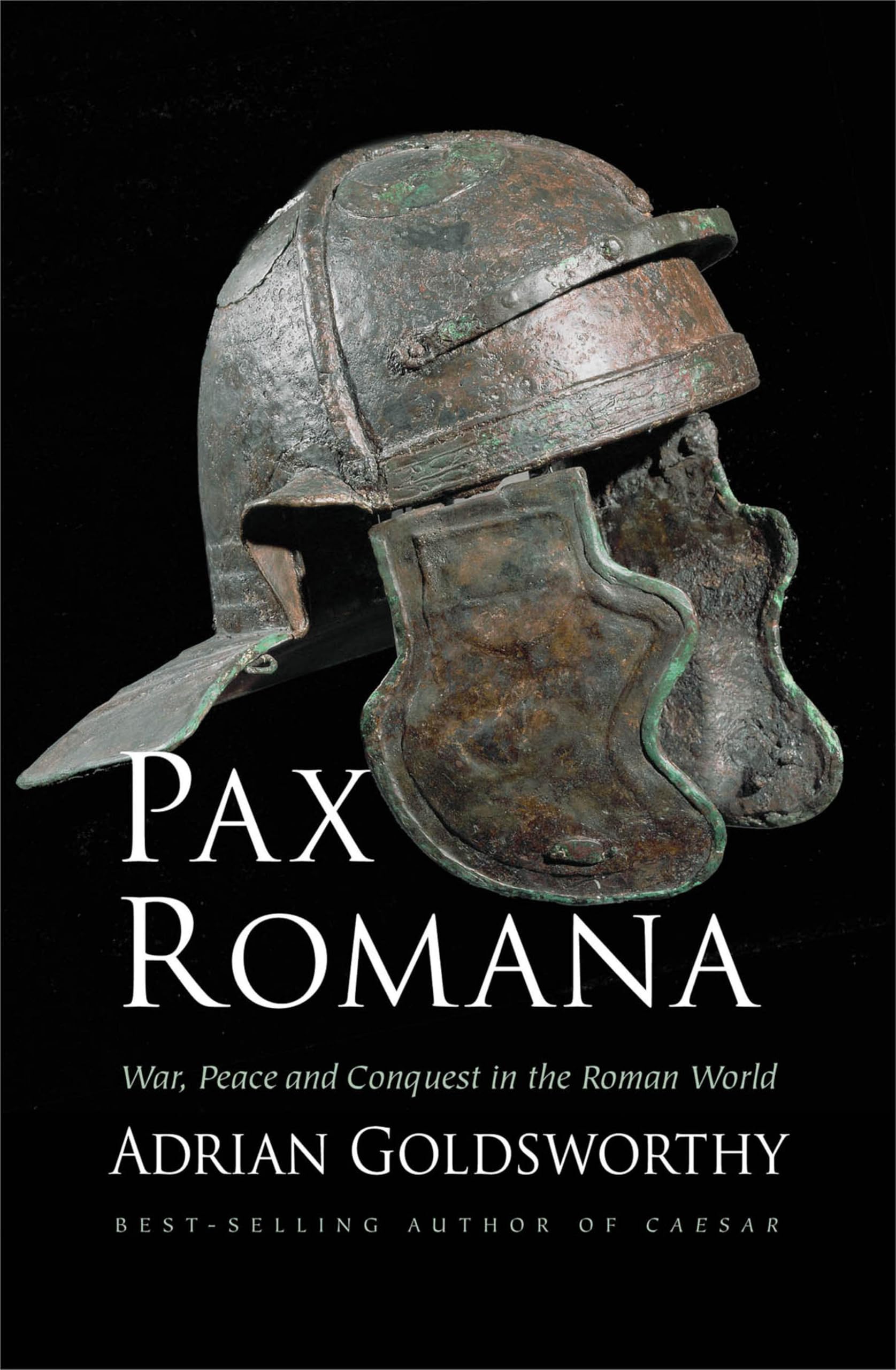
desertcart.com: Pax Romana: War, Peace and Conquest in the Roman World eBook : Goldsworthy, Adrian Keith: Kindle Store Review: An excellent review of how ancient Rome related to the world of its time. - In this meticulously researched volume, Goldsworthy delves deep into the nuanced era of Roman Britain, illuminating the complex interactions between Roman colonizers and indigenous populations. His scholarly examination reveals how the Pax Romana transformed the social, architectural, and administrative fabric of the British Isles, transcending mere military conquest to create a profound and enduring cultural metamorphosis. While not an era of absolute tranquility, this period represented a remarkable epoch of relative stability that enabled unprecedented development and cross-cultural exchange. Goldsworthy's narrative is both scholarly and engaging, offering readers a compelling window into a pivotal moment of historical transformation. Review: A Summary and Defense of Rome - The Roman period of history is one of those subjects where there are so many books written on the subject that it can be a bit difficult to figure out where to start. After seeing this book recommended in a military magazine, I decided that I would try this book. Having merely glossed over the subject of Rome in history class, I had always wanted to know more about this predecessor to modern Western civilization. The book starts off with an introduction by the author explaining that modern historians often focus only on the colonial aspect of Rome and tend to paint Rome as nothing more than a brutal, horrific oppressor of its citizens. This is done with limited evidence and large amount of the book is spent on debunking these assertions with examples and documentation. The story of Rome itself is divided into two sections; one for the Republic and the other for the Empire. Since this is more of a summary, the reader is given the events and people of the time without being bogged down too much with the details. After the timeline is established at the beginning of each section, the author uses subsequent chapters to flesh out the various duties of the Romans, along with fleshing out the ethnic groups and their life under Roman Rule. This provides the reader with a bigger picture of what the Roman Republic and Empire were like for those who lived during that period of time. I enjoyed reading this book quite a bit and the narrative is easy to follow. Learning about the lives of the Romans and how they remained the dominant power in the area for about five hundred years is fascinating. It also provides some lessons that can be applied to our own time. The only drawback of this book is that a lot of time is spent debunking the modern historical narrative that has developed around Rome. At first, I was appreciative of this effort, and I understand why it has to be addressed. However, it did get a bit tiresome by the end of the book to have to be pulled back into modernity to address one more fallacious argument driven by the narrative. That the author felt the need to do this is a sign of the times we live in, I suppose. Overall, though it's a very good summary of Roman times that provides the reader with plenty of sources about the subject matter. If you'd like to get started on learning about Rome, then this is a good place to begin.
| ASIN | B01L7SSED8 |
| Accessibility | Learn more |
| Best Sellers Rank | #94,925 in Kindle Store ( See Top 100 in Kindle Store ) #12 in History eBooks of Spain & Portugal #34 in Ancient Roman History (Kindle Store) #60 in Ancient Roman History (Books) |
| Customer Reviews | 4.4 4.4 out of 5 stars (1,019) |
| Enhanced typesetting | Enabled |
| File size | 26.7 MB |
| ISBN-13 | 978-0300222265 |
| Language | English |
| Page Flip | Enabled |
| Print length | 545 pages |
| Publication date | September 6, 2016 |
| Publisher | Yale University Press |
| Screen Reader | Supported |
| Word Wise | Enabled |
| X-Ray | Enabled |
L**K
An excellent review of how ancient Rome related to the world of its time.
In this meticulously researched volume, Goldsworthy delves deep into the nuanced era of Roman Britain, illuminating the complex interactions between Roman colonizers and indigenous populations. His scholarly examination reveals how the Pax Romana transformed the social, architectural, and administrative fabric of the British Isles, transcending mere military conquest to create a profound and enduring cultural metamorphosis. While not an era of absolute tranquility, this period represented a remarkable epoch of relative stability that enabled unprecedented development and cross-cultural exchange. Goldsworthy's narrative is both scholarly and engaging, offering readers a compelling window into a pivotal moment of historical transformation.
K**Y
A Summary and Defense of Rome
The Roman period of history is one of those subjects where there are so many books written on the subject that it can be a bit difficult to figure out where to start. After seeing this book recommended in a military magazine, I decided that I would try this book. Having merely glossed over the subject of Rome in history class, I had always wanted to know more about this predecessor to modern Western civilization. The book starts off with an introduction by the author explaining that modern historians often focus only on the colonial aspect of Rome and tend to paint Rome as nothing more than a brutal, horrific oppressor of its citizens. This is done with limited evidence and large amount of the book is spent on debunking these assertions with examples and documentation. The story of Rome itself is divided into two sections; one for the Republic and the other for the Empire. Since this is more of a summary, the reader is given the events and people of the time without being bogged down too much with the details. After the timeline is established at the beginning of each section, the author uses subsequent chapters to flesh out the various duties of the Romans, along with fleshing out the ethnic groups and their life under Roman Rule. This provides the reader with a bigger picture of what the Roman Republic and Empire were like for those who lived during that period of time. I enjoyed reading this book quite a bit and the narrative is easy to follow. Learning about the lives of the Romans and how they remained the dominant power in the area for about five hundred years is fascinating. It also provides some lessons that can be applied to our own time. The only drawback of this book is that a lot of time is spent debunking the modern historical narrative that has developed around Rome. At first, I was appreciative of this effort, and I understand why it has to be addressed. However, it did get a bit tiresome by the end of the book to have to be pulled back into modernity to address one more fallacious argument driven by the narrative. That the author felt the need to do this is a sign of the times we live in, I suppose. Overall, though it's a very good summary of Roman times that provides the reader with plenty of sources about the subject matter. If you'd like to get started on learning about Rome, then this is a good place to begin.
B**T
ALL US Citizen's MUST Read This Book- As "illuminate's" Many Things About How Democracies "Live or Perish" & US Constitution etc
All in the United States of America should in fact read this book. It reminds one of a whole lot of things-in particular that "democracies" or "Empires" do not fall from without but from within! Furthermore, it explains how the "Romans" were successful in "in-corp-orating" the "populations" of many cultures and religions. Also, how the "roman" Empire was in fact successful and last so long by "Guarding" their "Blind" spots on both the "fringes" and "with-in" their own "House" so to speak! It reminds one of the 'Jimi Hendrix' songs "All Along The Watch Tower" and "Purple Haze!" Oddly, since before ROME, "purple" has been the color of royalist and the "highly" influential! It is also kind of like the "Jethro Tull" album "Storm Watch (NC)" as the Romans built "Hadrian's Wall" in England to "deter" the Picts and kept "out post's" all along the Rhine River (Wacht am Rhine) to prevent "Germanic" tribe "incursions/infiltration!" Oddly, the "ROMANS" lost an entire "legion" in Germany, because they "trained/educated" a "highly" prominent son of a very "DOMINANT" German Tribe, that "tricked" the Roman's and led the "legion Commander" to his and his "legionnaires" demise! Kind of, like Osama Bin Laden, etc..., whom was trained by the US during the Soviet Union 'occupation' of Afghanistan- and the US had numerous opportunities to "negate" prior to 9-11; which is also oddly the US's universal "Police" emergency number which "originated" in Alabama! The, Roman's also hired "mercenaries" to guard their "frontiers/borders" such as Alderic- if I remember correctly- whom eventually "sacked" Rome! This, with the never ending wars in Iraq/Afghanistan, and elsewhere, spawning huge US, and other, "private'- 'part-time (GN)" armies should be a "heavy" lesson and "warning" to all- perhaps???? Oddly, the US Constitution EXPRESSLY FORBIDS US Leader's from accepting "titles of NOBILITY" as well as "no Person holding any Office of Profit or Trust under them, shall, without the Consent of the Congress, accept of any present, Emolument, Office, or Title, of any kind whatever from any King, Prince or foreign State!" So why then are "Foreign Entities" allowed to make US "political campaign" CONT_RI_BUTIONS???" As is this not "foreign" influence in US Domestic affairs???? It is kind of like how author "Jim Marrs" [at Amazon.com: https://www.amazon.com/s/ref=nb_sb_ss_c_1_9?url=search-alias%3Daps&field-keywords=jim+marrs+books&sprefix=Jim+Marrs%2Caps%2C490&crid=2YHJ6RDBWBG0B ] and others, on internet write, that some of our previous "leaders" are actually related to the Royal families of Europe....????? Finally, the Romans routinely, 'broke' or "dissolved" treaties and "arrangements" with other nations if thy were no longer in the "best" interest of Rome and her citizen's kind of like the US Constitution mandates and is "taught" in Political Science and International Relations, etc....! Another, lesson perhaps "pertinent" in today's world of INDUSTRIAL-GLOBLIZATION??????? The founding fathers of the US were in fact, merchant's, soldiers, scientist's, explorer's and in a few cases "attorneys!" By and large they were "visionaries" who for their time. were very "highly" educated in a whole lot of different "disciplines" like Benjamin Franklin- scientist, politician, medicine, historian, etc....! The US Constitution itself states Congress is "to promote the Progress of Science useful arts, by securing for limited times to authors and inventors the exclusive right to their respective Writings and Discoveries! The IMPORTANT POINT being to "promote the Progress of Science useful art!" Every US Citizen should read this work, as it is part of the "CHAIN" of "books" on the back cover of "Everything You Need to Ace Science in One Big Fat Notebook: The Complete Middle School Study Guide (Big Fat Notebooks)" Paperback – August 9, 2016by Workman Publishing (Author), Editors of Brain Quest (Draft Writer) [at Amazon.com: https://www.amazon.com/Everything-You-Need-Science-Notebook/dp/0761160957/ref=sr_1_1?ie=UTF8&qid=1525259778&sr=8-1&keywords=everything+you+need+to+ace+science } which are oddly from right to left almost in 'ROY-G-BIV" in arrangement!
D**C
Life in the Roman World
This is a well written book about all aspects of life in the Roman Republic and later Roman Empire. It deals in practically everything, whether it be legions, provinces, emperors, raiding or life in a day of an ordinary citizen, freedman or a slave. It doesn't go into details about wars or great emperors, but is instead focused on how all these events affected the Roman world and the peace the Roman occupation brought with it. If you hold any interest for Roman life outside the imperial court, this is a book to read.
P**T
Rome conquérante, Rome prédatrice, Rome destructrice... Et pourtant, finalement, Rome instauratrice de la paix universelle. C'est cet aspect de Rome que nous présente A. Goldsworthy dans un essai lumineux. Bravo!
S**R
Libro interessante che affronta il tema della Pax Romana e che anzi si chiede se sia realmente esistita. Sfata tantissimi cliché Hollywoodiani che non fanno altro che mostrare l'impero romano come solamente sanguinario e guidato da despoti o folli. Un libro questo che con equilibrio e obiettività ci ricorda che calarsi nell'epoca che si tenta di comprendere aiuta a non saltare a conclusioni frettolose e macchiate dal politically correct per fare improbabili paragoni dell'impero romano con l'era contemporanea.
C**N
Muy bien escrito y muy bien explicado en todos los sentidos históricos de la roma republica y porteriormente el imperio.
D**S
This is an outstanding book. Not only is it well written but is also very approachable. Mr Goldsworthy takes on the ambitious task of covering Roman history from the early days to the collapse. It seems initially that he will cover most of the ground that many others have covered, some of them very well (see Mary Beard's excellent SPQR: A History of Ancient Rome) which he does but then veers off to cover areas not usually written about such as the economy and policies of Rome and their conquered territories, structure of the Legions and the auxiliaries who fought for them. He argues that while the hand of Rome could be heavy and at times very brutal it was no better or worse than any other extant power and was to the advantage of these territories because they accrued very real advantages for themselves. To prove this point he covers a number of conquered places that became provinces to show that the Roman Peace was real. Even if you have read a lot about Rome (the Republic and Imperial) you'll find something (if not a number) discussions in this book that are new or only given cursory coverage in other books.
J**T
Another success from one of my favourite Authors. Pax Romana delves into a world not just inhabited by Romans but one filled with various different cultures and peoples all fighting for power/glory/wealth and in some cases simply just for freedom from Rome. He shows that the Romans were not the only aggressive state/peoples in the ancient world but that they were by far the most successful of them. There are many reasons why they were more successful than other states/cultures and Adrian Goldsworthy looks and comments on these reasons with care, respect and a professionalism to not judge the Roman culture by 21st century standards (something the majority of us do when looking back through their history) It certainly appears that the PAX ROMANA did exist across the empire and existed for a long time in various places. He points out that some regions, once they had been defeated and turned into provinces or client states, experienced decades upon decades of uninterupted peace. Now, this in itself proves the PAX ROMANA did exist, although it can be argued that various regions could or would have experienced long periods of peace if they had not been invaded and defeated by the Romans in the first place. Whatever your view on this (there will certainly be many) Adrian Goldsworthy succeeds yet again as he makes you form your own conclusions of the period. If you are a great lover of Roman history or have just started to explore the subject, PAX ROMANA has something for you. i fully recommend this book. A great read!
Trustpilot
2 weeks ago
1 day ago