Desert Online General Trading LLC
Dubai, United Arab Emirates
Desert Online General Trading LLC
Dubai, United Arab Emirates

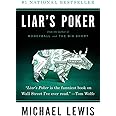
📚 Elevate your financial game with Liar's Poker!
Full description not available
M**E
Great Book!
This book really gives you a taste of what it was like to bite the ass off a bear in the 80s and I thoroughly enjoyed it. Fantastic story telling with familiar names like Larry Fink- yeah the Blackrock guy but before Blackrock existed. This should be made into a movie (there is a movie called liars poker but its not about this).
N**S
A Classic and Timeless Tale of Life as an Investment Banker
Although originally published in October 1989, Michael Lewis' 'Liar's Poker' is as timely a read today as it was back then. It seems the zero sum game in investment banking hasn't changed. For every money maker, there is a money loser, and usually it's the banks customers who lose.Described as 'wickedly funny,' Michael Lewis has a knack for articulating the absurd, and this is his first, and one of his best books. A true story of how he started his career as a trainee in the investment banking firm, Salomon Brothers, later becoming a bond trader based in the Salomons London office, until he left in 1988.He worked the phones, and on his customers, hard enough to become a 'Big Swinging Dick', or traders code for those who trumped the system, making millions for their company.Michael Lewis, unlike many other traders, did have a conscience, but he also wanted to keep his job. He makes up names for those who helped and inspired him at the firm, like 'Dash Riprock', his constant trader companion, and his 'Rabbis'; a mentor, or manager who took him under their wing.The author is less forgiving and used real names for those who deserve some kind of scorn, like John Gutfruend, who was chairman of Salomon Brothers during Michael Lewis' tenure there. Described as the 'last person a nerve-racked trader wanted to see.' He was the type of chairman who liked to sneak up from behind and surprise his traders.The author learns, soon after leaving his training for the trading desks that 'some of the men... were truly awful human beings... They didn't have customers. They had victims.'Other characters are colorfully portrayed in the book, although not many women are in the bunch, since, at the time, it was a male dominated play pen with not too many Big Swinging Dickettes. There was the 'Human Piranha,' a legendary trader who sprouted out profanities, stunning some trainees into silence and awe. And those 'mean gluttons' who worked as mortgage traders. Lewis wrote, 'nothing angered them more than being without food, unless it was being interrupted while they ate.'Michael Lewis also describes in the book the creation and use of mortgage bonds, but not too technically, so it won't overwhelm a layperson. And this is just one reason why 'Liar's Poker' is a timeless piece. After all, it was the invention of mortgage bonds that ultimately led to the financial crisis in 2008.And of course, the book would be vacant without mention of bonuses. Those fat sums of money handed out around December time to those who scored well enough to earn one. The size of a bonus measured the traders worth, and ego. Lewis adds and subtracts some zeros to give us an idea of how first and second-year traders bonuses were subject to a 'floor and ceiling.' And how the business 'froze' around bonus time. It was all anyone thought about. Michael Lewis explains that watching the faces of people coming out of their bonus meetings 'was worth a thousand lectures on the meaning of money in our small society.'The only difference between 1988 and now is that those excessive trader and executive bonuses are now part of a larger political and public discourse. In 'Liar's Poker,' Lewis describes how large salary bumps and bonuses are used to buy loyalty. But in reality, if an investment house across the street offers a better deal, the trader won't hesitate to go for more zeroes.Michael Lewis, is a respected financial journalist and non-fiction author. All of his books have been best-sellers for good reason. 'Liar's Poker' is an exemplary example of how truth can be stranger than fiction. Lewis describes life at Salomon like being in a 'jungle.' The players must be fiction, but, nope, they are real.The scary thing about this book is how timeless, and prophetic it is. Michael Lewis experienced the Wall Street crash of October 1987, and describes it in the book. And here we are, more than 20 years later. History repeating itself.
G**E
It's a classic, must read for anyone aspiring to a career in the financial industry
Well, what can I say about Liar's poker that hasn't already been said? The book has everything, and leaves you astounded. Like, "really"? "Is that possible". The movie The Wolf of Wall Street has nothing on this book. Because i think the wolf was a loner, albeit with a following. But Liar's Poker WAS the general culture on Wall Street. Ane every bit as scary as the Wolf movie.For those who put a lot of trust in the financial system and see it as a solid structure, on which basis the average Ameican family finances their house, their kids' college savings and ultimately their own retirement, would, and should be extremely horrified if they really knew how the "system" worked. The roaring eighties left, and nobody thought any more of it. Not even in 2008, when it became evident, once again, how the Gecko's of the world we indeed alive and kicking, with ever more vigor.Yes, there are things in this world you don't want to know about. What happens in hospitals is one. Onother big one is our financial institutions. Don't ask, don't tell. Lower your heart rate.
B**E
Small Investor Required Reading - Heed the Warnings!
A hilarious and grimly realistic look at the world of investment banking - as true today (2011) as it was in the 1980s when originally written. This should be required reading for anyone who has ever thought they could beat Wall Street at its own game - in other words, a cold-blooded reality check for those poisoned by the fumes of the "get-rich-quick" myth.Although an autobiography detailing the author's career with Salomon Brother's in the 1980s, it also serves as an informative study on the turmoil that rocked the markets in the 1980s that resulted in a major change in investor focus from the stock exchange to the bond market - and it is this that set the stage for the infamous crash of 1987 as well as the problems we face today with the mortgage bond market. It all started here.Lewis pulls no punches with frank commentary or his brutal prose: he has no problem ripping aside our comforting illusions of the investment world and is equally ready to turn his dagger against himself as well as against his former colleagues. He puts to rest the myth that 'anyone can get rich doing this' - advice that many former 'day-traders' of the 1980s probably wish they had heard at the time. True, if you know what you are doing you can likely make money - but that requires a twenty-four/seven commitment to keeping an eye on the entire market - not just stocks and bonds but the dynamics driving the industries behind them - which very few can do without quitting their day jobs. He shows the results of the dark side of the market - the consequences of losing triple your original investment - and how hard it is to avoid this. The odds are definitely stacked against the casual investor. Best summary of all this information: don't do it.This book also is an excellent business case study about what happens when a firm suddenly finds itself out of its familiar territory and makes no provisions or changes to deal with it. Consider the fact that we have an investment bank doing business in Europe - that has no idea who the European banks are! (Yes, you'll find that in the text). Or management that refuses to concede that their perfect plan has nothing to do with the business reality. Or, worse, that the lowest members of the hierarchy are able to see instantly that a firm, the most profitable on Wall Street at the time, is doomed to fail. It does.Readers who are offended by the use of uncensored language would probably do well to steer clear of this work - Lewis does not make any attempt to tone-down either the facts or the language used by the players. He does not offer a positive spin on the risks involved in the investment game and he makes it clear that all players need to be careful about assuming how much their advisers really have their best interests at heart. This is all to the good - this book is all the more striking because of this.Definitely a must-read for those who have ever considered taking on the market or for those who desire a clearer understanding of what exactly goes on in the world of Wall Street. It isn't comforting - nor should it be. But at least if a person still feels able to take on the windmills after reading this warning, they will be making sure that they aren't the fool in the market.
Trustpilot
1 month ago
2 weeks ago