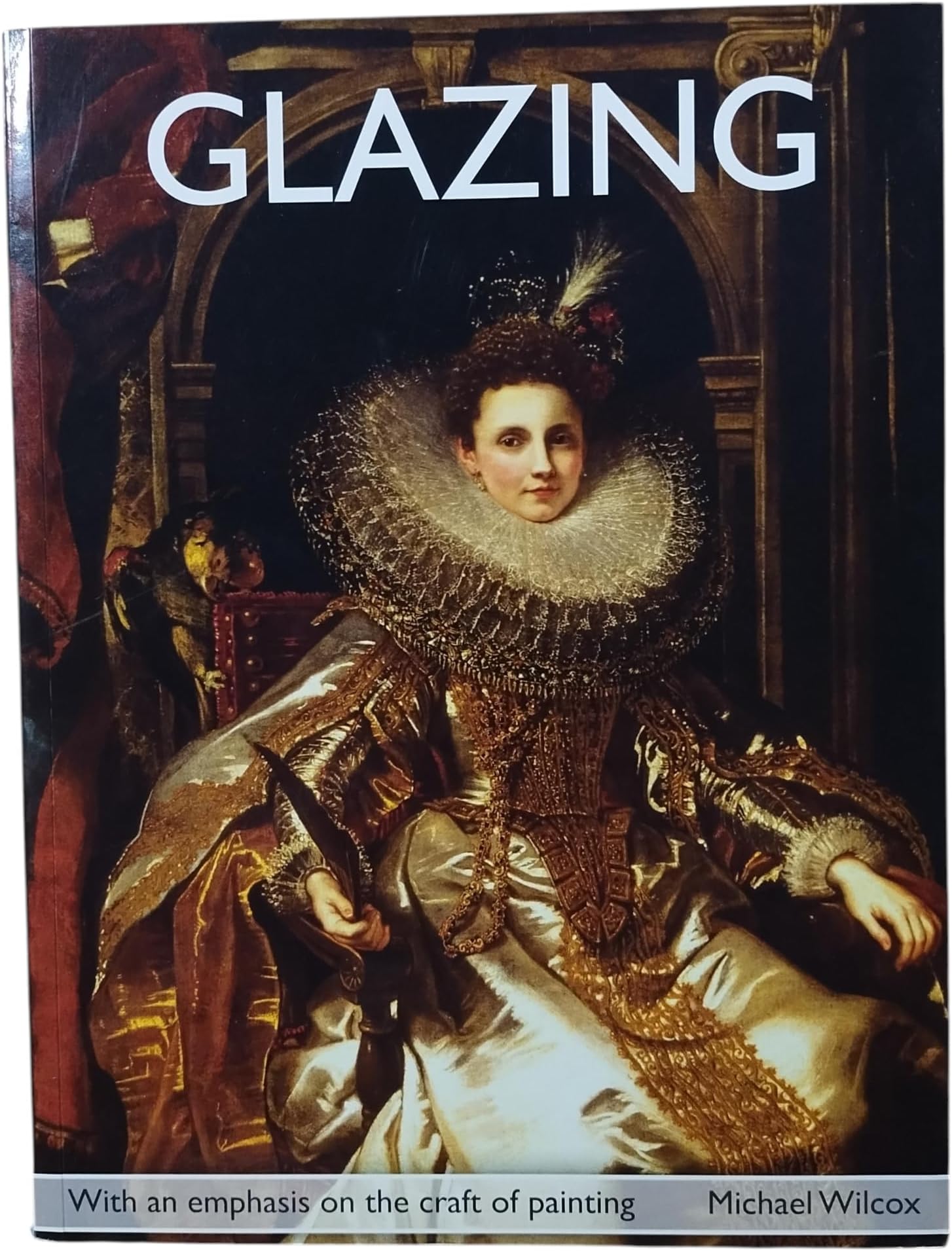
Glazing with an emphasis on the craft of painting
Product ID: 95081272
Learn the craft of painting from the Great Masters and challenge yourself to apply the same techniques to your artwork. Review: Outstanding! Necessary for artists, art historians & art lovers! - First, let me say the book arrived in pristine condition - thank you! I have read a variety of painting books with portions dedicated to glazing techniques. Nothing compares to this book in terms of breadth and depth. If you are an artist, art historian or simply a devoted lover of art, you must read this book. The author addresses the origin of pigments, the role of oils, the composition of specific paint colors, application methods and techniques utilizes by masters. In addition, the author discusses how paints age and how this impacts the work over time. The author also contrasts and compares the methods of the masters with the options and standards of present day materials. In addition, the author encourages contemporary artists to think how their color selection, application and glazing methods will appear over time. The excellent content is paired with spectacular images demonstrating the author's point. This book is an ideal textbook that should be mandatory reading in both studio art and art history courses. The publisher printed the book on durable, glossy pages that do justice to the art plates. I simply can't praise this book enough, it's worth every penny spent and more! Review: DO NOT BUY THIS BOOK - This is a great book with a wealth of information. The layout and design could have been better, but the straightforward information about painting/glazing is indispensible and often hard to find explained so plainly. This is NOT a beginning painting book, but more for the painter who has spent some time with the medium and needs more of a fleshing out of historical and practical knowledge. The images are very well printed and pertinent to the information being discussed, which is helpful when dealing with color/glazing. While this book is certainly worth more than its MSRP of 39.99, you should NOT be paying a cent more than that, especially not 200.00 for a book that is still being printed today, by an artist who is still living. Do a little internet sleuthing on the artist and the "school of colour" and thank me later.
| Best Sellers Rank | #2,355,807 in Books ( See Top 100 in Books ) |
| Customer Reviews | 4.6 out of 5 stars 118 Reviews |
T**I
Outstanding! Necessary for artists, art historians & art lovers!
First, let me say the book arrived in pristine condition - thank you! I have read a variety of painting books with portions dedicated to glazing techniques. Nothing compares to this book in terms of breadth and depth. If you are an artist, art historian or simply a devoted lover of art, you must read this book. The author addresses the origin of pigments, the role of oils, the composition of specific paint colors, application methods and techniques utilizes by masters. In addition, the author discusses how paints age and how this impacts the work over time. The author also contrasts and compares the methods of the masters with the options and standards of present day materials. In addition, the author encourages contemporary artists to think how their color selection, application and glazing methods will appear over time. The excellent content is paired with spectacular images demonstrating the author's point. This book is an ideal textbook that should be mandatory reading in both studio art and art history courses. The publisher printed the book on durable, glossy pages that do justice to the art plates. I simply can't praise this book enough, it's worth every penny spent and more!
M**O
DO NOT BUY THIS BOOK
This is a great book with a wealth of information. The layout and design could have been better, but the straightforward information about painting/glazing is indispensible and often hard to find explained so plainly. This is NOT a beginning painting book, but more for the painter who has spent some time with the medium and needs more of a fleshing out of historical and practical knowledge. The images are very well printed and pertinent to the information being discussed, which is helpful when dealing with color/glazing. While this book is certainly worth more than its MSRP of 39.99, you should NOT be paying a cent more than that, especially not 200.00 for a book that is still being printed today, by an artist who is still living. Do a little internet sleuthing on the artist and the "school of colour" and thank me later.
B**R
A wealth of hard-to-come-by information.
When I received this book I was stunned by the amount and depth of information that it contains. As a painter I am willing to take the extended periods of time necessary to build a painting up in layers, but unfortunately patience is not enough. I frequently find that after a meticulously executed grisaille underpainting, I am at a complete loss as to how to achieve the colors and effects I desire. Often the "obvious" choice produces a sickly glaze that I cannot wait to wipe off immediately. (One good thing about glazing is that you have the equivalent of the "Undo" key!) This book is truly the bible on glazing, and it immediately revealed why I was running into trouble. It is an invaluable resource for the painter who chooses to work in the traditional underpainting/glazing approach. Also I rather enjoy the author's rather tongue-in-cheek style after all the overstuffed purists that one runs across.
J**L
The Glazing Bible!
After reading a few of the reviews I was concerned with editorial vs. painting technique for the price. I prefer studio painting and hungry for information on how to achieve depth and glow with oils. This book delivers on how that is accomplished. Michael Wilcox has done an extraordinary job reporting on old masters tools, techniques and methodology. There are wonderful color tables and easy to understand information for intermediate to advanced painters. Painting technique books are written by author's with opinions. So what?! If you don't like the opinion close the book. However, it would be a shame to close this book when 99% is based on the craft of painting. So few painting books are representative of anything beyond Alla Prima and Plein Air painting techniques. This book completely delivers!
S**S
Superb book
If you are already familiar with the Masters’ techniques of imprimatura, umber layer and grisaille and similarly have a knowledge of the concept of painting “fat over lean” and which mediums to employ, but you still thirst for practical knowledge of how to complete the final step of glazing as a craft, in order that it should not just be a hit and miss exercise, than this book is a real page turner. However, If you are lacking the requisite understanding of the basics, then you are apt to view the book as a tedium of theoretical detail without application. This book is a vast compendium of knowledge which can be read and re-read and used as a valuable reference tool in your painting, using the traditional glazing technique of the Masters. It will provide unprecedented understanding of pigments, how light refracts and reflects through them and insight into the way some of the great painters achieved their results. As a former conservator, scientist and artist, Wilcox may shock you by his description of long standing techniques and materials he views as mere shibboleths in painting, frequently opting for more modern techniques and materials. His droll humor may have you chuckling out loud. My main criticisms are as follows: 1) He frequently mentions the traditional techniques of the Masters and that the problems of value and modelling must be solved before embarking on glazing, which are accomplished through the traditional build up of “dead layers” that the Masters used, yet his own extremely valuable color charts for glazing assume they are being built directly upon a white priming surface, unlike the Masters. It would have been most instructive and a logical extension of his book to include practical examples, step by step of how he would use glazing to paint a portrait, still life, or landscape. 2) His background as a conservator has made him a true purist, causing him to reject much of the materials of the past as being impermanent or having other undesirable qualities, yet at the same time he talks about the very paintings we still have today, 450-500 years later, where those same techniques and materials were employed! 3) His desire for archival perfection and purity should have led to much more discussion on some of the drawbacks of using alkyds and the pitfalls of mixing alkyds with oil mediums and varnishes which he only touches on obliquely; the unsuspecting or unknowledgeable student may suffer as a result from his lack of attention to these details. This is in stark contrast to the meticulous detail he gives in pointing out the numerous pitfalls of choosing the wrong pigment or material when working in oils. In conclusion, this is an excellent if not essential resource for the serious art student or painter with a sincere interest in approaching the art of glazing as a refined craft with a desire to emulate the effects of the great oil painting Masters.
S**T
Save yourself a lot of experimenting and get this great reference
I read this book cover to cover in a few days and find it invaluable. It is not a "paint by number" type of instruction but an indepth study of the art of glazing and an excellent reference. I have studied his book "Blue and Yellow Don't Make Green" and I think that the information in that book is a good basis for "Glazing"and recommend it for beginners/intermediates as a pre-req. Mr. Wilcox has saved me months, maybe years, of experimenting. I could say more about the details of the book but previous reviewers have pretty well covered that for me.
S**E
Info you just need to know if you’re getting serious about painting
Spoiler Alert: the Masters didn’t have anything we don’t have. They just used what they had in clever and interesting ways. Michael Wilcox has compiled an amazing tome about artistic skills with scientific insights. The book will demystify your artist materials. Even if you don’t care about glazing, the chapter on pigments alone, makes this book a must for any painter. I learned oil painting from a purist whom preaches the gospel of the Old Masters and he recommends historical pigments as the only way to achieve the old world style I want in my work. Alizarin Crimson has been a start of quite a few arguments between me and my teacher. Now, thanks to this book, I feel like I can finally and unapologetically abandon these nonsensical historical pigments. At the same time the book also shows you a few ways to test a new paint to make sure it’s quality material and verify it’s not full of fillers. I just can’t say enough great stuff about this book. Luckily, I was able to buy it for $60 from an alternative seller, so try not to get ripped off y’all.
C**R
A lot of info. (need to know info.) for a new artist like myself.
A lot of important art info. for all artists.
Trustpilot
2 weeks ago
1 month ago