


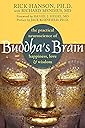




Buddha's Brain: The Practical Neuroscience of Happiness, Love & Wisdom
Product ID: 77742174
Buy anything from 5,000+ international stores. One checkout price. No surprise fees. Join 2M+ shoppers on Desertcart.
Desertcart purchases this item on your behalf and handles shipping, customs, and support to Vietnam.
desertcart.in - Buy Buddha's Brain: The Practical Neuroscience of Happiness, Love & Wisdom book online at best prices in India on desertcart.in. Read Buddha's Brain: The Practical Neuroscience of Happiness, Love & Wisdom book reviews & author details and more at desertcart.in. Free delivery on qualified orders. Review: Excellant - The book.is excellant and is a great eyeopener for me. The details are amazing Review: Fantastic - It’s a book that is simple and so valuable to a deeper understanding of the mind…..simplifies how we need to rethink our thinking sometimes
| ASIN | 1572246952 |
| Best Sellers Rank | #88,974 in Books ( See Top 100 in Books ) #356 in Buddhism (Books) #663 in Biology Books #3,040 in New Age & Spirituality |
| Customer Reviews | 4.7 4.7 out of 5 stars (1,899) |
| Dimensions | 15.24 x 2.54 x 22.86 cm |
| Edition | Illustrated |
| ISBN-10 | 9781572246959 |
| ISBN-13 | 978-1572246959 |
| Importer | Atlantic Publishers and Distributors (P) Ltd., 7/22, Ansari Road, Darya Ganj, New Delhi - 110002 INDIA, Email – [email protected], Ph – 011-47320500 |
| Item Weight | 1 kg 50 g |
| Language | English |
| Packer | Bookswagon, 2/13 Ansari Road, Daryaganj, New Delhi 110002, [email protected] , 01140159253 |
| Print length | 272 pages |
| Publication date | 5 November 2009 |
| Publisher | New Harbinger |
R**H
Excellant
The book.is excellant and is a great eyeopener for me. The details are amazing
P**R
Fantastic
It’s a book that is simple and so valuable to a deeper understanding of the mind…..simplifies how we need to rethink our thinking sometimes
V**A
Five Stars
Best book !
P**I
Interesting Book on the Human Brain
Buddha's Brain allowed me to journey into my inner self and introspect. More importantly, I learnt a few things about the human brain which I believe can be applied to our daily lives. The way to beat stress and build mental strength has always been a point of discussion in off-sites and retreats for a long time now. Sharing with you some of the ideas I found interesting... 1) Neurons that fire together, wire together - It is up to us to feed our motor neurons with positive thoughts and discipline a part of our minds the way we want to. 2) Our brain is like a Velcro for negative experiences and like Teflon for positive ones - Now we know why bad experiences are so difficult to forget. 3) Virtue, Mindfulness and Wisdom are the 3 pillars of our brain - Work on the first 2, the third will happen. 4) Mindfulness leads to Silence, Silence leads to Insight, and Insight to Clarity. 5) The Self has no independent existence whatsoever. It is simply a collection of real representations of an unreal being - like a story about a unicorn . Recommended for those who are interested in brain science and the workings of the human mind. Rating : 8/10
P**S
A gift for those who want to control their brain as well as life ⭐go for it, the best book 📕
Just go for it Infinite stars to it Key points in this book is so knowledgeable A lot of knowledge about brain
U**N
You can't miss
The best book I ever read changed my life and given me the motive to live in this beautiful world with peace and harmony.This book is best for students.
A**I
Good
It good book but very scentific.
N**O
Two Stars
Nothing special about this book... Don't buy...
J**Y
Buddha's Brain by Rick Hanson with Richard Mendius is a guide that leads the reader through the fundamental pillars and practices of Buddhism, explaining the underlying and inner workings of the human brain along the way. Focusing on happiness, love, and wisdom, Hanson and Mendius, both neuroscientists, attempt to explain the known mechanisms of the brain behind these core ideals on the path to Enlightenment. Although I should have expected as much from title, Buddha's Brain, I was surprised by the over all emphasis on Buddhist teachings and the overtly Buddhist perspective that Hanson uses to communicate his ideas. I expected a somewhat more direct (and perhaps more plain) explanation on how to practice contemplative techniques and the brain changes happening behind the scenes. Nevertheless, this is an excellent book on what I would classify as a difficultly nebulous topic, that does offer excellent suggestions and guides to quiet the mind and seek perhaps the most sought after innate human desires: happiness, love, and wisdom. Hudson lays out his practical work in four sections based on four concepts or ideals of classical Buddhist teachings: suffering, happiness, love, and wisdom. The concept of suffering and its neurological and evolutionary basis are presented. As explained by Hudson, suffering must be understood and avoided. Buddhism, at a basic level, teaches the minimization of suffering for one's self and others. In the next two sections, Happiness and Love, Hudson discusses what happens in our brains when we are happy or are loving/loved. In each section, Hudson then presents how someone can pursue these brain states and strengthen the wiring that creates them. Lastly, Wisdom is outlined in the final three chapters. Discussing how wisdom is first understanding "what hurts and what helps", Hudson then moves on to the power of meditation and how to concentrate the mind. Wisdom and the book are concluded with a lesson on reducing or relaxing the "sense of self". Overall, the structure of the book is great; the four sections are broken up into distinct and unified chapters that are easy to look back on when desired. Even within each chapter, text is formatted and categorized into sub-headings with diagrams, charts, and tables as needed. This makes the book very easy to refer to when thinking about a particular topic. I naturally found certain parts of the book more interesting, and in trying to practice some meditation on these areas I often located and re-read a few of the meditation walkthroughs and their surrounding context. Stylistically I found the book at times wordy, confusing and overly nebulous. Usually the scientific backing and underlying knowledge was presented well. Hudson simplifies a complicated science into simpler terms most readers will be able to understand. The scientific presentation is for the most part very thorough and well researched. However, much of Hudson's explanation of "the mind" was much more difficult to follow than his explanation of "the brain". Although I acknowledge the difficulty on the subject, Hudson's language is in my opinion to complex and airy. His diction can at times become a bit grandiose and it is sometimes easy to lose track of the underlying message. Much of this can be traced to word usage that to this reader seemed notably odd. Words like "truth", "equanimity", "stimulation" and many others are used in unfamiliar ways, making comprehension difficult. I can only guess that this word usage and abstract language stem from Buddhist teachings and beliefs that, due to the authors' bias, are quite pervasive throughout the book. Hudson does use allegorical language, at times, to try and simplify the message, but more often than not adds more complexity and does not ease comprehension. In short, for a book seemingly targeted for a wide range of readers as a practical guide for many Buddhist teachings, it was rather cryptic in its language. I would have preferred a slightly more simple and easily navigable guide, so that I may have understood the lessons with fewer rigors. Perhaps, a more plain beginning that ramps up to a more nebulous style would have been more effective. Opinions on Specific Parts Meditations Perhaps, my favorite aspect of this book were the meditation guides. Hudson provides many "walkthroughs" for simple meditations that deal with the topic he is discussing at the time. I found these guides to be very practical and interesting. I have never intentionally meditated before reading this book but I found myself wanting to try it out. Hudson slowly introduces meditation and its use throughout the course of the book. The first walkthrough does not come until Chapter 5 in the Happiness Section. Chapter 5, entitled "Cooling the Fires", focuses on relaxation and the parasympathetic nervous system. Here Hudson explains what meditation is, and many neurological and other scientific findings tied to meditation. Although I question some of the scientific results mentioned (such as meditation boosting immune system capabilities), I found this first meditation very interesting as I practiced it. These meditation guides become more and more frequent throughout the rest of the book and when time allowed, I earnestly tried to go through them. Hudson does an excellent job breaking down the steps so that I, a very new practitioner, could easily follow along. Evolutionary Explanations As somewhat of a budding scientist (biomedical engineering undergraduate), I greatly appreciated the evolutionary explanations of how the brain developed and theories as to why. The biggest example of this, mentioned in the opening chapters of the book, explain that the neural mechanisms behind suffering were what helped prehistoric man survive. Hudson explains how early man, and even now, your body and brain are programmed to try to handle threats, including remembering threatening and negative experiences well. This makes sense for early man, such negative and harmful experiences need not happen again if man wanted to survive; the prehistoric world was a much harsher one than it is today. This strong connection to and remembrance of negativity is the basis of suffering Hudson argues. Hudson also explains how these trends in evolution are still present in humans today, citing the functions of the pre-frontal cortex, hypothalamic-pituitary-adrenal axis, and others. Sense of self/"Us and them" One important pillar of Buddhism I learned from this book is the value in not only reducing suffering and increasing happiness for one's self, but of others too. In fact, the "relaxation of one's sense of self" is emphasized throughout the book, but especially in the last chapter. Earlier, when discussing compassion, Hudson points out the "us and them" mindset we inherently create. Again, the evolutionary foundation for this way of thinking, competition for resources, is presented. However, Hudson stresses the importance and value of extending "us" to include as many people as possible, if not the entire planet. In the final chapter, the concept of "I" or "self" is challenged. According to Buddhist ideology, this sense of self should be dissolved as much as possible. Hudson connects this to science by presenting how the brain's concept of self is not as important and extraordinary as one might think, and not necessary to drive thought or action. Literally, the number of neurons and the circuit that forms the "sense of self" is relatively small, according to Hudson. Review Summary and Recommendation Overall, I thoroughly enjoyed this book. It is very well organized and can be used as guide, picked up and put down as needed. I had some stylistic complaints that I feel form a small barrier to a wide audience, however this book was still incredibly thought provoking and interesting. From the neuroscience foundation to the Buddhist teachings to the practice of mindfulness, I found Buddha's Brain to be a very complete and thorough book. I would definitely classify this book as a must read for anyone interested in Buddhism not already familiar, anyone interested in how the brain works, or anyone who wants to seek happiness, love, and wisdom through contemplative practices. It will continue to be a regular read of the many neuroscience books on my shelf.
A**.
Great informative book. Was almost finished it but left it on train so i ended up buying another one because i just had to finish it!
C**T
Exceptional book
P**J
Dr Rick Hanson’s books are informative and entertaining. Everything he teaches can be useful in real life. I highly recommend this one as well as his others.
L**N
I have read and re-read this book as I have found it so helpful to understand the way that neuroscience has progressed to help us understand how and why we do things, not necessarily in our own / or others interests on an objective level ( think war,hatred,fear and anger just for starters). The perspective is both scientific and from the view of Buddhism and I would recommend it to anyone with an interest in either or both. I have particularly found it helpful to give an optimistic view of the human brain and its workings and to give a basically positive view of humanity and particularly an optimistic and practical way to progress as an individual. I have read fairly widely in neuroscience over the past few years and have found this book to be very impressive from the neuroscientific perspective in bringing together recent thinking and developments in that area, but with the added Buddhist perspective which is practical in its helpful ideas and accessible to non- Buddhists and Buddhists alike. I would recommend it to anyone with an interest in understanding the workings of the brain and hepful and practical ways to help oneself. Although called Buddha's Brain I believe that it would be informative and helpful to a reader from any or no religious persuasion.
Trustpilot
1 month ago
1 month ago