Buy anything from 5,000+ international stores. One checkout price. No surprise fees. Join 2M+ shoppers on Desertcart.
Desertcart purchases this item on your behalf and handles shipping, customs, and support to Vietnam.
📊 Stay ahead of your glucose game with Stelo — where precision meets lifestyle freedom!
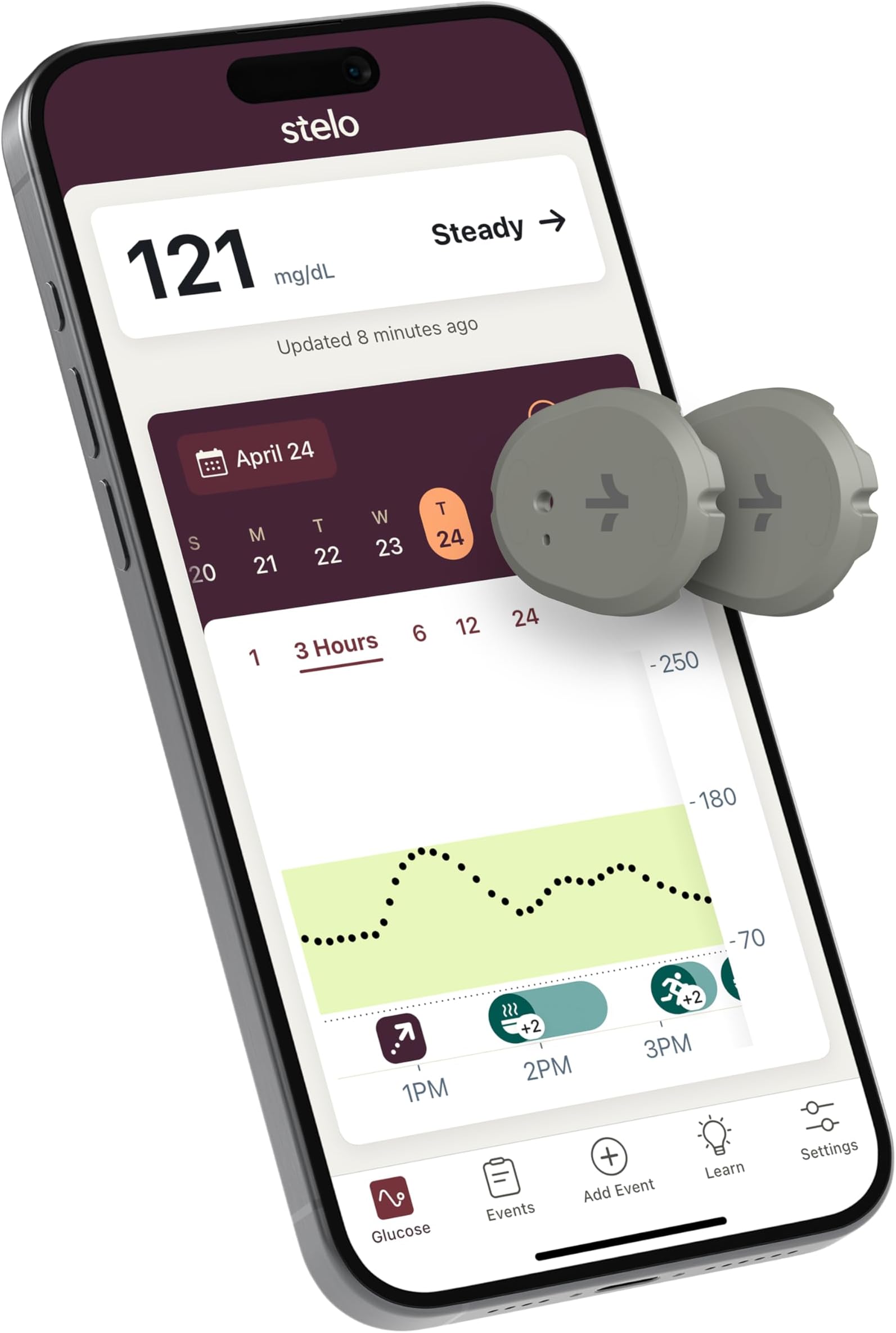
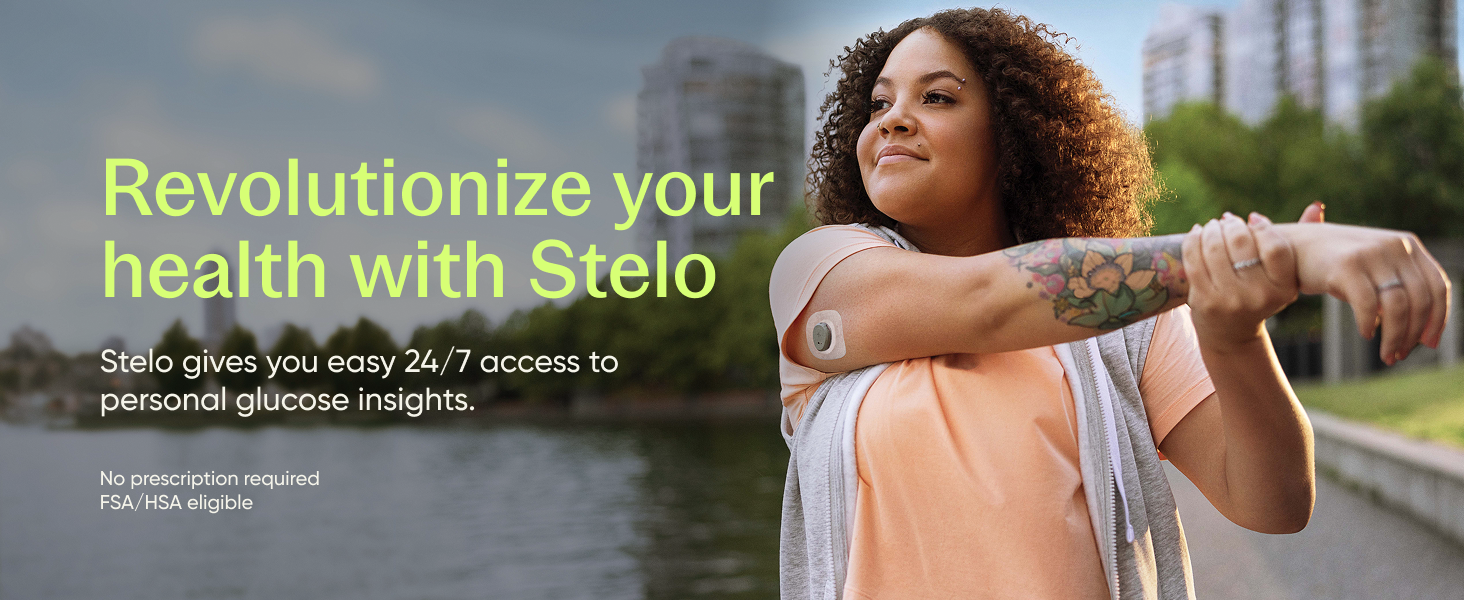
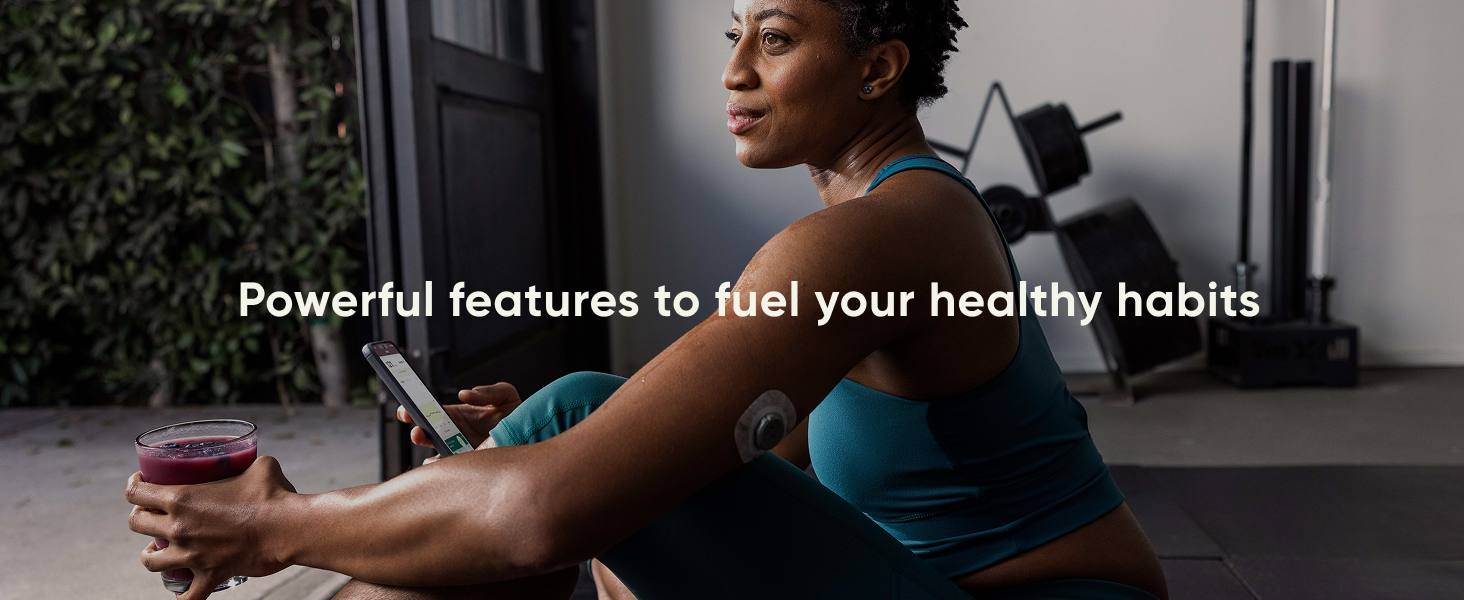
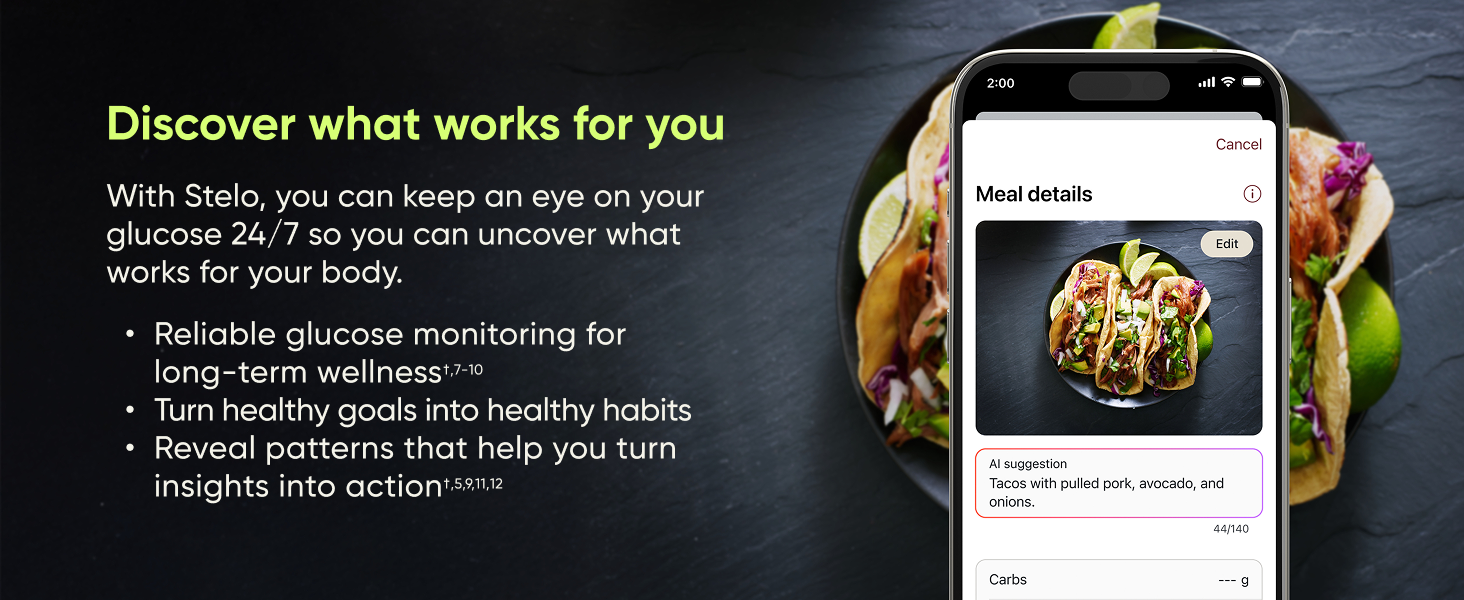
The Dexcom Stelo Glucose Biosensor & App offers continuous glucose monitoring for adults not on insulin, featuring up to 15 days of sensor wear, waterproof durability, and seamless syncing with iOS and Android devices. Designed for lifestyle insights rather than medical-grade precision, it provides personalized glucose pattern tracking, smart food and activity logging, and 24/7 support with guaranteed sensor replacement for early failures. Ideal for proactive glucose management without prescriptions, it empowers users to understand their body's responses in real time.


| ASIN | B0DTZ616WZ |
| Battery Cell Composition | Lithium Manganese Dioxide |
| Battery Life | 30 days |
| Best Sellers Rank | #897 in Health & Household ( See Top 100 in Health & Household ) #2 in Blood Glucose Monitors |
| Brand | Stelo |
| Brand Name | Stelo |
| Customer Reviews | 3.0 out of 5 stars 3,566 Reviews |
| Included Components | 2 applicators, 2 biosensors, 2 overpatches |
| Item Dimensions L x W x H | 1.1"L x 0.9"W x 0.2"H |
| Manufacturer | Dexcom, Inc. |
| Manufacturer Contact Information | Dexcom, Inc. 6340 Sequence Dr., San Diego, CA 92121 |
| Model Name | Stelo |
| Model Number | STP-XN-003 |
| Operating Time | 30 Days |
| Part Number | STP-XN-003 |
| Product Dimensions | 1.1"L x 0.9"W x 0.2"H |
| Special Features | App available on iOS and Android |
| UPC | 386270004857 |
| Unit Count | 2.0 Count |
D**.
Malfunctioning Sensor….You will need to check for Accuracy..
I was so happy to get this to manage my husband’s type 2 diabetes. This kit includes the sensors along with the online app to track your glucose and so much more. The first two sensors seemed great at first. They were easy to apply, very little pain if any (according to him) and they stayed put, lasting the entire 15 days. Although, he does says they are a bit painful when removing the adhesive surrounding the sensor, when it needs to be replaced. The app even tells you how many days you have left with each sensor. Additionally, the sensors were pretty accurate when testing against the finger stick glucose meter. However, this third one is showing numbers that don’t correspond with the finger stick meter. The Stelo Sensor is showing a glucose reading of around 224 which is consistently almost 100 points off the finger stick meter and there are still 9 more days to go. At one point, it showed a reading that was above 250. Although, it doesn’t show what the exact number is above 250. It just shows a broken dotted line. If this continues with the other sensor that was sent (got a pack of two) I am going with a different brand. I can see being off a little, but this is ridiculous! It’s been consistently like this now for the past day and a half. These sensors are too expensive to be malfunctioning. So, if you get a high or low reading make certain to check it first against the finger stick meter to verify if it is, in fact, correct. I am disappointed with this. But, will give an update on the next sensor. UPDATE: I contacted the company, via their chat box. You can then choose the option to connect with an actual person (live agent) via text, during normal business hours. Once I explained what was wrong, they gave me a link to open a case and fill out a form. I then received an email stating that they will send me a new sensor. Seemed easy enough! UPDATE: So, after experiencing issues with the 3rd sensor and waiting on the replacement, we decided remove the defective one and put on the other sensor we had. Well, we couldn’t get it to pair with the app we tried everything that was recommended with the troubleshooting advice and to no avail. Therefore, we had to open yet another case via chatbot (after business hours). They said it could take up to 1-2 business days, before they can reach out. At this point, I feel that although the company seems to try and help with these issues, there are a lot of glitches with this these otc continuous glucose monitors. I have even looked up the Lingo Continuous Glucose Monitor and it doesn’t look much better and It has about the same ratings. I have read that there are many things that can impact the monitor’s functionality. Pressure from laying on the sensor at night and even certain otc med such as acetaminophen can cause false highs and lows in glucose readings. However, when you have issues pairing the device with the app, that is a whole other matter. Especially, when you go through all the troubleshooting and still can’t find the issue (closing all apps, then restarting the Stelo app. unpairing any previous sensors with Bluetooth, turning Bluetooth off and then back on, making certain the sensor code is correct…and on and on! It seems to me that if the same company can make a prescription monitor that is more accurate, why can’t they make the OTC monitors more reliable? My husband isn’t on insulin, and according to the doctor, he isn’t eligible for a prescription monitor that is covered by his insurance unless he uses insulin. Needless to say, this is a very frustrating issue and it almost seems like it would be better to switch back to the finger sticks at this point, with the expense and issues which this monitor, it doesn’t seem like it is worth the hassle. I will continue to update on this issue.
S**Y
CGM
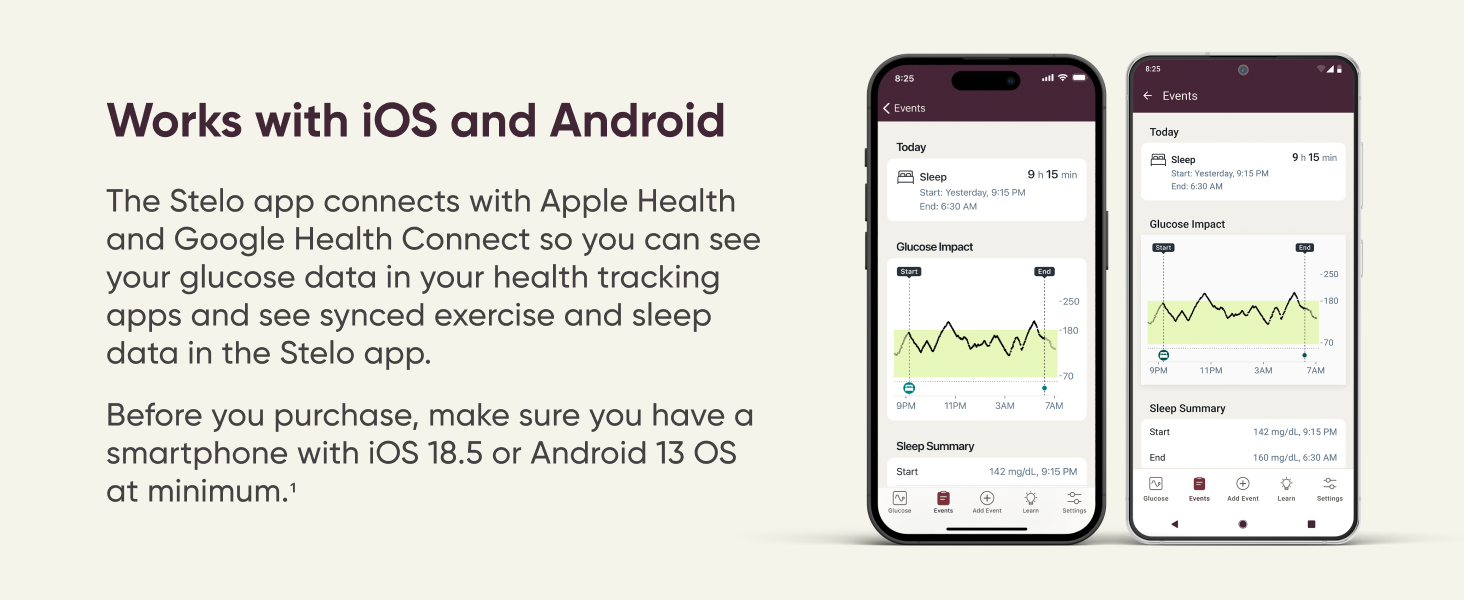
When ordering these I saw reviews about issues contacting customer service as well as problems with adhesion and even pain for some people but after I looked in to documentation and how this device works and what support is expected and how to handle issues I felt pretty comfortable ordering. I ran though two sensors and each lasted entire 15days and I am on the third one right now 3 days in. My overall experience has been great and I will try to address some of the common issues and pitfalls you may want to avoid. This device is a derivative of Dexcom G7 that are sold for diabetics by pharmacies with prescription only, main differences between Dexcom G7 and Stelo from what I know are: 1) Dexcom G7 is 3 sensors 10 days lifespan each, while Stelo is 2 sensors with 15 days each 2) Dexcom G7 has calibration in the app, white Stelo does not have this feature. 3) Dexcom G7 has live support because it is a medical device for patients with diabetes and is only available by prescription. 4) Dexcom G7 costs more - that I think is the obvious one. Lets go over each one, Stelo explains in its documents that it expects over 80% of its sensors to last all 15 days it also mentions that should a sensor fail before 15 days they will replace it. They also mention that over 90% or so will last 10days This means that medical device G7 is limited to 10 days because of much higher survival time %, while Stelo is allowed to run 15days with bit higher probability of failure which reduces costs to the consumer - as they only get two sensors and they are protected from failures by replacements. There is no calibration because accuracy is not as important for average person without medical condition, and incorrect calibration may mess up accuracy. Consumer version is targeted for general trends and not for precision accuracy, I agree with this decision. Medical grade devices have phone support but they also cost significantly more and require prescription and doctor visits. When using Stelo you will be limited to chat and email support, but in most cases sensor failures will be reviewed and decision will be made about the nature of the failure. Company can monitor these devices and it knows when device fails and how based on telemetry form the sensor and how it failed. Expect that support will be weak but they will address failures and if they meet criteria - these will be replaced. If sensor fails for me I will post the process and update. Now about the device and user experience - it is important that you apply the sensor properly and in the correct are, if you make a mistake here - sensor will not be covered by warranty. Watch some videos, learn how prep the area, how to find the right area, how to best position the applicator. Simple rules are to look for fat on the back of the hand, with your finders find the fatty are - avoid muscles. if you apply this to a muscle - you will bleed, you will be in pain and you will kill the sensor. If you use the included patch it lasts 15 days no problem, but this patch is soft and you will notice the sensor more, if you get high quality patch with a hole for G7 then it is thicker and will distribute movement better and sensor basically disappears. I added photos of the patch I use from Onida and it made a big difference. The app is very simple and well made and works amazingly well, you can bring sleep data, exercise data and food data right on to the chart via Google Health Connect if you track and monitor those activities in other apps. Over that last 30+ days I saw disconnected sensor few times, it was always when i was not near my phone and it reconnected on its own once I was close. Having a phone on, in the same room works fine, it is only when you go in to another room it may loose connection. Apple seems to have support for direct connection to watch so sensor talks to the watch and phone is does not need to be close by. Spend time making sure area you apply the patch to is clean - use alcohol to remove oils, make sure you place the sensor in the right area, add high quality patch. Placement is most important part of the process, take your time note what worked. For me placing the sensor with release button facing the shoulder was resulted with best experience, actual filament entry is on that side. Some advice I got from others, is to apply next sensor while existing one is still working and let that new sensor warm up before switching to it, some people do it 30min before and some people do it 12 hours before the switch so data is most accurate and there is not gap in the data. Sensor will continue to work 12 hours after 15 days are up and I tested that on my last sensor, where app said sensor life is over and it showed 12 hour countdown reminding me to switch over to new one. *** This is first update on Jan 23 and I plan to update again after I complete all 4 sensors. *** This is an update on Feb 8, I completed third sensor that also lasted all 15 days and worked 12 hours after it expired officially.
T**F
CUSTOMER SERVICE ? HORRENDOUS !
If I could give it less than 1 star I would. Sensor worked for only 8 days, and then gave me a “Signal Loss” message. I went through all the trouble shooting steps in the app, and checked all my phone settings. Signal NEVER came back. App says if signal loss lasts longer than 3 hours, contact customer service. I went through the app to manufacturer’s website. Customer service is an automated chatbot called SteloBot. Eventually, I was able to request chat with a live agent in the Philippines, which is also where their technical “support” is. The agent said they would request a Case ID be assigned and open an investigation, and that I would hear back in 1-2 business days. The next day, which was Saturday, I received an e-mail with a case ID number, and a link to fill out the customer service form. There was space to provide details of what the issue was as well as the sensor serial #. Before I could submit the form on Sunday, I received another e-mail saying that if I didn’t respond within 24 hours, they would consider the case closed. I submitted the form. The Stelo/DEXCOM system, acknowledged receipt of the form, and again said I would hear back in 1-2 business days. 8 days later I still had not heard back, so I again went through the Customer Service rig-a-marole, to finally contact a live agent. They were polite and apologetic,and they requested a “reinvestigation” . I received an e-mail later that day saying, my “customer service issue could not be validated” (whatever the hell that means), and that they would not replace the faulty sensor. I contacted customer service AGAIN, and asked what “could not be validated” meant. I was told the “computer investigation” said the signal came back after 10 mins. I told the agent that was not correct. The app said “Signal Loss” and the signal NEVER came back. I checked multiple times a day for the remaining time the sensor was supposed to be working. Never came back. I asked if there was anyway they could just replace the sensor anyway, and was told that it was not possible for her to override the computer’s decision. I told her once again that the “computer investigation” was incorrect, and that there was no communication between the sensor and the app on my phone, after the initial signal loss and that the signal never came back. I was told that they could not manually issue a request to replace the sensor. For what it’s worth, there also seemed to be no mechanism to attempt to re-pair the sensor with my phone, or the app installed on my phone. While it was working, the app/sensor worked okay. Be aware, the sensor DOES NOT measure actual blood glucose. It measures the amount of glucose in your interstitial fluid in your tissues, just beneath your skin. If you’re diabetic and/or need your exact blood glucose, this is NOT the device for you. I’m almost 70. Blood glucose was not diabetic level, but was higher than my doc would have liked on my last 2 physicals. My wife is an RN, and thought these might be a good indicator of what affected my blood glucose and by how much. The accuracy is roughly + or - 10%. Just be aware of that. It’s more for blood glucose trends than actual, accurate blood glucose, so if you’re diabetic and need exact blood glucose, you probably don’t want to rely on this product. The customer service for this product is EXTREMELY WEAK in my opinion. Let’s face it, we paid Amazon roughly about $110 for a two pack of these sensors. The manufacturer probably pays around $10-15 per sensor. The fact that they refused to acknowledge a faulty sensor and wouldn’t replace it tells me all I need to know. Yup, you guys got me for $110, and saved $10-15 on replacing a sensor, so in theory, you got me, ONE TIME, for $125, but I will never again by ANY product associated with Stelo/DEXCOM, and I will discourage family and anyone else who is considering it, from purchasing one of their products. For what it’s worth ; out of curiosity, just checked other reviews of this blood glucose monitor. They actually have a higher percentage of 1 star reviews than 5 star reviews. What does THAT tell you. AVOID THIS PRODUCT !!!! WOULD NOT RECOMMEND/WOULD NOT BUY AGAIN/ABSOLUTE CRAP !
A**R
You are whole Universe: looking behind the curtain of your own biology with Stelo
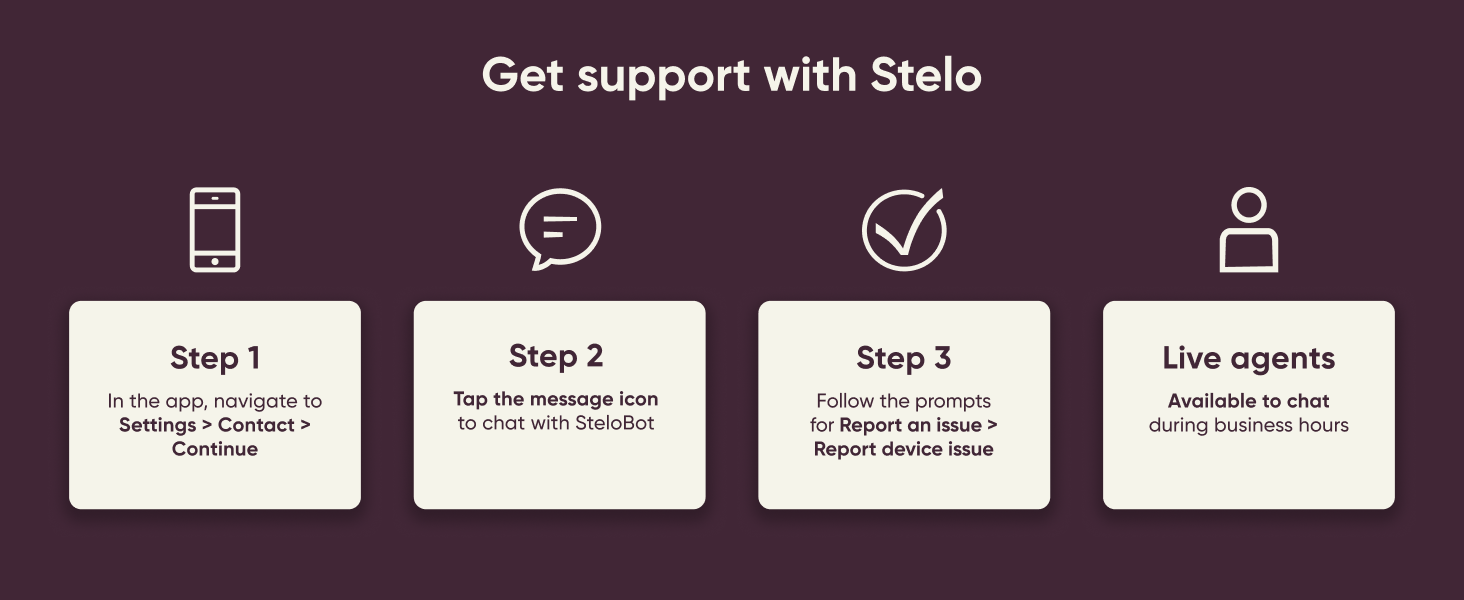
FINAL UPDATE (April 25) I’ve officially finished my journey with the second sensor, and I’m pleasantly surprised! This time it lasted the full 15 days. I had also +12 h, it seems the Grace Period are designed specifically so you can install a new sensor and let it calibrate without losing data continuity. When Stelo recently disappeared from Amazon for a few days, I found a solution and bought another "titan" in the CGM world -Lingo. This will be a great comparison! First impressions of Stelo vs Lingo: Stelo Cons: It is more expensive. Stelo Pros: The kit includes an extra protective overpatch (Lingo doesn’t), and the applicator feels much more premium - higher quality, solid, rubberized plastic compared to Lingo’s simpler construction. This review has already become a "Talmud," so I’ll post the detailed comparison in my upcoming Lingo review. Happy shopping, everyone! ------------‐-------------------------------------- Why that was in my wishlist? Because I wanted to see what is invisible to the naked eye. Stelo is the first CGM cleared for over-the-counter sale. It is officially NOT intended for people on insulin because it lacks active alerts and frequent samplings. However, it is an invaluable tool for biohackers and individuals exploring their own biology to fine-tune their diet and lifestyle. If you, like me, have an irrepressible urge to control everything around you, this device will become your best ally. It lifts the veil of mystery and shows your body’s real-time reactions to food. Installation & Setup: * Placement: I chose the arm I sleep on the least. Look for "the fluff": the sensor must sit in the subcutaneous fat layer. Do not attach it directly to the muscle. Flex your arm to find a spot that remains soft and stays away from joints. * Preparation: Do not use oils or heavy moisturizers on the skin that day. Wipe the area with an alcohol pad and let it dry completely. If the area is hairy, it’s worth using a razor for better adhesive contact. Avoid scars or skin irritations. How it Works: *Update Frequency -data syncs automatically every 15 minutes. * Glucose in the interstitial fluid (where the sensor sits) lags behind blood glucose by about 15 minutes. This is a physiological fact, not a device error. *There can be a slight margin of error. Especially, the first 24 hours, the sensor is "settling in". I installed mine in the evening, and by night, it showed values at the very bottom of the normal range. My Personal Experience: * I took showers and went to the pool, everything was perfect. The adhesive didn't peel or itch. * The "Shot": The needle is hidden inside the applicator and is invisible during the "fire." It’s incredibly fast and painless, which was crucial for me as I fear the sight of blood and needles. *The App Interface. One downside for me is that you can't see specific numbers for past readings, only the current one and the overall graph. The graph lacks a fine grid (e.g., every 10 units); the 70-140-250 spread is too wide for tracking. If I missed a setting for this, please let me know in the comments! I conducted a small experiment to see how different "shields" affect a glucose spike from a "carb bomb" (a can of pineapple juice). Day 1: Just the juice (fast spike). Day 2: Protein first, then juice. Day 3: Fats first (egg yolks), juice. Day 4: Fiber (psyllium husk), juice. Day 5 (The Grand Finale): A complex mix of fats, proteins, and fiber (Avocado + Eggs + Psyllium). The results a little surprised me. The highest spike wasn't from the juice alone, but from juice after protein. Fats and fiber significantly smoothed the peaks. The most intense hunger occurred after drinking juice on an empty stomach, it was actually easier for me to skip breakfast entirely. The most satisfying day was the last one with the complex breakfast. You can see the summarized data in my attached chart. I’ve always known I love fatty foods, despite the common narrative that "fats are the enemy." Now I value them even more—they are delicious and provide long-lasting satiety. Calories matter, but they aren't everything. My Conclusion: Numbers-whether on stelo, the scale, or a calorie counter- are just numbers. What matters most is how you feel. Understanding your internal reactions turns anxiety into awareness. I am not a doctor, so everything described in my experiments is my personal user experience. My charts are an illustration of my body’s reactions, not a guide for yours. Any anomalies in your data or questions regarding your health should be discussed with a doctor, not self-treated. P.S. I have one more sensor left, so my journey isn't over. I think the next part of my research will focus on physical activity! UPDATE (March 26): How I got a FREE replacement. My sensor died on day 14 , just hours after I posted my first review. The app will ask you to toggle Bluetooth and restart your phone. That didn't work for me.I took a screenshot that my session ended early, just in case. I was devastated because I hate English phone calls - they are a nightmare for me. But I found a way to get a replacement without talking to anyone! Here is the step-by-step: Go to Settings -> Support -> Contact in the Stelo app. It will take you to their website. IMPORTANT: Log into your account on the website and add the address BEFORE starting the chat. If you don't, the bot might glitch and ask you to restart the whole conversation because it won't remember chat history. Don't send long texts, the chat bot doesn't like "walls of text", just say: "Session Ended Early." It will then trigger the replacement form. Have your box ready: You will need the SN (found on the side of the box next to the number 21). I checked the installation date in the app, based on the schedule-specifically, when the first entries appeared. The Result: I submitted my claim on the morning of March 23. I got an email with a Case Number immediately, and 30 minutes later - an approval! Today is March 26, and the new sensor is already in my hands in Camas, WA. That is incredible speed! Update (April 19). I know how activity influence blood sugar after a "sugar bomb" (pure pineapple juice) right now. * 1 cup of pineapple juice on an empty stomach. * Compare a sedentary morning vs. two different walking strategies. Day 1: Bed Rest. Ispent the morning in bed reading books with my daughter. Result: My sugar spiked from 115 to 163. Day 2: Walking AFTER the Juice. I drank the juice at home and then immediately went for a 1-hour walk. The peak was still high 165, but the duration was much shorter. Walking AFTER helps clear sugar from the blood faster, but it does NOT prevent the initial peak itself. Day 3: I started my walk first. After completing one-third of my usual route, I drank the juice (which I had in my pocket) and continued walking. Result: This was the most effective method. The peak reached 145. By "pre-heating" my body began burning the energy immediately. Pay attention area under the Curve. I looked at the total glucose load on my body: Day 2 - even with a high peak, the total load dropped by 34% because the sugar cleared so quickly. Day 3- the total load decreased by nearly half (-42%) compared to lying in bed. Bonus Discovery 🥥 I also tested how my body reacts to coconut dark chocolate treats like dessert: 1 candy: Almost no change on the chart. 2 candies: Created a noticeable "hill" toward the top. 3 candies: Caused a full-blown spike. Final Note: The sensor is incredibly sensitive. On the third day you can see chart reversal at the end, because as soon as I returned home and ate my husband's pancake, the reading jumped from 101 to 113.
A**S
Review after 3 ,10, and 13 days of Using the Stelo CGM (compare with fingerstick readings)
Stelo CGM Review: My 13-Day Experience as a Prediabetic Background: As someone with HbA1c of 6.0 (prediabetic), I started using the Stelo Continuous Glucose Monitor (CGM) to get ahead of my condition. I also used a manual fingerstick glucometer to cross-check accuracy throughout. 1. 3-Day Update (Early Impressions) Over the past 3 days, I carefully compared readings — taking at least 30 fingerstick samples and comparing each with corresponding data from Stelo. Consistently, the Stelo CGM showed readings 8 to 15 mg/dL higher than the fingerstick measurements. I understand that CGMs measure glucose in interstitial fluid, which can lag behind fingerstick readings from capillary blood by about 15 minutes. That said, the difference I observed was very consistent — Stelo was always higher. . My Verdict: 1. Stelo is a useful tool for identifying trends and patterns over time. 2. It is not as precise for exact moment-to-moment readings. 3. For accurate blood glucose levels, fingerstick testing should stay the standard. . Notes: However, CGMs like Stelo can be very helpful for daily decision-making, meal timing, and understanding how lifestyle impacts glucose. . If you're looking to spot trends and improve metabolic health, Stelo is an option - just remember to double-check with a manual test when precision matters. 2. 10-Day Update (Mid-Way Review) By Day 5, accuracy dropped sharply: Stelo showed 25–30 mg/dL higher than fingersticks, even at rest. I fully admit I’ve pushed the sensor hard: -Daily gym workouts, heavy lifting, running. - Swimming 4+ times/week. Applied a Skin Grip patch, which impressively kept the sensor secure through sweat and water. Despite surviving physically, data quality of CGM declined: -Only helpful for general directional changes - rising, falling, or steady. -Not trustworthy for absolute numbers. Decision: I would keep it on for trend watching, but no longer trusted the data for actionable decisions. 3. 13-Day Final Update (Sensor Fail) By Day 10: Readings became wildly erratic, jumping from e.g. 120 → 170 → 110 within minutes. No longer reflected any real trend or state. 4. By Day 13: Battery died and I removed the CGM. Remarkably, Skin Grip still held tight. Final Verdict on Stelo CGM (Sensor #1) -Days 1–5: Solid performance, good directional data, valuable tool. -Days 6–10: Usable only for trend direction (rising/falling). -Days 11–13: Garbage — data was erratic, unreliable, and eventually the device died. Conclusion: If you're prediabetic and want to learn how your lifestyle affects your glucose, Stelo may provide short-term. But: -Don’t trust the exact numbers. -Be wary if you're physically active — sweat, motion, and water appear to impact accuracy over time. I’ll test the second sensor, but my expectations are modest.
D**R
Does NOT work on S10
DOES NOT WORK ON SAMSUNG GALAXY S10 like it says as it it also notes that the operating system must be Android 13 or above and the S10 only allowed updates till Android 12. I had to use someone else's phone which sucked and didn't get the most out of it that I could have. It only lasted 8 of the 15 days which sucked but did provide enough in that week for me to get a much better insight on knowing what was going on so to me it was worth it. I wouldn't wear it constantly though maybe once every few months just to check in to see if my changes made any difference (also note I don't have diabetes and my A1C & Glucose are normal but they wont give me a referral to endo so I bought a fasting insulin test from labcorp as I previously had full blown insulin resistance & do again which this biosensor also helped confirm my blood sugar leves are not right so I can get to the right doctor so I have to give it stars as it did what I needed it to, actually showed it was a worse than I though.)
D**O
Fantastic tool but poor QC
This product works great! First set of 2 units worked flawlessly for 15 days as stated. Inserted using the applicator onto fatty area at back of arm, was easy, painless and took 2 minutes at most. A quick scan of the QR on the applicator and there was immediate recognition and it starts the 20-30min warmup. After that you get a continuous flow of readings. It records glucose every 5min but uploads the readings every 15min. I waited until I tried a unit from a second order before leaving a review to make sure they all worked in light of all the negative reviews. Now on day 3 of my third unit and each one has been as simple and flawless as the last. Based on my experience with the last 2 units, I am confident that this one, and the next, will last the 15 days. Lots of reviewers complain about accuracy. In the past 5 weeks using Stelo I went through tons of finger pricks using a blood strip glucometer to assess accuracy. I found most of the readings were accurate, but rarely they were up to 20 units off. I am much more cognizant of what is going on while sleeping, the morning cortisol effect, the effect of stress etc. Also, many of the "keto friendly" stuff I used to consume I found is not so friendly after all. It is easy to enjoy a treat that you know may not be the best for your blood sugar if you just decide not to measure. It is a different thing when you see the numbers go up on your phone, so I've found myself avoiding foods that hit hardest, and have added some moderate exercise after some meals just to get the numbers trending down. It is too much effort and expense to do glucose tolerance tests for every meal item you consume and impossible to do it while sleeping using a blood strip glucometer. All is done automatically with stelo; I wish I had these many years ago. I also appreciate the discrete profile of Stelo. I've heard folks complaining about other CGM's setting off audible alarms, which I would not appreciate. The weakness I have experienced is the software. The Stelo app works great, and I appreciate its ease of use and ability to go to Dexcom Clarity to get a more in depth analysis. However, Stelo must get an app to allow Android users to see the glucose readings on their watch. I have a Samsung Galaxy phone and watch (as do many millions of others), and I want to glance down at and see my glucose level (as a complication on a Samsung watch face). It seems like such a simple piece of code to write. I like the Stelo CGM but if a competitor came out with a similar sensor unit with an app that integrates with my Galaxy watch I would switch in a heartbeat! Update 8/10/25: I'm on my 4th Stelo, and while the 3rd had a few glitches with low readings, it fixed itself and was still super useful. Just waiting on the Samsung watch compatability now 😃 Update 9/15/25: Removed my 6th Stelo because it has been giving major high numbers that did not match my blood (e.g., 160 vs 112). This wasn't a 1x event, it was consistent for several days and had me concerned until I did blood sticks. Put on my 7th Stelo and it would not pair, no matter what I did. Removed it and put on my 8th, this one seems to be giving decent readings. #7 and #8 were in the same set, indicating that quality control is not good for this product.
E**R
Just Don’t…
I made two orders of your product; Sensors #1,2,3,4. I made a first order for myself and a day later I ordered the second for my wife so we track our glucose together. My experience as follows: Sensor #1: attached and working perfectly. then roughly 18 hours later in the morning I experienced loss of signal. Did all the things: less than 20 feet, same side, power phone off/on, BT off/on, turned the app off then on - and it remained on waited 15 minutes, then 30, then 45, then 1,2,3,4 hours. Finally I gave up and detached device. I was sure to delete the device's connection from the app before removal. Sensor #2: I was still willing to believe it might be user error so I attached the second device on the on the other arm (after deleting the first from the app and removing the sensor from my arm). The second device paired up fine. But then after the warm up period there was no signal error. Again I waited four hours This device never worked at all. My instinct tells me the filament never penetrated into the interstitial fluid under my skin. My supposition... Sensor #3: In the meantime my wife tried her device. The device paired on her phone and data arrived but this data had such wild swings that it could not be believed. The thing would go from mid 80s, then drop data for 3-4 intervals, then it would spike up to 140+, then it would flat line to 70, then steady for an hour and then another burst of missed data, and then more erratic behavior. At this point we both concluded that your product is faulty be design. Sensor #4: We never unboxed the last sensor. From our perspective, the product is unreliable but the second significant problem is Customer Support. The only option for tech support is that they send a replacement. Nowhere does the tech support form inquire about the actual failure mode(s). They deny themselves the data they need to make the product better. I don't want a a replacement! In fact I want nothing to do with the product. I just figured someone should know the product is unreliable and tech support team seems to be out to lunch. BTW automated bots that don't actually reply with anything other than canned responses simply serve to insult the customer. I predict that if structural changes aren't made soon the company won't be around for long.
Trustpilot
2 months ago
1 month ago