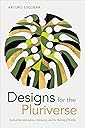
Designs for the Pluriverse: Radical Interdependence, Autonomy, and the Making of Worlds (New Ecologies for the Twenty-First Century)
Product ID: 66613718
Desertcart purchases this item on your behalf and handles shipping, customs, and support to Vietnam.
In Designs for the Pluriverse Arturo Escobar presents a new vision of design theory and practice aimed at channeling design's world-making capacity toward ways of being and doing that are deeply attuned to justice and the Earth. Noting that most design—from consumer goods and digital technologies to built environments—currently serves capitalist ends, Escobar argues for the development of an “autonomous design” that eschews commercial and modernizing aims in favor of more collaborative and placed-based approaches. Such design attends to questions of environment, experience, and politics while focusing on the production of human experience based on the radical interdependence of all beings. Mapping autonomous design’s principles to the history of decolonial efforts of indigenous and Afro-descended people in Latin America, Escobar shows how refiguring current design practices could lead to the creation of more just and sustainable social orders. Review: A cornerstone for any participatory initiative - The book challenges conventional Western design thinking by advocating for a fundamentally different approach to design that embraces multiple ways of being in the world - what Escobar calls the "pluriverse." Drawing from decolonial theory and Latin American thought, Escobar argues that design should move beyond serving market-driven modernization to instead support the creation of multiple worlds and ways of living. Review: There is no question we need to redesign society and Escobar provides brilliant analysis of methodologies and insightful questions to think through ... - This is an incredible book! Accessible to those who aren't familiar with design theory and a valuable resource to anyone thinking about how we should go forward given the ecological crisis we face. There is no question we need to redesign society and Escobar provides brilliant analysis of methodologies and insightful questions to think through as we do so. I highly recommend this book!
| Best Sellers Rank | #520,082 in Books ( See Top 100 in Books ) #177 in Design History & Criticism #389 in Human Geography (Books) #1,361 in Cultural Anthropology (Books) |
| Customer Reviews | 4.6 out of 5 stars 127 Reviews |
B**P
A cornerstone for any participatory initiative
The book challenges conventional Western design thinking by advocating for a fundamentally different approach to design that embraces multiple ways of being in the world - what Escobar calls the "pluriverse." Drawing from decolonial theory and Latin American thought, Escobar argues that design should move beyond serving market-driven modernization to instead support the creation of multiple worlds and ways of living.
M**N
There is no question we need to redesign society and Escobar provides brilliant analysis of methodologies and insightful questions to think through ...
This is an incredible book! Accessible to those who aren't familiar with design theory and a valuable resource to anyone thinking about how we should go forward given the ecological crisis we face. There is no question we need to redesign society and Escobar provides brilliant analysis of methodologies and insightful questions to think through as we do so. I highly recommend this book!
W**C
Dense, demoralizing and inaccessible
This is a challenging book but it really didn't need to be, which is a tragic shame because the book is ultimately about inclusivity and access. Unfortunately many of the good and necessary ideas in the book will likely have trouble competing with more lightweight biz tech books, or with a cliff notes adaption of this very text. Improving design should be more accessible and feel less like a dusty university lecture. For example: - The introduction was 1 hour long and actually got into arguments and long excerpts of other texts. - The first 6 minutes of chapter 1 outlines the topics that the hour long chapter will cover, but failed to get to the point. Non-academic literature has moved on from this sort of traditional essay structure. - The next 6 minutes of that chapters try to make a point by using a novel excerpt that didn't connect to me. Why take such a long walk? The author and their ideas seems be hiding among citation and reference having their own internal conversation. - The book frequently displays academic jargon, minting politically-correct terms that aren't going to be useful to readers. This and and other annoyances that drew focus from central points. The awkward title says it all: any editor could have tightened that up to a punchier title that uses common words. Pluriverse is a word designed to elicit a groan. There are just so many opportunities for a reader to get lost, which will be frustrating for anyone looking for information or guidance but who isn't in love with this type of storytelling. I feel this needed a pop-biztech coauthor, a more aggressive editor and audience testing. To the author: Please think deeply about your broadest audience! Translate your ideas into consumable ideas.
V**Z
El mejor!
Es un gran libro y considero que debe ser leído por todo estudiante y docente de diseño, realmente es muy inspirador.
A**V
A tough read that expands your mind
I've been stuck in a design rut for a while and couldn't put my frustration into words. This book changed that. I now know that I was frustrated and burnt out in the endless pursuit of patriarchal design philosophy that chased neoliberal expansionism and I craved for better meaning to my design work. I recommend this book to any designer that feels they need a different paradigm of being a designer, and a framework for thinking about design in the modern world. It's a tough book to get going with, I read the first few chapter with AI helping me translate passages into more accessible language. However, once I understood the terminology, the rest was easier to digest. It's the first book I read with my phone by my side, helping me translate, but it was worth it.
M**A
inspiring
inspiring book!
B**O
Excellent and surpresing purchase
This book came as a suggestion through two other books that I purchased here. I made an impulse buy and it ended being a very nice surprise. Escobar, just as other authors is trying to reflect on the ontology of design but he offers a latin american perspective. So I would advise this book for readers interested in the subject that wish to have a less eurocentric perspective.
S**E
Beautiful
Arturo Escobar provides a wonderful alternative take on Design, and how it relates to social and environmental concerns, in the 21st century. More Designers need to be reading these kinds of books, to challenge our conception of our role in the world.
Trustpilot
2 weeks ago
2 months ago