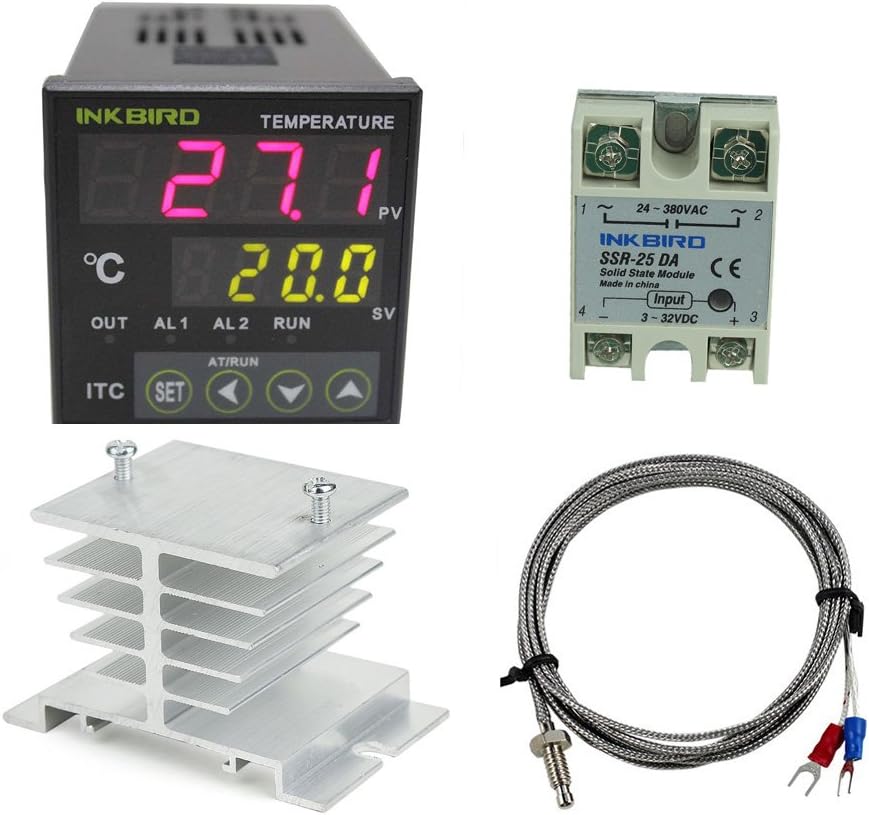
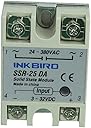
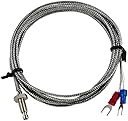
The placement of electrical connectors on an ITC-100 unit makes it very difficult to connect the wiring once it is installed in a diecast box. I recommend partially inserting (about 1/2-inch or 13mm) the unit through the 45mmx45mm square hole you must cut into the box for the front panel, placing the included cream-grey square plastic retainer over the unit, and only then wiring up the unit. This gives the maximum room for a small screwdriver to fasten the wires. When done, slide the unit all the way in and pull back the plastic retainer towards the front panel to ratchet the unit into place. At this point it is difficult to slide the unit out of the box if the retainer ratchet can't be reached to release it. Alternatively, use a larger diecast box with its lid on the same or opposite side to the display, allowing easy access to wire and tighten the terminal screws. The ITC-100HV is more expensive than the ITC-106VH, but works much better to control a roaster oven. I glued the supplied k-thermocouple to the inside of the heated pan, near the heating element. The instructions use poor English (a native English manual writer could be a useful hire) and definitely leave out important details like the formula for controlling the PID feedback, or what each adjustment does. The defaults were mostly OK, but it still initially overshot temperature at power-up. The AT automated PID calibration run mode did not work properly for the integration time, but got close on all the other values, so I recommend running the AT mode first, and then hand-tuning the integration time to get appropriate damping (reduced overshoots). I had to manually up the integration term to around 1300 until it stopped overshooting on power up - a larger value was needed as the system has a lot of thermal mass and a long delay (120 seconds) from applying power to seeing a temperature rise. Using the "<<" button to change the working decimal position (for quickly increasing and decreasing large values) works well. The supplied 25Amp solid-state relay works well with a 10Amp load also. The "run" code description was confusing - "no manual" means it forces the unit to run in automatic (PID) mode, and locks out the "<<" button from being used to switch between auto (PID) and manual (percent on/off ratio) modes. "Loc" mode is useful to prevent accidental configuration changes. The unit should have an on/off button to the solid-state relay module so that adjustments can be made to temperature without actually heating anything.