Buy anything from 5,000+ international stores. One checkout price. No surprise fees. Join 2M+ shoppers on Desertcart.
Desertcart purchases this item on your behalf and handles shipping, customs, and support to Vietnam.
❄️ Keep your meds cool, your life cooler — never miss a dose on the move!
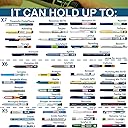
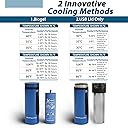
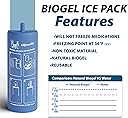
The 4ALLFAMILY Voyager Insulin Cooler is a TSA-approved, USB-powered travel case designed to maintain a stable temperature range of 36–46°F for up to 30 hours. Its auto shut-off thermostat prevents freezing or overheating, ensuring medication integrity on the go. Lightweight yet spacious, it holds up to 7 insulin pens or vials and operates quietly under 30dB. Compatible with various USB power sources, it includes a biogel ice pack, digital temperature display, and carrying bag, making it an essential, reliable companion for temperature-sensitive medication management during travel.


| ASIN | B0CQWSMB7M |
| Best Sellers Rank | #25,677 in Health & Household ( See Top 100 in Health & Household ) #46 in Diabetic Care Organizers & Travel Kits |
| Brand Name | 4ALLFAMILY |
| Capacity | 900 Milliliters |
| Closure Type | Zipper |
| Color | BLUE XL |
| Customer Reviews | 4.4 out of 5 stars 882 Reviews |
| Global Trade Identification Number | 00197644423002 |
| Handle Type | carrying handle |
| Included Components | USB LID, Thermos Cup, USB Cable & Charger, Biogel Pack |
| Item Type Name | Medicine Cooler |
| Item Weight | 3 Pounds |
| Manufacturer | 4ALLFAMILY |
| Manufacturer Part Number | Voyager |
| Manufacturer Warranty Description | 1 Year Warranty Included |
| Material Type | Stainless Steel |
| Model Number | Voyager |
| Number of Compartments | 2 |
| Pattern | Solid |
| Shell Type | Hard |
| Size | Large |
| Style Name | Modern |
| Unit Count | 1.00 Count |
T**S
This works better than my 19cf Refrigerator
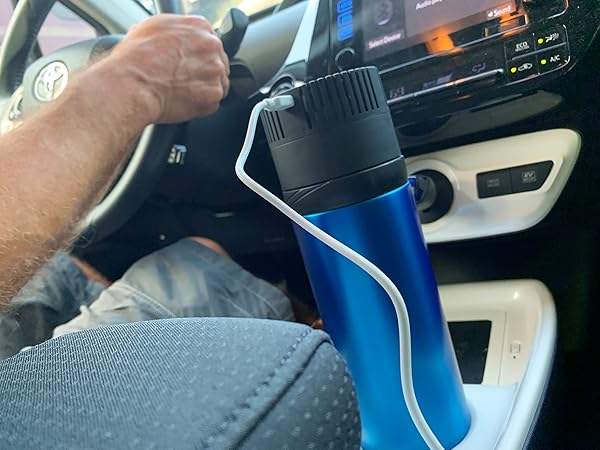
Our fridge started to act erratically with troubling temperature fluctuations. While we waited to find out what was wrong, we needed to find something to store my husband’s diabetes medications and we needed it fast and it had to be reliable. I looked at scads of different options from mini-fridges, coolers, gels, you name it -I read about it. I was almost on the point of getting one of those dorm fridges (which I absolutely didn’t want, but what we were going to do for his meds?) when I saw a woman in a video holding what looked like a thermos. It seemed interesting so I watched. WELL – THIS WAS THE ANSWER TO MY PRAYERS. This thing seems to be more for people who travel and need something to keep their meds at the right temperatures. One way to use it is with Biogel that you freeze and then insert into the thermos. But the part that interested me is that it plugs into a power source and maintains temperatures of 36°-46°F. It can be affected by ambient temps – so this is something to be aware of. It does have its space limitations inside, but for us it is a godsend. Basically the outer part is a thermos. The screw on cap, which has a place to insert a USB wire and then plug into an outlet is the power source. The cap has a long open ended tube which is where the cooling is and it is into this tube that the meds are stored. I was able to fit 4 Levemir (that’s all we had at the time) inside the tube. Or I could have put in 2 Trulicity. Be aware that it will not fit more than 2 Trulicity (one up and one down) because of the ridiculously large base of their pen. I actually called Lilly medical and asked them to rethink their design - it’s too big. So, although the fridge is semi-working again, (now the temps are too cold and no amount of adjusting seems to make it warmer, but according to the repair people, there’s nothing wrong with the fridge. What?) we’re essentially using it full time. It’s a teeny weeny, itsy bitsy mini refrigerator and so far it’s working beautifully. It doesn’t require much room, is extremely quiet, shows the temp right at the top for easy monitoring and although I have it on a table in my living room, it is not in any way an eyesore. If you weren’t looking for it, you’d probably not notice it. If I have any complaints it’s that it’s kind of expensive and it isn’t big enough inside. But I actually got to speak to the VP of the company and asked him about making something bigger that isn’t necessarily portable. I’m sure we’re not the only ones to have a fridge conk out with no place to store insulin or other meds needing refrigeration. He said that it takes research and time to get it right and who could fault them for wanting to do it right - not fast. Hopefully they'll work on something. Because I have to say that I feel very confident about the quality of this product. So, I’ll tell you how much I love this little thing – I named it. They call it Voyager which made me think of space which made me think of Star Trek which made me think of an especially iconic character. So we’re calling it CAPTAIN KIRK because really, this too is one of a kind.
T**R
This unit works great, if you have problems with yours, read this review!!!
This top paragraph is an update after 2.5 years of ownership. I use this unit for travel, so I do not use it constantly. After 2.5 years of use the fan is starting to fail. This is not unexpected, small fans like this unit has inside cannot last forever. This unit requires the fan to move enough air to cool the hot parts of the unit. When the fan fails, the hot parts heat the entire unit! It heats to about 97 degrees according to the temperature readout of the unit. This is actually the expected failure mode. Essentially the heat pump in the unit is still working, but it needs the fan running to work correctly. I would like to ask the manufacturer to do something to address this issue. The fan is easy to replace, I would suggest that the unit be redesigned to make it easier to open, and that replacement fans be made available. Also the unit should have a mutable alarm for temperatures above ambient. It it is starting to act like a heater, the user should be warned. This is still a positive review, I still like the unit, I simply have experienced the end of life of the fan. I will replace the fan, and it should work like new. If you think "this is bad because the fan can die", all medication chillers that run on electricity will have a fan of some sort, and fans can fail. Small fans cannot be made to run forever. They clog with dust, and the bearings wear out. They should be replaced every couple years. Your PC has small fans in it, it will start acting bad when one dies, it is a $10 part, but some people replace the whole pc because they don't know any better. There is another reviewer that charted the temperature performance but he gave it low marks because of the failure modes such as loss of power could result in lost medicine.... And to his post I would have to agree, as it dovetails into my failure mode from the fan. The seller should add a second model to their lineup that includes wifi/blutooth with a cloud app and notification service that can alert caregivers and the user's phone. This will add around $10 in hardware costs, though it may be lower if they simply delete the existing chips and start with a wifi imbedded cpu. The upgrade will require software and will add $100 worth of value, so it can be the higher-end model. I could write a book on the features it needs...- In 15 minutes, I was able to cool the unit from a reading of 87°f to 36°f using the supplied cable and charger, in a room that was 74°f. I see a lot of complaints that are related to improper use. If you are having problems, read and understand this whole review. This unit does work, and it's limitations are in the instructions, but it may take an engineer to understand the limitations and explain them properly. I am an electrical engineer. And I happen to have very specific knowledge about how this unit operates, and why some people have issues with it. This is a 10 watt rated peltier junction refrigeration device. As long as the fan works, this unit will be functional as the solid state nature of the cooling device should have it last a lifetime. But for it to work for you, you will need to understand how to power this unit. This unit has a short USB C cable, and requires a power supply that can handle 5v at 2 amps to supply the rated power of 10 watts. If you don't use the power supply that came with it, you may have trouble finding USB ports that put out enough power. The standard USB2 port can only put out 1/4th the power this unit is rated to use. If you plug it into a standard USB port, the unit may only provide a tiny amount of cooling, and it may not be enough if it is in a warm location. This unit draws 1.5A of power when it is cooling, and if your power supply can't put that much power out, the cooler may not have enough power to do the job. This is important to understand... This unit can provide a maximum of 50° of cooling. That means if you want it to never get above 47° it must never be stored above 97° with insulin inside... If you put it in the trunk of the car on a 110° day in the Texas sun, the inside of the trunk may get as hot as 150°. at that temperature the coolest your medicine will be is 100°. On a hot dashboard where I have measured temperatures of 170°, you can expect internal temperatures no cooler than 120°. The 50° cooling this unit provides is a real limit, so plan accordingly. This is a reliable device, but power cords are frequently mistreated, so buy extras, and don't buy the cheapest cord you can get. To provide the 2 amps of power, you need a proper thick usb A to C cable that is capable of carrying power, so look for cables labeled "quick charging" to insure they are designed to carry the rated power. If you want a long cable, it must be thicker, so get one rated for 100 watts or more (for best results). The longer the cable, the less cooling you will get, so even though this is a 10 watt device, the reduced voltage drop from a 100 watt cable will provide help you get the maximum cooling. And if you use a power bank, be aware you will be drawing 8 watts when it is cooling, and in a warm location that drain will be continuous. Most power banks are rated at a higher wattage than they actually support, so it is best to assume the power bank will only put out 25% of the claimed power, but it could be as much as 75% from a high quality brand, but most you see on amazon are going to be closer to the 25% range. This unit draws 1.5Amps, that is 1500 miliamps. So to run this unit for 24 hours in a warm location, it wants 1500 miliamp hours of power per hour, so 36,000 mah per day. a 30,000 mah power bank *should* run this for exactly 20 hours, but in my experience you can expect 5 hours from cheap power banks, and perhaps 15 hours for a good power bank rated 30,000mah. The reasons the ratings don't provide real-world results is the batteries are 3.7v rather than 5v, so power is reduced by stepping the voltage up to 5v, and it is further reduced because 95% of the batteries from china do not actually hold the amount of power they claim, so the rating of the power bank will be off by however big the lie was when they sourced their batteries. And finally, this unit turns off cooling at 36° and turns it back on at 46°, so the temperature will cycle across that range. I use two insulin and one liraglutide products. The strorage instructions are long term storage in the 34-45°f range, and storage BELOW 80°f for up to 30 days after first use. I have changed brands several times, these temperature ranges are common to all of the insulin/diabetes injectables I have used. so if you are carrying a 2 week supply, for 2 weeks, then 79°f is a target temperture to stay under (you guys that think you must have insulin be refrigerated all the times are either wrong, or you are using a cheap and unstable form of insulin. The point is I read a lot of reviews of people that claim cooling requirements that may not be actually true. Read the whole label on your injectables, not just the part that says keep refrigerated. Mine say below 80 for up to a month. Most of yours will too. The important thing here is this means that the maximum powered storage temperture for a 2 week supply is 79°f, which with the 50°f cooling capacity means your medications can be kept safe up to around 120°f if fully powered and out of direct sunlight. Direct sunlight will add heat. The biogel will work at higher temperatures, but the hotter the shorter it lasts. If you are packing without power, I would generally trust the ratings of the biogel, as that is a reliable source of cooling. If you travel by plane, be aware that the biogel must be frozen to get past security. If it is melted, you will not be allowed to have it in carry on luggage, and they will make you throw it away. So using the biogel for air travel requires you to have it fully frozen in security, or you will need to pack it in checked luggage. But if your luggage is lost, all bets are off as to the condition of your medications, as they might spend a week in a metal box in the sun at an airport, so a reason TO and a reason NOT TO store in checked luggage. Decisions decisions. Buy two coolers and store half of your supply in checked luggage and half in carry on. So to recap: - provide power from a "fast charge" capable power supply - Provide at least 10 watts of power on a good cable - Do not store it at temperatures exceeding 50°f of the desired medicine temperature when powered - Cools quickly when empty, probably needs an hour or so if full (unless you prechill as recommended) - If you are having problems call the number on the door hanger - The warmer it is, the longer this will take to cool down (reality is harsh) - Test your power supply and know your limits - Cars can get really hot, 75°f higher than the temperature outside is easily possible, so this cooler can't do it's job in a hot car for long - The temperature of the display is that of the cooling device, you will see it cycle up and down from 36° to 46°, but the ACTUAL temperature of your meds will be the higher of the temperatures you see it cycling between. I did several tests using the provided charger, and the unit works GREAT. It performs up to the claimed capabilities. It cannot do the impossible... nothing can. I paid $200 for this, I think the value justifies the price. There are plenty of biogel based coolers for 1/8th the price, I still think the value justifies the cost of this unit. I'm an engineer, I could make one of these for under $50, with about $1000 worth of labor. Buying one already made is a good value.
T**N
Outstanding Product - No comparable alternative device
Read the review by "Big Texun". It is spot on. Unfortunately, he hadn't posted his review before I needed to use the cooler - so I had to do a lot of similar testing. Because of the maximum 50 degrees of cooling, I have 2 of these. I went on an 1,800 mile motorcycle trip in west Texas in early-July 2022. We were prepared for high temperatures of 107 degrees, which occurred on some days. On day rides into the dessert areas and down to the remote Mexican border (where there are no walls, guards, or migrants), I left my "refrigerated" insulin at our camp site, which was in the Davis Mountains. I did this because the cooler would only be able to keep the insulin around 57 degrees on those days in the dessert, which is too hot for insulin that is not in use. But, the highs at our camp were never above the upper 70s. So, this cooler could keep my refrigerated insulin at a safe temperature there. I took a second cooler on day rides so my in-use "room temperature" insulin didn't go above 86 degrees. Although my in-use insulin went below normal room temperature, it was always at a safe temperature during the day when the outside air was 107. I had a minor issue with the first cooler I bought (while I was testing it in 100+ degree days at home before the trip). Customer service was top notch! The company resolved it very promptly at no cost. And, I purchased a second one. I'm not aware of any comparable product. There are some other small, refrigerated coolers, but their capacity and versatility is very limited. I also tested these All-4-Family coolers against the Frio bags for my in-use (room temperature) insulin. The Frio bags don't reach their advertised temperatures except in narrow, ideal conditions. Probably fine for traveling in a controlled environment (car/plane) with only in-use (room temperature) insulin. I also tested the Vivi-Caps for in-use insulin. They are better than the Frio bags, but still can't match the performance of this cooler in a hot, outdoor environment. They are fine for carrying in your pocket (or purse) for day use in moderate temperatures (spring and fall --- or even in the summer if you aren't in extreme temperature for more than an hour ... are if you are in more northern areas than Texas). I prefer them over the Frio bags, which are also messy to deal with. The vivi-cap, inspite of their marketing material saying otherwise, does require some care. It works on heat exchange, so they have to return to room temperature to "recharge" (dissipate the heat they've absorbed). Not a good option for constant outdoor use unless the temperature drops over night for 8+ hours --- and not good for more than a few hours in extreme outdoor temperatures. I have a Frio bag, multiple Vivi-caps, and two All-4-Family coolers. If you have medications that need to be "refrigerated", this is hands down the best option. Not cheap but reasonable for the reliability and capacity of the product.
T**R
40-day trip, worked great!! Charging cable protrudes, can get whacked in airport...otherwise 5 stars
I bought two of these last year for an extended trip overseas (42 days) that involved a cruise and long airline flights. Without cooling the trip could have been a disaster as far as maintaining temperature on the meds needed towards the end of the trip within their recommended refrigeration range. I did a dry run several months before international travel on a US trip to evaluate the system. That test was successful enough I bought a second system because of the length of the trip. A trial run is essential at home in advance of more complex trips to ensure you’ve thought through the pitfalls. Whatever your final configuration is as far as thermos, carry-on bag, and possible lithium battery backup, test them all at home in EXACTLY the manner you will carry and transport them on your trip, for the length of time (1, 2, 10 hours, etc) you will experience on your trip. The system worked great, and kept my meds between 36-46 degrees on a 18 hour flight transit to Singapore, relying on a combination of airline power and lithium battery power. I bought two 24,000mAh 3-Port Portable Charger with 140W Output, Smart Digital Display-anker, worked fine. The ONLY downside I encountered with the unit, was one I expected from the outset. Wheeling the bag through airports and terminals, the plug is vulnerable to getting whacked, and coming loose or being damaged because of the way the mount is designed. That happened transiting an overseas terminal (bag tipped over, of course). Fortunately, I had a backup cable that worked as the one provide was damaged. I would recommend 4AllFamily take a hard look at reengineering the connection port in a way that the charging cable doesn’t stick out from the unit, and can be secured more firmly into the unit without concerns that it might pull out or become loose, or get bent or broken. 1. I had no problems going through security, either in the US or overseas, and no one requested I open the devices or examine them. However, there’s always that possibility. 2. As many suggest, I carried along a rechargeable battery in case there was an issue with either finding a suitable plug, or the one on the airline didn’t work. I encountered both those problem. Thank goodness for the batteries. Remember the lithium batteries cannot be stored in your check baggage when you return home and aren’t using them. 3. Because the thermos cooling ability is limited by the outside temperature around the head of the thermos top, if you put the thermos inside a carry-on bag that is zipped closed, you run the real danger of not being able to cool the thermos down to the 36-46 deg F range. The temperature around your thermos top inside a closed bag will be quite warm and limit how much you can cool the thermos. 4. I had to buy a carry-on bag that had a large front side zipper pocket large enough to allow the thermos top to stick out of the top of the unzipped pocked and be ventilated. 5. Not all lithium batteries are the same. Some batteries have features that cause the thermos cooling unit to shut down and stop cooling the first time it cycles. If you buy a battery to charge the unit while traveling, make sure you try it at home and cool your thermos for the length of time you expect to need it to be cooled on the trip. 6. The thermos charging cable is susceptible to getting banged or damaged if its carry-on bag turns over or hits a wall or gets hit by something else in transit, or on the plane.
A**R
Takes the stress out of traveling with injectables
I have to take growth factor injections for my cancer and they need to be refrigerated. I was initially freaking out because I wasn’t sure how I’d leave the house and keep so many at that temperature. I thought I might need to get a cooler and use ice or dry ice, or something along those lines. Amazingly, after a lengthy Amazon search, I came across this invention. It is basically the size of a regular thermos. The instructions inside and online mainly talk about the diabetes use case as I think some forms of insulin also need to be refrigerated, but they should add that this worked great for growth factor meds as well for cancer. Specifically, in case anyone else is wondering if their medicine will fit, I have used this for Zarxio and Neulasta. Both are about the same size. For both, I had to remove the syringes from their packaging (plastic tip covering the needle stayed intact!), but I made sure to add some cushioning (balled up paper towel) at the top and bottom of the container to make sure they didn’t move. I believe I was able to fit 4 of both medicines. I might’ve been able to fit even more if I added some vertically in the container, but I haven’t needed to yet so TBD on that. I bought the max capacity Anker power bank allowed by the TSA and also a right-angle USB C - USB cable. The power bank provides about 10 hours of charge. The cable provided seemed a little weak and the right-angle of the new cable reduced any chance of the cable getting disengaged or something. Once the power bank is turned on and the cable is plugged into the container, there is a fan on top that starts and a temperature reading on the display. The temperature display is honestly what I love the MOST. Prior to my purchase, I had a moment in a hotel where I was pretty sure the mini fridge was not within the acceptable range; the drinks were not cold - just not lukewarm. The hotel also did not want to store my medicine in their kitchen fridges for fear of liability. During a few desperate hours, I even went searching for the mini fridge’s manual to see what range it operated at and how I could turn the temp to the lowest. I ended up pulling out all the bottles to attempt to ensure my medicine would get chilled, but I couldn’t guarantee the actual temp. It turns out that most mini fridges aren’t even cold enough to safely refrigerate your leftovers, so how can you trust them with your medicines then… With this product, I can always tell what the temp is. My main thing is making sure I have enough power in my power bank, so whenever I can stop and use AC power and charge the bank, I do so. When I get to my destination, I immediately switch to AC power, too. Obviously if I’m at a location with a real residential fridge, I’ll transfer to that. I do get a little worried about the motor overloading so once a day I’ll unplug everything, give it a rest, then plug back in. I have not had any resistance from TSA or airport security overseas. Sometimes I get asked, but once I let them know there is medicine inside, it’s not a problem. Most agents, actually, have been quite awed by the device and ask where I got it. What could be better: the sling and the plastic clip are a bit cheaply made. I was looking at Stanley cup-type slings to see if that would be better, but haven’t bought one to try yet. I would just suggest the company to consider a metal clip for peace of mind, at the very least. The blue holder could be aesthetically improved, but it works fine and that’s what matters first. Another idea if it could be possible: if there was a way to be notified if the temperature suddenly drops or the device turns off on its own. Analog could be some kind of noise, digital could be Bluetooth-based simple alert. I am always checking for the the display when I’m moving around just because if the power cable gets dislodged or the bank runs out, the device just goes silent. Thank you to the company for making a reliable product that frees up folks from carrying around giant coolers and refrigerators. In the midst of illness and all its obstacles, this simple freedom goes a long way.
R**D
Great Unit!
Keeping my insulin at the right temperature has always been a struggle when taking long trips. Usually, after a trip, I would discard the unused insulin because when it warms up, it loses its efficacy. I've tried cooling cases which require ice packs, but the ice usually melts before I get to my destination. I purchased the 4AllFamily Medicine cooler not expecting that it would actually work. I used it for the first time when I took a trip from Washington DC to Hawaii. That is a twelve hour flight! I've taken this trip, many times in the past, and the ice always melts. On several occasions, I have had to purchase replacement insulin because I had lost confidence in the efficacy of the insulin. The 4AllFamily medicine coller worked very well. It's small but very effective and it keeps the insulin between 36 and 46 degrees. On my last trip to Hawaii, the insulin stayed effective and I was happy to have found a solution to the problem. On a recent trip to the Caribbean, the top of the unit detached from the base and the power cord between the battery and the unit was broken. I called the customer support line and the company promised to send a full replacement. I should have the new unit, by Monday. This is a great product, and I was very encouraged that the company was responsive and agreed to replace the unit. I would suggest a couple of design changes, however. First, the top of the unit, containing the electronics, needs to be better secured to the body of the unit. The power cord from the battery sticks out of the top of the unit making it easy for it to break and destroy the USB plug. It would be a good idea to recess the the USB receptacle so the plug doesn't break off. The final suggestion concerns the carrying straps. They way they are designed throws off the balance of the unit when carrying it. These are minor improvements which will make the unit more resilient and better protected from the bumps and grin ds experienced in an airport and on a plane. I should also mention that I never had a problem with TSA. They never asked to have me open the unit nor did they delay my security check because of the unit. If you are concerned about keeping your insulin at the right temperature on a long trip, especially to a sub-tropical climate, this cooling device works very well and the battery pack is essential.
M**O
Must have *continous* power or daily access to a fridge/freezer
This product works well as long as you have access to 1) CONTINUOUS power or 2) a refrigerator and freezer for daily use. If not, you will have issues. Scenario 1 - Continuous power: If the power is cut off from the USB unit (your car turns off, the car USB doesn't work, your external battery runs out of charge, whatever), you have a VERY short window of time before the unit is out of temp range. The outer shell, which the USB sleeve fits into, has no functional insulation. On a recent 3-week trip to Scotland, we found this out. During the 15 minutes of getting out of the car, getting our luggage out, checking into our lodging, walking up the stairs (no lift), and plugging the unit in, the temps had raised at least 10 degrees - often more. If we were lucky and unplugged the unit from the car when it was at its lowest temps, we'd be fine when we plugged back in. If not, the meds were out of temp range. Yes, we can and did use an external battery, but they only have so much "juice" in them and don't help if you're on a tour with no other power supply. Scenario 2 - Access to a fridge/freezer: During our trip, we had access to a fridge/freezer a total of two nights. Without that, we could not freeze the gel pack nor keep the medication cold. That meant we had to rely on the USB unit, sometimes causing the issues outlined above. Suggestions: 1) insulate the exterior shell to keep the contents cold for 30-45 minutes 2) size the gel pack to fit inside the USB sleever so it can keep the contents cool until you get access to power again (assuming you can freeze the gel pack during your stay) For those who say our experience is unusual, it might be for those who go on escorted vacations, take cruises, or stay in urban areas where there are fully fitted hotel rooms. We rarely take escorted vacations or cruises, preferring independent travel to areas a little more off the beaten path. (Example: we stayed at a small inn in the Scottish Highlands rather than a hotel in Glasgow.) Perhaps we should have investigated the functionality of this unit further before purchase to see if it would work for our travel needs. That's on us. I just wanted future purchasers to know the capabilities of this unit before purchase. It might work just fine for you!
A**E
Exactly What You Need . . . works flawlessly!
Yes, it's a little too expensive . . thought about deducting a star 'cause of the price. The thing is, this is an amazing cooling unit for our meds. Plugged it in and within a couple of minutes it was below 40 degrees and, on a flight across country and back again, it never stopped! It's really easy to see the temperature, it's solidly built, it comes with a carrying case that'll also hold a battery -- BUY THE ALL4FAMILY 20000mag BATTERY -- and TSA had no problem with it. The cooler itself WILL slide into most backpack water bottle holders, the mesh ones on the sides, but not really with the case and definitely not if the case includes the battery. Again, it's expensive but it really does the job and, if you're purchasing an insulin (or other meds) cooler, you know you're going to want it to be solid and last. I can't attest to longevity yet but we've had a good start! PS - We tried to save some money by buying a, highly recommended, 20000mah battery . . . it did not work! It appears that most batteries won't provide the CONSTANT draw that's needed for the cooler. They're own (white) 20000mah battery not only provided the necessary power, it did it for 11 hours straight and still had almost ¾ of the charge . . . buy it too!
L**Y
Ottimo!
Comprato per un amico diabetico, ha sua detto è un accessorio fondamentale e super comodo!
K**N
Must if you travel
I bought the Voyageur with the USB cooler in July 2023. It was working fine for a couple of months as I used it sporadically in my travels. I try and use the gel pack mostly and the USB cooler only if I am in a place where there is no access to a refrigerator. While it was in use, recently, the USB cooler suddenly stopped working, the display was at a constant 99 degrees. I wrote to the customer service and in a matter of a few days, after some exchange of mails / videos to understand the exact nature of the issue and what mitigations could be possible, Peter arranged for a replacement at no cost to me. I must say the product is good no doubt, but their customer service is what makes it worthwhile to deal with this supplier. I hope my USB cooler will work without issues - only time will tell, as I am about to embark on a tour where the USB cooler will be very important for me.
A**L
A Must Have for Travel
I am so glad I bought this. It is expensive but worth every cent. I have previously been on holidays in South East Asia where my insulin has got hot and I ended up triple dosing etc and ran out and had to source some overseas. This product works perfectly. Sometimes you may not have access to a fridge or if you do it doesn't work very well. The attached fridge works really well and fast. I ran the fridge for several hours on a train using just a power bank. Using the icepack will keep things cold for a while day easily. It was great having the flexibility between fridge and icepack. Product was a lifesaver.
M**H
Biogel worked well. The USB cooler didn't cool properly.
I bought the 4All the family USB cooler. I tried it out plugged in and the temperature as you can see was around 10degrees after leaving it plugged in for a few hours. I then tried the biogel. This worked really well. I did needed to warm the gel up twice as the temperature was still under two degrees initially. But then it kept my insulin at the correct temperature. I wonder if the USB part is faulty as i have seen so many good reviews of this product.
M**Z
Excelente producto, sobre paso mis expectativas.
Siguiendo el canal de type one talks, en YouTube encontré este producto. Desafortunadamente no existen muchas reseñas deeste producto en Internet que expliquen a detalle como sirve y que esperar de el (lo cual me tenia un poco exeptico) después de varios días de buscar información en varios lugares del Internet me decidí comprarlo. El producto es increíble y funciona exepcionalmente.lo compre para un viaje de 1 semana al Perú, llego más rápido de lo esperado, y gracias a eso pude hacer mis propias pruebas con el y sacar mis propias conclusiones antes de mi viaje. 1- la tapa usb (el modelo de tubo) no se apaga como lo dice en el manual. Esta trabaja todo el tiempo pero deja de enfriar cuando llega a los 36f y lentamente cambia a los 46f. Cuando llega a esta temperatura te das cuenta que esta enfriando porque hace un poco más de ruido y el 0 a mano izquierda del display empieza a dar vueltas. 2- El thermo hace ruido ( la tapa usb). No es un ruido excesivo pero en mi opinión si es un ruido lo suficientemente alto para no dejarme dormir por las noches. Mi solución fue encontrada por una Blogger que recomendaba dejar el thermo en el baño y cerrar la puerta al dormir. 3- comprar baterías extra es muy útil, yo compre 2 de 20 mah y en promedio cada una me da entre 12 a 15 horas
Trustpilot
2 weeks ago
2 months ago