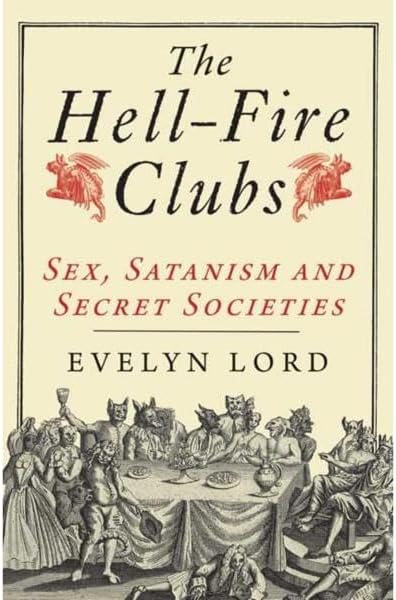
The Hellfire Clubs: Sex, Satanism and Secret Societies
Product ID: 5810708
Buy anything from 5,000+ international stores. One checkout price. No surprise fees. Join 2M+ shoppers on Desertcart.
Desertcart purchases this item on your behalf and handles shipping, customs, and support to Vietnam.
The Hellfire Clubs: Sex, Satanism and Secret Societies [Lord, Evelyn] on desertcart.com. *FREE* shipping on qualifying offers. The Hellfire Clubs: Sex, Satanism and Secret Societies Review: A sane, accurate and non-sensationalist history of the various Hell-Fire Clubs and their adherents - This book is NOT a work of Fiction. It is not a speculative list of the perversions and vices attributed to the Hell-Fire Club, otherwise known as "Order of the Friars of St. Francis of Wycombe" If the previous reviewers found this book to be too dry, non-sensationalist, and uninteresting to the current bottom-feeders trying to read "naughty history" then they need to pick up one of the several examples of "Yellow Journalist" on this subject that will appeal to their purile and scatalogical interests, or perhaps a collection of "Readers Letters To Hustler." If however, the reader is interested in following an extensively researched recounting of the Hell-Fire Club's British and French precursors, and extensively covering both the Duke of Wharton's and Sir Francis Dashwood's subsequent Hell-Fire Clubs they will be well rewarded with as much real history as may likely be found on the actualy subject, and not the sensationalist blackening of characters attempted by the yellow journalists of the day, and to this very day: The Hellfire Club was a Gentleman's Club, like many others of its day. And to understand these clubs, one need look no further than City of Laughter: Sex and Satire in Eighteenth-Century London so see that the Hell-Fire Club was not nearly so far from the social norms and mores of 18th Century London, as many of its moralist detractors claimed at the time, and still claim today. Review: >> Taking the Myth out of the Hell-Fire Clubs << - Evelyn Lord’s The Hell-fire Clubs: Sex, Satanism and Secret Societies removes the myth but leaves the mystery about an undercurrent of antisocial meetings and acts that began in the late sixteen hundreds and reached its peak in the early seventeen hundreds before dying out at the end of the century. Dr. Lord’s thesis is that drink, sex and gambling cloaked in secrecy gave rumor to the “devil-worship” that remains largely unsupported. Instead, what is found is an often spurious launch of gentlemen clubs that last the lifetime or less of its founder/s. Often shut down once their existence is found out, these clubs provided the wealthy an outlet for experimental social behavior. Emerging at an extreme before falling into reputable silence, fear and chaos was London’s first experience with the members of these clubs. The Mohocks raked hell on the streets at night, permanently tarnishing the concept of secret clubs. Members, among whom are the famous John Wilmot. Drunk and looking for a fight, hell-fire members physically molested people in the streets and even the watchmen of the night. Often pulling lethal pranks such as slicing the faces of whoever opened their doors at night. This twisted usage of “Enlightened thinking” was just a license to cause havoc. As the eighteenth century moved forward, the clubs left the coffeehouses and alehouses and retreated to the privacy of homes and rented castles. It is with the Medmenham Friars that the clearest understanding of what possibly went on in some hell-fire clubs is found. Created by Sir Francis Dashwood, also founding member of the Dilettanti and Divan clubs, the Friars took on a monastery theme at a restored castle on the Thames River. The truth of their secret meetings is blurred by the eccentric journalism of the day. Most likely, it ws a place for the wealthy to get drunk and have organized sex, and not the satanic club that supposedly feed the Eucharist to an animal. Clubs continued to spread, involving men of politics and often interfering in their careers, such as the case with John Wilkes. The hell-hire clubs existed but were less pronounced in Scotland, the American colonies and further abroad. In Ireland, Protestant hell-fire clubs gained notoriety more because of the Catholic majority that despised the minority of Protestants than for any secret practices that may have existed. Evelyn Lord is the Secretary of the Emeritus Fellows Society at Wolfson College and the former Staff Tutor in Local History at CU Institution of Continuing Education. She received her Masters from the Open University and doctorate from the University of Leicester. She analyzes the literature left behind coupled with court records, which her training as a local historian enables her to deduce who might have been a member when and in which club. Because of the secrecy of the clubs, few records of solid evidence remain. As a historian, she reads between the lines and finds the probable truth in the lies created by journalist eager to make a shilling in the eighteenth century. Her analysis of the evidence is generally vague, providing few answers. She does however provide a context for what she does offer as probably answers and clearly attributes much of her understanding of Enlightened Britain to Roy Porter’s research. Her writing is clear but at times repetitious, reintroducing persons previously mentioned unnecessarily. However, the writing is dry and a labor to read. As exciting as sex, Satanism, and secret societies are, she does not deliver the accounts in a stimulating way. Two hundred and fifteen pages appear to be an easy read but instead, leaves the reader ready for it to end by the sixth chapter. A great area of study, that leaves the reader uninspired by the tragedy of the eighteenth century Enlightened Englishmen.
| Best Sellers Rank | #1,514,841 in Books ( See Top 100 in Books ) #1,684 in U.S. Colonial Period History #5,919 in Great Britain History (Books) #31,090 in World History (Books) |
| Customer Reviews | 4.1 4.1 out of 5 stars (48) |
| Dimensions | 8.8 x 5.7 x 0.9 inches |
| Edition | Illustrated |
| ISBN-10 | 0300164025 |
| ISBN-13 | 978-0300164022 |
| Item Weight | 2.31 pounds |
| Language | English |
| Print length | 247 pages |
| Publication date | April 6, 2010 |
| Publisher | Yale University Press |
W**E
A sane, accurate and non-sensationalist history of the various Hell-Fire Clubs and their adherents
This book is NOT a work of Fiction. It is not a speculative list of the perversions and vices attributed to the Hell-Fire Club, otherwise known as "Order of the Friars of St. Francis of Wycombe" If the previous reviewers found this book to be too dry, non-sensationalist, and uninteresting to the current bottom-feeders trying to read "naughty history" then they need to pick up one of the several examples of "Yellow Journalist" on this subject that will appeal to their purile and scatalogical interests, or perhaps a collection of "Readers Letters To Hustler." If however, the reader is interested in following an extensively researched recounting of the Hell-Fire Club's British and French precursors, and extensively covering both the Duke of Wharton's and Sir Francis Dashwood's subsequent Hell-Fire Clubs they will be well rewarded with as much real history as may likely be found on the actualy subject, and not the sensationalist blackening of characters attempted by the yellow journalists of the day, and to this very day: The Hellfire Club was a Gentleman's Club, like many others of its day. And to understand these clubs, one need look no further than City of Laughter: Sex and Satire in Eighteenth-Century London so see that the Hell-Fire Club was not nearly so far from the social norms and mores of 18th Century London, as many of its moralist detractors claimed at the time, and still claim today.
R**2
>> Taking the Myth out of the Hell-Fire Clubs <<
Evelyn Lord’s The Hell-fire Clubs: Sex, Satanism and Secret Societies removes the myth but leaves the mystery about an undercurrent of antisocial meetings and acts that began in the late sixteen hundreds and reached its peak in the early seventeen hundreds before dying out at the end of the century. Dr. Lord’s thesis is that drink, sex and gambling cloaked in secrecy gave rumor to the “devil-worship” that remains largely unsupported. Instead, what is found is an often spurious launch of gentlemen clubs that last the lifetime or less of its founder/s. Often shut down once their existence is found out, these clubs provided the wealthy an outlet for experimental social behavior. Emerging at an extreme before falling into reputable silence, fear and chaos was London’s first experience with the members of these clubs. The Mohocks raked hell on the streets at night, permanently tarnishing the concept of secret clubs. Members, among whom are the famous John Wilmot. Drunk and looking for a fight, hell-fire members physically molested people in the streets and even the watchmen of the night. Often pulling lethal pranks such as slicing the faces of whoever opened their doors at night. This twisted usage of “Enlightened thinking” was just a license to cause havoc. As the eighteenth century moved forward, the clubs left the coffeehouses and alehouses and retreated to the privacy of homes and rented castles. It is with the Medmenham Friars that the clearest understanding of what possibly went on in some hell-fire clubs is found. Created by Sir Francis Dashwood, also founding member of the Dilettanti and Divan clubs, the Friars took on a monastery theme at a restored castle on the Thames River. The truth of their secret meetings is blurred by the eccentric journalism of the day. Most likely, it ws a place for the wealthy to get drunk and have organized sex, and not the satanic club that supposedly feed the Eucharist to an animal. Clubs continued to spread, involving men of politics and often interfering in their careers, such as the case with John Wilkes. The hell-hire clubs existed but were less pronounced in Scotland, the American colonies and further abroad. In Ireland, Protestant hell-fire clubs gained notoriety more because of the Catholic majority that despised the minority of Protestants than for any secret practices that may have existed. Evelyn Lord is the Secretary of the Emeritus Fellows Society at Wolfson College and the former Staff Tutor in Local History at CU Institution of Continuing Education. She received her Masters from the Open University and doctorate from the University of Leicester. She analyzes the literature left behind coupled with court records, which her training as a local historian enables her to deduce who might have been a member when and in which club. Because of the secrecy of the clubs, few records of solid evidence remain. As a historian, she reads between the lines and finds the probable truth in the lies created by journalist eager to make a shilling in the eighteenth century. Her analysis of the evidence is generally vague, providing few answers. She does however provide a context for what she does offer as probably answers and clearly attributes much of her understanding of Enlightened Britain to Roy Porter’s research. Her writing is clear but at times repetitious, reintroducing persons previously mentioned unnecessarily. However, the writing is dry and a labor to read. As exciting as sex, Satanism, and secret societies are, she does not deliver the accounts in a stimulating way. Two hundred and fifteen pages appear to be an easy read but instead, leaves the reader ready for it to end by the sixth chapter. A great area of study, that leaves the reader uninspired by the tragedy of the eighteenth century Enlightened Englishmen.
M**I
Great non fiction!
Interesting topic and perspective
T**A
So boring
I would not purchase this book it talks about secret societies but doesn't know anything about them it's all suggestions and possibilities no real proof of anything . Very boring read
A**.
Hellfire - Fascination Left Unquenched
While the subject was fascinating and the promised a lot in its title, I found it a bit of a slow read. With a subject like this you definitely want more story flow somehow and less academic. For me, this was a little too much like someone's thesis that promised sex and delivered a rather chaste good-nite kiss instead. Still worth reading, but now I want the fictionalized story to go with it.
V**N
None other than the home of super secret, super evil "Skull and Bones
I would venture a guess as to why this book is perhaps not shall we say accurate and somewhat watered down. Check out the publisher. None other than the home of super secret, super evil "Skull and Bones. Yale University.
A**R
Four Stars
Readers should consider Ashe's book also and draw their own conclusions.
B**S
Not worth the read
To be fair to Ms. Lord, she did a lot of research. Otherwise this book is a nightmare of poor organization, structure, and pacing. It's quite possibly one of the most boring history books I've ever read, which is impressive given both its short length and subject matter. I'd recommend reading another book on this subject - even if it does, as Ms. Lord believes, make the history more titillating than the reality - because it's likely to be a better use of a reader's time. As for me, following Ms. Lord's painting of these clubs as precursors to fraternities, I have no desire to read another book on this subject (and wish I hadn't read this one). This book is a great example of having the research for a good book but not connecting it with the proper thesis and editing to make that transition.
S**R
Kinky upper crust Brits drinking and whoring, what could be more fun?
F**O
A pleasure to read it !!!!.....
R**Z
The book is a very easy read, but I was looking for something more about the rumours etc - this is a great historic books, she really goes into the facts and details - so if that's what you want then don't think twice, because it's all here - very well researched and Lord is skilled at writing things in a clear and simple manner - that even someone like me couldn't put down however i was looking more for the stories and the 'hollywood' of it all!
S**R
Brilliant service and product very pleased thankyou
E**S
Its was ok
Trustpilot
2 months ago
1 month ago