Buy anything from 5,000+ international stores. One checkout price. No surprise fees. Join 2M+ shoppers on Desertcart.
Desertcart purchases this item on your behalf and handles shipping, customs, and support to Vietnam.
๐ง Elevate your home's comfort with smart, efficient hydrationโbecause dry is so last season.
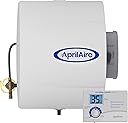
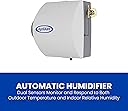
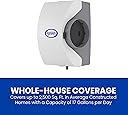
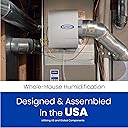
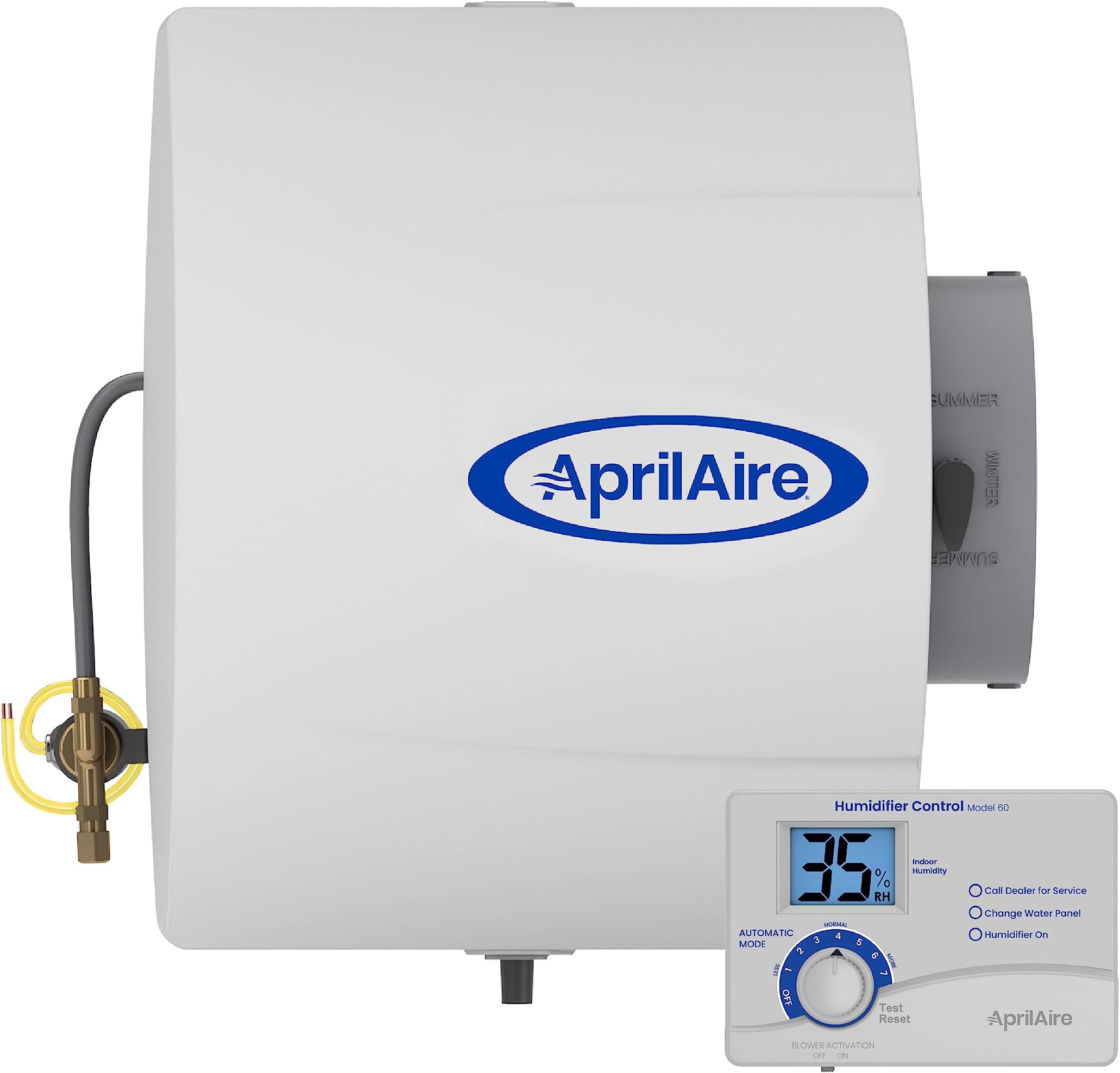
The Aprilaire 400 is a 24V drainless whole-house humidifier designed to cover up to 5000 square feet with a powerful 17 gallons per day output. Featuring an automatic digital control system and dual sensors, it ensures precise humidity levels while conserving water through a unique evaporative process. Made in the USA by the industry leader, it offers a low-maintenance, efficient solution to dry air problems in large homes.


| ASIN | B004PDDZRS |
| Brand Name | Aprilaire |
| Capacity | 17 G/day |
| Color | White |
| Control Method | Touch |
| Customer Reviews | 4.4 4.4 out of 5 stars (293) |
| Filter Type | Wick |
| Floor Area | 4000 Square Feet |
| Global Trade Identification Number | 00686720004001, 00686720104008 |
| Included Components | Dual Sensors, Remote Control |
| Item Weight | 8.8 Pounds |
| Manufacturer | Aprilaire |
| Material | Wood |
| Model Name | 400 |
| Model Number | 400 |
| Operation Mode | Auto |
| Other Special Features of the Product | evaporative |
| Part Number | 400Z |
| Power Source | Corded Electric |
| Room Type | Living Room |
| Runtime | 37 hours |
| UPC | 686720104008 |
| Voltage | 24 Volts (AC) |
A**M
Great humidifier, no more wasted water going down the drain!
B**N
I spent a lot of time deciding on a humidifier. I checked humidity levels all over the house and they were pretty consistent at 23-25% at 25-30 degrees outside. My home is 3000 sf and the specs for this model put that size at its limit. I was debating between the 600 and this model, the 400. Ultimately, I picked this model for its efficient water usage and after a lot of use I am positive I made the right choice. Unlike other humidifiers this one does not drain water unless there is a problem. Water still comes in from the top and flows over the water panel but water flow stops when a holding cup gets filled on the bottom. Other models just keep running water until there is no longer a call for humidity by the humidistat. The water in the cup is then wicked up and then water flow turns on again, This happens over and over as needed. Installation was pretty straight forward. It took $36 worth of parts at the hardware store and about 3 hours to get it installed. Tape the supplied outline on either the supply (make sure it's above the AC Coil) or the return duct and cut a hole. Find a spot for the bypass (a 6" round duct) on the other duct and make a hole there. The unit mounts the the duct with several screws (self taping sheet metal screws make fast work) and two screws for the 6" duct coming off of it. Just a tip - if the unit can be mounted with the first section of duct attached then screw it on before mounting it. I had a little trouble getting a drill in there once it was mounted to the furnace. I used metal tape on the edges of the unit itself and all the duct joints. I used two adjustable elbows and a short section of flex duct to make the connection between the unit and the bypass. Now for the water. I did more research on this than I care to admit. Here's what I kept reading, if the furnace does not have long run cycles then run hot water to the humidifier. They explained it that if the furnace doesn't get hot for a long time then the humidifier will not work as efficient. So, with that logic I ran hot water to it. The kit includes a saddle valve which makes for an easy install. Unfortunately these aren't the greatest so I put in a different valve. This took more time than anything else. Once the valve was in, I ran the shortest possible length of tubing to the humidifier in an attempt to keep the incoming hot water as hot as possible. After running the humidifier for some time now, my opinion is the hot water makes no difference. The water flow doesn't run enough to keep it hot for very long. I found that water will run for maybe 1 minute max before the fill cup fills and shuts off the water. After a couple minutes the cup will empty and water will run again, but this time for even less time because the water panel is already wet. The heat from the furnace, even on a short run time, seems to do just fine. Next was the wiring. Turn off power to the furnace to avoid frying the board. I tapped into an existing 24VAC line for the power, connected the C (common) and H (humidifier) from the furnace board, the white and yellow from the humidifier and the outside temp sensor wires to the humidistat. I mounted the humidistat before the humidifier on the cold air return. The humidistat will work in automatic mode based on outside temperature. I found this a little conservative for my home. When in manual mode I can maintain over 40% humidity without a problem. I usually don't keep it this high but wanted to see if it could do it. I took the same humidity readings as prior and have a reading within 3% throughout the house.
J**.
This Aprilaire 400 arrived quickly and with no damage. One small 1/4 inch ferrule was missing but was easily acquired from a hardware store. The price was very competitive compared to other sources. Installation was not for the faint of heart but it is now installed and works perfectly.
M**M
The AprilAire 400 installed on a Heil HVAC system with forced air / AC Full disclosure: I'm not an HVAC installer, plumber, or electrician (I'm not even a mechanic) and have never attempted any similar project prior to this one. I was not given this product in exchange for a review. I understand that does happen. Please read the entire text and especially the NOTES AT THE BOTTOM. Once I fully researched the installation procedure by watching a number of YouTube videos and perusing the manufacturer's owner's manual and installation booklet for the Model 60 controller and the main unit, I decided I would order this humidifier to replace another, different brand, unit that was not working. WARNING: Ensure the power is OFF for the HVAC circuit prior to attempting the installation. Allow yourself ample time to complete this project, so if it an extremely cold day, it's probably not a good time to try pulling off this project, since you won't be able to heat your home during this time. The entire project took me about 5 hours, give or take. Some of which was discovering I needed additional hardware, e.g. new bypass duct, wire nuts, wire ties, etc..., so trips to the store added more time to it. I had to pick up a few things to do the tasks necessary to complete the installation. I purchased a metal cutting jigsaw blade to make the existing cut larger for the AprilAire 400, 100ft of 2-conductor solid 20 gauge wire (tried to find stranded, but wasn't able to in a reasonable gauge and length), a small tube of silicon sealant to seal up the hole I was to drill through to the outside for the temperature sensor, a drill bit designed for drilling through masonry/brick (ensure it is long enough!), a special hole cutting bit for metal (for the control sensor that's mounted on the return duct) - it was basically a round 3/4" piece, as required, with a main bit in the center to keep the drilling centered and accurate), some wire ties for wire management, a bag of wire nuts appropriate for the wire sizes being combined, a 6' length of expandable and flexible duct work for the bypass (from return duct to humidifier) - the existing piece was slightly too short to reach the new humidifier, so I opted to just replace it with something easier to work with.), and a roll of foil type duct tape (doesn't become brittle like regular duct tape). I already had: 1. Copper tubing for the water line 2. Wire stripper/cutter 3. Black & Decker 9.6V cordless drill/screwdriver 4. Copper tubing cutter (a device that is put around the tube and spun till it cuts it) 5. Existing 24V connection with a sufficient amp rating (from previous humidifier) 6. Sheet metal shears to cut where I could not use the jigsaw 7. A wood drilling bit (to drill through the floor a hole to run the outdoor temperature sensor) 8. Sheet metal screws from old humidifier mounting 9. Longer (3/4") sheet metal screws for mounting the control sensor to the supply duct 10. A jigsaw 11. Various other tools, i.e. wrenches and screwdrivers. The most challenging parts of the installation were feeding the outside temperature sensor through the outside wall and cutting the supply duct behind where the humidifier mounts. I did not have any existing holes to use on that side of the house. The other sides were either on the south or just too difficult to get to from the basement. The second most tedious part was cutting the existing humidifier's duct hole larger. I used the jigsaw where I could, but had to finish up quite a bit with sheet metal shears. Mounting of the saddle valve seemed almost too easy. I have a combo of mostly PVC and some copper piping. I opted to saddle on a hot water pipe just up from my water heater (about 4ft away), which is right next to the furnace anyway. I taped over the removed humidifier's screw holes to prevent air leakage. The old unit was shorter and wider than the new unit and had a much smaller duct opening behind it. A high level approach: 1. Run the outside temperature sensor 2. Disconnect power to HVAC system 3. Remove existing humidifier, if applies 4. Drill 3/4" hole in return duct to mount control sensor (adhering to distance requirements in booklet) 5. Run wires where they need to go per the control sensor instruction booklet 6. Tape up template on supply duct, being sure it is level,(install instruction page) and draw around it for where you need to cut and then cut it out. 7. Mount humidifier into new supply duct hole 8. Mount saddle valve. The instructions did not say to turn off the water supply for copper or PVC, but I did anyway. 9. Run copper tubing to humidifier's solenoid valve. Tighten per instructions. 10. Run copper tubing line to saddle valve and giving enough to work with, cut the tubing to length 11. Mount the copper tubing to the saddle valve 12. Wire the 24V as described in the manual. Be very careful with this part, it was a bit confusing to me at first. Look at the drawing to make better sense of it. 13. Connect your 1/2 inch inner diameter (I.D.) tubing to a drain or a condensation pump 14. Restore water flow - checking for leaks (check again after a while - often takes a while to develop some leaks, if they are small) 15. Restore power to the HVAC system 16. Test the unit per the instructions to ensure proper operation Notes: I experienced a very slight leak at the saddle valve. It was easy to fix by tightening everything, except the saddle mount itself. Be sure not to over tighten the actual mount, as it could crush the pipe. Just make sure it is tight and secure. It should NOT easily slide if mounted well. The leak I experienced was at the actual compression connection of the tubing. I had to use the sheet metal shears when cutting parts of the rectangle behind the humidifier mostly because the cooling coil sitting behind this area had some coolant tubing that was too close to the area being cut. Had I used the jigsaw entirely, I would have damaged the cooling tubes. Be careful with this. This review may contain errors, for which I apologize for in advance and I assume no responsibility or liability. Be sure to read your instructions thoroughly. It is recommended that a qualified HVAC installer handle the installation. My order of events reflect my actual order of events, but some things could likely be done in a different order. When in doubt, have a professional do it.
A**N
I bought the AprilAire 400 specifically because my basement doesn't have a floor drain near the furnace. The best part about this unit is that it uses a float system to evaporate all the water, so it doesn't dump anything out of a drain line. It saved me the huge hassle and extra cost of having to buy and install a condensate pump. The installation went okay, but the instructions weren't the best. They get the job done, but they aren't the best or most clear. I had to Google a few things to make sure I had it all installed correctly. Overall, itโs a solid humidifier that actually works. If you're in a spot where you can't easily run a drain line, this is definitely the one to get. Itโs kept my house much more comfortable this winter without any leaks or mess. This can be installed without the outdoor temperature sensor installed, you have to flip a switch in the controller to manual mode. I plan to install the sensor next summer as it's too cold outside to work on a project like that. Overall works great for my application and brought my indoor humidity from 5-10% up to 35% where I set it at.
Trustpilot
2 weeks ago
1 day ago