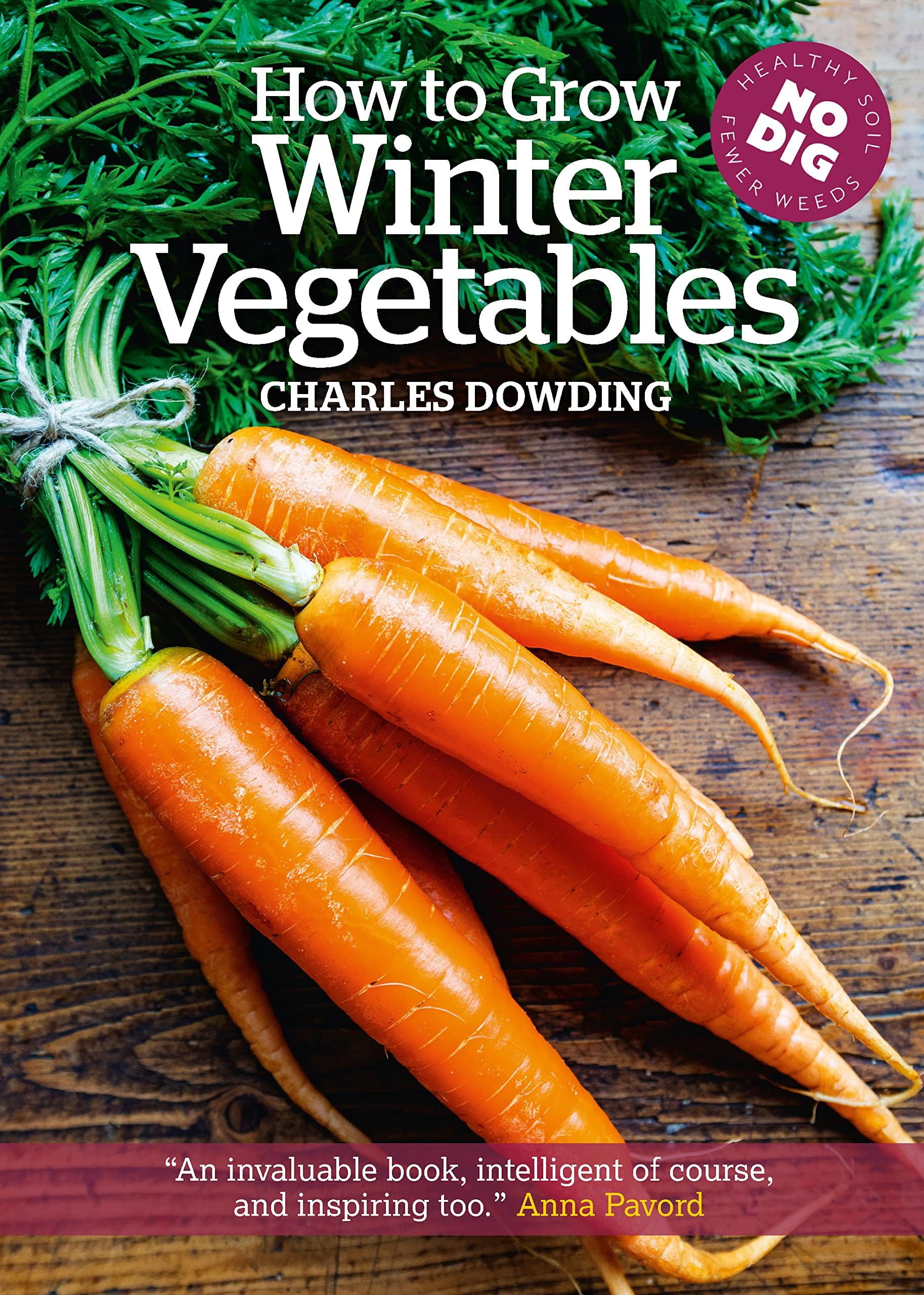
How to Grow Winter Vegetables
Product ID: 54598001
🌱Frost-hardy winter crops guide
📅Month-by-month growing calendar
📸Full-color garden photography
Desertcart purchases this item on your behalf and handles shipping, customs, and support to Vietnam.
🌿 Grow beyond the season—winter veggies, redefined!
How to Grow Winter Vegetables by Charles Dowding is a beautifully illustrated, expert guide that empowers gardeners to cultivate and harvest fresh produce throughout winter. Featuring a detailed monthly sowing calendar, frost-hardy crop advice, and practical storage tips, this book transforms the coldest months into a productive growing season.
| Best Sellers Rank | 282,621 in Books ( See Top 100 in Books ) 67 in Greenhouses & Conservatories 296 in Vegetable Gardening |
| Customer Reviews | 4.7 out of 5 stars 296 Reviews |
S**B
Excellent advice for growing for winter
I rate Charles Dowling highly, he's an experienced vegetable grower and a brilliant communicator. This is my third book of his and the one I have been waiting for. Every year my allotment skills improve and I build on past experience BUT in winter I have rarely managed more than a small crop of purple sprouting broccoli and a few leeks. Next winter will be different. The book is extremely well laid out with best sowing times very clearly explained. From this I have been able to fill my diary with reminders for sowing and planting. The fantastic photos show what to expect at all stages from seedling to plant to mid-winter. I highly recommend it.
C**S
Excellent book
Really practical with lots of great tips for times of sowings,suitable crops and growing methods to help garden over winter,but actually it's really useful for summertime too to help you plan ahead so you don't run out of plants later in the year.Wish I had got this book sooner!
C**H
Everything you need to know about growing winter greens
Best varieties, sowing and planting times and loads of tips - advice gleaned from a lifetime of growing winter salads and greens. A wonderful resource. Invaluable if you want to keep your plot producing through the winter. Charles Dowding is an inspiration!
N**D
Very good, but flawed
Overall, I've been impressed by this book. Not only does it address a topic, winter growing, that isn't dealt with elsewhere, but the author also includes an impressive amount of information in only 232 pages. I'm fairly new to vegetable gardening generally, so it could be that others have covered some aspects of this, but the only other books I've come across are the classic one by Hessayon (The Vegetable and Herb Expert), Harrison's "Vegetable Growing: Month by Month", Hills' classic but quirky "Month by Month Organic Gardening", and Dowding's other book "Organic Gardening"; none of these seem to deal with growing over Winter. That said, having followed Dowding's advice what I mainly found was that not much does grow over Winter, but I did learn quite a bit trying things I read in his book, and I remain intrigued by the notion. The key issue, as far as I can see, is overwintering, namely the planting of crops that can *survive* Winter and then have a head start. His advice for many vegetables was sound, and I'm now seeing quite a bit of growth. Of course, overwintering cabbages is nothing new and could be found in many other books, but many of the other crops don't appear to be dealt with elsewhere. The flaw? Well, it's poorly laid out and so it's difficult to find the info you're looking for. For instance, if I wanted to know about growing cabbage I can look in the index and will find "cabbage, growing", and then find references thereto on pages 23, 54, 102-103, 109, 115, 126-127 & 142. They're all legitimate, useful references, and I applaud the thoroughness of the referencing, but surely a further level of sub-referencing is called for?! Most of the reasons for the plethora of page numbers is due to starting planting in different months (very helpful, by the way!), so just have different index entries!: e.g., "growing, june", "growing, july" etc. It's not beyond the wit of man.... (A smaller gripe is the title of Chapter 15 (An Amazing Array of Vegetables). How on Earth is this informative? That said, overall, the positives heavily outweigh the negatives and a second edition with these issues addressed would be a classic in my view. The most impressive aspect is the amount of info he gets in there. It's also much more impressive than Dowding's "Organic Gardening", which I wasn't too keen on.
I**T
More crops, less work.
Really well written. Most importantly, this is not one of those books where the same old "traditional"advice is trotted out. Charles has done extensive trials and kept comprehensive records and THAT is what makes his books so valuable. For instance, I spent 15 years following the accepted wisdom that ground needs digging and that compost and muck must be dug into the soil. That is rubbish. I tried the no dig, surface mulching method - and it works! Not just that, but with far better results! No more double digging for me. Far fewer weeds. Bigger and better crops. Thank you Charles! By the way, he has really good videos on YouTube as well and watching those inspired me to give it a go. Try it yourself. You won't be disappointed.
M**R
Gardening.
In keeping with the Authors previous two Gardening Books this is a must. Having been a gardener for 40 years I thought I knew most of the answers.....not to be .... I realised I still had much to learn...and this is the book to do it with. Sensible..practical..full of reasoned information. A great book..
A**R
Ideal Book for my first year of growing vegetables
So much information, backed up with wonderful photographs .. absolutely invaluable book to inspire me on my path of growing my own vegetables.
B**L
started with no dig in 2012
This is just the latest book that I have from Charles and I have to say that in a difficult growing year I have had outstanding results with little effort having followed his no dig method. his books are easy and clear to follow and I would not be without them
K**E
Unglaublich umfangreiches Praxiswissen
Dieses Buch sollte man unbedingt zusammen mit Organic Gardening vom gleichen Autor kaufen, denn diese beiden Bücher ergänzen sich hervorragend! Auch hier handelt es sich um ein Buch jenseits der üblichen Plattituden, die viele Autoren gegenseitig voneinander abschreiben. Der erste Teil über die No-Dig-Methode an sich, ist erfreulich kurz gehalten, viel muss man auch nicht darüber schreiben, so einfach ist sie. Das Unglaubliche an diesem Buch ist das detaillierte Wissen über die besten Anbauzeiten für bestimmte Salat- oder Gemüsesorten. Das Wissen des Autors speist sich aus seiner Praxiserfahrung und vielen Versuchen, Irrtümern und Experimenten über Jahrzehnte hinweg. Auch seine Gedanken zu möglichen Fruchtfolgen sind sehr umfangreich. Es gibt aber keine fertigen Anbaupläne, wer danach sucht, ist hier falsch. Aber durch die Informationen über Fruchtfolgen und Anbauzeiten kann man sich leicht seine eigenen Pläne zusammenstellen, ohne an vorgefertigte Ideen gebunden zu sein. Anfangs war ich ein bisschen verwirrt, warum in einem Buch über Wintergemüse der Spargel so viel Aufmerksamkeit bekommt, bis mir im letzten Kapitel klar wurde, dass für Charles Dowding der Ernte-Winter bis in den Juni dauert. "Hungry Gap" würde ich frei als Sauregurkenzeit bezeichnen, wenn draußen zwar schon wieder viel wächst, es aber dauert bis geerntet werden kann. In diese Zeit fällt unter anderem die Ernte des Spargels, dank dessen frisches lokales Gemüse in dieser mageren Ernte-Zeit auf den Tisch kommt. Natürlich beziehen sich alle Angaben von Charles Dowding auf seine Klimazone im Südwesten Englands, aber mit etwas Geschick und Frostschutzvliesen und Winterschutz lässt sich einiges auch auf rauhere Lagen übertragen. Ich halte dieses Buch zusammen mit "Organic Gardening" vom gleichen Autor für eine wunderbare Grundlage, um einen Einstieg in die Selbstversorgung aus dem eigenen Garten zu finden.
A**R
Excellent Information
I feel equipped to sow seeds at the right time to have a more successful crop of winter vegetables next year. Well presented information and a very practical book.
M**N
A Hidden Gem
While I have quite a collection of books about winter vegetable gardening, I turn to this book a lot for advice on timing. This is the best organized manual I have seen on how to grow crops for eating in the winter. The author gives specific, practical advice for what to do each month for each vegetable: preparing, planting (including spacing for best results, giving you a range), care, and special concerns. He also has helpful charts for at-a-glance help. He's been a market gardener for many years and it shows. I'm surprised this book isn't more popular. My guess is that it is because the author lives in the UK and the book hasn't been promoted in the US. I've found the author's timing and culture recommendations work very well for my mid-Atlantic garden as long as I keep in mind that his winters are a bit milder than mine, and his climate is usually more rainy and cooler in the summer. If you live in the South, you will need to grow short-day onions (he grows long-day onions), and the timing will be different.
K**.
Not applicable where we really have winter.
Nice little book but just not useful in colder growing zones.
B**X
Great Book! Not quite right for my growing area, but a good reference.
I loved all the details about each plant's requirements. I wish that the recommendations about timing were more about light and temperature and moisture, rather than say, March, or May, or whatever works for Charles Dowding in his specific region. For example, knowing when peas sprout or flower or fruit or stop doing any of those activities moisture- or temperature-wise is more helpful than knowing what month is a good month for him to do those things. I live in an area dominated by microclimates! That said, I learned a lot about many winter vegetables, and have much more courage to try growing them now.
Trustpilot
3 weeks ago
1 month ago