
Buy anything from 5,000+ international stores. One checkout price. No surprise fees. Join 2M+ shoppers on Desertcart.
Desertcart purchases this item on your behalf and handles shipping, customs, and support to Vietnam.
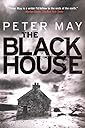
Nominated for the Barry Award Best Mystery/Crime Novel of the Decade The first book in an enthralling mystery series from award-winning author Peter May. "A WRITER I WOULD FOLLOW TO THE ENDS OF THE EARTH." --Marilyn Stasio, The New York Times Book Review "SHINES WITH INTRIGUE AND SUPERB PLOTTING." -- USA Today Every step toward solving the case brings Scottish detective Fin Macleod closer to a dangerous confrontation with the dark events of the past that shaped--and nearly destroyed--his life. When a grisly murder occurs on the Isle of Lewis that bears similarities to a brutal killing on mainland Scotland, Edinburgh detective and native of the Isle of Lewis Fin Macleod is dispatched to the Outer Hebrides to investigate, embarking at the same time on a voyage into his own troubled past. As Fin reconnects with the people and places of his tortured childhood, the desolate but beautiful island and its ancient customs assert their grip on his psyche. Review: A Superb and Evocative Mystery - The Black House is the first book by Peter May that I've read. It certainly won't be the last, as I've already downloaded the Kindle version of The Lewis Man, the second book in his novels about the island of Lewis, and am looking forward to Kindle publication of the third and final volume in the series. Let me state clearly at the outset: Readers looking for a plot-driven, linear mystery focused on detection and police procedures should think carefully before tackling the Black House. Yes, the book is put in motion by a grisly murder on Lewis, and yes, the mystery is resolved in the end. But what lies between the start and finish of the book is much more about Lewis itself and the hardy and "dour" people who eke out a living on the northern- and western-most of the Outer Hebrides islands, off the western coast of Scotland. Black House brilliantly captures the grit and near-poverty that impact the inhabitants and shape their lives. At the outset, Edinburgh detective Fin Mcleod is dispatched to his native Lewis to investigate the murder of a character from his past who was discovered hanged and disemboweled in a shed on the island. The murder bears a striking resemblance to an unsolved Edinburgh case Fin's in charge of (and has made little progress in solving). Fin's left a lot of personal baggage on Lewis, but he also brings a lot with him: his marriage is falling apart in the wake of the hit and run death of his young son. Devastated by his loss, Fin has been absent from work for so long that his boss basically tells him that solving the Lewis case is his last chance to stay on the force. As Fin goes about his work on Lewis, he finds the murder inextricably linked to his own childhood on the island, including a tragedy in his past that he has completely blocked out. In order to solve the case and apprehend the villain, Fin has to look deep within himself, his past, and the islanders he knew and loved (or hated) as a child and young man. The journey of self-discovery is absolutely integral to the novel, and through it we learn about Fin, Lewis, and the people who live there. The story is told both in third- and first-person narratives, which some readers may find off-putting. It took me a few chapters to adjust to the form, but I soon found myself immersed in the novel. May does an exceptionally fine job of vividly capturing the terrain, weather, and hardscrabble lives of the Lewis islanders. This is very much the novel's main focus, as the mystery is literally (and plot-wise) the means to return Fin to his roots and put him on the voyage to discover himself. It's beautifully done, particularly the scenes of the guga hunters on Sula Sgeir, where Lewis men to this day stubbornly maintain their hereditary rights to the annual gannet hunt. I have never been to Lewis but I have spent time on Skye, and May's depiction of the environment and particularly of the extraordinary quality and play of the light take me straight back to my own memories of the beauty and desolation of the western Highlands and Skye. Black House is much more than a mystery. It is a moving portrait of a way of life -- warts and all -- that is sustained in the face of many challenges. Through the narrative, we come to care deeply about Fin and his fellow Lewis islanders. It is an exceptional novel that happens to also be a mystery. It succeeds brilliantly on both counts. Review: A Thriller with Depth and Power. - I sat up and paid attention when The New York Times Book Review (Marilyn Stasio) raved: “Peter May is a writer I’d follow to the ends of the earth.” So, of course I added this author to my TBR list. The Blackhouse is the first in a trilogy based in the Scottish Hebrides and featuring Edinburgh cop, Fin Macleod. Finn is sent to his childhood home on Lewis where a grisly murder on the isolated island seems to be a copy of a murder he has been investigating in Edinburgh. Our detective is somewhat relieved to leave Edinburgh, as he grieves over the death of his young son, while half-heartily trying to prevent his marriage from crumbling. But first a few warnings: If you’re at all squeamish, you’ll have to tiptoe through; 1) a full and grisly autopsy, and 2) an honored, traditional, but gruesome, gannet hunt on a small island. If you’re expecting a standard police procedural, you’re happily in for more than you bargained for ~~ this thriller has depth and power. Now that you have read the Book Barmy safety warnings, fasten your seatbelts, because you are in for a great mystery read. Mr. May is an extraordinary writer, able to take us seamlessly between two narratives. Masterfully moving from first person to develop Fin’s story growing up on Lewis, and then the third person to tell the current day story– Fin’s broken, disillusioned adult childhood friends, the crime, and its resolution. Mr. May has a gift for developing his characters, all of which are remarkable, but Fin is an especially likeable hero. Having the grand experience of staying in the Outer Hebrides many years ago, I can attest that he also gives the reader unbelievably lovely descriptions of the harsh life in the Outer Hebrides — bleak, windy, and yet starkly beautiful. The plot is a compelling mix of retribution, revelations, and intrigue. High accolades for what turns out to be not only a tightly plotted thriller, but an insightful treatise on growing up, moving away, then coming home — one you thought you’d moved beyond. From the introduction: Three things that come without asking: fear, love and jealousy. A Gaelic proverb And thank you Mr. May for a brilliant ending. See more at BookBbarmy(dot)com
| Best Sellers Rank | #158,548 in Books ( See Top 100 in Books ) #855 in International Mystery & Crime (Books) #2,459 in Suspense Thrillers #2,778 in Murder Thrillers |
| Customer Reviews | 4.3 out of 5 stars 19,144 Reviews |
D**N
A Superb and Evocative Mystery
The Black House is the first book by Peter May that I've read. It certainly won't be the last, as I've already downloaded the Kindle version of The Lewis Man, the second book in his novels about the island of Lewis, and am looking forward to Kindle publication of the third and final volume in the series. Let me state clearly at the outset: Readers looking for a plot-driven, linear mystery focused on detection and police procedures should think carefully before tackling the Black House. Yes, the book is put in motion by a grisly murder on Lewis, and yes, the mystery is resolved in the end. But what lies between the start and finish of the book is much more about Lewis itself and the hardy and "dour" people who eke out a living on the northern- and western-most of the Outer Hebrides islands, off the western coast of Scotland. Black House brilliantly captures the grit and near-poverty that impact the inhabitants and shape their lives. At the outset, Edinburgh detective Fin Mcleod is dispatched to his native Lewis to investigate the murder of a character from his past who was discovered hanged and disemboweled in a shed on the island. The murder bears a striking resemblance to an unsolved Edinburgh case Fin's in charge of (and has made little progress in solving). Fin's left a lot of personal baggage on Lewis, but he also brings a lot with him: his marriage is falling apart in the wake of the hit and run death of his young son. Devastated by his loss, Fin has been absent from work for so long that his boss basically tells him that solving the Lewis case is his last chance to stay on the force. As Fin goes about his work on Lewis, he finds the murder inextricably linked to his own childhood on the island, including a tragedy in his past that he has completely blocked out. In order to solve the case and apprehend the villain, Fin has to look deep within himself, his past, and the islanders he knew and loved (or hated) as a child and young man. The journey of self-discovery is absolutely integral to the novel, and through it we learn about Fin, Lewis, and the people who live there. The story is told both in third- and first-person narratives, which some readers may find off-putting. It took me a few chapters to adjust to the form, but I soon found myself immersed in the novel. May does an exceptionally fine job of vividly capturing the terrain, weather, and hardscrabble lives of the Lewis islanders. This is very much the novel's main focus, as the mystery is literally (and plot-wise) the means to return Fin to his roots and put him on the voyage to discover himself. It's beautifully done, particularly the scenes of the guga hunters on Sula Sgeir, where Lewis men to this day stubbornly maintain their hereditary rights to the annual gannet hunt. I have never been to Lewis but I have spent time on Skye, and May's depiction of the environment and particularly of the extraordinary quality and play of the light take me straight back to my own memories of the beauty and desolation of the western Highlands and Skye. Black House is much more than a mystery. It is a moving portrait of a way of life -- warts and all -- that is sustained in the face of many challenges. Through the narrative, we come to care deeply about Fin and his fellow Lewis islanders. It is an exceptional novel that happens to also be a mystery. It succeeds brilliantly on both counts.
B**Y
A Thriller with Depth and Power.
I sat up and paid attention when The New York Times Book Review (Marilyn Stasio) raved: “Peter May is a writer I’d follow to the ends of the earth.” So, of course I added this author to my TBR list. The Blackhouse is the first in a trilogy based in the Scottish Hebrides and featuring Edinburgh cop, Fin Macleod. Finn is sent to his childhood home on Lewis where a grisly murder on the isolated island seems to be a copy of a murder he has been investigating in Edinburgh. Our detective is somewhat relieved to leave Edinburgh, as he grieves over the death of his young son, while half-heartily trying to prevent his marriage from crumbling. But first a few warnings: If you’re at all squeamish, you’ll have to tiptoe through; 1) a full and grisly autopsy, and 2) an honored, traditional, but gruesome, gannet hunt on a small island. If you’re expecting a standard police procedural, you’re happily in for more than you bargained for ~~ this thriller has depth and power. Now that you have read the Book Barmy safety warnings, fasten your seatbelts, because you are in for a great mystery read. Mr. May is an extraordinary writer, able to take us seamlessly between two narratives. Masterfully moving from first person to develop Fin’s story growing up on Lewis, and then the third person to tell the current day story– Fin’s broken, disillusioned adult childhood friends, the crime, and its resolution. Mr. May has a gift for developing his characters, all of which are remarkable, but Fin is an especially likeable hero. Having the grand experience of staying in the Outer Hebrides many years ago, I can attest that he also gives the reader unbelievably lovely descriptions of the harsh life in the Outer Hebrides — bleak, windy, and yet starkly beautiful. The plot is a compelling mix of retribution, revelations, and intrigue. High accolades for what turns out to be not only a tightly plotted thriller, but an insightful treatise on growing up, moving away, then coming home — one you thought you’d moved beyond. From the introduction: Three things that come without asking: fear, love and jealousy. A Gaelic proverb And thank you Mr. May for a brilliant ending. See more at BookBbarmy(dot)com
M**R
Love this book so much!
Fin McLeod is an Edinburgh policeman who just lost his ten-year-old son, Robbie. Coming back from his leave, he is put back on the still-unsolved murder case he was investigating at the time of his son's death. A new similar murder returns him to the place he was raised, the Isle of Lewis, to see if there's any connection between the two crimes. As the investigation proceeds, Fin must confront his past, reliving it through many of the people who were is friends and acquaintances when he was growing up. The author alternates between Third Person POV for the murder and First Person for the flashbacks of Fin's past. The two are more connected than Fin realizes at first. While the Third Person chapters are a somewhat typical police procedural story, albeit very well-written, I really loved the stories of Fin's past. I've been to Stornoway (stayed at the Crown Inn where Fin resides during his visit) and visited many of the places mentioned in the book which was just an extra fillip of pleasure to me as a reader. I will quibble and say that I didn't find many places open in Stornoway on a Sunday, but otherwise, it's always fun to revisit real locations in a book. The writing, as I said, is excellent and captures the stark landscape of Lewis very well. The story itself is engrossing, filled with tension as Fin gets closer to the murderer and the resolution of his own past which is surprising and melds well together. The book deserves all the kudos it has received, and I can't wait to read the next book in the series. As is said in the book, though in a different context, "A journey that you would rather never end always passes quickly." The Black House finished all too quickly for me.
C**N
Dark, Compelling, Beginning to a Trilogy
"Blackhouse" is the bleak, yet stellar, first volume in Scottish writer Peter May's Lewis Trilogy. Edinburgh detective Fin Macleod, grieving the loss of his only son and his crumbling marriage, is sent to the Outer Hebrides island of Lewis to investigate a gruesome murder that has similarities in its grisliest details to a seemingly unrelated Edinburgh murder. In the process of the investigation, Fin awakens and confronts many painful memories of his early life on the island: the early deaths of his parents and subsequent life with a flaky aunt, bullies and teachers who harass him for his Gaelic speech, a former best friend with whom he has lost touch, and (of course) his first love. Fin's most compelling and painful memory involves a real Lewis tradition that is still carried out today: twelve men make a perilous journey to Sula Sgeir, an island in the North Atlantic that consists of a hard gneiss rock, ledges, and caves, and rises several hundred vertical feet above the ocean. (See http://en.wikipedia.org/wiki/Sula_Sgeir). The purpose of the journey is to capture, kill, butcher, and process several thousand young gannets, who used to be a food staple, but are now a delicacy. During the expedition, the men live in an ancient blackhouse, or botha, on the island. May alternates chapters about Fin's contemporary investigation and, in the youthful Fin's voice, his painful childhood. May introduces elements of Scottish natural history, seafaring history, geology, and folklore, such as the predictions of the Brahan Seer Kenneth Mackenzie and St. Ronan's sister, Brenhilda, who was believed to have inhabited and died on Sula Sgeir. Following up on these historic and folkloric elements made reading "Blackhouse" on my Kindle with a Wikipedia app a joy! Best of all, unlike so much crime fiction, the tension and mystery of the story build until the very end of the book's conclusion--one that this reviewer, at least, did not see coming. I immediately downloaded the next book in the trilogy and it is next on my list to read--something I do not usually do. Usually I am ready for a break from the characters and read something else before I return to a subsequent book in a series, but Fin Macleod is such a sympathetic character with such a dark history and unresolved demons that I wanted more right away.
P**Y
The start of a trilogy
Murder in the Outer Hebrides. A former local arrives to help solve the crime and confront his past,but its much better than this cliche sounds. My only real complaint is that this is obviously the first of a trilogy and was planned as such and as such we have a huge back story placing all the characters in their place. The mystery is a cheat as well as there is no way the reader could have any chance of solving the murder by clues alone. But the ending is a ripper. Just when you thought things couldn't get anymore sordid they do. The author has a background in television and knows how to set a piece. The characters are pretty one dimensional but his description of a landscape and the character's surroundings are superb. He writes pictures which I love. This is a bleak sad story set in a bleak harsh place, populated by unfulfilled lives but it is a book you have to read if you want to complete the set - I do, so it is time well spent.
M**R
I started out thinking this was a five star book...but it turned into a soap opera
The best part of this book is the Outer Hebridean setting, on the Isle of Lewis (off the west coast of Scotland). I've been there, but found the place so profoundly depressing I left after one day - it's bleak, and even when you walked into a pub, the unhappiness in the air made you want to immediately leave. The author does a good job of describing the Isle of Lewis, but his history in television is reflected in this book, which was rejected by many publishers before finally being accepted. And no wonder. There's really not much attention paid to the murder mystery -- instead, it's one of those coming of age stories that men may like more than women (the message seems to be that you need to do something dangerous and bloody to be a man, and then there's all this father-son stuff). The center of the story is a male rite of passage on Lewis: the annual harvesting of 2000 fledgling sea birds -- in two weeks -- which serves as a coming of age rite for the protagonist of this story, I ended up skimming most of that - not interest in hearing the details, which distressed me and were irrelevant to the story anyway. The protagonist detective is Fin MacLoud, who grew up Gaelic-speaking on this island, is now an Edinburgh police detective, and returns to Lewis to investigate a murder that resembles one he investigated in Edinburgh. In the tradition of Scottish mysteries, the detective's superiors don't like him, and he's a maverick (a la Rebus). Fin's young son has very recently died, and returning to the place of his youth triggers a lot of memories of his youth. The present day chapters are interspersed with chapters recounting Fin's past (beginning with his first day at school as a child). Needless to say, the past and present all tie together and his memories help him solve the murder. But it's incredible - in the worst way and very contrived. In the great tradition of novels, Fin is pretty much an orphan with little family. Fin, an only child, is orphaned at age 8 (nobody in this book dies of old age) -- and his aunt who raises him doesn't love him and provides a cold home. She dies while he's still young, leaving him alone. Fin is not the only child: they seem to abound in a book full of odd families and unlikable people. Four characters fall from great heights, either to their death or severe injury. Descriptions of the weather (almost always foul) abound - Gothic weather. Everyone drinks too much and too often (that's probably realistic), or they smoke marijuana. The women are two dimensional,and serve mainly as props or for men to compete over. I found a troubling attitude toward them by the men -- one woman screaming rape is described as engaging in "wishful thinking." Another woman who says she has been raped must be lying. There's lots of fighting, between men of the same age, and father-son relationships are at best absent. By halfway through the book, I felt like I was watching a Gaelic soap opera. Maybe this is really a men's book - or someone who doesn't like a well-plotted mystery, but prefers a focus on conflict between characters in a novel. If you're interested in the Hebrides, it's definitely worth a read. And it did make me want to go back and give the place another chance.
B**S
Not just a murder mystery…
I thoroughly enjoyed this book. I read this as the January Book of the Month with Scotland Book Club. A small-town crime and mystery novel based on the Isle of Lewis, Scotland follows the return of Finn Macleod, now a DI with Edinburgh police, to his hometown and the ghosts of his past, to investigate a murder of a larger than life childhood bully. This novel is filled with fact, ways of life on Lewis, and historical interest references. I found myself making copious notes on points of interest and then Googling information surrounding mentions in this book, from the actual Isle of Lewis, Blackhouses, Lews Castle, the Brahan Seer and the Lewis Chessmen through to the reality of the Guga Hunt and images of Leith Walk. This book brought a remote area of Scotland to life for me. Even though this was a crime and mystery novel, there are so many layers within the story which do not fail to surprise and add extra depth and strength to the characters and the plot. Very well developed in all aspects. I will make time to read the next 2 books in this trilogy. Thank you Scotland Book Club for introducing me to this author. My favourite lines with beautiful words from the novel: ‘And for once it is warm, like breath on the skin, caressing and seductive.’ ‘The sea breathes gently upon the shore, phosphorescent foam bursting silver bubbles over gold.’ ‘And all the regrets of his life rose up inside him like water in a spring, and he knelt beside the boat and wept.’ ‘A blink of moonlight splashed a pool of broken silver on the ocean beyond.’ ‘Real sleep. The kind that wraps all thoughts in black and lowers them gently to the bottom of a deep, dark well.’
C**L
A great, but depressing glimpse into Outer Hebrides life and culture with a murder on the side.
I don't really know how I feel about this book. It is well written, compelling and interesting but I was disappointed that the murder mystery takes a backseat to the "coming-of-age" story about Fin and the Island of Lewis. Detective Fin MacLeod is sent back to his old village on the small island from his post in Edinburgh. He hasn't been home for 18 years and so the trip brings back loads of memories, mostly regrets and sadness. Basically no one on the island is happy, except the island detective (Gunn) that is assigned to him. Everyone they encounter is sad and seem to have peaked out in their teeaged years and been just getting by since then. It can be depressing. And Fin spends more time revisiting old friends and reliving old events than he does investigating. The book is full of great descriptions of life on the island and the terraina and culture, which is very old-fashioned. Many people have a reason to kill the man "Angel" so the plot is complicated. There is a strange local custom where 12 men from the island harvest seasbird chicks on a remote and dangerouse rock island which apparently is a real thing. All in all I was drawn to the book but depressed by it too.
C**N
Ottima scoperta
Giallo molto ben scritto, dall'ambientazione insolita e dal quale si fa davvero fatica a staccarsi fino a quando non lo si è finito. Oltre alla trama avvincente ho apprezzato le bellissime descrizioni dei luoghi (mi è venuta voglia di partire per le Ebridi) e della vita e della mentalità isolane. Per il lettore italiano (o almeno per il sottoscritto) inoltre è interessante l'uso di parole e/o espressioni scozzesi, ed è stata una piacevole sorpresa scoprire che del gaelico è ancora vivo e vegeto come lingua famigliare/affettiva rispetto all'inglese. Leggetelo e non ve ne pentirete, ho acquistato la seconda parte della trilogia appena finito questo libro.
L**S
Genial primera entrega!
¿Por qué he tardado tanto en descubrir a Peter May? Conocía al autor, conocía su obra, y aún así he tardado demasíado en adentrarme en su literatura. Para el que busque la típica novela de investigación policial, “The black house” quizás no termine de convencerlo. Porque aquí la investigación en sí misma es la parte menos interesante de la trama. Lo que realmente destaca es la narración de todo lo que acontece en la isla de Lewis, su gente, sus costumbres, su idioma gaélico, su religiosidad, y por encima de todo, sus paisajes y su clima. Nos sumergimos en ello con ayuda de una prosa extraordinaria, unas descripciones que te hacen sentir un habitante más de este inhóspito rincón de Escocia. El vaivén entre presente y pasado no sólo no es incómodo, sino que es esencial para el desarrollo de la trama. La historia se desarrolla entre el asesinato que se acaba de cometer, y un incidente ocurrido en An Sgeir, (la isla de los cazadores mencionada en el título en español), 18 años atrás, en el que nuestro protagonista, Fin Macleod, tuvo un papel determinante. Todos los capítulos concernientes a las vivencias del futuro policia en la isla durante su niñez y adolescencia son para mí lo mejor del libro. Una auténtica maravilla. No es una novela perfecta al 100%. Puestos a criticar, hay algunas consideraciones que quizás el autor debería haber terminado de pulir, no siendo la menor de ellas el hecho de que, acabando de sufrir una tremenda tragedia familiar, hay momentos en la novela en los que parece que el protagonista se olvida por completo de su situación. Y en cuanto a su bloqueo mental, me imagino que más de un lector habrá enarcado las cejas. Aún así, Peter May completa una primera parte de la presente trilogía que te deja con ansias de más. Como escritor de viajes tendría el éxito garantizado, pero en su calidad de escritor de novelas de misterio combina ambas con una maestría envidiable. No tardaré en leerme la segunda parte. Es más, ¡estoy deseándolo!
D**G
An excellent and unusual storyline
This is the first Peter May book I've read and it certainly won't be the last. I bought this for my Kindle for only 20p, thinking that if it was rubbish at least I hadn't wasted much money. However, I am delighted to say that I've now discovered a brilliant new author and I will be reading the other two books in the "Lewis" trilogy. I have actually been to the Isle of Lewis (Stornaway) as part of a cruise around the Scottish "Highlands and Islands" and reading this book makes me want to go there for a much longer visit. The author's vivid descriptions of the wild and remote landscape, the crofters' cottages, the fishing boats and the tight community are a joy to read. The storyline and the characters are unusual; the narrative is written partly in the present and partly in flashback which is integral to the plot and the characters' relationships with each other. As another reviewer has said, the detailed description of the ancient traditional 'guga' (gannet) hunt which are as much a test of endurance for the men of Lewis as tradition is fascinating and left me wanting to find out more about it (yes, it does happen in real life). All in all, a thoroughly enjoyable read and different from your average 'detective' stories.
S**T
Great setting and plot, wonderful use of words
I just finished The Black House and loved it. The writing is wonderful and the plot intriguing and full of unexpected twists. The Isle of Lewis is an evocative setting which the author capitalises on - it is now on my bucket list to visit. About to download the next in series
A**A
great combination of gripping stories and learning about the Western Isles
A great read - quite sad it's only a trilogy. Well researched apart from a few minor details. The characters seem real, likable and the stories are well thought out. Certainly enough drama and action to keep you turning the pages. The descriptions of the Outer Isles and its people, present and past, are vivid and I could feel and smell the atmosphere. It's great how the author weaves local customs, characters and stories into the books. I like the way there is always a personal account as well as a third person account. The author is very sensitive writing from an elderly Alzheimer sufferer's perspective (in the second book), the perspective of a 5-6 year old in the first book, doesn't always ring true- sounds more like a 12 year old. Overall I thoroughly enjoyed all three books.
Trustpilot
1 week ago
2 days ago