Buy anything from 5,000+ international stores. One checkout price. No surprise fees. Join 2M+ shoppers on Desertcart.
Desertcart purchases this item on your behalf and handles shipping, customs, and support to Vietnam.
🎧 Elevate your everyday sound — because your ears deserve the best.
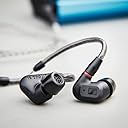
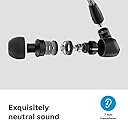
The Sennheiser IE 200 In-Ear Headphones combine 7mm TrueResponse dynamic drivers with precision manufacturing for consistent, neutral sound reproduction. Featuring a dual-position bass tuning system, flexible earhooks, and a detachable braided MMCX cable, these wired earbuds deliver customizable, high-resolution audio with exceptional comfort and durability. Ideal for professionals and audiophiles seeking premium sound on the go or at the desk.


| ASIN | B0BRPR38JR |
| Additional Features | Noise Cancellation |
| Age Range Description | Adult |
| Audio Driver Size | 7 Millimeters |
| Audio Driver Type | Dynamic Driver |
| Best Sellers Rank | #6,296 in Electronics ( See Top 100 in Electronics ) #525 in Earbud & In-Ear Headphones |
| Brand | Sennheiser |
| Brand Name | Sennheiser |
| Built-In Media | IE 200 Earphones, Braided Cable with MMCX Connectors and 3.5mm Plug, Silicone and Memory Foam Sets (S, M, L), Carry Pouch, Safety Guide |
| Cable Features | Detachable |
| Carrying Case Color | Black |
| Color | Black |
| Compatible Devices | Cellphones |
| Connectivity Technology | Wired |
| Control Method | Touch |
| Control Type | Media Control |
| Customer Reviews | 4.0 out of 5 stars 894 Reviews |
| Ear Placement | In Ear |
| Earpiece Shape | Rounded tip, in-ear |
| Enclosure Material | Plastic |
| Form Factor | In Ear |
| Frequency Range | 6 Hz - 20,000 Hz |
| Global Trade Identification Number | 00810091270813, 04260752331098 |
| Headphone Folding Features | In Ear |
| Headphone Jack | 3.5 mm Jack |
| Headphones Ear Placement | In Ear |
| Impedance | 18 Ohms |
| Is Autographed | No |
| Item Type Name | headphone |
| Item Weight | 4 Grams |
| Manufacturer | Sonova |
| Model Name | Ie 200 |
| Model Number | 700249 |
| Noise Control | None |
| Number of Items | 1 |
| Series Number | 700249 |
| Style Name | Classic |
| UPC | 810091270813 |
| Unit Count | 1.0 Count |
| Warranty Description | 2 year manufacturer |
A**I
Loving it so far
I read a lot of “horror stories” about how quickly these break and how bad they sound, but I want to be fair — they’re better than I expected. I’m new to earbuds, and I was told to download Equalizer APO and Peace right after plugging them in. That’s what really made these feel top-tier for me. Out of the box, they do sound a bit flat. But after setting up those two free pieces of software, the sound becomes amazing. I’m usually a headphone user, but headphones get warm after long hours, and over time that actually caused some scalp irritation for me. I was expecting a noticeable downgrade switching from headphones to earbuds, but honestly, after tuning, these sound about as good as my headphones. The fit is also excellent. I really like the flexible over-ear design — the soft, bendable hooks let me wrap them comfortably around my ears, and they stay secure all day. I use headphones for more than 8 hours a day while working on my PC, so I would consider myself a heavy user. If these can last two years under that kind of usage, they’ll likely last much longer for most people. That said, I only use them at my desk and not on the go, so this won’t fully reflect real-world wear like constant movement, rubbing, or stress on the cable. I’ll update this review after a few months of use to see if they really break as easily as some comments suggest. If you don’t see an update from me, that means they’re holding up well. You can check the date of this review to see how long they’ve lasted without issues. If they make it to around two years and then eventually break, I probably won’t come back to update — at that point, they’ve already been well worth the money to me. I’ve also heard they can last 5–6 years with proper care, so we’ll see how it goes.
D**D
Most comfortable, best sounding ear buds at this price point
As someone who has always had a deeper appreciation for high quality audio but only just recently started getting into “audiophile” level stuff (which these aren’t, this is intro to audiophile), I can honestly say I’ve never owned a better, more comfortable set of ear buds or IEMs. I’ve had many of Apples offerings, Beats, SkullCandy, and KST to name a few. This blows all of them out of the water. First off the fit. They fit my ears so well I almost forget I’m wearing them. I’ve always found AirPods and AirPod Pros very comfortable to wear for extended periods of time, but putting either set in after these is uncomfortable. They seal well in my ears and come with enough bud bits that they should fit most people very well. I also have not noticed what I call “ear creep,” where the buds back out of your ear over time. Every set of buds I’ve ever had back out of my ears over time, especially while eating or chewing gum, but these made it through a couple meals today with no noticeable ear creep. I keep trying to push them back in out of habit but find they’re still fully seated. I was not super impressed with the audio quality at first. They were a little tinny and had little low end. It was there, but hard to hear. Then I remembered the dual position ear tips and reseated them farther down the stem. That made a huge difference. The bass is there now and the balanced audio I was promised is there. The highs sing, the bass and sub bass are present without being overwhelming, and the mids are not harsh. I know these are geared more for average consumers and do not have a truly flat EQ, but to my ears after listening to my studio monitor over ears these are close. I wanted a good set of wired headphones to use with my old iPods as I didn’t have a wired set of buds. They had to be comfortable, sound good, and do a decent job blocking out outside noise. These check all the boxes. These Sennheisers are good enough that you will notice a difference in sound quality between different playback devices playing the same music. I can tell the difference between my iPhone 12 Pro Max, iPod Classic 6th Gen, and iPod classic 5th gen. The hype about the 5th gen’s sounding the best is real. There is a noticeable difference with these headphones. Going from these back to AirPod Pros is almost painful with the drop in high end frequencies and boost in low end. I typically do not listen to music with my AirPods though, just using them primarily for audiobooks and hands free texting and phone calls when out and about, which is fine. They are more convenient than these in that aspect, being wireless and having a microphone, but for a good sit and listen these Sennheisers are amazing. I’ve had these for a day so I cannot attest to the durability or quality issues other users have had, but if I have any issues I will update the review. Overall, I am impressed with these buds and look forward to many hours of listening enjoyment with them. As a musician I appreciate that they can pull double duty on stage as they are technically IEMs, so I can also replace my uncomfortable IEMs at the same time with these.
I**.
It’s an investment in to your relationship with music that requires effort on your part.
If you don’t know what you’re getting in to, which is an investment in to your relationship with music, be ready for a bit of frustration from a product that demands more from you than a pair of AirPods. I’m gonna try to balance the technical with the practical here for people who maybe don’t know a lot about the megas and gigas but appreciate hifi sound when they hear it and are maybe feeling lost on this journey to find what they’re looking for in headphones. If you can’t tell the difference between $20 apple earbuds and $10 airport skull candies, then the value of these might be lost on you. But if you’re interested in exploring hifi sound and learning what the hype is about this is a nice forgiving entry level product. They offer a wider “soundstage” than most headphones you’re probably used to (in other words hearing the separation between instruments and feeling like they are taking up more room). There’s a couple big “BUT’s” here - those being that… 1) They are IEM (In-ear monitors) which means they are going to be LIMITED in the width of soundstage they can offer because they are going right in to your ears and are bypassing parts of your ear anatomy (all those curves in your ear) that have evolved to separate and amplify the way you hear sounds. That means that you’re getting a pretty straight forward and isolated sound that may almost sound unusual. Some people like that and swear it’s a superior listening experience. Others say that over-ear headphones create a much better sound because they can create a more natural sense of space and actually interact with more of your ear anatomy. I tend to fall in the later camp but I do enjoy these more for specially one thing, which brings me to my next point…. 2) The quality of these headphones is directly correlated to the quality of your sound files. Spotify streaming will likely sound no better on these than any other headphones because the bottle neck for sound quality there is Spotify, not your headphones, because Spotify compresses their music a ton. Apple Lossless will provide you with a great listening experience on these, but then you’re in the Apple ecosystem with AirPods that offer AI upscaling and artificial Spatial Audio so you’re better off sticking with Apple hardware at that point. So then what are these actually good for? For me, it’s listening to my old school iPod. For you it’s probably that or another analog portable music player like an MP3, Cassette or CD player. And that’s part of this journey in to the hifi sound hobby - getting past streaming services and getting in to CD’s that give you 16bit FLAC or MP3’s at 320 kbps audio on devices that can’t stream and don’t support Bluetooth (which also causes sound compression). And that’s the sweet spot for a product like these - portable, entry level hifi, analog listening devices that don’t have enough power to drive a hifi set over ear cans. That’s really where you’ll get your moneys worth from these. On an iPod gen 7, or one running rock box, these things SHINE. Now in THAT segment there’s a few other things to consider here. The cable that comes with these is actually pretty junky, you’ll hear it in your ears when the cable scrapes against your shirt, and they can sometimes cut out or pick up interference. The good news is these have a modular design and the MMCX cable can be replaced and upgraded for not a lot of money. Still an inconvenience so I’m taking off a star for that. Sound signature is flat meaning it doesn’t inherently add treble or bass, which is by design so you have more room to customize the sound to your liking. That’s what to expect from all hifi category headphones. You are meant to adjust the EQ balance yourself through a DAC or on your device itself. If you found this useful and you’re entering the hifi category or have been in it for a while and are going from over-ear to IEM’s, these are a good entry level product to get you in to it.
R**C
Dull/flat sound.
They sound dull/flat with zero bass. I connected them to different sources and got same dull/flat sound. They are a hassle to fit on your ear and they fall out. Different ear tips made no difference in the sound or fit. The cord is too short.
M**K
Forget the Naysayers
Forget the naysayers. These are great IEM. I own a variety of headphones and IEM. My lineup includes: Etymotic’s ER4XR, 2XR, Sennheiser’s HD650, 560S, Meze 99 Classic, and now the IE200. I also own a nice 2.1 system. I love collecting good sounding things. They’re all different and rotating them keeps things fresh! These IEM look great! It’s a Sennheiser product so they know what they’re doing when it comes to design. The right and left are easily recognizable. They fit nice and comfortably within your ear. Let’s get to the sound. First, let me set the scene. I’m not a fan of super detailed headphones. I’ve sold multiple pairs of HiFiMan products because my brain cannot handle the detail and treble. It sounds artificial to me. Some people think I’m crazy. My favorite sounding headphone is the HD650. People criticize that headphone for its “lack of staging” and “veil” but to me it is the most realistic sounding headphone I’ve ever owned. The timbre and midrange on it is amazing. With that in mind, I love the sound of the ie200. Are they on the level of the 650? Of course not. Are they as analytical and detailed at the 4XR? No. They have have a v shape curve to them. To me they are “exciting neutral.” They are very enjoyable. I listen to jazz and I find them to be great. The vocals aren’t as pronounced as they would be on the 650 but they’re still nice and smooth. Tested them on Diana Krall, RAM, Spyro Gyra, Steely Dan etc. They pass the test. Some people claim they have bad semblance but I didn’t experience that. I use foam tips. I’m very happy with my purchase.
J**N
IE 200: A "somewhat" budget-friendly IE 600?
Thorough and personal analysis in IE 200 Review Sennheiser is a company that many people in the general public know as an "audiophile" or one that emphasizes sound quality more than any typical audio gear company. While their other consumer-oriented audio devices, such as the Momentum series, received mixed receptions, there is no denying the impact and legendary status they made thanks to their Audiophile/Professional Headphone lineup. Their headphones, such as the HD 25, HD 560s, HD 6XX, HD 600, HD 650, and HD 800s, received critical acclaim and are regarded as one of the best headphones in the market. Even the old HD 600, made in 1997, is still strong thanks to its neutral signature, fantastic timbre, and great vocal emphasis from its intimate soundstage. Despite the competition, such as the Sundaras, DT 990, Fidelio, and R70x, the HD 6X0 series is still a valid option for many consumers who want great neutral audio at around $200-$500. While Sennheiser does well with its headphone lineup, its IE lineup is somewhat mixed. Their previous IEMs, such as the Pro lineups, the Momentum series, and older audiophile brands, such as the IE 800s, received mixed responses. Even with the addition of IE 900 and IE 300, many audiophiles do not view their IEM lineup highly until the introduction of the IE 600, where issues that make the IE 900 and IE 300 seem underwhelming to some are now resolved. After the critical acclaim of the IE 600, Sennheiser later created the IE 200 for the general market. It costs around $150-$110, a fraction of the price from the hefty $699-$799 price tag from the IE 600. While it is far better than the previous installments, it is mixed from the audiophile community on certain key factors. Some dislike the bass emphasis and microdetails of the IE 200, while others clamored for a budget-friendly IE 600. Regardless, after purchasing the IE 200 and the IE 600, I am giving my thoughts on this IEM and comparing it with other IEMs, earbuds, and headphones. Build-quality: - The IE 200 is a respectable IEM with a plastic housing and a recessed MMCX braided cable. The plastic is black and has no speckled glitter from the IE 300 (which is slightly disappointing considering that I love the IE 300 aesthetic). The build is TINY and fits snuggly to any ear. It is very comfortable, and I have no issues using it for hours. The braided cable that comes out of the box smells off but disappears after some use. The cable does not scream confidence, though, as it appears fragile, thin, and cheap. It is also microphonic, meaning that any movements you make, you hear the sound of the cable while listening to the music. It can get very annoying if you have a huge beard, as the cables can rub it. Therefore, I recommend purchasing a recessed MMCX cable from an off-brand market. The ear-tips are underwhelming as they do not seal well and often leave out the bit of the bass, which was further butchered thanks to the weird mechanic of the IE 200 that I will discuss later. Also, the tips often pop off when you smile or frown hard. It can get annoying when you are smiling on a track, and then the tips pop off, resulting in a different tonal signature. Regarding rating, I would give this a 6/10, pushed mainly by the comfortable housing. Tonality: - IE 200 is a somewhat toned-down V-shaped IEM. Therefore, the treble and sub-bass are boosted forward while the mids (where most instruments are recorded) are recessed. Consequently, it is not recommended for mixing and mastering but for music enjoyment. If you are a bass-head, will you like this one? Because of the mechanics of the IE 200 with the slit of the nozzle, plus the tips not covering the IE 200 well, the bass will bleed and sound relatively subdued. However, you can try giving it more bass by getting aftermarket tips or taping around the slit of the nozzle to cover it. Thus, you can get a more satisfying bass. The bass with one of these techniques sounds more emphasized, rumbly, and well-controlled. The treble is delicate. Cymbals and trumpets sound rather lively and well done. However, it is not too hot nor too sibilant. However, while done well from the treble, the microdetails and the timbre on the treble region leave a bit to be desired, and it does sound a bit plasticky sometimes. Lastly, the mids are well-controlled. The vocals are well executed, although not as emphasized or forwards; the bass and treble do not cloud the instruments. However, there are some tracks where the mids are pushed way too far from the treble and bass, and there are other tracks where the vocals in the IEM could've given more intimacy. Regardless, it is a good, clean-sounding, well-controlled V-shaped IEM. It is not neutral but a fun IEM for motivation or working out. In terms of rating, I would give this a score of 7/10 without tape mod or aftermarket tips and 8.5/10 with those included because the bass emphasis provides more balance and fun in my ears. Technical Performance: The IE 200 is respectable with its technical performance. The soundstage (how far the instrument is from your head) is broad for an IEM, and the instrument separation is good. Considering that IEMs are closed back, I doubt it will go as far as an HD 800s, but the soundstage is close to an HD 600 but slightly farther. It is comprehensive but not wide that it blows your mind. The imaging (how precise and pinpoint the instruments are located) is also respectable. The musical instruments are primarily found in the front and side views but do not do well behind. The accuracy could be more holographic, but you can tell where it is. I doubt it will be way too useful for gaming, but purchasing this is a good choice for those who want an IEM/Headphone for gaming (although I would recommend buying an HD 58x, AKG701, or HD 6xx for gaming if you have some money to purchase around $150-$200). The timbre (how realistic and lively the sound is) is realistic and well-defined. The music does not feel dead or bland but instead sounds natural. It does not sound as lush as some headphones I will compare to (especially in the treble), but this is respectable for those who want realism. The IE 200 does not out-compete other IEMs in this price market but fails to succeed in others. However, the timbre is excellent enough to handle some IEMs in that market. In terms of rating, I would give this a 7/10. A good performer but not an excellent one. Now let's compare a few audio gears I have briefly: Jabra Elite 7 Active, Air Pods Pro 2, Tangzu Wan'er, HD 600, and IE 600. IE 200 vs. Jabra Elite 7 Active: In terms of tonality, both are close. When I first listened to the IE 200 with tape mod for the first time, I was underwhelmed by how similar it is compared to Jabras. However, there are critical differences between the two. IE 200 emphasizes more on the treble than the Jabra Elite 7 Active. The cymbals sound more lively and realistic than the Jabras. The technical performance is a step up compared to the Jabras, as it has better soundstage, imaging, and resolution. The timbre is also a mild step up. The bass is similar to both devices with tape mod or aftermarket tips, but IE 200 has more detail and texture to the bass than the Jabras. I prefer IE 200 very slightly, but I wouldn't mind Jabras. IE 200 vs. Air Pods Pro 2: Surprisingly, Air Pods Pro 2 is just slightly behind in technical performance compared to the IE 200. Air Pods have noticeable soundstage and imaging, and the mids are more emphasized than the IE 200. However, the bass is more subdued, and the treble is not resolving. IE 200 has a clear upper head on the treble with better clarity, detail, and resolution than the Air Pods Pro 2. Compared with Frank Sinatra's Fly Me To the Moon, the Air Pods Pro 2's treble resolution is muddy, but the IE 200 sounds cleaner. I prefer the IE 200s. IE 200 vs Tangzu Wan'er: The Wan'er treble can be sibilant compared to the IE 200. The Wan'er's resolution is not as good as the IE 200, and the vocals can sound distorted in specific recordings. The imaging and the soundstage are respectable compared to the IE 200, but the IE 200 is slightly better on both fronts. The timbre isn't good on the Wan'er because of its resolution and somewhat sibilant treble. However, the compromise makes sense considering that the Wan'er is a $20 IEM vs. IE 200 being a $120-$150 IEM. I prefer the IE 200s. IE 200 vs. HD 600: Comparing the HD 600 vs. IE 200 is unique. IE 200 is a V-shape IEM, while HD 600 is a neutral-sounding headphone. Regardless, because HD 600 is neutral, the treble and bass are de-emphasized in favor of the mid-pushing forward. This, alongside the intimate soundstage of the HD 600, results in the timbre being very good for the price. Compared to the IE 200, the HD 600 has more body, better imaging, better timbre, and much better vocals. Some tracks that make it an easy comparison are MGS's Call into the Night and AOT's 2an, where in both tracks, the intimacy from the headphones creates girth and pure lushness and liveliness on the instruments that make the IE 200 seem lacking. The HD 600 gives the violin in the 2An more realism and the fake-chorus more body and emotion that showcase the pure pristine of that song. Call into the Night's vocals are in your face in the HD 600 instead of the IE 200's. The vocals feel very accurate and in front of you when you listen to them, and you feel the emphasis on the vocals when she is trying to sing. Because the IE 200 has a v-shape tuning, the vocalist sounds a bit recessed and even strained at some moments. However, keep in mind that the HD 600 also has issues. The sub-bass and bass emphasis being subdued results in a less engaging headphone than the IE 200. For those who do not care for vocals but care for EDMs, Metal, or any exciting/interesting sound, you may prefer IE 200 over HD 600 based on tonality alone. I prefer HD 600 more, but this one is mainly based on whether you like neutrality over V-shape. IE 200 vs. IE 600 IE 200 is compared to IE 600 a lot. Therefore, I will provide my thoughts on both and see whether you will spend additional money on the IE 600. Both tonalities sound remarkably similar (tape modding/aftermarket tips included), but the IE 600's treble sounds much more energetic, lively, and detailed than the IE 200. The IE 600's timbre from the treble sounded so good that it sometimes felt real. The cymbals in Star Wars, The Droid Invasion, and the Appearance of Darth Maul sound extremely real, as if the cymbal smack right next to your face. The sub-bass felt very real and rumbly on that soundtrack. You can feel the impact in your head when you listen to the IE 600 instead of the IE 200. Regarding imaging and soundstage, it is a clear step-up improvement in comparison to the IE 200. The IE 600's imaging is fantastic, and there are many moments when the sound comes behind you instead of in front of you from the IE 200. A great in that regard is Beach Bowl Galaxy in Super Mario Galaxy, where one point, the music loops in front and then in the back of your head. The IE 600 does that, while the IE 200 never does it. It is clear that the IE 600 is a step up in technical performance and tuning; it is a perfect IEM for those who want a fun-sounding IEM. However, considering the price, I can't tell whether it is worth spending several hundred for this IEM since I recognize the QC issues on that IEM. However, it is worth every penny if you are interested in purchasing IE 600 and acknowledge the potential QC problems. But for the general consumers, buying an IE 200 is enough to get at least 60%-75% of what IE 600 offers. Because the IE 200 cost significantly less, it can be a steal to some. I prefer the IE 600, but the IE 200 is no slouch. It does things well, but the IE 600 nudges further thanks to its technical performance. In conclusion, the IE 200 is a respectable IEM viable for the $120-150 price tag. It has a great timbre, well-controlled bass, and good treble (if you mod it or use aftermarket tips), and its technical performance is respectable. However, because of the rapid shift in the IEM community with tons of IEMs releasing, especially ChiFi, into the market, the IE 200 is a tough sell. The accessories and cables are decent but lacking compared to other ChiFi IEMs, with the housing being the saving grace because of its comfortability. It is clear that if Sennheiser wants to continue its legendary status through the IEM market, it must crucially acknowledge the market and compete well. The IE 600 is still one of the best IEMs in the $500-$1000 range, and no doubt that it can continue its status for years to come, but the IE 200 is likely to be outcompeted by other markets. This is especially true of the IE 200's average/below-average technical performance and accessories. I recommend buying it when these are on sale but consider other IEMs in the market and weigh the pros and cons before considering it. I will give this a 3/5. I hope Sennheiser's future IEM lineups continue to improve in the future.
R**Y
Wothwhile replacememt
Significant improvement over the regular Apple headphones. Efficient enough not to need an external DAC/AMP. I'd advise with these to forget the dongles. Your best sound, and least trouble, comes when you pair these with the IPhone 6s. You need to use the old style 3.5mm headphone port. Forget the lightning or USB-C ports. Buy an older model and keep it as your only music source. The problem with the newer ports (lightning, USB-C) is that the port is asked to do too much. It messes up the sound and the stability. You need a dedicated port. The 6S DAC is very good. Plus you get to charge the phone while you're listening. Sometimes the older way of doing things is actually better than the newer way. Also, use the large silicon tips if possible. They give the best sound if they fit. The default tips are great for comfort but inferior for bass. Large silicon plus 6S gets you 90% of the way to audiophile. The other 10% is nice but maybe too expensive. One more thing. You'll need a better cable. It doesn't change the sound but there's less interference.
D**T
The only review you need to read about this IEM
This IEM has received a lot of hype and criticism from the audiophile community, and unfortunately, the criticism is warranted with this IEM. I am going to break this review down into three parts: comfort, accessories, and sound. Comfort: This is the most important part of any IEM because you want an audio product to be comfortable on your head/ears for a long listening session. The IE200 is the most comfortable IEM in the price range due to its very small profile and lightweight design. You can still these IEMs into any ear with the right-sized tips and they will fit great. Accessories: This is where the IE200 begins to fall apart. The silicon ear tips are very thin and do not seal well into my ears and it is disappointing from to see this from a brand like Sennheiser because I own $20 IEMs (Truthear Hola, Moondrop Chu, and 7Hz Zero) that come with better silicon ear tips than the IE200. The foam ear tips are good and usable but I could not find a good fit with either the large or medium foam tips. The cable is the cheapest cable I have ever seen on an IEM. It is extremely thin, it tangles very easily, and the microphonics (meaning hearing cable noise when rubbing against your clothing or skin) is horrible. The worst part about the cable is because of how the IEM is designed at the connector point. You have to remove the plastic ring where the cable connects to the IEM in order to replace the cable, and will most likely void your warranty. Sound: The IE200 does not sound good compared to other IEMs in its price range because of the quality of sound and how the nozzle is designed. The nozzle has a hole notched into itself so you can set the stock tips in two positions to give you two different tunings. The first has the tips sitting flush against the IEM to give you more of a V-Shape style of signature while the second has the tips sitting towards the edge of the nozzle to give you a brighter signature without bass. The problem with this design is you can not reliably stick these IEMs in your ear while the ear tips are in the second position without the ears tips sliding from the nozzle to the body of the IEM and the notch on the nozzle creates bass leakage even when using aftermarket tips. The bass of this IEM is not very dynamic (meaning it does not feel like bass sounds like it is good quality bass). It lacks a lot of energy and compared to IEMs like the Tripowin Olina SE and even the $20 IEMs I own that I mentioned earlier have better bass energy and dynamics than this set, The lower and upper mid-range sound a bit average compared to other IEMs in its price range but is not terrible. I enjoy how instruments sound in the mid-range, except they are extremely colored by the treble. The treble is probably the Achilles heel of this IEM. The mid and upper treble is very boosted, which is very unique amongst single dynamic driver IEMs and adds a lot of sparkle to your music at the cost of making everything sound very thin. To my ears, treble sounds energetic and the most forward thing in the mix but is very unnatural. Overall, I do not recommend this IEM at all. The sound and accessories of this IEM are not worth the $150 and I recommend saving $50-$70 to buy either the Tangzu Zetian Wu Heyday Edition or the Aful Performer 5.
Y**N
Highly Recommended Seller
Outstanding quality. The seller provides prompt responses to all questions. I highly recommend both this item and the seller. 大変満足しております。質問に対しても迅速にご回答いただき、安心してお取引ができました。非常におすすめのショップです。
A**S
Affordable IEM by industry leaders
Balanced neutral IEM with crisp mids and treble and fast bass.
Y**D
بعد استخدام ست شهور
ثاني منتج اخذه من سنهايزر ما شاء الله جودة بالصوت تصميم رائع الي تتميز به السماعة خفه وزنها السلبية الوحيدة ان ال Bass ليس بهذيك القوة ولاكن شي منطقي لان نفس monitors صغير بشكل عام السماعة يتعطيك تجربة عامة متوازنة جدا اعتبرها واحد من الخيارات الي ناوي يستخدم IEM لاول مره
C**N
ÉCOUTEURS POUR AUDIOPHILES / QUALITÉ ++
La qualité audio des écouteurs est vraiment très impressionnante. Même sans réducteur de bruit actif, les écouteurs insonorise bien de l’environnement bruyant entourant (plusieurs embouts a dispo pour les différentes oreilles) La qualité des basses est vraiment à souligner ainsi que la précision des aigus. Sennheiser tient vraiment la promesse d’un son d’exception. Ces écouteurs donnent vraiment raison d’écouter la musique sans compression.
R**M
READ BEFORE YOU BUY! - Amazing but only if you give them the chance to be...
Absolutely phenomenal IEMs for the price. - The reason why you see such mixed reviews is often due to a lack of people understanding how to use these to their full potential. These IEMs are a testament to why technicalities can sometimes be even more important than tonality. In a chi-fi era defined by iems hyper focused on meta (JM-1) tuning, these stand as a reminder that there is more to a good pair of IEMs than just a frequency responce graph. Oh and I completely forgot to mention how these are one of the most comfortable IEMs on the market! One thing you need to know is that these share the same TrueResponse transducers as the IE 600 and IE 900... Those are $700 and $2000 (CAD prices) IEMs. Take a moment to understand the significance of that fact. Sure the more expensive brothers have better tuning as a result of different case material and number of helmholtz resonator chambers (1 for IE 200, 2 for IE 600, 3 for IE 900). But with just $50 in post-purchase investment, you can turn these IE 200's sounding 95% the same as the IE 600 ($700). You would want to change the cables because the originals are genuinely atrocious (I recommend the Tripowin Amber), do the "tape mod" which basically means to plug up the nozzle dual tuning hole that leaks base with small strip of tape, and get a good quality pair of ear tips that make a good seal in your ears. (I recommend HiBy WG01 or Dunu S&S tips) So how do they sound? Think mostly neutral with a bit of a base shelf (heavily dependent on the seal you get) and with a pleasant airyness. They have a pretty decent soundstage, great instrument separation, and good imaging as well. What these excell at is giving you just the right amount of treble for that great clarity but not too much for it be shouty or undesirable. Everything is smooth yet oddly textured at the same time while maintaining the right amount of sparkle. They are relatively neutral with a slight emphasis on mid focused tuning. I'm not going to try to describe the sound much more because at the end of the day it is highly dependent on your own HRTF, PRTF, the ear tips you use, and the seal you are able to get and so much more. I personally noticed they do benefit from a DAC/AMP despite not requiring it (I used the Moondrop Dawn Pro 2) and I personally didn't have a great experience with foam tips despite their good seal because of how much of the treble rolls off. What I will say, is that this is not an IEM for which you would want to chase a JM-1 tuning with via EQ. There is a reason the Sennheiser audio engineers put that 200-800hz dip in there for example to pull the vocals back and give you that soundstage. The IEMs are very well tuned, you just have to make sure you do the supporting mods you need to make sure you take advantage of it. I would only recommend EQing of these to those who are well versed and experienced in setting up their own EQ profiles and not someone who would simply use an AutoEQ feature. This is one of the most competent IEMs on the market, but it requires an equally competent user to actually bring it to it's full potential. If you think you want to buy these and just use them as is, then don't, because there are much better plug and play IEMs you can buy that would sound better. These do not sound good straight out of the box, you will be disapointed if you do not know what you are buying. But once you do the mods, they will sound absolutely phenomenal. Buy these if you know what you are buying (basically a DIY IE 600), what to expect, and if you are going to upgrade them to have them reach their full potential. Basically, if you have open back headphones, know what an HD 600 is, use a DAC/AMP or even read this far tbh then these are for you. However If you use airpods and stream off spotify at medium quality for data savings then probably not the best buy.
Trustpilot
2 months ago
2 weeks ago