Dereliction of Duty: Johnson, McNamara, the Joint Chiefs of Staff, and the Lies That Led to Vietnam
Product ID: 4811199
Buy anything from 5,000+ international stores. One checkout price. No surprise fees. Join 2M+ shoppers on Desertcart.
Desertcart purchases this item on your behalf and handles shipping, customs, and support to Vietnam.
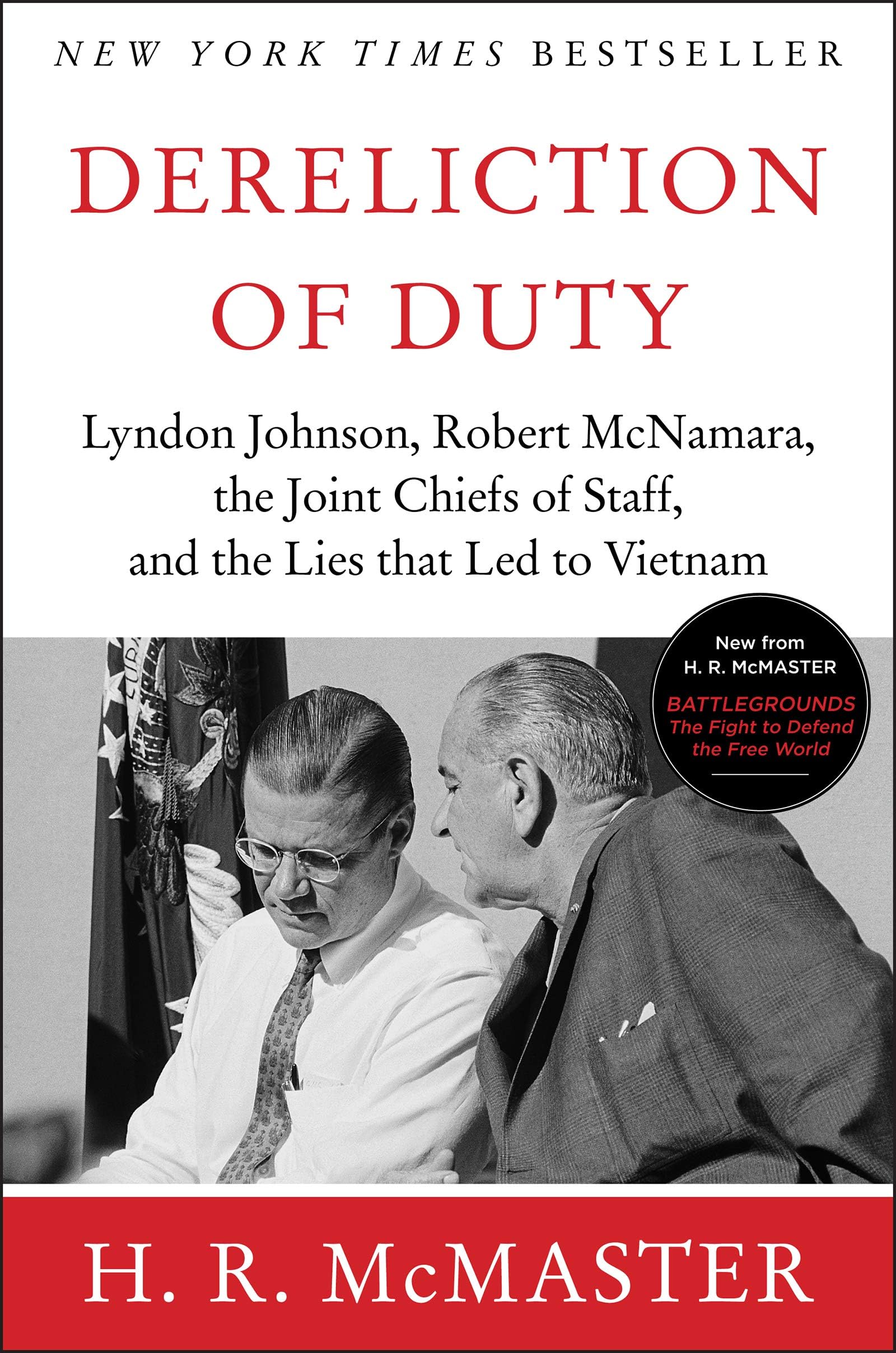
"The war in Vietnam was not lost in the field, nor was it lost on the front pages of the New York Times or the college campuses. It was lost in Washington, D.C." —H. R. McMaster (from the Conclusion) Dereliction Of Duty is a stunning analysis of how and why the United States became involved in an all-out and disastrous war in Southeast Asia. Fully and convincingly researched, based on transcripts and personal accounts of crucial meetings, confrontations and decisions, it is the only book that fully re-creates what happened and why. McMaster pinpoints the policies and decisions that got the United States into the morass and reveals who made these decisions and the motives behind them, disproving the published theories of other historians and excuses of the participants. A page-turning narrative, Dereliction Of Duty focuses on a fascinating cast of characters: President Lyndon Johnson, Robert McNamara, General Maxwell Taylor, McGeorge Bundy and other top aides who deliberately deceived the Joint Chiefs of Staff, the U.S. Congress and the American public. McMaster’s only book, Dereliction of Duty is an explosive and authoritative new look at the controversy concerning the United States involvement in Vietnam. Review: Required Reading: But not for Everybody. - Required Reading, but not for everyone. McMaster has made a valuable contribution towards our understanding of how policy mistakes among the civilian executive yields military disaster. And how the Chiefs of Staff and the other suppliers of policy advice and information to the executive (National Security, etc.) ought to respond to the political objectives of the Executive. I read somewhere that this is required reading for the USMC. His title "Dereliction of Duty" is, surely, a military concern. The military derives its legitimacy from its adherence to duty to both the Commander In Chief And the Constitution.. Had this thesis been meant for the Civilian Executive, "Self Serving Abrogation of Responsibility" might have been a better title. The Vietnam War has been covered from every conceivable angle. What does McMaster have to offer that is new and important? Mostly his focus is on the failures in the relationship between civilian and military command structure. McMaster provides a synopsis beginning with Eisenhower's modifications to the command structure developed by Roosevelt for the WW2 war fighting; Kennedy's radical shift to suit his more collegial style; which Johnson inherited and then further "modified" to cover his insecurity and distorted policy objectives. The author wrote this before the Second Gulf War. Which demonstrated that this same toxic mix of distorting domestic policy objectives and failure to listen to military advice, yields unsatisfactory outcomes. Executive military policy is driven by and influenced by a highly fraught and partisan Congress, and military turf wars. McNamara, Johnson and the other principles fully demonstrate what happens in this case. Unable to offer any prescription for the civilian end of the equation he offers this: " Because the Constitution locates civilian control of the military in Congress as well as in the executive branch, the Chiefs could not have been justified in deceiving the people's representatives about Vietnam. Wheeler, in particular, allowed his duty to the president to overwhelm his obligations under the Constitution. As cadets are taught at the United States Military Academy, the JCS relationship with the Congress is challenging and demands that military officers possess a strong character and keen intellect. While the Chiefs must present Congress with their best advice based on their professional experience and education, they must be careful not to undermine their credibility by crossing the line between advice and advocacy of service interest." Well, sir, good luck with that! The utility of this book is that McMaster writes in a very clear and cogent way. He has a distinct point of view that seems to have been applauded by some of the more right wing persuasion. But this is NOT an ideological diatribe and seems to me to be a fair account. Though, as a diagnostic exercise without any sustainable policy prescriptions. -- The only caveat is that he does grind exceeding small! Covering the two years when Johnson's concern with the Presidential election and other insecurities put in place what was to become the disastrous Vietnam policy. His argument is that many prior evaluations focused on Washington's obsession with anti communism as a foreign policy driver. But that the roots of the disaster lay closer to the personalities in the Executive and with serious flaws among the Joint Chiefs of Staff. Consumed with inter service rivalry and jealousy, and single service answers to war fighting strategy. The fact is Kings have always made war for their own, personal, political purposes. I guess the point of our hallowed Constitution and government and military lines of communication and accountability was supposed to avoid this. It doesn't seem to have worked except in those few occasions (WW2) when an over riding war fighting objective prevails. American wars since have been essentially diplomatic/political ventures with policy objectives. But not often clear military objectives. McMaster's history demonstrates the consequence. (As would a similar analysis of Nixon's Vietnam policy, and Bush's Iraq 2. (As opposed to the entirely successful Iraq 1) Review: Enlightening and disturbing - In the epilogue of Dereliction of Duty author H.R. McMaster writes, "The Americanization of the Vietnam War between 1963 and 1965 was the product of an unusual interaction of personalities and circumstances. The escalation of the U.S. military intervention grew out of a complicated chain of events and a complex web of decisions that slowly transformed the conflict in Vietnam into an American war." McMaster thoroughly explains how this all came about. In November 1963, following the assassination of JFK, LBJ inherited the Vietnam situation, JFK's advisors and advisory style that limited real influence to his inner circle and treated others, particularly the Joint Chiefs of Staff (JCS), more like a source of opposition than advisors. LBJ distrusted advisors and had a low opinion of the top military leaders. There was tension between the JCS and the administration and it grew as the situation in Vietnam deteriorated and the U.S. developed plans to become more involved in the war. Robert McNamara, the Secretary of Defense, became LBJ's right-hand man on Vietnam for three main reasons, according to McMaster: the ineffectiveness of the JCS; LBJ's insecurity; and LBJ's obsession with consensus and his unwillingness to listen to diverse views. McNamara advocated a policy of "graduated pressure," which he believed would convey American resolve and convince the adversary to change behavior. The JCS recommended a more aggressive program. The military saw only two options: get in or get out. McMaster writes that McNamara "forged consensus behind fundamentally flawed strategic concept that permitted deepening American involvement in the war without consideration of its long-term costs and consequences." LBJ preferred McNamara's approach because he didn't think it would jeopardize the 1964 election and it bolstered his image as a moderate candidate. He preferred not to have to make any difficult decisions on Vietnam until after the election. General Maxwell Taylor, head of the JCS, aided LBJ and McNamara in delivering the military advice they wanted to hear. Taylor frequently obstructed JCS members, misrepresented their position to the President and lied to them. The JCS hurt its own cause by being unable to come to a consensus, often because they were trying to protect or advance the cause of their individual military branch. LBJ was at a fork in the road in January 1965. He either had to increase military power or begin to negotiate a withdrawal. To increase military power, however, LBJ needed an incident to justify the decision. He found it in February when the Viet Cong attacked an airfield and killed eight Americans. At the end of the month, LBJ committed ground troops to Vietnam, an irrevocable commitment to war. He believed he could pursue a policy of graduated pressure without involving the U.S. in a major war. He refused to discuss Vietnam strategy in a forthright manner with his advisors, Congress or the American public. He deceived Congress about the growing military presence. By June of 1965, Under Secretary of State George Ball proposed that LBJ and the U.S. cut its losses in Vietnam and begin to negotiate a withdrawal. That proposal, however, was suppressed by McNamara and Secretary of State Dean Rusk. The Gulf of Tonkin Resolution, which was the aftermath of an attack that probably never happened, declared that "Congress approves and supports the Commander-in-Chief to take all necessary actions to repel any attack against the United States and to prevent further aggression." LBJ continued to lie to Congress and the American people because he didn't want Vietnam to take attention and support away from his Great Society legislation. The Great Society constrained explorations of policy options in Vietnam. LBJ's advisors preferred to commit the U.S. to a war and lose it rather than withdraw. Civilian advisors did not evaluate military consequences. They thought they could stop if the policy of graduated pressure failed. The JCS meanwhile preferred an intensive air campaign in North Vietnam to destroy key targets. The JCS wanted a clarification of military objectives, but McNamara refused to relay the request to LBJ. McNamara recommended ground troops as an alternate to bombing North Vietnam. Of course, he continued to drastically understate the number of troops being sent to Vietnam and the extent that the U.S. was involved. In conclusion, McMaster writes, "McNamara and his assistants in the Department of Defense were arrogant. They thought their intelligence and analytical methods could compensate for their lack of military experience and education. They ignored and disrespected history. "Failure in Vietnam was the result of a uniquely human failure, a responsibility shared by LBJ, his principal military and civilian advisors. The failures were many and reinforcing: arrogance, weakness, lying in the pursuit of self-interest and above all, the abdication of responsibility to the American people." This book is enlightening and disturbing. It's difficult to envision a worse way that the situation in Vietnam could have been handled. Although this is a very informative book, the author tends to frequently repeat major concepts long after his point has been made. At times, the book also borders on being a textbook. Although it can be a struggle at times to read, Dereliction of Duty should be a must read for anyone interested in the Vietnam war.
| Best Sellers Rank | #61,619 in Books ( See Top 100 in Books ) #27 in Southeast Asia History #49 in Vietnam War History (Books) #173 in History & Theory of Politics |
| Customer Reviews | 4.4 out of 5 stars 2,799 Reviews |
D**M
Required Reading: But not for Everybody.
Required Reading, but not for everyone. McMaster has made a valuable contribution towards our understanding of how policy mistakes among the civilian executive yields military disaster. And how the Chiefs of Staff and the other suppliers of policy advice and information to the executive (National Security, etc.) ought to respond to the political objectives of the Executive. I read somewhere that this is required reading for the USMC. His title "Dereliction of Duty" is, surely, a military concern. The military derives its legitimacy from its adherence to duty to both the Commander In Chief And the Constitution.. Had this thesis been meant for the Civilian Executive, "Self Serving Abrogation of Responsibility" might have been a better title. The Vietnam War has been covered from every conceivable angle. What does McMaster have to offer that is new and important? Mostly his focus is on the failures in the relationship between civilian and military command structure. McMaster provides a synopsis beginning with Eisenhower's modifications to the command structure developed by Roosevelt for the WW2 war fighting; Kennedy's radical shift to suit his more collegial style; which Johnson inherited and then further "modified" to cover his insecurity and distorted policy objectives. The author wrote this before the Second Gulf War. Which demonstrated that this same toxic mix of distorting domestic policy objectives and failure to listen to military advice, yields unsatisfactory outcomes. Executive military policy is driven by and influenced by a highly fraught and partisan Congress, and military turf wars. McNamara, Johnson and the other principles fully demonstrate what happens in this case. Unable to offer any prescription for the civilian end of the equation he offers this: " Because the Constitution locates civilian control of the military in Congress as well as in the executive branch, the Chiefs could not have been justified in deceiving the people's representatives about Vietnam. Wheeler, in particular, allowed his duty to the president to overwhelm his obligations under the Constitution. As cadets are taught at the United States Military Academy, the JCS relationship with the Congress is challenging and demands that military officers possess a strong character and keen intellect. While the Chiefs must present Congress with their best advice based on their professional experience and education, they must be careful not to undermine their credibility by crossing the line between advice and advocacy of service interest." Well, sir, good luck with that! The utility of this book is that McMaster writes in a very clear and cogent way. He has a distinct point of view that seems to have been applauded by some of the more right wing persuasion. But this is NOT an ideological diatribe and seems to me to be a fair account. Though, as a diagnostic exercise without any sustainable policy prescriptions. -- The only caveat is that he does grind exceeding small! Covering the two years when Johnson's concern with the Presidential election and other insecurities put in place what was to become the disastrous Vietnam policy. His argument is that many prior evaluations focused on Washington's obsession with anti communism as a foreign policy driver. But that the roots of the disaster lay closer to the personalities in the Executive and with serious flaws among the Joint Chiefs of Staff. Consumed with inter service rivalry and jealousy, and single service answers to war fighting strategy. The fact is Kings have always made war for their own, personal, political purposes. I guess the point of our hallowed Constitution and government and military lines of communication and accountability was supposed to avoid this. It doesn't seem to have worked except in those few occasions (WW2) when an over riding war fighting objective prevails. American wars since have been essentially diplomatic/political ventures with policy objectives. But not often clear military objectives. McMaster's history demonstrates the consequence. (As would a similar analysis of Nixon's Vietnam policy, and Bush's Iraq 2. (As opposed to the entirely successful Iraq 1)
B**S
Enlightening and disturbing
In the epilogue of Dereliction of Duty author H.R. McMaster writes, "The Americanization of the Vietnam War between 1963 and 1965 was the product of an unusual interaction of personalities and circumstances. The escalation of the U.S. military intervention grew out of a complicated chain of events and a complex web of decisions that slowly transformed the conflict in Vietnam into an American war." McMaster thoroughly explains how this all came about. In November 1963, following the assassination of JFK, LBJ inherited the Vietnam situation, JFK's advisors and advisory style that limited real influence to his inner circle and treated others, particularly the Joint Chiefs of Staff (JCS), more like a source of opposition than advisors. LBJ distrusted advisors and had a low opinion of the top military leaders. There was tension between the JCS and the administration and it grew as the situation in Vietnam deteriorated and the U.S. developed plans to become more involved in the war. Robert McNamara, the Secretary of Defense, became LBJ's right-hand man on Vietnam for three main reasons, according to McMaster: the ineffectiveness of the JCS; LBJ's insecurity; and LBJ's obsession with consensus and his unwillingness to listen to diverse views. McNamara advocated a policy of "graduated pressure," which he believed would convey American resolve and convince the adversary to change behavior. The JCS recommended a more aggressive program. The military saw only two options: get in or get out. McMaster writes that McNamara "forged consensus behind fundamentally flawed strategic concept that permitted deepening American involvement in the war without consideration of its long-term costs and consequences." LBJ preferred McNamara's approach because he didn't think it would jeopardize the 1964 election and it bolstered his image as a moderate candidate. He preferred not to have to make any difficult decisions on Vietnam until after the election. General Maxwell Taylor, head of the JCS, aided LBJ and McNamara in delivering the military advice they wanted to hear. Taylor frequently obstructed JCS members, misrepresented their position to the President and lied to them. The JCS hurt its own cause by being unable to come to a consensus, often because they were trying to protect or advance the cause of their individual military branch. LBJ was at a fork in the road in January 1965. He either had to increase military power or begin to negotiate a withdrawal. To increase military power, however, LBJ needed an incident to justify the decision. He found it in February when the Viet Cong attacked an airfield and killed eight Americans. At the end of the month, LBJ committed ground troops to Vietnam, an irrevocable commitment to war. He believed he could pursue a policy of graduated pressure without involving the U.S. in a major war. He refused to discuss Vietnam strategy in a forthright manner with his advisors, Congress or the American public. He deceived Congress about the growing military presence. By June of 1965, Under Secretary of State George Ball proposed that LBJ and the U.S. cut its losses in Vietnam and begin to negotiate a withdrawal. That proposal, however, was suppressed by McNamara and Secretary of State Dean Rusk. The Gulf of Tonkin Resolution, which was the aftermath of an attack that probably never happened, declared that "Congress approves and supports the Commander-in-Chief to take all necessary actions to repel any attack against the United States and to prevent further aggression." LBJ continued to lie to Congress and the American people because he didn't want Vietnam to take attention and support away from his Great Society legislation. The Great Society constrained explorations of policy options in Vietnam. LBJ's advisors preferred to commit the U.S. to a war and lose it rather than withdraw. Civilian advisors did not evaluate military consequences. They thought they could stop if the policy of graduated pressure failed. The JCS meanwhile preferred an intensive air campaign in North Vietnam to destroy key targets. The JCS wanted a clarification of military objectives, but McNamara refused to relay the request to LBJ. McNamara recommended ground troops as an alternate to bombing North Vietnam. Of course, he continued to drastically understate the number of troops being sent to Vietnam and the extent that the U.S. was involved. In conclusion, McMaster writes, "McNamara and his assistants in the Department of Defense were arrogant. They thought their intelligence and analytical methods could compensate for their lack of military experience and education. They ignored and disrespected history. "Failure in Vietnam was the result of a uniquely human failure, a responsibility shared by LBJ, his principal military and civilian advisors. The failures were many and reinforcing: arrogance, weakness, lying in the pursuit of self-interest and above all, the abdication of responsibility to the American people." This book is enlightening and disturbing. It's difficult to envision a worse way that the situation in Vietnam could have been handled. Although this is a very informative book, the author tends to frequently repeat major concepts long after his point has been made. At times, the book also borders on being a textbook. Although it can be a struggle at times to read, Dereliction of Duty should be a must read for anyone interested in the Vietnam war.
C**R
All the top issues of Vietnam
One of the better books I’ve read. Retired military but not required to follow the story.
S**G
extremely important and valuable
This book is extremely important and valuable for two reasons. First, I believe it is a very honest and accurate description of how Eisenhower, JFK, and LBJ got America into the Vietnam War. There are a lot of biased books, but this book is heavily documented, based on declassified memos and communications from the highest ranking civilian and military leaders. It seems to me that both “war hawks” and “war doves” will find it honest and informative. Second, the author was recently appointed as National Security Advisor to Donald Trump. So it reveals some of the thinking of this important advisor. We should not expect that H.R. McMasters will be derelict. So who was derelict? LBJ and McNamara most importantly, because they cared about winning the 1964 election and passing the Great Society legislation, way more than what was the right thing to do in Vietnam, way more than the lives of those who would die. They lied and manipulated to get their way. All of the JCS were derelict for not standing up to LBJ and McNamara, allowing themselves to be manipulated. But I don’t think we should be too hard on the JCS, because they are required to follow the orders of the president and SecDef. Chapter One is about the early days of the Kennedy administration and the Bay of Pigs invasion of Cuba. Eisenhower and Congress had established formal structures for Defense decision making, with the JCS advising the president. JFK gutted that apparatus, using a few close friends for advice and using the JCS to support decisions that were already established. Eisenhower had set in motion the preparations for the Bay of Pigs invasion. JFK let it proceed but denied it the kind of support it needed for success. Then he blamed the JCS for failure. Kennedy and McNamara strengthened the role of the SecDef at the expense of the JCS. Kennedy established Maxwell Taylor as his Military Representative, a new postion. JFK fired or “kicked upstairs” the service chiefs, putting in his own men. Chapter Two is about the Cuban Missile Crisis, then shifts to Vietnam. The JCS wanted a more muscular military response to the Soviets. McNamara advocated a naval “quarantine” and a secret deal to remove nukes from Turkey in exchange for the removal of nukes from Cuba. McNamara convinced the president, and the strategy worked out pretty well, emboldening McNamara to be more assertive over the JCS. There is a quick review of Vietnam history from 1940 to 1963. The French were defeated at Dien Bien Phu, Vietnam was partitioned, elections were to be held but never happened. Ho Chi Minh consolidated power in the north and started directing revolt in the south. The U.S. supported Diem, a Roman Catholic who did not treat the Buddhist majority well. In 1963 the U.S. started sending uncertain feelers for a coup. The coup finally occurred on Nov 1, 1963. Chapter Three includes the Nov 1, 2914 coup that killed Diem, and the assassination of JFK on Nov 22, 1963. JFK did not communicate clearly to Ambassador Henry Lodge, and Lodge thought there was a green light from Washington for the coup. JFK was upset when he learned of Diem’s death. Chapter Four covers the initial months of the Johnson administration. LBJ had big plans for the Great Society legislation and wanted to limit military spending so that the country could afford the Great Society. LBJ also didn’t want to lose Vietnam to the communists. Maxwell Taylor continued to strengthen his power as chairman of the JCS. McNamara was happy to deceive the public with an optimistic assessment of Vietnam, allowing the U.S. to limit spending on Vietnam, leaving funds for domestic spending. McNamara championed a strategy of gradually increasing military force. The JCS advocated a sudden and vigorous military response to achieve victory. Special Forces were used to raid North Vietnam. Chapter Five explores the tension between the Joint Chiefs and the President and SedDef in the spring of 1964. LBJ appointed Lemay to serve an additional year as the AF chief, reasoning that as long as (but only as long as) he was in uniform he would not publicly oppose LBJ’s Vietnam policy. The Pentagon conducted a war game, SIGMA 1-64, to test the strategy of graduated pressure. The war game accurately predicted the future events – the introduction of large U.S. ground forces into the war, the lack of support from Congress and the American people, and the underestimation of Hanoi’s resolve. (This study crushes a prominent claim of the book A Bright and Shining Lie, which claims that the U.S. did not understand Hanoi’s resolve. The Pentagon understood it.) McNamara made sure that LBJ never saw this report. Chapter Six covers the summer of 1964, with the same themes. LBJ viewed everything in terms of its effect on the election. Maxwell Taylor maneuvered to give himself more influence and authority. He became Ambassador to SVN in July, securing a memo from LBJ giving him authority over military operations. Taylor got LBJ to appoint Earl Wheeler to Chairman of the JCS – the third consecutive Army general to hold the position. Wheeler had no combat bona fides and was compliant towards McNamara, LBJ, and Taylor. There was a big conference in Honolulu, and Taylor shut out the views of the JCS. LBJ asked the JCS for recommendations, but constrained their response to limited actions. The Gulf of Tonkin incident occurred during this period. On one night, NVN patrol boats attacked a US Navy destroyer. A couple of days later there was confusion, and a NVN attack was thought to have occurred, but almost certainly did not. When LBJ was first notified of the second attack, he ordered the Navy to respond with a strike on the NVN navy base, thinking that would help is election campaign. One Navy pilot was killed and another taken prisoner – the first POW of the war. The incident resulted in a Congressional resolution giving the president authority to respond. Campaign surrogate speakers were told to emphasize that things are going well in Vietnam now but to hold open the possibility of escalation later. LBJ wanted some freedom to escalate after the election, so everyone basically lied about how well things were going in the summer and fall. The book is getting pretty repetitious here. Chapter Seven includes quite a bit about William Bundy, younger brother of McGeorge Bundy. William Bundy advocated graduated pressure on NVN, with a bombing campaign to start on Jan 1, 1965. Once Maxwell Taylor got established in SVN as the ambassador, he saw the need for a more vigorous military response, but he had little success getting support for this from LBJ and McNamara. Throughout the book to this point, a major theme is the inter-service rivalries, the inability of the Joint Chiefs to agree, and the ability of McNamara and Maxwell Taylor to use the rivalries to neutralize any effectiveness the Chiefs might have had in influencing decisions. Air Force General LeMay and Marine General Greene often teamed up to advocate vigorous military action. Army General Johnson opposed the most vigorous actions and feared that escalation could cause China to intervene or increased violence from the Viet Cong. General Johnson was skeptical of the ability of air power to interdict the supply routes or to coerce NVN. General Greene wanted the Marines to secure all of the coastal areas of SVN. Chapter Eight starts with a Pentagon simulation, Sigma II. Its results were similar the earlier Sigma I simulation. Graduated pressure, implemented through controlled bombing of NVN, did little to hinder the military capability of the communists and did nothing to weaken their resolve to win. It resulted in escalation, with the introduction of U.S. ground combat units into SVN and erosion of support from the American public. But graduated pressure fit with the domestic political objectives of Johnson, McNamara, and the rest, so LBJ continued to follow it. McNamara continued to look back to the success of graduated pressure in the Cuban Missile Crisis. [I interject that it was easy to isolate Cuba because it is an island close to the U.S. NVN had land routes and short sea routes to send munitions to SVN.] Up to this point, McMasters does not seem to take sides. He has shown that JFK and McNamara and their civilian associates, and Maxwell Taylor were dishonest and valued winning the election over everything else. The options were to vigorously strike the enemy in NVN and Laos, graduated pressure, or negotiated withdrawal (giving up.) McMasters clearly sees graduated pressure as the worst choice, but hasn’t really taken a stand between vigorous strikes and withdrawal. History shows that graduated pressure did not work and cost the U.S. dearly, so any author would have to oppose that strategy in retrospect. Chapter Nine starts after the election. “McNaughton and William Bundy rationalized that committing the U.S. to a war in Vietnam and losing would be preferable to withdrawing from what they believed was an impossible situation.” Location 3706. (Gasp!) Johnson was determined to pass the Great Society legislation at any cost. He won the election in a landslide and picked up seats in the House and Senate. LBJ spent most of the month at the ranch to avoid dealing with the war and to work on the Great Society. The JCS continued to favor a sudden and vigorous application of force on NVN but the civilian leadership slow-rolled them and stuck to slow escalation. Chapter Ten – A Fork in the Road - goes from December 1964 to February 1965. Taylor tried to straighten out the SVN government with tough talk, but they saw it as colonial interference and dissolved the national council. The Viet Cong were having a lot of success and McGeorge Bundy and McNamara thought that the U.S. needed to escalate its efforts to prevent a collapse of SVN. But the administration had been constantly telling the American people and the world that things were going quite well in Vietnam, so justification was need for the escalation. The Navy was sent north to try to provoke something, but it was a wimpy effort. Unrelated to that, the VC attacked Pleiku (a place where I landed many times) on February 6, killing and wounding some Americans. LBJ ordered air strikes on barracks in southern NVN the next day. Chapter 11 – The Foot in the Door: February – March 1965, and Chapter 12 – A Quicksand of Lies: March – April 1965. The administration came to believe that SVN would, in the end, fall to the Communists but that it was important to support SVN for a while and delay the outcome, that this would be better for U.S. prestige, respect, and credibility than an immediate withdrawal. VP Humphrey told LBJ what he thought and was barred from all future discussions on Vietnam. Taylor opposed using Army and Marine combat units. There was haggling over using one, two, or three Marine battalions and where to put them. A battalion was sent to defend Danang. The JCS quarreled over air power and ground combat units and which to use first. John McConnell replaced Curtis Lemay as AF Chief of Staff. The Viet Cong controlled more and more of the country and there was danger that the Saigon government would fail, but LBJ kept lying that they were doing well. LBJ would give pep talks to the military leaders, telling them to kill more VC, and then keep in place the restrictions that kept them from killing more VC. A few of the civilian and military leaders noticed that the U.S. had not defined its objective in Vietnam. Beat NVN into submission to the point they would stop aiding the VC and order the VC to cease and desist? Prop up the SVN government for a while and then find a reason to pull out? Negotiate some kind of settlement? LBJ wouldn’t really discuss the topic or commit to any objective. Chapter 12 ends with a pretty good summary of the book. The JCS had estimates of the number of troops needed to win in Vietnam – 700,000, but did not give those estimates to their civilian superiors. Johnson maneuvered the JCS to give him the advice he wanted to hear, not the advice they knew he needed. A slow escalation, with minimal air strikes on NVN and small troop deployments proceeded, with LBJ refusing to acknowledge to himself or to the American people where it was going. Chapter 13 – The Coach and His Team: April – June 1963. Chapter 14 – War without Direction: April – June 1965. Chapter 15 – Five Silent Men: July 1965. LBJ gave the JCS a pep talk about how they are the team and he is the coach and they are supposed to do what he says. Nobody knew what the objective of the war was, or if they had an opinion, there were different and conflicting opinions. Destroy NVN’s ability to wage war and compel them to call off the rebellion in SVN? Hang on a little longer, propping up the SVN government? Show the world that we are a dependable ally, then figure out a way to exit SVN with honor? There was a lot of haggling about how many more battalions and air squadrons should be sent to Vietnam. Maxwell Taylor, the ambassador, opposed any combat units, thinking (correctly it turns out) that U.S. combat units would cause the ARVN to cede the fighting to the Americans, and Americanize that war. There was haggling about Rolling Thunder, the air war against NVN. Johnson and McNamara wanted to control the air war from Washington and limit strikes to minor installations that wouldn’t provoke NVN, the U.S.S.R, and China too much. The JCS wanted to send more sorties against move important targets. The peace movement was cranking up in the U.S. and abroad, and LBJ thought that sending more troops to SVN would cause less opposition from the peace movement than air strikes against NVN. By July, LBJ approved about 200,000 total American troops in SVN. In May there was a seven-day halt to Rolling Thunder to see if NVN would respond favorably diplomatically (they didn’t) and to placate the peace movement.
G**Y
Meticulous Accounting of the Washington D.C. Politics on the Vietnam War
General McMaster conducted meticulous research with this historical accounting of the Johnson Administration and began with of course the Kennedy Administration with the occasional link into the Eisenhower years. The lingering effect of LBJ to Vietnam is that many times options were available for withdrawal – never discussed at any sort of credible length the “yes men team” above the JCS in advisors held little opposition to what LBJ wanted accomplished in South Vietnam, Secretary McNamara was the architect of this debacle and protector of the President. One thing is for certain within the pages of history – the LBJ years as President and McNamara as Secretary of Defense managed first to divide and conquer the Joint Chiefs of Staff (JCS) and then managed to obfuscate and simply outright lie to the Congress and Senate along the way, the American general population was rarely if ever considered. By the time history of the Vietnam War brought about the Gulf of Tonkin Resolution with the later landing of U.S. Marines in 1965 following the 1964 election cycle, it is hard to imagine what President Kennedy would have done; all we really have is what he “did” before his untimely death in Dallas in November of 1963. Robert McNamara certainly left out a lot of detail in his memoir “In Reflection”; so much so it is doubtful that he ever fully meant to come clean with anything in that lousy written attempt to provide information on decisions he made that led to the Vietnam War. Missing from the McNamara book is all the high detail that General McMaster introduces us to here in “Dereliction of Duty.” Add to the fact that Lieutenant General Hal Moore (US Army – Retired) and Mr. Joe Galloway (self embedded reporter to the Battle of Ia Drang) made their own observations of this book openly it is therefore hard to concede that McNamara did anything other than continue to hide and find excuses for the decisions that literally affected hundreds of thousands if not millions of Americans and millions more Vietnamese. This should have been the book that McNamara attempted to put to clearer definition for the sake of history and the people of both the United States and Vietnam. General McMaster began this research in 1992 – it became his thesis for his PhD in 1996 and went on to be published in 1997 a mere two years after the first edition of Secretary McNamara’s book “In Reflection.” There are over 100 pages of source materials listed in the back of the book – so much so that it is hard to conceive anything but the truth to which the political agenda forced the situation in Vietnam to be a political war of the personal agenda of Robert McNamara. General McMaster wrote a masterpiece within this work. President Johnson showed his several faces along the way, ensuring he would be elected in 1964 he kept activity of Vietnam quiet and hidden with the assistance of Robert McNamara. LBJ would lie to the press in the hopes to quell the beginning of growing amounts of protestors, demand the JCS “kill more Viet Cong” in private meetings and only would speak regularly to the JCS during and after the Marine Battalion Landing Teams (BLT) arrived in Danang March of 1965. He managed to ensure that the JCS would give him only answers he wanted to hear and that McNamara wanted to censure. Dr. Bernard Fall was forthcoming in his book “Hell In A Very Small Place” in that LBJ learned the tools of trade by preventing (as a Senator and Majority Leader of the Senate) then President Eisenhower from being able to provide air support for the French during Dien Bien Phu. In 1954 this lesson would serve LBJ well 10 years later with the Gulf of Tonkin Resolution. The lesson would continue well beyond 1964. LBJ would receive a 5-minute standing ovation at the 1964 Democratic Convention, Robert F. Kennedy would receive a 15-minute ovation. It’s fair to say that the 1964 election was an emotional win more so than any other type given the sense of loss the country had felt with the untimely death of JFK; LBJ knew how to play all of this to his winning ways. He was no fool, but he knew nothing of Vietnam and even less of what McNamara had caused at the Pentagon with the belittled JCS. In the easy to read few pages of the introduction to this book, General McMaster explains what it was like to pin on his Second Lieutenant bars in 1984; that he had hoped to learn from those older Officers the effects of Vietnam as he began his own career. According to General McMaster not much was spoken of in relation to Vietnam; it is fair to say that pockets of military personnel never forgot and attempted as they could to pass down their personal experiences in almost a subdued manner. In 1984, I was a Corporal in the U.S. Marines. Having entered the military in January of 1980, and after arriving to the Fleet in May of that year, it was apparent to me that the Marines were still suffering from a Post-Vietnam Loss on the battlefields. Our equipment was shoddy and the Marines were still operating on a shoe-string budget that kept them “available” but barely “functional.” When President Reagan was elected later that year it would take nearly two years before the Marines and the military overall would begin to see changes and upgrades to equipment. There were plenty of Vietnam Veterans still in the service at the time, many of those young PFC’s and Lance Corporals in the late 1960’s and early 1970’s were working their way up the ranks as leaders. I recall the inspiration we all felt in the mid 1980’s when Navy Secretary James Webb was selected – we felt a new energy on the horizon. PFC Robert R. Garwood would bring out the Staff Non-Commissioned Officers angst whenever spoken about; Garwood would return from Vietnam in 1979 amid the controversy that he defected/collaborated/and otherwise assisted the North Vietnamese. For those that recall the return of PFC Garwood, we as young troops at the time in 1980 were quite taken by all the anger that was easily displayed by those above us – Garwood was supposedly captured in 1965 outside of Danang where the Marines had first landed in March of that year. So, my experience with Marines was different from that of General McMaster – this certainly does not take away from the most important position of this book based on the facts. Any person who thought Robert McNamara wrote a “good book” should rediscover in themselves why they would believe this – the only thing that comes to my mind is that these people who gave the McNamara book a “good” rating have no understanding of the political decisions he made and would never confront openly nor honestly – we are of course all entitled to our opinions even still. Lastly, there were several collateral effects on the American population during this time of the Vietnam War, specifically I am not speaking of the Press nor the protestors. One such collateral effect of the Vietnam war not discussed in this book were the draft dodgers of the era. Draft dodgers were everywhere when I was growing up in London and Sarnia Ontario Canada. While living in London Ontario I recall specifically walking past “hippie houses” while walking to school daily. The mid to late 1960’s through the mid 1970’s in Canada was a sight to see with these Americans who avoided the draft. Prime Minister Trudeau had created a policy of whereby draft dodgers were considered “immigrants”. Numbers vary on the Draft Dodger “immigrant” to Canada – make no mistake the numbers I saw in every city from Sarnia to Windsor to London to Kitchener to Toronto seemed very large to me, and larger than what is reflected today in so called “historical accounts.” An estimate of 40,000 to 50,000 is not unreasonable but I speculate that number could be as high as twice that size. More important, Canadians have been serving in the U.S. Military since the American Civil War – Americans joined the Canadian Forces in WW I and the early years of WW II; Canadians who had forces under the British during the Korean War also served in the American Armed Forces during this first test of the new “Cold War.” In Vietnam one Congressional Medal of Honor was listed as being awarded to a Canadian serving in the U.S. Army. The only point I am stressing here is that where draft dodgers continuously received the attention of the time to the American Press – Canadians serving in the American Armed Forces were rarely if ever written about. There were many casualties of the Vietnam War experience – General McMaster pieced together the political causal and most important component of that war.
C**S
THE LAST STEP TOWARD WAR
Dereliction of Duty: Johnson, McNamara, the Joint Chiefs of Staff, and the Lies That Led to Vietnam by H. R. McMaster is an exceptionally well researched and well written book. One certainly gets the impression that McMaster has studied the main decision makers of Vietnam so well that he wrote about them with the familiarity and insight that is normally only reserved for siblings. While a bit long, this book explains the blow-by-blow decision making that led to the Vietnam War. Most military strategists look back at Vietnam and recommend one of two strategies. The first of these strategies would have been an all out conventional war against North Vietnam. The risk of this strategy is that it might have resulted in China and/or Russia intervening. If that had happened, the results could have ranged from Nuclear War to a repeat of the Korean conflict. Either result would have been suicide for Johnson. The second strategy is the so-called ink blot strategy. The risk of this strategy is that small American units working with local forces would, from time to time, be destroyed by larger North Vietnamese units that infiltrated the south. This combined with the large ongoing manpower requirements and lack major combatant operations would have meant that Johnson would have been open to criticisms of being soft on Communism. Given the unique situation of the war in Vietnam, it is unclear if either strategy would have been successful in the long run. It is said that a masterpiece is something that many people can read different meanings into. If that is true, than Col McMasters has drafted a great masterpiece based on the other Amazon reviews. Col McMasters has a pretty equal criticism of both the JCS and Johnson/McNamara. Likewise, many senior folks today have used this book as a justification to criticize the current war in Iraq. In the mind of this reviewer, the education, experiences, and background of Johnson, McNamara, and the JCS members were almost a guarantee that they would be unable to craft an effective strategy for Vietnam. Johnson's role models for war presidents were Truman and Wilson. He crafted policies and political messages to avoid the mistakes that they had made not realizing how different his situation was. Likewise, McNamara and his whiz kids were uniquely unqualified to lead a war in a largely agrarian state that was motivated more by ideology than by profits/loss statements. Moreover, WWII which was the shaping experience for most of the JCS was exactly the wrong kind of war to model Vietnam after. Col McMasters, recently of the 3rd ACR in Iraq, has a well earned reputation as one of the leading intellectuals in the modern Army. However, the lesson of his book is the unintended one that means and ends are also measured in terms of political influence and ideology. In the end, Vietnam was a war lost as much to lack of imagination and creativity than to political expediency. On a side note (and beyond the scope of this review), I'm always amazed that historians including McMasters, so quickly give Truman, Eisenhower, and, especially, Kennedy a bye on the failure to formulate a comprehensive policy in Vietnam. Under Truman, we had Joint Army Navy Intelligence Units and OSS Units actually fighting each other because they were supporting different elements that were nominally fighting the Japanese. Eisenhower actually sent an air mobile battalion to Vietnam to test helicopters in combat just so we could develop combat doctrine without going to the expense of actually being in a war. Kennedy increased the 500 or so military folks (advisors, Special Forces, and Eisenhower's air mobile battalion) to 16,000 advisors. Anyone of these Presidents could have crafted a more effective and thoughtful strategy for Vietnam, but failed to do so.
L**E
Heeding The Advice He Wanted To Hear: LBJ & Vietnam
In Dereliction of Duty, H.R. McMaster argues that President Lyndon Johnson and Defense Secretary Robert McNamara treated Vietnam as an obstacle to LBJ’s election in November 1964. Fearful that the United States might become bogged down in Southeast Asia like it had in Korea more than a decade earlier, Secretary McNamara pursued a policy of “graduated pressure” that he believed could deliver success in Vietnam while also avoiding a full-scale war with the North Vietnamese. A graduate of West Point Military Academy, H.R. McMaster draws on an impressive array of periodicals, oral histories and archival evidence --particularly military archives-- to offer an incisive analysis of the Vietnam War from a former soldier trying to determine why “...Vietnam had become an American war --a war in which men fought and died without a clear idea of how their sacrifices were contributing to an end of the conflict.” According to McMaster, Secretary McNamara’s idea that graduated pressure could deliver success in Vietnam represented a lie. Graduated pressure was merely a subterfuge to create a political environment in which LBJ was not at risk of “...losing his chance to win the presidency in his own right.” For President Johnson, achieving an electoral victory remained his paramount goal throughout 1964. Indeed, LBJ knew full well the American people had little appetite for a war halfway across the globe and he calculated that allowing Secretary McNamara to implement his strategy of graduated pressure would generate enough success in South Vietnam so as to deflect charges that the President was soft on communism. Additionally, the implementation of graduated pressure portrayed the President and his top foreign policy advisers as fully engaged in Vietnam, but in stark contrast to the more hawkish, and extreme policies advocated by LBJ’s Republican opponent, Arizona Senator Barry Goldwater. Indeed, if Senator Goldwater sought a major military escalation in Vietnam and talked of using nuclear weapons to achieve victory, then President Johnson looked calm and rational by comparison. Introducing nuclear weapons in Southeast Asia represented not merely an unreasonable, inhumane position but more importantly, it amounted to an outdated idea of how foreign policy should work in the postwar world. Ever eager to ensure his success in November 1964 so that he might achieve a lasting domestic legacy in the form of a “Great Society,” LBJ dispatched Secretary McNamara to create a semblance of stability in South Vietnam which did not harm his chances at realizing those two goals. Significantly for the fate of Vietnam, “McNamara was confident in his ability to satisfy the President’s needs.” H.R. McMaster contends that President Johnson and Secretary McNamara purposefully ignored the advice they had been receiving from the U.S. Joint Chiefs of Staff. Indeed, mindful of the growing instability in South Vietnam and the increasingly devastating attacks perpetrated by the National Liberation Front (or Viet Cong) throughout 1964, the Joint Chiefs repeatedly advocated a military escalation. These entreaties fell on deaf ears, however, because President Johnson and Secretary McNamara remained uninterested in the advice of military leaders. In fact, President Johnson “...predicted that the war would continue at its present or increased intensity even if North Vietnam were completely destroyed.” To McMaster, LBJ was merely interested in Vietnam to the extent that it could harm him politically and disrupt his ultimate agenda: electoral victory in November. To be sure, President Johnson and Secretary McNamara often denigrated their military advisers because they felt confident in their own intellect and their own foreign policy acumen. “Indeed military experience seemed to them a liability,” McMaster argued, “because military officers took too narrow a view and based their advice on antiquated notions of war.” If President Johnson and his Secretary of Defense had taken the advice of the Joint Chiefs throughout 1964 and taken the fight to the North Vietnamese, this would only result in a broader war without any realistic end in sight. More importantly, however, McMaster contends that President Johnson and Secretary McNamara ignored the Joint Chiefs largely because they understood that military escalation in Vietnam meant defeat at the polls in November 1964. Moreover a defeat at the polls meant no Great Society for LBJ, and furthermore, it ensured his would go down in history as an accidental presidency. Beyond ignoring the advice of the Joint Chiefs of Staff, President Johnson and Secretary McNamara sought to reassemble the Joint Chiefs in such a way as to ensure the President received the advice he wanted to hear. By appointing General Earle G. “Bus” Wheeler the new Chairman of the Joint Chiefs following General Maxwell Taylor’s promotion to U.S. Ambassador to South Vietnam, President Johnson scored a twofold success. Firstly, the President now had his most loyal man in uniform, General Taylor, in complete control of the U.S. mission in South Vietnam. And secondly, President Johnson had as Chairman of the Joint Chiefs a man who owed his promotion to General Taylor. McMaster argues forcefully that General Taylor’s ascension to Ambassador and General Wheeler’s promotion to Chairman in effect manipulated the Joint Chiefs’ military advice and by “...undercutting JCS {Joint Chiefs of Staff} ability to influence Vietnam planning,” General Taylor had “...bolstered McNamara’s and Johnson’s effort to keep the Chiefs divorced from the policy process while preventing them from openly dissenting.” As significantly, President Johnson could now rest assured that the advice he received regarding Vietnam would remain consistent with his and Secretary McNamara’s overall policy toward Southeast Asia. By eliminating the dissension which President Johnson found so detestable, he could now focus earnestly on the presidential election and the pursuit of his domestic agenda. In keeping with President Johnson’s desire to keep South Vietnam stable enough to appear fully committed to retarding the success of the National Liberation Front, LBJ and Secretary McNamara tasked William P. Bundy with drafting a policy of “limited pressures” to be applied on the North Vietnamese. “Bundy’s charge was to get the administration through the election,” posits McMaster, “with a possible set of actions that would help morale in South Vietnam, put some pressure on North Vietnam, and yet present minimum risks of the war becoming more serious.” With the Joint Chiefs effectively hamstrung and unable to present an alternative plan of action to the president, Secretary McNamara and Secretary of State Dean Rusk advised LBJ to pursue Bundy’s policy. According to McMaster, this effort by President Johnson, Secretaries McNamara and Rusk, Ambassador Taylor and U.S. National Security Advisor McGeorge Bundy amounted to a form of contrived consensus. On the surface it appeared that President Johnson remained open to the input of his Joint Chiefs, but their inability to coalesce around an alternative policy had forced President Johnson to accept the clearer, more sober advice of Rusk, McNamara, Taylor and the Bundy brothers. Excluding the counsel of the Joint Chiefs, argues McMaster, did a tremendous disservice to U.S. policy in Vietnam. By seeking only the advice he wished to hear, President Johnson’s ability to clearly discern possible outcomes in Vietnam had been severely diminished. To the detriment of both the people of South Vietnam and the Americans serving in Southeast Asia, “...the (Joint) Chiefs’ suppression of their differences to gain approval for stronger military action and the contrived consensus between the president and his civilian and military advisers would permit planning for the Americanization of the war without full consideration of the potential costs and consequences.” Central to McMaster’s argument is President Johnson’s distaste for dissension. By keeping the Joint Chiefs’ message muddled and disjointed, he could seek the counsel of his most trusted Vietnam advisers: namely, McNamara, Rusk, Taylor and Bundy. Significantly, these four men alone offered LBJ the ability to look steadfast in the face of the communist threat, while also avoiding a major military escalation before the elections. To President Johnson this represented the best possible scenario. The American people would see their President as tough, yet much more moderate than Barry Goldwater. Additionally, LBJ understood well that by peppering his Joint Chiefs’ with assurances of military actions to be taken at a later date, he could achieve the quality for which he cared most in his advisers: loyalty. Eager to mollify his Air Force Chief of Staff, General Curtis Lemay and U.S. Marine Corps Commandant Wallace Greene and stamp out dissent, President Johnson had General Bus Wheeler, the Chairman of the Joint Chiefs “tell Lemay and Greene that, although he had been reluctant to enter the fighter (South Vietnam) in a ten-round bout when he was in no shape to last through the first round, he would be ready to do more at a later time.” Indeed McMaster notes that the President also assured General Wheeler that more decisive military action would be taken after the election in November. McMaster's work suffers --understandably given his thesis-- only from a a portrayal of LBJ as utterly aloof, disengaged from Vietnam, which is really not borne out in the archives nor oral histories of the era. All told, this sort of cajoling was symptomatic of President Johnson’s approach to Vietnam and belied his naked self-interest and unwavering desire to get elected in November. Despite assurances that he was committed to winning in Vietnam, McMaster alleges that LBJ’s commitment to Vietnam extended no further than preventing the conflict from undermining his chances at the ballot box. Realistically, no victory could be achieved in Vietnam if the President of the United States insisted on putting politics before policy. In short, the Vietnam War was lost because President Johnson “...had disregarded the advice he did not want to hear in favor of a policy based on the pursuit of his own political fortunes and his beloved domestic programs.”
R**O
Eye-Opening
Incompetent, deceitful, arrogant, and wrong ("terribly wrong" as Robert McNamara admitted later). Strong words, yes, but true words when describing the Washington officials who led America into the Vietnam war. "Dereliction of Duty" by Army Major H.R. McMaster contains much new information about the multitude of mistakes that were made. The men of the Kennedy-Johnson Administration would not tolerate dissent within their own government while making key decisions based on highly-questionable assumptions, decisions that effected the lives of countless thousands of American soldiers, while never doubting for a moment they might be wrong. These were highly educated and intelligent men who lacked simple wisdom and the humility to admit that what they were undertaking might be wrong. It's a tragic story but necessary to understand, if the lessons are to be learned. The biggest mistake was the very first: entering a conflict without having a clear objective. Presidents Kennedy and Johnson talked of stopping communism from spreading in Southeast Asia, which in fact was more a political than military objective. Wars are fought to be won, not to achieve a stalemate on the battlefield, which in fact was what they were after. At the same time, they were asking American boys to fight and die not to win but to stop an incursion. During World War II, every American soldier from the lowliest cook to the highest general knew what the objective was--to win. The soldiers who were trained, armed and sent to Vietnam to fight and die had no idea of what the objective was, other than to "kill Vietcong." Thus, the U.S. gathered statistics of enemy dead to show progress was being made, which is pointless in a country of 30 million people. Which brings us to the Defense Secretary, Robert McNamara. He was a master of numbers, and a great proponent of systems analysis, to the point where he trusted his "number-crunchers" more than the Joint Chiefs of Staff. Indeed, one of the main points of McMaster's book is how McNamara prevented the JCS from performing their primary duty--counseling the President of the United States on effective ways of winning the war in Southeast Asia. Both Kennedy and Johnson encouraged McNamara to keep the JCS away. Incredibly, both the Kennedy and Johnson Administrations thought they knew more about war than the JCS, and, in point of fact, did not trust them. As a result, their primary source of information on how the war was progressing was from Robert McNamara and his team of systems analysts. McNamara's primary source was data--the number of American and South Vietnamese soldiers employed in combat, the number of aircraft sorties and bombs dropped, the number of guns captured, the number of enemy killed, etc., etc.--which was given to the number-crunchers for processing and analysis, and became the sole indicator of how the war was proceeding. As McMaster points out, McNamara had absolutely no understanding of the enemy or what they wanted (independence), nor did he care find out. When Robert McNamara was given numbers that conflicted with his own, he refused to believe them. He only believed numbers that supported his own highly-questionable assumptions. Two examples (1) strategic bombing; after World War II, the "U.S. Strategic Bombing Survey" conducted by the government proved conclusively that the strategic bombing of Germany had not worked; on the contrary, it had intensified the will of the German population to resist (which is exactly what happened in North Vietnam, binding the population to the Hanoi regime), and (2) the graduated pressure McNamara favored didn't work either; the JCS organized a war game (called SIGMA I-64) to test McNamara's assumption that graduated pressure on North Vietnam would turn the tide. In fact, it showed the opposite was true. No matter how the game was played, or who the players were, the outcome always favored North Vietnam. McNamara was given these results but refused to believe them. Trusting only McNamara's flawed analysis, Johnson gradually cut-off all other sources of information, including the JCS. Even within Johnson's inner circle, differences of opinions were discouraged and ultimately not tolerated. According to White House special assistant Michael Forrestal, it got so bad "the government was extremely scared of itself. There was tremendous nervousness that if you expressed an opinion it might somehow leak out . . . and the president would be furious and everyone's head would be cut off. . . . It inhibited an exchange of information and prevented the president from getting a lot of the facts that he should have had." The only outside facts to reach the president were being reported in newspapers across the U.S.--reports that American was losing the war--which only only infuriated Johnson more. Congress, meanwhile, which approved war funding, relied solely on the Johnson Administration for information. As time went on, the information given Congress was fudged to the point of becoming outright lies. The irony of it is, Johnson doubted the war from the outset. He believed that once America became involved, it could not get out. Despite this, he continued to up the ante, deploying as many as 500,000 Americans. In fact, as McMaster's book makes clear, Johnson was never fully committed to the war, was never "all in." Still, he expected 18-22-year old American boys to be "all in," to put their lives on the line in the jungles of Vietnam, while Johnson himself wouldn't put his own political career on the line by doing what he knew was right--to call for a truce and withdraw American forces. H.R. McMaster has spent time on the battlefield. During the Gulf War he commanded an armored cavalry troop, in combat against Iraq's Republican Guard. He's also a scholar, with an M.A. and a Ph.D. in history from the University of North Carolina at Chapel Hill. At the time he researched and wrote this book (in the 1990s), he had the advantage of recently declassified documents, newly opened manuscript collections, and the release of the official history of the JCS during the Vietnam War. One more thing: he's one heck of writer. Five stars.
P**G
The measure of a man
I bought the book both to read the first comprehensive review based on recently disclosed records, and on the Author being selected as National Security advisor. I was very satisfied on both counts. The book makes a very persuasive case in favour of speaking truth to power, however unpalatable, and he also has a track record on that score. His being selected for that post makes me think that the present administration might be way more pragmatic than commonly thought
G**N
Great book on why America failed in Vietnam
Absolutely a great book. A no holds barred account of the US Secretary of Defence, Robert McNamara's policies in Vietnam based on research and study of documents. An in-depth analysis of why America went to war on the basis of the flawed thinking of one man and his ego. Sadly, the Chiefs of Staff failed to stand up and confront him. McNamara and his boys reduced fighting wars with time tested doctrines to fighting with statistical data and analysis. The other actors too do not pass muster.
A**R
Muy bien, buen libro de calidad.
Muy bien, buen libro de calidad. LLegó a tiempo, y aunque sea de pasta blanda (paperback), es de buen tamaño y se puede leer cómodamente. Buena relación calidad - precio.
J**H
「The Fog of War」しか観てない人はぜひ
ベトナム戦争の失敗の原因に関心があるので買いました。 何より驚いたのは、当時のマクナマラ国防長官やケネディ・ジョンソン大統領が現場である南ベトナムからの声や統合参謀本部(Joint Chiefs of Staff, JCS)からの声を聞き入れずに、政策決定をした点です。以前、マクナマラに関するインタビュー映画「The Fog of War」(2003年製作)を観ましたが、そのような内容が本人から一切語られませんでした。映画公開時やレビューを見ると「マクナマラは客観的だった」との声があったものの、やはり人と言うのは自分の失敗には触れたくないものでしょうか。(時間の関係でカットした可能性もあるが) また、「現場の声を聞かずに政策決定を行う」のはベトナム戦争に限らず、インパール作戦や現在のコロナ対策などあちこちで見られる問題ではないでしょうか
J**W
A very detailed analysis of the decision making processes that resulted in America fighting a war in Vietnam
Firstly it might be useful to say what this book isn't. The book is not a history of the Vietnam war nor an analysis of the actual war. In fact events in Vietnam itself are very peripheral to the story and there is almost no content about the conduct of the war. The book provides a very detailed analysis of the decision making process that caused America to fight a war in Vietnam, it is limited in both scope and time, concluding in mid 1965. The book presents an argument that for the critical years 1963 - 1965 LBJ proceeded down a path which was intended to limit US involvement in Vietnam in order to secure electoral success followed by securing legislative approval for his great society program, aided and abetted by his civilian advisers and whilst by-passing the professional advice of the joint chiefs of staff. LBJ appears to have wanted to avoid a war but was also incapable of considering a withdrawal, the refusal to make a decision between withdrawal and war, with a steady escalation based on a theory of graduated pressure had catastrophic consequences for America and Vietnam. The story is essentially a story of human relations between the key players, an insecure President with dreams of changing US society, civilian advisers who were undoubtedly clever but who engaged in ever more duplicitous manoeuvres to hide the reality of the escalating involvement of US troops and who lacked either the judgement or courage to challenge the drift into a quagmire. When I say drift, it is important to state that this is used in terms of a lack of strategic aims or any clearly defined policy, however it was also the result of a decision making process and it was within the power of LBJ to stop this drift at any time. Finally the joint chiefs, who fully understood the import of decisions being made but who were hopelessly divided by inter service rivalries and a great reluctance to challenge LBJ even in private, never mind in public. The figure of McNamara looms large throughout the book, his attachment to graduated pressure stemmed from his positive experience at the time of the Cuban missile crises whilst professional arrogance (a belief in the power of systems and quantitative analysis combined with disdain for professional military experience) and loyalty to the person of the President led him to cling to graduated pressure in the face of all evidence and professional advice that it was a failed idea in Vietnam. The professional arrogance and disdain towards military advice was a characteristic of the inner circle responsible for the critical decisions such as the Bundy brothers. The joint chiefs do not emerge in a positive light. Particularly Maxwell D Taylor who was chairman of the joint chiefs then ambassador to South Vietnam. Taylor was instrumental in neutering the joint chiefs and making sure that the military gave LBJ and his advisers the advice they wanted whilst making sure any counter opinions from his colleagues were kept well away from the President. Later as ambassador he was a staunch critic of committing US ground forces into combat yet even as he realised the futility of US policy he was unable to bring himself to seriously challenge LBJ. The book shows that there was never really a policy or coherent purpose for US policy, and that even the obvious aim of securing a free and independent South Vietnam very quickly became a subsidiary aim. There appears to have been little beyond a desire to hang on long enough to serve the purpose of LBJ's domestic political agenda and to demonstrate US resolve. The tactical aim of killing communists replaced strategy. The theory of graduated power offering the opportunity to turn off US involvement at any point was demonstrably false and was predicted as such. Fundamentally the joint chiefs realised from the outset that the essential choice facing America was to either commit huge forces (500,000+ troops) to fight a war, or to withdraw from Vietnam, there was no half way house. Taylor especially realised that the key to success was the Saigon government, real success needed a stable, viable South Vietnamese government yet there was never an effective political force in Saigon to oppose communism and US military power could not compensate for this. This is a story with no heroes, not even the perspicacious George Ball (who did provide very prescient analysis) comes out particularly well. The lessons remain valid today. Don't go to war based on lying to the country and with no real objectives or strategy. An outstanding book, very highly recommended.
Trustpilot
1 month ago
5 days ago