Buy anything from 5,000+ international stores. One checkout price. No surprise fees. Join 2M+ shoppers on Desertcart.
Desertcart purchases this item on your behalf and handles shipping, customs, and support to Vietnam.
🪚 Elevate your craft with the timeless precision of Japanese woodworking mastery!
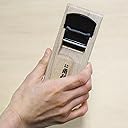
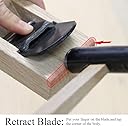
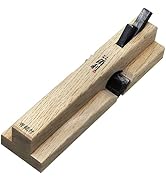
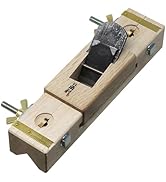
The KAKURI Japanese Hand Plane is a compact, expertly crafted woodworking tool featuring a 42mm high-carbon steel blade and an ECO Oak body. Designed for pull-style planing, it offers superior control and smooth finishes, perfect for detailed chamfering and surface smoothing. Made in Japan, it blends traditional craftsmanship with sustainable materials, making it a prized addition for both professional woodworkers and dedicated DIY enthusiasts.


| ASIN | B000ALF4GO |
| Base Material | Oak |
| Best Sellers Rank | 277,681 in Home & Kitchen ( See Top 100 in Home & Kitchen ) 4,427 in Painting (Home & Kitchen) |
| Brand | KaKUrI |
| Colour | Wood |
| Country of Origin | Japan |
| Customer Reviews | 4.3 out of 5 stars 3,119 Reviews |
| Cutting Width | 5.9 Inches |
| Included Components | No |
| Item Dimensions L x W x H | 15L x 5.3W x 4.1H centimetres |
| Item Type Name | Plane |
| Manufacturer | KAKURI |
| Material | Wood |
| Model Number | P-150 |
| Part Number | P-150 |
| Power source | Manual Power |
| Product dimensions | 15L x 5.3W x 4.1H centimetres |
| Style | Woodworking |
| UPC | 735343186585 |
| Unit Count | 1.0 count |
M**K
First time Kanna user - convert!
It;s a long way from Japan so I wasn't bothered by the delivery time. Even so, it arrived well within the stated period with no damage. I had done some research and was prepared to spend some hours fettling the plane before use but it took a lot less than I expected. The white oak dai was almost perfect. Just a little scraping on the blade bed and guide channels; the sole was almost flat and took just a quick rub with sandpaper and using a scraper to get the relief. The chip breaker needed a bit filed off one corner to lie flat on the blade which is about twice as thick as a western blade. I went through the grits from 400 to 6000 to remove a few tool marks and get a mirror finish on the bevel and the hollow ground back. Adjustment was quite easy although it did initially feel weird hitting a tool with a hammer! I tested it on pine (clear and knotty) and oak and the results were truly amazing. Full width cuts, mirror smooth surfaces and translucent shavings. Not bad for my first attempt. This will be my go to plane for small projects in future. I may even get a bigger one for Christmas! The lack of English instructions was not a problem as there is a wealth of Youtube info on setting up and using these planes.
M**Y
A joy to use once set up
Okay - I've added a good number of images and a video to help with this review. I regret not having taken a shot of the blade before I started sharpening... As with all Japanese planes this one needed some work to get it to a useful condition. given it's price this could have had 5 stars but for one issue, something I think is really important. You'll see in the photos that the cutting blade, when inserted into the dai without the chip breaker, extends beyond the sole of the dai! This is only dropped in, not tapped. The issue - the edges of the blade were very rough and needed a little filing to clean them up, that and honing of the back, clening shavings from the wedge etc all combinded to leave the blade a very loose fit, the amount of wood I had to remove to get the blade to sit flat was less than a very fine shaving, so it's not that too much wood was removed. the slots that hold the blade also needed widening a little, again this is normal and allows for lateral adjustment of the blade. The blade itself is ok and as you can see fro mthe video it can be brought to a really good edge, this took about an hour of honing from 300 grit to get a good flat bevel through to 7000 grit for polishing. The hollow ground on the back isn't the best and could have been improved with a little hammering out, I just didn't bother. Same with the chip breaker, though that also had the problem that the edge wasn't square to the sides so that took a little more work with the 300 diamond plate. Once done there was just a little adjustment to the ears to bring it to sit nicely with the blade. Because the blade is so loose the chip breaker is required to hold the blade in place, not a massive issue I guess but Japanese planes should be usable with or without the chip breaker in place. The chip breaker in this one is essentially now a back iron that holds the blade in situ. I might address this by inserting some tiny hardwood edges into the slots to close them up and then refile them to fit the blade properly, though it does work very well as is. Yours may not suffer these issues at all as I suspect quality contol and consistency is a bit hit and miss on planes at this end of the market (It's relatively cheap for a kanna) The dia itself was pretty much set up ready to go with the 2 high points of the sole in place, as I decided to sand the base to ensure it was perfectly flat I then needed to hollow out the sole to bring back the 2 high spots - if you don't know what I mean by this there are many really good setup videos on the tube that explain it, basically the plane rides on 2 high spots of the sole to minimise drag. The sides were square to the sole so needed no work. I pulled shaving from a piece of softwood, both along the edge and also the width of the board, these can be seen in the photos. I also pulled on a piece of reclaimed (very dry) mahogany and a piece of reclaimed oak. Both worked well though I needed to (lightly) tap the blade out a little more for a deeper cut. All said for what this kanna costs it's great value. IF you have no idea how to set one up and expect it to work out of the box (it came in a bag) then you'll be disappointed and frustrated, this would be so even if you spent 10 times as much though. With some very basic carpentry skills this can be made to work really well, you need patience! I have many planes, old wooden ones, transitional types and typical iron western planes as well as kanna, this is a nice little addition and I feel it was money well spent. Would I buy another one? Yes I belive I would...
C**N
High quality tool.
Very well made little plane. Iron(blade) seems to be high quality but as I haven't had the opportunity to use it as of yet but being Japanese it should be excellent.
M**R
Great little plane
This plane came with problems, but nothing an hour of fettling didn't sort out. That said, I have bought far more expensive planes with far worse problems. The back of the blade wasn't flat - there was a slight hollow behind one side of the cutting-edge; nothing various grades of wet & dry abrasive paper couldn't solve. The chip-breaker needed a little refinement, as did the blade-bed and the sole. There are plenty of youtube videos that show you what to do about all of these issues. After following all the advice, I had a plane that takes even, translucent shavings. It works well on the push or pull stroke. Franky, for the money, this is brilliant little plane. It may only be small, but I've put it through the paces and it pretty much does everything you'd expect from a good jack plane.
A**R
Im not sure what I was expecting from this item ...
Im not sure what I was expecting from this item, as I wanted to try a pull plan, this was the only one I could afford. cute, ok for getting an idea how they work, can be sharped well, but will take time to get fully used too, it won't replace my iron plan, very light and small. hard to hold in hands,
M**R
Best plane I own!!!!
I have been using this plane to make Japanese sword saya's and tsuka's and it works perfecty for the job I intended. Im not so sure it would be a good choice for bigger work as it is a diddy plane......... but extremely well made for the price and I have always preferred the versatility of the Japanese plane. 5*****
M**M
Mystical Cobblers - But Fun
Okay, I'm sure that anyone reading this or looking at this plane is probably a woodworker who has read something online or in a magazine euologising the incredible brilliance of Japanese planes. They have within the 'community' taken on some sort of mystical bollocks whereby the use of such an item confers a degree of mastery of the art of making something out of wood. The truth is of course that they are no better and in many ways worse than a English plane style made from metal. But...and here's where I slightly go back on what I said, they are fun to use and when you get them set right they do cut well. The effort put into gettting it there is half of the fun - or frustration depending upon your point of view - and when you get that smooth 'swish' of an almost translucient shaving it's very satisfying indeed. Of course you can do the same with a 'real' plane as well but this is more of a work to get it there and that's where the satisfaction comes in. So, honestly I do no better with this than my old Stanley Baily type but I enjoyed the experience of getting this up and running and set up to cut razor thin wood shavings. Anyway, off the bat this won't cut anything much at all. I'm not sure if this is true of all Japanese planes but I suspect that to be the case for all. The blade is rough ground and almost blunt. Bit mucky too. I think it was in the wrong way too when I got it - which might be for transportation to avoid damage. Regardless, once you get this your 'journey - groan' starts. Set aside a couple of hours to get the blade sharp and yourself tuned in to working out how to use the damn thing. Takes a bit of time I can tell you. Number one on my list was to get the back flat which was a bit of a task. The blade is hollow ground to relieve most of the very hard laminated steel but even then I reckon it was a good 30 minutes or so of grinding on abrasive paper to get the edges flat. Firstly I noted the blade is ground to 30degrees complete and only roughly. So I took the blade to my marble top with some coarse paper on it and over about 20 minutes got it to a 25deg instead. Maybe you don't do this with Japanese planes but I figured I'd stay with what I know. Then I went through the grits to get a decent finish on it which took another hour I guess. After that I went for a micro-bevel of 30 degrees - which is how I set up my English pattern planes. That took a while as I went through all the grits and then a waterstone followed by diamond paste on a leather hone. And then at the end of all this work I'd like to say that I'd reached some Eastern Zen like state but in fact all I really had was sore fingers and an aching back. I did if I'm honest enjoy the process as it's a skill and learning something new is I find fun. Of course then I had to set the plane up with a newly sharp blade which, I have to say with some degree of pride is sharp enough to cut atoms....just. What I then discovered was that my flattening of the blade had reduced the blade thickness just enough to allow the backing chip breaker to push too far down. So, in comes the hammer you will need and I tapped a slight bend in the bar to give a better grip. Push the blade in set it close and then tap it with a hammer. Hey presto! You've gone too far..... So try and try again until you get 'The Knack.' Which is basically tapping it a damn sight less hard than you think you need too. Once I'd gotten it set I tried planing English oak and softwood with I'm chuffed to say, really fine cuts. The lamintated blade really does take a great edge and holds it well. But, bottom line is that this isn't any better than the old steel plane in your shed. Set both up correctly and they will both work beautifully. This is to me a skill that I'm glad I took the time to learn and this plane will be one I keep at hand with other conventional ones. One more thing. The blade is tapered so you can't use the guides that clamp on either side. Bit irritating that because, I prefer that type of guide. So, buy this if you fancy a bit of a challenge and you like learning a new skill.
J**E
Stunned at how good this is
Very impressed. Is this a top end japanese plane? Of course not. Is this a cheap end japanese plane? Yes. Is this the best cheap japanese plane I have? Yes it is. I was very surprised this took half decent shaving without sharpening. I just put the blade in and took a few passes. I will do the rest of the set up tomorrow and I am sure once the blade is sharped and bedded, with the sole flattened and hollowed this will be an incredible piece of kit.this will be going in the work apron for constant use.
I**.
Love it
Used it on different projects and it cuts very well. The tapping to position the blade needs some getting used to. But it’s a fun and great tool to have in your toolbox. The woods surface of the plane is also great, as it is less likely to scratch the woods you’re working on when you slip.
A**S
I love it
I love this tool. very well made. very sharp
T**C
Well crafted, ready out of box
Update: After a few days playing with it and watching master craftsmen using their tools, I finally figured out how to tap the blade out. I have most success using a steel hammer, I don't have access to a brass hammer. I did not find any success using a plastic mallet. I also changed the grip from having my index on the blade to using my thumb instead. I also applied a decent amount of pressure onto the blade. I believe the increased pressure increases its inertia which makes the tapping more effective. It has a learning curve compared to western style metal planes. I am changing my rating from 4 stars to 5 stars because all my struggle was inexperience not the fault of the tool. It is well made with a amazing hardwood body. I am a beginner woodworker so I had a few trouble setting it up. When I got it out of the box, I wanted to hone the blade like many woodworkers recommended but I could not get the blade to budge. I followed their guide hitting the chamfer (the daigashira) alternating corners rhythmically. I suspect that this is not a manufacturing error but more so that the wood shrunk as it was dried sitting on store shelves and applying excessive pressure to the blade. Or I might just be doing it wrong. In my process I accidentally split the wood at the mouth so please be careful when you try to set it up. After giving up getting the blade out, I striked the blade further in to try and get a shaving. It was working very well out of box, got a really nice shaving. I won't be getting the thin shavings that Japanese woodworkers could get in their competition, but it was far better than the planes I got from Harbor Freight. eventually I got the blade out by using a vise grip locking plier with its tip wrapped in multiple layers of electrical tape as to not scratch the blade steel. Then I proceeded to whack the chamfered edge and got it out. It is a very nice plane for the price. I would highly recommend it despite my initial struggles.
T**.
Lâmina de péssima qualidade.
Pelo preço não se pode esperar muita coisa, porém a lamina parece que foi cortada e feita de um simples estoque de barra chata de aço. Mais uma vez, estou ciente que pelo preço não podia esperar muita coisa, mas o objetivo todo era ao menos a lâmina ser um pouco mais elaborada que isso.
G**O
Rabot japonais pas trop cher
Ce petit rabot est très bien fait mais non préparé ! Il faut y accorder un travail de mise en forme et de réglages assez fins et poussés (des tas de videos existent sur YouTube à ce sujet) avant de s'en servir avec beaucoup de plaisir. A l'instar des scies japonaises, ce type de rabot s'utilise en tirant vers soi et non en poussant comme avec un rabot européen traditionnel. Celui-ci est arrivé très bien protégé et avec un fer parfaitement coupant. Il a fallu régler son contre-fer mais il y avait peu de travail sur celui-ci. En revanche il faut creuser (au grattoir) la sole en deux endroit très précis d'où l'utilité des videos.
Trustpilot
2 days ago
1 month ago