We remain fully operational. Our teams are working around the clock to ensure your deliveries continue safely.

DOWNLOAD THE APP


Copyright © 2025 Desertcart Holdings Limited
DOWNLOAD THE APP




Buy anything from 5,000+ international stores. One checkout price. No surprise fees. Join 2M+ shoppers on Desertcart.
Desertcart purchases this item on your behalf and handles shipping, customs, and support to Vietnam.
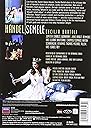
Cecilia Bartoli stars in the title role of Robert Carsen's modern-dress staging of Handel's dramatic opera 'Semele' at Zurich Opera House. Not satisfied with being the mistress of Jupiter (Charles Workman), the beautiful and ambitious Semele strives with tragic results to supplant his wife, Juno (Birgit Remmert). The La Scintilla Orchestra is conducted by William Christie. Sung dazzlingly, Myself I shall adore was one of many high points in Bartoli's stunning performance, her first operatic role in a language other than Italian...The wonderfully intimate Zurich Opera House allows every detail of her performance to be savoured. --International Herald Tribune Review: and Bacchus crown the joys of love - ....and Bacchus crown the joys of love. The Work. By 1741 Handel was out of the opera business. For three decades he had presided over a thriving Italian Opera House in London, had produced dozens of operas by other composers as well as written and produced some thirty five or so operas of his own composition. All this time he had been in the favor of the royals and the "people of Quality". However the tastes of the London audience had changed and he had gone from a wealthy man to near bankruptcy. Now he simply changed forms and was writing oratorios in English and was again prospering. A succession of "hits" folloowed including Messiah, Samson, Saul, Joseph and his Brethren etc. Then in 1743 he too up the script of Semele, a tale from Ovid. He had previously written a "serenata" in English also based on Ovid in 1714 called Acis and Galatea which is in oratorio style, not staged. Semele was to be a non-opera even though the libretto by William Congreve was set as an opera by John Eccles in 1707 but not performed at that time. This libretto is a masterpiece of English writing. It pulsates with life, passion, lust, comedy, pathos and eroticism. Certainly not something for a church choir. Handel added some parts of Alexander Pope e.g. Jupiter's "Where 'er you walk" to fill in the Congreve text. His great inspiration began to flow again and Handel produced one of the most perfect gems of his great output. The Performance. This DVD production was filmed in January 2007 at the Zurich Opera House, The cast here has the very gifted Cecilia Bartoli, the formidable conductor and Baroque authority William Christie and noted producer Robert Carsen. All in all a very successful operation. The other cast members are not so well known as Ms Bartoli but are most all up to the calling except the Ino of Liliana Nikiteanu who goes breathless on occasion. They all work together along with the excellent chorusto give the piece a light comedic touch, particularly the Juno of Brigit Remmert. When this work was first presented (not staged but sung) in 1744 the reviwer dubbed it "No Oratorio, but a baudy opera", and bawdy it is. A good evvenings entertainment as a staged work. In 1990 a superb CD was issued using period instruments, the Ambrosian Opera Chorus, English Chamber Orchestra all led by John Nelson. The cast was a dream roster with the young Kathleen Battle in perhaps her best recorded role, the unmatchable Marilyn Horne as Juno and Ino, Samuel Ramey, Sylvia Mc Nair, counter tenor Michael Chance and John Aler as Jupiter. I have listened to and cherished this recording for many years. When I compare this performance to the present DVD I'm impressed with several things. In the CD we have a series of arias superbly sung e.g. Horn "Hence, Iris, hence away", M Chance "Hymen haste, thy torch prepare"(not included in the DVD), Ramey "Wher 'er you walk" (so beautiful). But that is it. It is a series arias sung by some of the best and most famous singers of the time; there is no sense of continuity. Here in this DVD it all works well together as an opera with the good chorus providing push for the action and unifying the parts into a whole. Semele has a sad end but from her ashes is born the demigod of wine and good cheer. So in the end the chorus sings his praises and passes around the wine to everyone onstage, all get tipsy and start doffing off clothes; and Bacchus crown the joys of love. Review: Jupiter was an Insufferable Cad... - ... and, like other powerful executives of recent memory, had dubious taste in dames. But the libretto for this English opera, written by playwright William Congreve, is several notches above the average Georgian doggerel, and the music is Handel near his compositional peak. What follows here will be a critique of this specific performance and should not be read as criticism of Semele as a work of the musical stage. This is a wretched mess of a performance. The modern sets are dreary. The orchestra is shaky. The balance of voices with orchestra is lacking in acoustic integration. But most of all, the singing is shoddy, unstylish, lacking in ensemble discipline, and OUT! OF! TUNE! Cecilia Bartoli is the biggest name and has of course the biggest role, as Semele. Bartoli often substitutes mannerism for affective expression, but this time she takes her flouncy coyness to extremes. Worse yet, she sings most of her arias with a tight, quivery, non-ornamental vibrato. It's unclear whether she's attempting to re-legitimize the old-time fat lady's warble, or to mask the deficiencies of her tuning, but in any case she fails at both. Liliana Nikiteanu, in the role of Ino, has such a reedy little voice, and so little control of her enunciation, that it hardly matters when she's out of tune, which is often. Believe me, it's true. Listen to her duets with Athamas, sung by high tenor Thomas Michael Allen, early in the First Act. The duets are shockingly out of tune, and I think the fault is chiefly Nikiteanu's. Birgit Remmert (Juno) and Isabel Rey (Iris) play their roles as TV comedy, which might be presumed to justify their squawky, squeaky timbres. But they're also tragicomically OUT! OF! TUNE! altogether too often. There's nothing especially ingratiating about the voice of bass Anton Scharinger, at least in his Baroque role of King Cadmus. His singing is bluff and robust, but not at all stylish. Nevertheless, his arias come as a relief, since he's mostly IN TUNE! High tenor Thoams Michael Allen struggles bravely with a role (Athamas) that flings him up and down across his voice break. He has some style and he acts with expressive restraint. I'll watch for him in other productions. William Christie is one of the finest conductors and exponents of Baroque music in the world today. It was his presence at the podium in the Opernhaus Zürich that induced me to buy this DVD. Unfortunately, the orchestra "La Scintilla" lets him down. The violins struggle raggedly to keep up with Handel's hustling sixteenth notes. The oboes are scattered at crucial passages, and in one obbligato, they are hideously OUT! OF! TUNE! This DVD is so disappointing that I'm putting it up for re-sale immediately. Hopefully one of my pesky persistent no-voters will buy it by mistake.
| Contributor | Anton Scharinger, Birgit Remmert, Cecilia Bartoli, Charles Workman, George Frideric Handel, Isabel Rey, Liliana Nikiteanu, Operanhaus Zurich, Robert Carsen, Thomas Michael Allen, William Christie Contributor Anton Scharinger, Birgit Remmert, Cecilia Bartoli, Charles Workman, George Frideric Handel, Isabel Rey, Liliana Nikiteanu, Operanhaus Zurich, Robert Carsen, Thomas Michael Allen, William Christie See more |
| Customer Reviews | 3.7 out of 5 stars 86 Reviews |
| Format | AC-3, Classical, Color, DTS Surround Sound, Dolby, Multiple Formats, NTSC, Subtitled, Widescreen |
| Genre | Classical / Opera & Vocal, Music Video & Concerts |
| Language | English |
| Runtime | 18 hours and 31 minutes |
D**N
and Bacchus crown the joys of love
....and Bacchus crown the joys of love. The Work. By 1741 Handel was out of the opera business. For three decades he had presided over a thriving Italian Opera House in London, had produced dozens of operas by other composers as well as written and produced some thirty five or so operas of his own composition. All this time he had been in the favor of the royals and the "people of Quality". However the tastes of the London audience had changed and he had gone from a wealthy man to near bankruptcy. Now he simply changed forms and was writing oratorios in English and was again prospering. A succession of "hits" folloowed including Messiah, Samson, Saul, Joseph and his Brethren etc. Then in 1743 he too up the script of Semele, a tale from Ovid. He had previously written a "serenata" in English also based on Ovid in 1714 called Acis and Galatea which is in oratorio style, not staged. Semele was to be a non-opera even though the libretto by William Congreve was set as an opera by John Eccles in 1707 but not performed at that time. This libretto is a masterpiece of English writing. It pulsates with life, passion, lust, comedy, pathos and eroticism. Certainly not something for a church choir. Handel added some parts of Alexander Pope e.g. Jupiter's "Where 'er you walk" to fill in the Congreve text. His great inspiration began to flow again and Handel produced one of the most perfect gems of his great output. The Performance. This DVD production was filmed in January 2007 at the Zurich Opera House, The cast here has the very gifted Cecilia Bartoli, the formidable conductor and Baroque authority William Christie and noted producer Robert Carsen. All in all a very successful operation. The other cast members are not so well known as Ms Bartoli but are most all up to the calling except the Ino of Liliana Nikiteanu who goes breathless on occasion. They all work together along with the excellent chorusto give the piece a light comedic touch, particularly the Juno of Brigit Remmert. When this work was first presented (not staged but sung) in 1744 the reviwer dubbed it "No Oratorio, but a baudy opera", and bawdy it is. A good evvenings entertainment as a staged work. In 1990 a superb CD was issued using period instruments, the Ambrosian Opera Chorus, English Chamber Orchestra all led by John Nelson. The cast was a dream roster with the young Kathleen Battle in perhaps her best recorded role, the unmatchable Marilyn Horne as Juno and Ino, Samuel Ramey, Sylvia Mc Nair, counter tenor Michael Chance and John Aler as Jupiter. I have listened to and cherished this recording for many years. When I compare this performance to the present DVD I'm impressed with several things. In the CD we have a series of arias superbly sung e.g. Horn "Hence, Iris, hence away", M Chance "Hymen haste, thy torch prepare"(not included in the DVD), Ramey "Wher 'er you walk" (so beautiful). But that is it. It is a series arias sung by some of the best and most famous singers of the time; there is no sense of continuity. Here in this DVD it all works well together as an opera with the good chorus providing push for the action and unifying the parts into a whole. Semele has a sad end but from her ashes is born the demigod of wine and good cheer. So in the end the chorus sings his praises and passes around the wine to everyone onstage, all get tipsy and start doffing off clothes; and Bacchus crown the joys of love.
G**O
Jupiter was an Insufferable Cad...
... and, like other powerful executives of recent memory, had dubious taste in dames. But the libretto for this English opera, written by playwright William Congreve, is several notches above the average Georgian doggerel, and the music is Handel near his compositional peak. What follows here will be a critique of this specific performance and should not be read as criticism of Semele as a work of the musical stage. This is a wretched mess of a performance. The modern sets are dreary. The orchestra is shaky. The balance of voices with orchestra is lacking in acoustic integration. But most of all, the singing is shoddy, unstylish, lacking in ensemble discipline, and OUT! OF! TUNE! Cecilia Bartoli is the biggest name and has of course the biggest role, as Semele. Bartoli often substitutes mannerism for affective expression, but this time she takes her flouncy coyness to extremes. Worse yet, she sings most of her arias with a tight, quivery, non-ornamental vibrato. It's unclear whether she's attempting to re-legitimize the old-time fat lady's warble, or to mask the deficiencies of her tuning, but in any case she fails at both. Liliana Nikiteanu, in the role of Ino, has such a reedy little voice, and so little control of her enunciation, that it hardly matters when she's out of tune, which is often. Believe me, it's true. Listen to her duets with Athamas, sung by high tenor Thomas Michael Allen, early in the First Act. The duets are shockingly out of tune, and I think the fault is chiefly Nikiteanu's. Birgit Remmert (Juno) and Isabel Rey (Iris) play their roles as TV comedy, which might be presumed to justify their squawky, squeaky timbres. But they're also tragicomically OUT! OF! TUNE! altogether too often. There's nothing especially ingratiating about the voice of bass Anton Scharinger, at least in his Baroque role of King Cadmus. His singing is bluff and robust, but not at all stylish. Nevertheless, his arias come as a relief, since he's mostly IN TUNE! High tenor Thoams Michael Allen struggles bravely with a role (Athamas) that flings him up and down across his voice break. He has some style and he acts with expressive restraint. I'll watch for him in other productions. William Christie is one of the finest conductors and exponents of Baroque music in the world today. It was his presence at the podium in the Opernhaus Zürich that induced me to buy this DVD. Unfortunately, the orchestra "La Scintilla" lets him down. The violins struggle raggedly to keep up with Handel's hustling sixteenth notes. The oboes are scattered at crucial passages, and in one obbligato, they are hideously OUT! OF! TUNE! This DVD is so disappointing that I'm putting it up for re-sale immediately. Hopefully one of my pesky persistent no-voters will buy it by mistake.
A**7
Semele Excels
Cecelia Bartoli has the voice if not the figure to make you believe Jove would lift her to a secrete love palace on the lambent wings of an eagle. This opera is Handel at his erotic best. I blushed many times as Semele and Jove cavorted the bed to sublime music. The production is what opera should be: fun and entertaining to watch one rainy evening. The only irritant is the silly bedrobe Bartolia wears through most of the production---surely the lover of Jove would be more sexily attired? My favorite aria is Juno in full fury: Hence hence, Iris, hence away. Always the jilted spouse, Juno is a fury of anger and malice as she tricks Semele into self-destruction. And does so here most convincingly. Bartoli looks so innocent besides the conspiring wife that I shuddered to think of silly, young girls throwing themselves at married men. If you have ever conceived of Handel as serious water-cannon music, here is a production that is worthy of the modern and immodest times we enjoy, and done with verve and skill so that by the end you are satisfied as only opera can satisfy: full of visual, aural, musical, and sensual delight. Buy this one.
K**R
Handel Shines!
Yes, I found the so-called comedy hokey rather than witty. Yes, it is modern dress; but I didn't mind. It doesn't detract from the performance. The minimal sets were acceptable but added nothing much to the strength of the production. In general, the absence of more extensive settings did limit the possibilities of interaction so as to minimize their impact. The direction seemed, at times, to be devaluing certain key supporting roles, such as Juno (Birgitt Remmert), so that they lacked the weight to be taken seriously when they are causes of key activities. I'm sure that I can come up with other deficiencies in direction which made the performance less than it might have been; however, that said, despite these weaknesses, the marvelous Handle score shines through thanks to first rate vocal performances by Cecilia Bartoli (as Semele) and Charles Workman (as Jupiter), Solo, in duet, and with the (excellent) chorus they give us words (by Congreve) and music which make for a most entertaining and stiumlating evening. There is a moral, of course, which is very lightly touched upon. Handel was well aware of the nature of the British society of his day and paid his respects to its rulers, but with sufficient delicacy so as not to offend the developing middle class. The moral: if you don't know your place in society, the bosses (aristocracy) will see that you learn it the hard way. The directors of the production make sure that none of us will be distressed at the anti-democratic qualities which, once upon a time, probably were given greater emphasis.
J**P
Two Stars for lead and conductor
A wonderful Baroque opera made into a silly comedy... slap stick at times. I'm always surprised when great talents like Bartoli and Christie allow a director to make them out to be fools. Normally i would do not review performances since taste varies. My only reason for posting this comment is t caution prospective buyers... this is not a quality update, it is a farce. The singing does not excuse the low budget contrived production.
S**R
Bartoli glows in Semele
Cecilia Bartoli glows in this production of Handel's Semele. Her voice and acting combine to embody the gloriously beautiful mortal beloved of Jupiter, and Birgit Remmert is superbly sinister as jealous Juno. The Robert Carsten production is spare but very effective, especially in the bed scene. William Christie directs this performance, recorded live in Zurich.
M**N
Operatic production of an oratorio
There is conjecture about this being an oratorio rather than an opera as it is based on an English opera libretto by Congreve. One train of thought suggests that, with opera waning in popularity, the oratorio form was needed for success to regain prosperity for the composer. That said the Zurich performance is most definitely in operatic form but the result is strange at times with the chorus dressed up in dinner suits and evening gowns. The plot uses mythology to illustrate that greed ultimately destroys the individual, in this case Semele sung by Cecilia Bartoli, who demanded immortality from Jupiter who had whisked her off to a specially built palace. Bartoli is in fine singing voice and often outshines others in the cast. The oratorio style is often evident in the singing but this is not a somber work as there is comedy mixed with some bawdiness with Bartoli spending a lot of the time romping around in a nightdress.. So overall it is quite a different work which receives a unique presentation. First class audio and video. Regarded as one of Handel's masterpieces this production deserves a place in your collection.
S**E
Not what i was looking for
I was looking for more musical style not operetta. It did arrive quickly and in new condition. It comes with a booklet telling the storyline.
Trustpilot
1 month ago
5 days ago