


Buy anything from 5,000+ international stores. One checkout price. No surprise fees. Join 2M+ shoppers on Desertcart.
Desertcart purchases this item on your behalf and handles shipping, customs, and support to Vietnam.
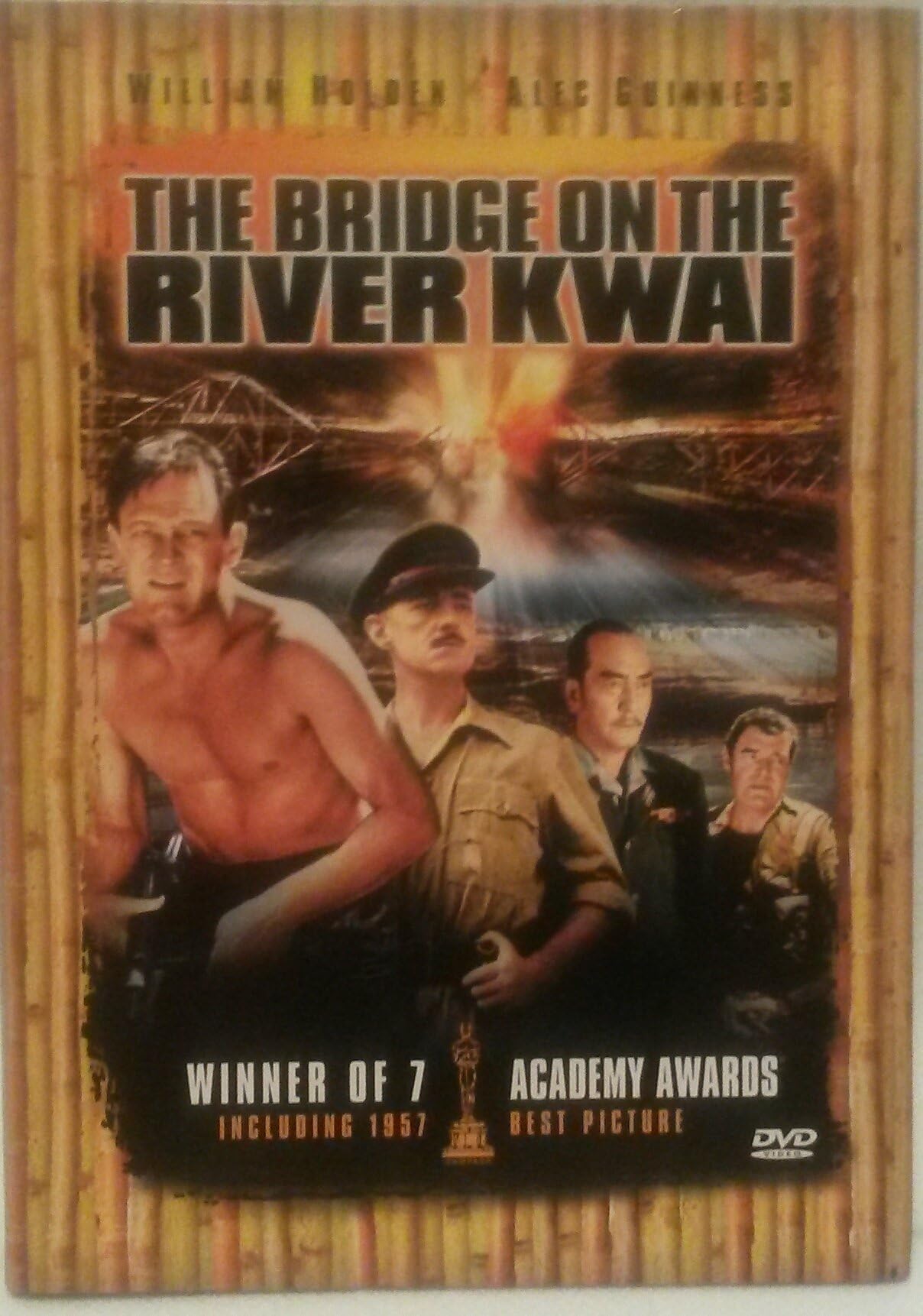
Spectacularly produced, and the winner of seven Academy Awards� (1957), including Best Picture, Best Director and Best Actor (Alec Guinness), THE BRIDGE ON THE RIVER KWAI continues to be one of the most memorable cinematic experiences of all time. Experience director David Lean?s legendary classic like never before with this 60th anniversary edition. Review: A Battle of Wills - Sam Spiegel’s film, Bridge on the River Kwai is difficult to categorize. It is a war movie, but not the type that glorifies war. It has action and adventure, but to say it is an action/adventure film would be an overstatement. It is a criticism on the madness of war, on excessive pride, on the class system. Perhaps most intriguing, it is a character study on how several men, each a bit crazy in his own way, react to the circumstances of the war around them. Kwai is set in the jungles of Burma in 1943. Though the opening sequence depicts what appears to be a tropical paradise, we soon learn that the setting is a Japanese Prisoner of War camp, ruled by the ruthless Colonel Saito (Sessue Hayakawa). Saito has been ordered to build a railroad bridge over the river, with the prisoners providing the labor. Death rates are high because of illness, overwork, and, we are told, “Saito.” When British Colonel Nicholson (Alec Guinness) marches into camp at the head of a new group of prisoners, it seems Saito may have met his match. Saito declares that all prisoners, enlisted men and officers alike, will perform manual labor to build the bridge. A battle of wills ensues when Nicholson insists that in accordance with the Geneva Convention, it is not permissible to require officers to do manual labor. Saito initially considers having all the officers gunned down, but instead leaves them standing in the blazing sun all day. He then has Nicholson put in a torture device known as “the oven,” and locks up the remaining officers. Nicholson will not relent, and eventually Saito releases him and agrees that the officers will not do manual labor, but must supervise the work. It seems Nicholson has won this round. The characters of Nicholson and Saito embody their own personal and cultural views of honor. Our first glimpse of Nicholson is as he leads his men into the prison camp, marching properly (for the most part) and, lacking a military band, whistling the Colonel Bogey march. For Nicholson, rules, order, and discipline are what honor consists of. Saito has a very different view. When Nicholson offers him a copy of the Geneva Convention and speaks of the rules, Saito responds, “Do not speak to me of rules. This is war! This is not a game of cricket!” For Saito, honor means doing his part for the greater good of Japan, whatever that takes. His orders are to build the bridge. If the bridge is not completed by the given date, Saito’s honor dictates that he must commit suicide. Even once the British officers begin supervising construction of the bridge, it still moves at a snail’s pace. Nicholson’s men, a company of engineers, can easily see problems such as the chosen location. They know they could build a better bridge. Nicholson convinces Saito to start over, allowing the British engineers to design and supervise the construction of the bridge from start to finish. Again, it seems he has prevailed…but has he? In his pride that his men can show British superiority by constructing a bridge that will last for many years, he is seemingly oblivious to the fact that doing so is aiding the enemy’s war effort. And as it becomes apparent the bridge will not be finished on time, he even gives in on the point of having officers do manual labor. A second story line is that of the plot to blow up the bridge. Shears (William Holden) is an American POW who escapes from the work camp and recovers at a British military hospital. There he is recruited by British commando Major Warden (Jack Hawkins) to help with the plot. Shears, who generally does anything possible to get out of work, initially resists. However, when confronted with the news that Hawkins knows the truth about who he really is, Shears agrees. With two other officers, they set out, but absolutely nothing goes according to plan. Eventually, the story lines come together. The bridge is finished, and the train loaded with Japanese officers and dignitaries is on its way. The commandos arrive and adjust their plan to the changed circumstances. What follows in the climactic scenes…well, let’s just say, it’s worth the wait. Bridge on the River Kwai garnered seven Oscars in 1958, including Best Picture, Best Actor (Guinness), Best Director (David Lean), Best Cinematography (Jack Hildyard), Best Editing (Peter Taylor), Best Score (Malcolm Arnold), and Best Adapted Screenplay. This last one is rather interesting; the film’s actual writers, Michael Wilson (It’s a Wonderful Life, A Place in the Sun) and Carl Foreman (Home of the Brave, High Noon) were not credited at the time because they were on the infamous Hollywood blacklist of suspected communist sympathizers. Instead, Pierre Boulle, the French writer of the novel upon which Kwai was based, received the credit and the Oscar, even though he did not speak English and had no part in the screenwriting. Wilson and Foreman were retrospectively awarded the Oscar in 1984. Sadly, Wilson did not live to see this happen, and Foreman died the next day. Foreman’s and Wilson’s names were added to the film’s credits when it was restored in the 1990s. Guinness is brilliant as Nicholson, the obsessively proper British military officer. Not only does Nicholson’s pride and professionalism come through clearly, so does his madness. Guinness, as Nicholson, does not even flinch when it is suggested that building such a fine bridge could be construed as collaborating with the enemy. His line of reasoning is so clear in his own mind that his explanation almost makes sense. When Nicholson hangs a placard on the completed bridge listing his own name as having overseen its construction, it is clear his pride in British ingenuity has been overcome by his pride in himself. Few actors could portray this kind of calm, cool madness and arrogance so convincingly. Hayakawa (who was nominated for Best Supporting Actor) and Hawkins, as Major Warden, are also quite good. Hayakawa’s Saito is as mad as Nicholson in his own way, and we see his prideful resistance break down when he fears that the bridge will not be completed on time. Warden, like Nicholson, is intent on order and discipline. His madness is of a different brand, and a more conventional one, exactly the kind of suicidal single-mindedness we would expect of a commando. Though crazy in his own way, Warden clearly sees Nicholson’s madness for what it is. Hayakawa and Hawkins pull off their respective roles admirably. William Holden delivers a solid performance as Shears. However, this character is not as well developed as the others, perhaps because it was added for the film and was not in the novel. Shears’ change from slacker to hero seems a bit improbable, and Holden’s performance does not quite overcome this. It seems he was added more for star power and box office appeal. James Donald, as medical officer Major Clipton, should not be overlooked. In fact, it is Clipton who acts as the outside observer, the voice of reason, the conscience of the film. It is Clipton who prevents Saito from shooting the officers, and who suggests to Nicholson that building the bridge is abetting the enemy. It seems Clipton is alone in recognizing the madness all around him. And it is Clipton who cries, “Madness, madness!” as things fall apart. It is a relatively small, but incredibly important role, and Donald does it justice. Though Malcolm Arnold won the Oscar for Best Score, it is not his music that is most memorable. Rather, the Colonel Bogey march by Kenneth J. Alford, written decades earlier, is what is most prominent in Kwai. It is heard whistled by the soldiers at various points in the movie when morale is high. The film score itself is minimal, with other sounds—soldier’s marching feet, a single set of footsteps on the bridge, or the distant sounds of the train—often providing non-musical sonic interest. Bridge on the River Kwai is a long film at 2 hours 41 minutes, but well worth the time. The cinematography is striking, showing the beauty and perils of the jungle as well as the building of the glorious bridge. The bridge story line provides psychological drama, while the plot story line provides action and adventure. The culmination of the colliding stories is exciting and surprising. And the characters are intriguing. Their quirks and their choices lead us to ask important questions about right and wrong, honor, and pride. It is no wonder this film was well received by critics and the public alike. Review: A powerful statement on the madness of war - Why I waste my time watching all of the newest films that come out (of course, not all of them are bad) when there are plenty of tried-and-true classics waiting to be discovered is something I'll never completely understand. It's not even like I have the excuse that I don't know about them, or even don't have the time (because I do). Still, I do like the feeling of seeing something for the first time and THE BRIDGE ON THE RIVER KWAI delivered everything I expected and more. The story is set during WWII and is about a group of British POWs who arrive at a Japanese labor camp in the Burmese jungle (modern-day Myanmar). They are tasked with building a bridge over the Kwai River, but initially have difficulty because the camp's commander Colonel Saito (Sessue Hayakawa) has a clash of wills with their own commander, Colonel Nicholson (Alec Guiness). There is also an American POW, Shears (William Holden) who manages to escape but is "recruited" to lead a team back to the jungle to blow up the bridge. If there's one thing that David Lean knows how to do, it's craft an epic film and that's exactly what he did here. It did drag a little bit for me in the first hour, but it was an engrossing watch after that point. It almost goes without saying that this film is perfect from a technical standpoint, and some truly great images were captured. The acting was also just as good, especially from the three key players: Alec Guiness, Sessue Hayakawa, and William Holden. Each of them brought their A-game and turned in probably the best performances of their entire careers. One aspect of the story I really liked was the psychological battle of wills that occurs between Saito and Nicholson. Both of them were equal in rank, but also similar in their approach to their own specific situations. One might say that they were cut from the same cloth. William Holden rounds out this trio of characters by portraying a man who is drafted for a difficult task in spite of his desire to just keep on surviving, and in a cruel turn of irony, puts him at cross-purposes with Nicholson who feels like he is doing good work by building the bridge. Although the film plays it rather close to the vest in terms of message-making, only really making its statement in the final minutes, I thought that it handled the subject of war in a rather balanced and mature way despite taking a stand against it. Nobody is turned into a villain, instead having each major character be an unwitting foil to the other in a way that suggests what is later explicitly stated (by the medic) as madness. It's not perhaps the most original of anti-war statements, but it was portrayed to extremely good effect. Also, the last 20 minutes or so is as riveting and tense as anything that has come out since. Granted, it's not perfect as there is a rather superfluous romance between Shears and his nurse but, studio-mandated love interest aside, this film stands as not only one of the best anti-war films ever made, but one of the best films period.

| ASIN | B00004XPPC |
| Actors | Alec Guinness, Jack Hawkins, James Donald, Sessue Hayakawa, William Holden |
| Aspect Ratio | 2.55:1 |
| Best Sellers Rank | #5,445 in Movies & TV ( See Top 100 in Movies & TV ) #57 in Military & War (Movies & TV) #665 in Drama DVDs |
| Customer Reviews | 4.8 4.8 out of 5 stars (6,851) |
| Director | David Lean |
| Dubbed: | French, Portuguese |
| Is Discontinued By Manufacturer | Yes |
| Item model number | 5278 |
| Language | English (Dolby Digital 2.0 Mono), English (Dolby Digital 5.1), French (Dolby Digital 2.0 Mono), Portuguese (Dolby Digital 2.0 Mono), Spanish (Dolby Digital 2.0 Mono), Unqualified (Dolby Digital 1.0) |
| MPAA rating | PG (Parental Guidance Suggested) |
| Media Format | DVD |
| Number of discs | 1 |
| Producers | Sam Spiegel |
| Product Dimensions | 0.7 x 7.5 x 5.4 inches; 2.4 ounces |
| Release date | November 21, 2000 |
| Run time | 2 hours and 47 minutes |
| Studio | Sony Pictures Home Entertainment |
| Subtitles: | Chinese, English, French, Georgian, Portuguese, Spanish, Thai |
A**B
A Battle of Wills
Sam Spiegel’s film, Bridge on the River Kwai is difficult to categorize. It is a war movie, but not the type that glorifies war. It has action and adventure, but to say it is an action/adventure film would be an overstatement. It is a criticism on the madness of war, on excessive pride, on the class system. Perhaps most intriguing, it is a character study on how several men, each a bit crazy in his own way, react to the circumstances of the war around them. Kwai is set in the jungles of Burma in 1943. Though the opening sequence depicts what appears to be a tropical paradise, we soon learn that the setting is a Japanese Prisoner of War camp, ruled by the ruthless Colonel Saito (Sessue Hayakawa). Saito has been ordered to build a railroad bridge over the river, with the prisoners providing the labor. Death rates are high because of illness, overwork, and, we are told, “Saito.” When British Colonel Nicholson (Alec Guinness) marches into camp at the head of a new group of prisoners, it seems Saito may have met his match. Saito declares that all prisoners, enlisted men and officers alike, will perform manual labor to build the bridge. A battle of wills ensues when Nicholson insists that in accordance with the Geneva Convention, it is not permissible to require officers to do manual labor. Saito initially considers having all the officers gunned down, but instead leaves them standing in the blazing sun all day. He then has Nicholson put in a torture device known as “the oven,” and locks up the remaining officers. Nicholson will not relent, and eventually Saito releases him and agrees that the officers will not do manual labor, but must supervise the work. It seems Nicholson has won this round. The characters of Nicholson and Saito embody their own personal and cultural views of honor. Our first glimpse of Nicholson is as he leads his men into the prison camp, marching properly (for the most part) and, lacking a military band, whistling the Colonel Bogey march. For Nicholson, rules, order, and discipline are what honor consists of. Saito has a very different view. When Nicholson offers him a copy of the Geneva Convention and speaks of the rules, Saito responds, “Do not speak to me of rules. This is war! This is not a game of cricket!” For Saito, honor means doing his part for the greater good of Japan, whatever that takes. His orders are to build the bridge. If the bridge is not completed by the given date, Saito’s honor dictates that he must commit suicide. Even once the British officers begin supervising construction of the bridge, it still moves at a snail’s pace. Nicholson’s men, a company of engineers, can easily see problems such as the chosen location. They know they could build a better bridge. Nicholson convinces Saito to start over, allowing the British engineers to design and supervise the construction of the bridge from start to finish. Again, it seems he has prevailed…but has he? In his pride that his men can show British superiority by constructing a bridge that will last for many years, he is seemingly oblivious to the fact that doing so is aiding the enemy’s war effort. And as it becomes apparent the bridge will not be finished on time, he even gives in on the point of having officers do manual labor. A second story line is that of the plot to blow up the bridge. Shears (William Holden) is an American POW who escapes from the work camp and recovers at a British military hospital. There he is recruited by British commando Major Warden (Jack Hawkins) to help with the plot. Shears, who generally does anything possible to get out of work, initially resists. However, when confronted with the news that Hawkins knows the truth about who he really is, Shears agrees. With two other officers, they set out, but absolutely nothing goes according to plan. Eventually, the story lines come together. The bridge is finished, and the train loaded with Japanese officers and dignitaries is on its way. The commandos arrive and adjust their plan to the changed circumstances. What follows in the climactic scenes…well, let’s just say, it’s worth the wait. Bridge on the River Kwai garnered seven Oscars in 1958, including Best Picture, Best Actor (Guinness), Best Director (David Lean), Best Cinematography (Jack Hildyard), Best Editing (Peter Taylor), Best Score (Malcolm Arnold), and Best Adapted Screenplay. This last one is rather interesting; the film’s actual writers, Michael Wilson (It’s a Wonderful Life, A Place in the Sun) and Carl Foreman (Home of the Brave, High Noon) were not credited at the time because they were on the infamous Hollywood blacklist of suspected communist sympathizers. Instead, Pierre Boulle, the French writer of the novel upon which Kwai was based, received the credit and the Oscar, even though he did not speak English and had no part in the screenwriting. Wilson and Foreman were retrospectively awarded the Oscar in 1984. Sadly, Wilson did not live to see this happen, and Foreman died the next day. Foreman’s and Wilson’s names were added to the film’s credits when it was restored in the 1990s. Guinness is brilliant as Nicholson, the obsessively proper British military officer. Not only does Nicholson’s pride and professionalism come through clearly, so does his madness. Guinness, as Nicholson, does not even flinch when it is suggested that building such a fine bridge could be construed as collaborating with the enemy. His line of reasoning is so clear in his own mind that his explanation almost makes sense. When Nicholson hangs a placard on the completed bridge listing his own name as having overseen its construction, it is clear his pride in British ingenuity has been overcome by his pride in himself. Few actors could portray this kind of calm, cool madness and arrogance so convincingly. Hayakawa (who was nominated for Best Supporting Actor) and Hawkins, as Major Warden, are also quite good. Hayakawa’s Saito is as mad as Nicholson in his own way, and we see his prideful resistance break down when he fears that the bridge will not be completed on time. Warden, like Nicholson, is intent on order and discipline. His madness is of a different brand, and a more conventional one, exactly the kind of suicidal single-mindedness we would expect of a commando. Though crazy in his own way, Warden clearly sees Nicholson’s madness for what it is. Hayakawa and Hawkins pull off their respective roles admirably. William Holden delivers a solid performance as Shears. However, this character is not as well developed as the others, perhaps because it was added for the film and was not in the novel. Shears’ change from slacker to hero seems a bit improbable, and Holden’s performance does not quite overcome this. It seems he was added more for star power and box office appeal. James Donald, as medical officer Major Clipton, should not be overlooked. In fact, it is Clipton who acts as the outside observer, the voice of reason, the conscience of the film. It is Clipton who prevents Saito from shooting the officers, and who suggests to Nicholson that building the bridge is abetting the enemy. It seems Clipton is alone in recognizing the madness all around him. And it is Clipton who cries, “Madness, madness!” as things fall apart. It is a relatively small, but incredibly important role, and Donald does it justice. Though Malcolm Arnold won the Oscar for Best Score, it is not his music that is most memorable. Rather, the Colonel Bogey march by Kenneth J. Alford, written decades earlier, is what is most prominent in Kwai. It is heard whistled by the soldiers at various points in the movie when morale is high. The film score itself is minimal, with other sounds—soldier’s marching feet, a single set of footsteps on the bridge, or the distant sounds of the train—often providing non-musical sonic interest. Bridge on the River Kwai is a long film at 2 hours 41 minutes, but well worth the time. The cinematography is striking, showing the beauty and perils of the jungle as well as the building of the glorious bridge. The bridge story line provides psychological drama, while the plot story line provides action and adventure. The culmination of the colliding stories is exciting and surprising. And the characters are intriguing. Their quirks and their choices lead us to ask important questions about right and wrong, honor, and pride. It is no wonder this film was well received by critics and the public alike.
R**S
A powerful statement on the madness of war
Why I waste my time watching all of the newest films that come out (of course, not all of them are bad) when there are plenty of tried-and-true classics waiting to be discovered is something I'll never completely understand. It's not even like I have the excuse that I don't know about them, or even don't have the time (because I do). Still, I do like the feeling of seeing something for the first time and THE BRIDGE ON THE RIVER KWAI delivered everything I expected and more. The story is set during WWII and is about a group of British POWs who arrive at a Japanese labor camp in the Burmese jungle (modern-day Myanmar). They are tasked with building a bridge over the Kwai River, but initially have difficulty because the camp's commander Colonel Saito (Sessue Hayakawa) has a clash of wills with their own commander, Colonel Nicholson (Alec Guiness). There is also an American POW, Shears (William Holden) who manages to escape but is "recruited" to lead a team back to the jungle to blow up the bridge. If there's one thing that David Lean knows how to do, it's craft an epic film and that's exactly what he did here. It did drag a little bit for me in the first hour, but it was an engrossing watch after that point. It almost goes without saying that this film is perfect from a technical standpoint, and some truly great images were captured. The acting was also just as good, especially from the three key players: Alec Guiness, Sessue Hayakawa, and William Holden. Each of them brought their A-game and turned in probably the best performances of their entire careers. One aspect of the story I really liked was the psychological battle of wills that occurs between Saito and Nicholson. Both of them were equal in rank, but also similar in their approach to their own specific situations. One might say that they were cut from the same cloth. William Holden rounds out this trio of characters by portraying a man who is drafted for a difficult task in spite of his desire to just keep on surviving, and in a cruel turn of irony, puts him at cross-purposes with Nicholson who feels like he is doing good work by building the bridge. Although the film plays it rather close to the vest in terms of message-making, only really making its statement in the final minutes, I thought that it handled the subject of war in a rather balanced and mature way despite taking a stand against it. Nobody is turned into a villain, instead having each major character be an unwitting foil to the other in a way that suggests what is later explicitly stated (by the medic) as madness. It's not perhaps the most original of anti-war statements, but it was portrayed to extremely good effect. Also, the last 20 minutes or so is as riveting and tense as anything that has come out since. Granted, it's not perfect as there is a rather superfluous romance between Shears and his nurse but, studio-mandated love interest aside, this film stands as not only one of the best anti-war films ever made, but one of the best films period.
K**H
Have seen this movie manu times, from vcd to dvd. Nostalgic.
E**L
Ok
グ**ん
迅速丁寧に対応していただき商品は無事届きました。ありがとうございました。商品は非常に良い状態で満足しております。また今後機会がありましたらよろしくお願いいたします。
M**A
Soy fan de los grandes clásicos del cine y cuando supe que Sony Pictures había restaurado en formato 4K Ultra HD el clásico "The Bridge On The River Kwai" o "El Puente Sobre El Rio Kwai" la compré de inmediato. Se ve espectacular, mejor que nunca, con una calidad de imagen fuera de serie. Llegó rápido y en perfectas condiciones, el único inconveniente es que ya no trae Slipcover de colección.
J**R
An excellent transfer. Vibrant colours. The Malcolm Arnold score has been re-channelled for stereo effect. Sumptuous presentation with the vibrant steel box. A great film.
Trustpilot
4 days ago
1 month ago