

Buy anything from 5,000+ international stores. One checkout price. No surprise fees. Join 2M+ shoppers on Desertcart.
Desertcart purchases this item on your behalf and handles shipping, customs, and support to Vietnam.
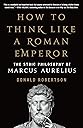
How to Think Like a Roman Emperor [Robertson, Donald J.] on desertcart.com. *FREE* shipping on qualifying offers. How to Think Like a Roman Emperor Review: An excellent book that links stoicism to modern life and cognitive behavioral therapy - When I was 19, I got a copy of Marcus Aurelius’ Meditations from the Walter J. Black Classics Club. I still have that volume. I’ve been dipping into the Meditations several times a week for more than 50 years. The original volume traveled with me in my seabag. It was my companion on trips as a young man. It’s still on my shelf, though I use an updated translation today. I bought several recent books on stoicism. How to Think Like A Roman Emperor: The Stoic Philosophy of Marcus Aurelius by Donald Robertson was one of them. I buy two versions of books I plan to take notes in. I buy the Kindle version so I can take notes and create flashcards. And I buy the audio version, which I use as my main “reading” copy. I like the slower pace of the reading that allows me to ponder the meaning of passages. And I can highlight the passages themselves in my Kindle version. That’s what I did with this book. As I went through the audiobook, I realized the author linked stoicism to cognitive behavioral therapy (CBT). “Okay,” I thought, “that’s an additional insight.” In the version of the audiobook I used, the introduction was at the end of the book. It cleared up many things about the book I had wondered about. It inspired me to go back through the book with the introduction in mind. The introduction does what an introduction should do. It gives you a frame for understanding the book and how it’s organized. It also gives you the author’s intent. Here is that intent, from the introduction. "This entire book is designed to help you follow Marcus in acquiring Stoic strength of mind and eventually a more profound sense of fulfillment. You’ll find that I’ve combined Stoicism with elements of CBT in many places, which as we’ve seen is only natural because CBT was inspired by Stoicism and they have some fundamental things in common." If you have an audiobook laid out the same way mine was, skip to the end and listen the introduction before you listen to the rest of the book. You’ll get more from the book. How to Think Like A Roman Emperor was a great book for me. I was already familiar with stoicism and I worked to apply it throughout my life. I’d read other books about stoicism and about Marcus Aurelius. This is the best of those. There are two reasons. Stoic teachers taught Marcus and others to identify people they admire and then learn from their example. Robertson does the same thing, with Marcus Aurelius as the prime example. Robertson ties stoic practice to cognitive behavioral therapy. That provides a modern context and some scientific support for some stoic practices. In A Nutshell If you’re already familiar with stoicism, buy this book and read it. You’ll learn new thing about Marcus Aurelius and how to apply stoic principles. Robertson puts stoicism in a modern context. He gives you helpful ways to connect stoic philosophy with everyday life. If you’re relatively new to stoicism, read Ryan Holiday’s The Obstacle Is the Way first. It will give you a good practical overview of stoicism before you go a little deeper with Robertson’s book. Review: Excellent Book on Marcus Aurelius’ Life - Thoroughly researched and fascinating look at Marcus Aurelius’ life and influence on Stoic philosophy and cognitive behavioral therapy and its applications.
| Best Sellers Rank | #19,770 in Books ( See Top 100 in Books ) #20 in Ancient Greek & Roman Philosophy #195 in Motivational Self-Help (Books) #568 in Personal Transformation Self-Help |
| Customer Reviews | 4.7 4.7 out of 5 stars (4,215) |
| Dimensions | 5.4 x 0.75 x 8.2 inches |
| ISBN-10 | 1250621437 |
| ISBN-13 | 978-1250621436 |
| Item Weight | 9 ounces |
| Language | English |
| Print length | 304 pages |
| Publication date | August 4, 2020 |
| Publisher | Griffin |
W**K
An excellent book that links stoicism to modern life and cognitive behavioral therapy
When I was 19, I got a copy of Marcus Aurelius’ Meditations from the Walter J. Black Classics Club. I still have that volume. I’ve been dipping into the Meditations several times a week for more than 50 years. The original volume traveled with me in my seabag. It was my companion on trips as a young man. It’s still on my shelf, though I use an updated translation today. I bought several recent books on stoicism. How to Think Like A Roman Emperor: The Stoic Philosophy of Marcus Aurelius by Donald Robertson was one of them. I buy two versions of books I plan to take notes in. I buy the Kindle version so I can take notes and create flashcards. And I buy the audio version, which I use as my main “reading” copy. I like the slower pace of the reading that allows me to ponder the meaning of passages. And I can highlight the passages themselves in my Kindle version. That’s what I did with this book. As I went through the audiobook, I realized the author linked stoicism to cognitive behavioral therapy (CBT). “Okay,” I thought, “that’s an additional insight.” In the version of the audiobook I used, the introduction was at the end of the book. It cleared up many things about the book I had wondered about. It inspired me to go back through the book with the introduction in mind. The introduction does what an introduction should do. It gives you a frame for understanding the book and how it’s organized. It also gives you the author’s intent. Here is that intent, from the introduction. "This entire book is designed to help you follow Marcus in acquiring Stoic strength of mind and eventually a more profound sense of fulfillment. You’ll find that I’ve combined Stoicism with elements of CBT in many places, which as we’ve seen is only natural because CBT was inspired by Stoicism and they have some fundamental things in common." If you have an audiobook laid out the same way mine was, skip to the end and listen the introduction before you listen to the rest of the book. You’ll get more from the book. How to Think Like A Roman Emperor was a great book for me. I was already familiar with stoicism and I worked to apply it throughout my life. I’d read other books about stoicism and about Marcus Aurelius. This is the best of those. There are two reasons. Stoic teachers taught Marcus and others to identify people they admire and then learn from their example. Robertson does the same thing, with Marcus Aurelius as the prime example. Robertson ties stoic practice to cognitive behavioral therapy. That provides a modern context and some scientific support for some stoic practices. In A Nutshell If you’re already familiar with stoicism, buy this book and read it. You’ll learn new thing about Marcus Aurelius and how to apply stoic principles. Robertson puts stoicism in a modern context. He gives you helpful ways to connect stoic philosophy with everyday life. If you’re relatively new to stoicism, read Ryan Holiday’s The Obstacle Is the Way first. It will give you a good practical overview of stoicism before you go a little deeper with Robertson’s book.
A**R
Excellent Book on Marcus Aurelius’ Life
Thoroughly researched and fascinating look at Marcus Aurelius’ life and influence on Stoic philosophy and cognitive behavioral therapy and its applications.
W**.
Excellent intro to actionable Stoic principles.
Me at the New Year's Party: "In 2020, my resolution is to Duolingo Italian everyday and to start approaching things/conducting myself more stoically!" 2020: "Hold my corona..." Yeah...So, there's a lot to like about this book: it is part history book, part Stoicism-101, part self-help do-it-yourself psychotherapy (CBT) manual. It recounts the life of the famous Roman Emperor and Stoic par-excellence Marcus Aurelius. Why was he so famous? Because as the author explains, before philosophy went all ivory-towery manifestoey and theoretical, people used philosophy as a practical guide to live a fulfilling life. Sure, there were still philosophy bros here and there called "Sophists" that used philosophy to construct clever arguments to impress baes and such, but for the most part, you practiced what you preached. Few exemplified this more than Marcus Aurelius himself, who fortunately for us was also into journaling and scrapbooking, so we get a glimpse into his thought process and guiding principles as he carried out his daily affairs in what was perhaps the most powerful empire of the ancient world. Zeus knows he had plenty of opportunity to practice it and develop it into something close to a religion, since as we find out he suffered many a tragic event in his life, plus his son and successor Commodus (played by Joaquin Phoenix in the movie "Gladiator") turned out to be quite the tool; a bit Ericky Trumpey if I'm being honest ok? The author does a great job contextualizing Marcus Aurelius' life and actions through the vehicle of the four Stoic ideals: wisdom, justice, courage, and moderation. He further expands upon each lesson by introducing modern Cognitive Behavioral Theory techniques and guidelines that can help the readers implement them in their daily lives. It is done very well and the whole thing is quite readable without being pedantic or patronizing. It does get a bit repetitive at times which causes it to lose steam towards the last chapter and get bogged down, but this is perhaps due to the simplicity of the philosophical approach. Highly recommended!
S**Z
Great book. Highly recommended. Arrived right on time as scheduled.
S**)
I am certain this one of those rare books that changes your life and your worldview. I couldn't put it down until the end. You can tell Mr Robertson had poured his heart and soul into this work. Brilliantly written and erudite, yet still highly readable, compelling, actually. The author has a considered and very mature conception of Stoicism and this book expounds it in great detail but in a very digestible way. In my view it has no major flaws and it makes Salzgeber's "The Little Book of Stoicism" seem trivial and childish. Mr Robertson also often compares Stoic thinking with modern CBT and other therapies, which clearly echo a deal of thought of the Stoic school, and he skilfully comes up with an excellent account of how the reader can apply Stoic principles in his own life in practical terms. If you truly wish to appreciate Stoic thinking at a deep level, especially the thinking of Marcus Aurelius, and apply it in your life, this book is for you.
M**N
As described
A**C
I thoroughly enjoyed this book, which is a great starting point for anyone wishing to know more about the life and philosophy of Marcus-Aurelius, as well as the world of Stoicism. Not only does Robertson's work offer precious insights into the mind of one of the world's most brilliant thinkers, but it also bridges the gap with modern cognitive-behavioural psychotherapy. In a world shaped by perceptions and where emotions often take the upper hand, Marcus-Aurelius remains as relevant as ever.
D**H
very great book, life changing
Trustpilot
2 weeks ago
2 weeks ago