Buy anything from 5,000+ international stores. One checkout price. No surprise fees. Join 2M+ shoppers on Desertcart.
Desertcart purchases this item on your behalf and handles shipping, customs, and support to Vietnam.
โก Jumpstart your peace of mindโanytime, anywhere, no charging fuss!
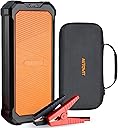
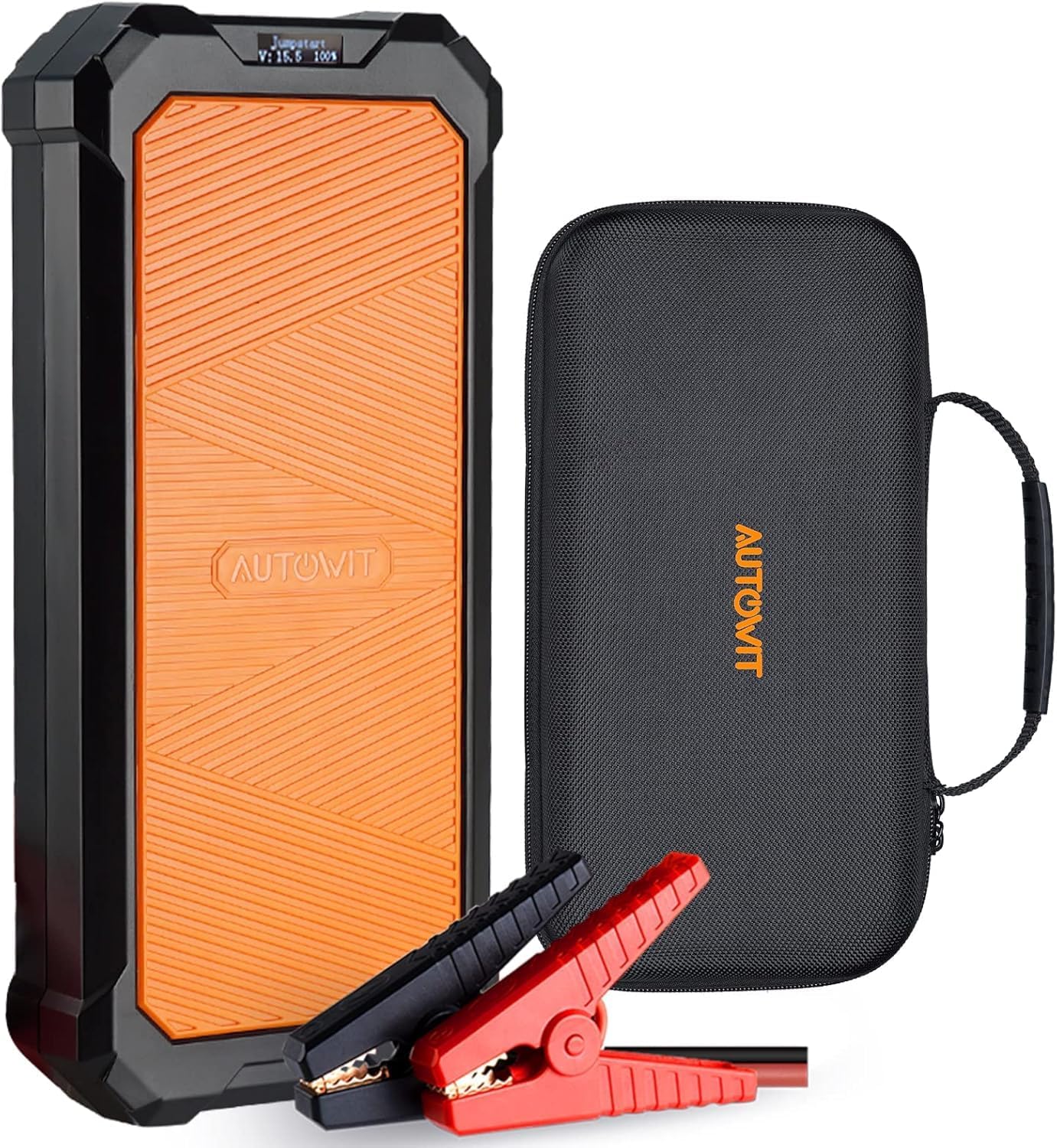
The Autowit Super Capacitor Jump Starter is a cutting-edge 12V portable jump box featuring built-in supercapacitors that require no pre-charging. Delivering up to 800 amps peak current, it safely jump starts gasoline engines up to 8.0L and diesel engines up to 4.0L. Designed for extreme environments (-40ยฐC to 70ยฐC), it offers spark-free, ultra-safe operation with over 100,000 uses lifespan, making it an indispensable tool for millennial professionals who demand reliability and convenience on the go.


| ASIN | B086L29DL9 |
| Amperage | 800 Amps |
| Battery Capacity | 12 Volts |
| Battery Cell Composition | Lithium Ion |
| Battery Type | Lithium Ion |
| Best Sellers Rank | #31,150 in Automotive ( See Top 100 in Automotive ) #162 in Jump Starters |
| Brand | autowit |
| Brand Name | autowit |
| Compatible with Vehicle Type | Motorcycle, Tractor |
| Customer Reviews | 4.4 out of 5 stars 2,683 Reviews |
| Item Dimensions D x W x H | 4.52"D x 10.43"W x 1.77"H |
| Item Weight | 2 Pounds |
| Manufacturer | autowit |
| Manufacturer Part Number | autowit |
| Peak Output Current | 800 Amps |
| Product Dimensions | 4.52"D x 10.43"W x 1.77"H |
| Unit Count | 1.0 Count |
| Vehicle Service Type | Motorcycle, Tractor |
| Voltage | 12 Volts |
K**E
Safe with a Prius hybrid!
I thought I would own this item for a year or more before I needed it, but less than 3 days after it arrived, I found my Prius's 12V battery was too low. I got lots of info on the dashboard, but it refused to start. I'm lucky that my 2020 Prius e-AWD has the battery right up front in the engine compartment, like any other car. (My older one had the 12V battery hiding deep under the cargo compartment, behind the rear seat. That location would have made the Autowit even more convenient, compared to stretching jumper cables from another car.) I removed the Autowit and the main booster cable set from the zippered case. The other items in there are just for charging from another source if my car battery is really far gone. A flexible rubber cover protects all the ports and the power button on the Autowit. The blue plug that fits into the side of the booster is marked + and - to match markings on the unit, and the plug is shaped so it only fits one way. I didn't have to press any switch; as soon as I connected to the battery (red to red and black to black, like any other jumper cables) the unit beeped and began charging from the car battery. The display in the top edge of the front of the booster is very small, but crystal-clear and steady. I had to slow down my camera shutter to get it to show the whole display - the the naked eye it isn't blurred at all. The Prius hybrid has a much smaller 12V battery than most cars, since it only needs to fire up a small gas engine. Mine was down to 9.8 volts, low enough for the car to refuse to attempt to drive. I didn't time how long it took to fully charge the Autowit's capacitor. It seemed like forever, but was probably 8 - 10 minutes. That little display counted up 1% at a time, while it reported the battery voltage dropping slowly to 8.0V. Having that display makes it obvious that I'm waiting for it to charge, and that it's going fine. At 100% the booster beeped. The beep is so quiet (to my 70 year old ears) that I didn't try to hear the long beep that tells me the 10-second timer is up. After the "ready" beep I pressed the small red button to get ready to start (the only button on the unit), and I just counted 10 seconds while walking around to the door and sitting, before starting the car normally. And it worked! BUT THE PRIUS STARTED THE ELECTRIC DRIVE SYSTEM ONLY. The dashboard showed the car was up and running, but it was silent - it hadn't started the gas engine. I pressed the gas pedal to force the car to start the gas engine (still in Park), and it fired up and began charging all the electrical stuff. After a few seconds of running I got out and went back to the Autowit. That little display told me the car battery was now being charged at 13.8V, exactly what you expect in any 12V car system. I have AAA, and calling for a jump start would have been free, but I would have waited most of an hour at best to see my rescuer. I have a battery thing that provides 110V AC and 12V DC, but it's too small to provide the big, sudden current needed to start a car. It would have blown a fuse. I could buy a bigger battery-based jump starter, but those are big & heavy, and they need to be kept charged if their going to be any use. Maybe plug it in overnight once a month. Just fine if you start dead cars for a living, like the AAA guy, but if I never used mine, I'd forget, and when I needed it a year later, it would be dead. This Autowit is built to not need charging until it's needed, and then it charges itself off your low battery. (That's not some new miracle electronic circuit. Voltage multipliers have been around for decades. This is a perfect application for it.) If my car battery was so dead that it couldn't charge the Autowit, I could still use that battery power unit to charge my Autowit, or even my power bank for recharging my smartphone. That would have been very slow, but could save me out on some logging road, far from cell service. And I can feel better about helping others with dead batteries. Toyota warns that the Prius has thousands of dollars worth of computers controlling the engine, and connecting it to some old beater with a dead battery might kill my car, resulting in a very expensive repair after getting it towed. But I can quickly charge the Autowit from my running car, disconnect it from my battery, and carry it over the the "victim" car for a quick & easy start, without ever endangering my car with electrical noise from the other. I still need to learn why my car battery got so weak. Probably my dash cam system constantly recording while the car is parked. (VanTrue N4 3-channel system with optional GPS camera mount) Or maybe Toyota's latest software update is causing the car's computers to drain power - seems less likely. But whatever is draining my battery, the Autowit rescued me easily, automatically, and relatively quickly. I'm very glad I bought it, and it's going to live in my car for as long as I have it. *** EDIT *** I was going to contact Autowit about my ling charge time, compared to other reviewers, but decided to test it first, so I would be armed with actual times and photos. I left my car parked and off, and turned on the headlights to drain the battery, testing it with my voltmeter. When it was well below 10V I tried to start the car normally. It refused, giving me the same low voltage message I had seen before. I hooked up the Autowit and watched its display of battery voltage and capacitor charge %. Starting from 17% charge (residual from previous use, I guess), it reached 100% in about 3.5 minutes, much better than my first experience. I pressed the button on the unit, got into my car while I counted 10 seconds, and started the car. Perfect. Again, it came to life in Electric mode, so I pressed on the gas (still in Park) to force it to start the engine. I let it run while I got out and disconnected the Autowit, closed the hood, and went on my errands. Another benefit: I never saw any spark when I connected or disconnected the cables to my battery, both times that I used it. Using standard jumper cables and another car is a bit scary, because you sometimes generate big sparks when the cables touch the battery poles. Since a dying car battery often vents hydrogen gas, that's scary. The hydrogen can burn, and it it burns inside the battery, it can explode. That's not common, but it can happen, and can burn your skin, eyes, and clothes with flying sulphuric acid. To avoid that I learned early to hook up the + (red) side first, then connect the - (black) clamp to some heavy metal bracket on the engine. It's always the second connection that will spark, at either car, and making that second connection on some part far from the battery can save you from an awful mess. But that's with normal jumper cables. I never saw even a tiny spark from the Autowit cables, while connecting, or removing them.
J**E
The Best Cold Climate Jump Starter
I'll start this review by saying I own both this Autowit jump starter as well as their previous model. As such, I can compare them fairly well. You may have seen this product on a popular YouTuber's channel and while it doesn't come out on top, I'll explain why this technology is right for me. I live in the subarctic where winter's super cold temperatures are the norm rather than the exception. The problem with battery based jump starters in cold climates is the battery won't hold a charge while stored in your vehicle for weeks/months at negative temps. These capacitor based systems are essentially immune to this problem, since you charge them when you go to use them and also there is no battery chemistry involved. Conceptually, this unit will take remaining energy from your insufficiently charged battery - and release it all at once, allowing you to jump start your rig. It suffers with really weak batteries, but really, it just takes longer to charge. While it's true that it won't charge from a truly "dead" battery, this is really a better application for a battery charger anyway. That said, you could use the DC accessories to plug this into an alternate power source (another battery, USB or cig lighter adapter) and start a truly dead battery. When I need a jump starter, it's because it's been -40F for a week+ and I haven't started my vehicle. In fact, I've put my old Autowit through exactly that exercise more than once, down to -46F. I gladly bought this updated model for my second vehicle as it's been such a helpful and versatile tool to get through the harsh winters. I've tried this newer one out a couple of times and expect it'll do every bit of what the old model will do. For me, a tool like this needs to be operational at all times (not just fair weather) and this fits the bill nicely. There are some differences and "upgrades" found in this unit, compared to the old version. First, the cover for the plugs is a nice rubber insert, which is infinitely better at handling cold temperatures than the (now rock hard) plastic insert they used previously. The display is nice, it gives you battery voltage and general indicators of status. The buttons are a little more clear in this unit and there is no longer an "on" button, it engages when clamped to your battery. Most importantly, the unit gives you audible clues (beeping) that you can use to know precisely when to start your vehicle. That feature is completely absent on the old version, meaning it was a bit of a guessing game of when to try starting your rig. I also super appreciated the storage case that comes with. As for the bad? There's very little in my opinion, most of my critiques were corrected in this updated model. If I had to pick one thing, it's that the beeping isn't quite loud enough. It's really hard to hear (even in deafening silence) since the hood is often up and in the way of when you need that audible cue. As for the popular YouTuber that rates these - his "cold test" really needs to be multiple weeks at -20F or lower, like it might see in the real world. Overnight in freezing temperatures is nothing, not even enough to take out my battery to begin with. This is one of the only units that is suitable for this scenario. Even if you're not facing these odds, this is still the "survivalist" version of a jump starter - one you can take anywhere and jump almost anything. It's a trusty bit of kit in my book and that's why I now have two of them!
B**N
A you tube influencer said this would work.
I presented a tough scenario for the Super cap 2 to prove itself on a low battery located under the rear seat of a gm car. And it did not work as advertised, utilizing the Super cap 2 alone failed in the above scenario on the first attempt. I then connected car #1 to car #2 using jumper cables and was able to get lights and alarms to power up but still not enough juice to start it. I then added in the Super cap 2 to a location under the hood for normal jump assist's and then the Super cap 2 was able to provide just enough additional energy to turn the engine over so it would start. The Pros The tech behind it makes sense instead of using lithium batteries it uses Capacitors for storing a Pre-charge of energy and it should work on something that wasn't so depleted maybe where you have dim lights and the dash lights up but doesn't have enough juice to turn over the engine. Unlike a Lithium battery this unit can be 100% pre charged in less than 10 mins. While it wouldn't start the car alone it did tell me the system voltage and that the battery was low, when the car was running it does display the charging systems voltage output. I did have to also use the accessories to pre charge it in car #2 it comes with a nice carrying case a USB cable as well as a cigarette lighter socket plug mechanism for pre charging it. The Red and Black cable attachment is removable and is designed in such a way that you cant accidently install it backwards. The cons I felt it doesn't work well with GM side mounted battery terminals, due to the batteries design the clamps kept wanting to come loose, maybe some sort of offset shoes should be included for insertion between the actual battery terminal and the cable then the clamp's could connect to the shoe instead of the small cable attachment bolt. The instruction manual is really vague on what to troubleshoot it did show a chart on the various readouts but then nothing to suggest what each one meant and how to correct them. Update: I had a no crank but the lights came on and this device was abler to operate properly and was able to provide enough current to start the car.
J**.
Autowit SuperCap 2: Clever, Compact, and Capable โ But Needs Better Documentation
The Autowit SuperCap 2 is an impressive piece of tech that stands apart from traditional jump startersโitโs not a battery. Instead, it uses supercapacitors to harness power from a car battery that still has a bit of life left in it (as little as 1 volt). Once connected, the Autowit charges itself up using the residual power, which typically takes just a few minutes. When the capacitor hits 100%, you simply press a small red button, giving you about 10 seconds to crank the engine with the dead battery. This makes the Autowit an incredibly practical toolโyou donโt need to worry about keeping it charged ahead of time, unlike conventional jump starters. Itโs always ready, as long as the donor battery has a tiny bit of juice left. Pros: No need for pre-charging Fast, self-contained capacitor charging Reliable jump-start performance Great for long-term storage or emergency kits Cons: The manual is almost uselessโtiny, poorly written, and barely legible The built-in LCD screen is very smallโwe didnโt even notice it at first. It only displays charge status, but better visibility would go a long way. Overall, the Autowit SuperCap 2 is a smart and innovative tool that performs well when you need it most. Just be prepared to do a little extra research online since the included instructions wonโt be much help.
S**P
Perfect. Have truck, will crank. Tanks! I mean, Thanks!
Update #3: Have not needed to use it since last edit but it connects & loads up using any & all of the included connectors. Iโve even used my little 10w USB solar panel. (Took forever for reasons obvious). All worked & when I tested each, used the truck & it was ready to go. So no issues. Works as stated. Works well. The only variables are the vehicle & the user. Aside from a tiny solar who-cares-what-you-have-going-on-today panel, each method you use determines your charge time. Itโs math. It works. Buy it. Just double check your connections like I didnโt. Wink-wink. Vanlifer tip for those with steeds & iffy electrical systems: Load it with your USB pack whenever you park. If you occasionally need a jump but think often enough you might need one every time, this practice will ensure less downtime when you have to go but โDamn! Three days since last jump. Trickled down to 20%, USB battery, yikes! Iโll be on the road in forty five minutes, not 2.5! Damn damn! :insert Doc Brown facial expression: So, shortly; Have a weak electrical system? Buy this & habitually connect it to your USB battery pack on parking. Less downtime. Update #2: I gave it a day. Out of frustrated fairness, I gave it another go. Connected to a charged battery this time. Used only the jumper connector to turn it on. Worked. Seems intermittent. Unsure of cause. Will continue use as needed & update review as my experience evolves. Update #1: Itโs been a few short months & it no longer works. It will charge but not begin the countdown when the button is pressed. Damn waste of homeless guy funds! Original review below: The BEST thing about this is that it will crank a light truck. Others I looked at wonโt work very well with even my little 4.6L motor. When I was experiencing an electrical issue, this helped me stay moving until I found the issue. Itโs light, so easy to stow, carry, and retrieve out of your VEDC. Simple to use. Very few connections. Itโs literally plug (or pinch) & play. & in the event you have a tragically low battery, you can even prime this thing with your cell phone charger or a portable USB battery. Takes longer but it works. One-person use with a โbeepโ loud enough to hear inside your car if itโs freezing outside while you wait for it to charge. And itโs tough. With no battery in it, you donโt have to worry about handling it like you would a lithium ion or a lead acid battery jump starter.
D**R
Some non-discussed limitations, but a great tool you can keep in your car daily
TLDR; I have no reason to believe it wouldn't work for its primary intended purpose...jump starting a discharged but otherwise still healthy battery. Discussion: I bought this less than a month ago, and hoped not to need to use it for a while. But the wife's car wouldn't start abruptly last night away from the house, so I met her with this tool and a battery tester. First I followed the instructions, and it took about 3 minutes for it to fully charge. We hit the red button, and it had a ten second countdown timer (it beeps every second for that time, helpful in the dark). We tried starting the car, and the battery/super capacitor combo still didn't provide enough power to engage the starter. I re-positioned the cable clamps on the terminals to ensure a good connection, and checked the other end on the capacitor to ensure it was well connected into the super-cap (it was). Second test, same result. I hooked up the battery tester, and the test revealed a bad cell in the battery, which would explain why the super cap didn't make the expected difference. Replacing the battery fixed the problem. So what I learned is 1) if you have a battery tester (I use the Konnwei KW208, highly recommended), I'd suggest checking the battery condition before attempting to jump start with the super cap to see if you have a bad cell or other battery viability problem (especially if outside temps are at highs or lows), and 2) don't expect the super cap to be able to jump a car with a physically compromised battery (like a bad cell); a damaged battery isn't the same as a simply discharged battery. I gave the super cap high ratings because it appeared to work as designed, meaning the display kept me informed on charging status, operation processes, and ending (discharged state). It is small enough to carry on trips, and has good environmental temperature tolerances so it can be left in the car. All items advertised were included (super cap, battery cable, cigarette charger, USB cords, and carrying case) all arrived with the order in new condition, and the finish of all provided was without noticeable flaws.
F**Z
Don't use it like most other battery packs
After getting it in hand and running through an initial charge cycle to check if the unit works correctly, I found that you cannot leave it alone. Like other reviewers have mentioned, this needs to be unplugged (or stop charging) from its source as soon as it hits 100% - leaving it connected longer just causes the unit to discharge, which had me scratching my head. It would've been pretty easy to design a stop-charge mechanism, especially when it's over $100? There are a lot of other battery packs that are cheaper... Charging it through the USB port took way too long - it felt like an hour, but the docs says it's supposed to only take 30 minutes. Realistically, you really need a 12V source, as this should cut charge time in half or more - since you have to disconnect the device when it tops off, this is a more manageable time. It also claims a 10 year life, with 100,000 charge cycles possible - so you're going to fire this 10,000 times a year??? That's over 800 times a month, or over 25 times a day??? I find those numbers baffling... ADDENDUM: So... I finally got to do a real world test on the unit. Test vehicle: Honda Civic with a half flat battery, 7VDC - 8VDC The Super Cap 2 was taking too long to charge from the half-dead battery, so I found another battery to charge from, as per instructions. It took 5 - 10 minutes with a solid 12VDC! I watched the display flicker from "12.0" to "12.1" volts, but the percentage charge quickly went up. Once it beeped (buzzed?), I quickly disconnected and reconnected on the Honda battery. I then hit the ON / OFF button and the unit started to count down from 10. Once it started to beep (buzzed?) again, we started to crank the car... Now, this car has a history of hard starting, so this would be a true test; sure enough, after about 10 seconds of cranking, the car did not start. After 10 seconds of cranking, the Super Cap 2 was DONE - display showed 47% capacity, and it would not induce another cranking cycle. What does the Super Cap 2 instructions say to do in this case? Start another charge cycle...AGAIN. That's it. Now, I would think most people would use this product in an emergency situation; I would not think they would like to go through SEVERAL charge cycles just to get a car started. This is where this product disappoints. I would assume this product would fire the engine on the first try - NOPE. I think you're better off getting a lithium jump pack, which should be about the same price. Now, I dunno about you, but this was a major disappointment for me. Unit returned for refund. ADDENDUM: So it looks like this manufacturer / distributor likes to sic it's customer reps / techs on you whenever you write something bad about their product, like I did... THEY claim the unit is supposed to keep recharging (above 95%) if kept connected to charge - which my unit DID NOT DO. They claim the unit is supposed to be able to discharge several times once it's 100% charged - which my unit DID NOT DO. They claim the "100,000" cycles is for commercial / business use - why isn't this explicitly stated? My (returned) unit couldn't even restart the first time. This is the first time I've encountered such a hostile response from a "vendor" for leaving an unsatisfactory review. I pointed out to them that I was merely stating my direct experience with their product - it could have been possible the unit was defective. (If the unit was defective, their quality control sucks; I was not going to get into a back and forth shipping headache for this.) Be careful dealing with their "customer service."
J**M
Works great - read the instructions first
Works perfectly and most importantly, no batteries that have to be replaced eventually. Lithium battery type charger at -30 good luck with that. This thing worked perfectly. Follow the directions exactly and you will find it super easy and fast. Like jumper cables, throw it in your car and forget its there until you need it - it will always be ready to go.
H**F
Funktioniert immer
Nachdem schon 2 Powerbanks versagten bin ich mit dem -immer funktionierten- Starthelfer - auf der sicheren Seite
J**N
Great product
Good solid build, draws it's power from the flat battery. So if your battery goes flat and no one else is around it could be a live saver.
C**0
Top
Simple et efficace
P**B
Not tested in real need yet
Slower to charge on usb than advertised
R**S
Brilliant
Brilliant
Trustpilot
1 week ago
2 weeks ago