The Boy Who Harnessed the Wind: Picture Book Edition
Product ID: 1693565
Buy anything from 5,000+ international stores. One checkout price. No surprise fees. Join 2M+ shoppers on Desertcart.
Desertcart purchases this item on your behalf and handles shipping, customs, and support to Vietnam.
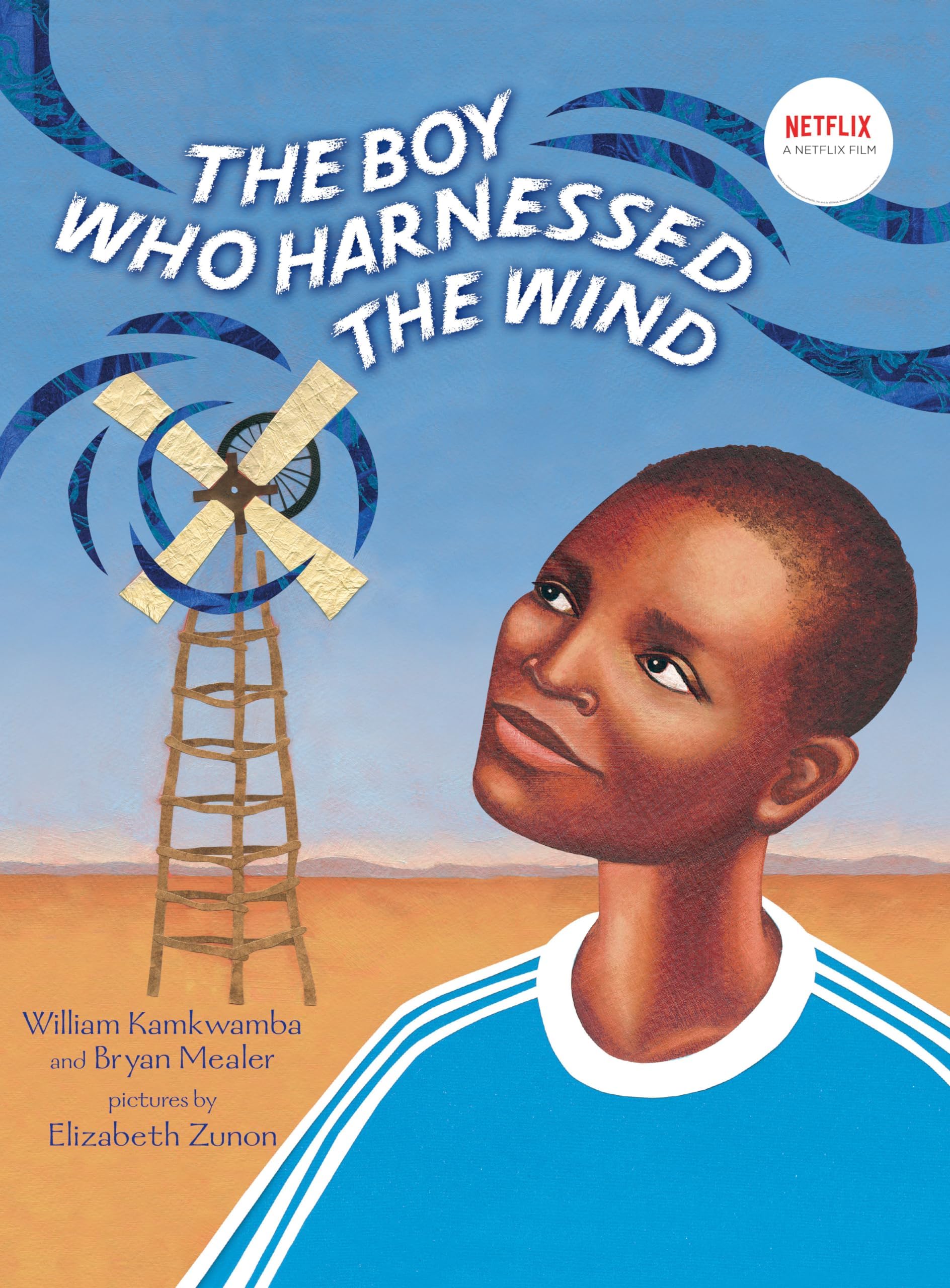
The picture book retelling of the New York Times bestseller • Now a Netflix film starring and directed by Chiwetel Ejiofor! A lyrical and gloriously illustrated true story of one boy’s determination to help his community that shows how—even in the worst of times—a great idea and hard work can rock the world. When a terrible drought struck William Kamkwamba's tiny village in Malawi, his family lost all of the season's crops, leaving them with nothing to eat and nothing to sell. William began to explore science books in his village library, looking for a solution. There, he came up with the idea that would change his family's life forever: he could build a windmill. Made out of scrap metal and old bicycle parts, William's windmill brought electricity to his home and helped his family pump the water they needed to farm the land. Retold for a younger audience, this exciting memoir shows how, even in a desperate situation, one boy's brilliant idea can light up the world. Complete with photographs, illustrations, and an epilogue that will bring readers up to date on William's story, this is the perfect edition to read and share with the whole family. Review: The Boy Who Harnessed The Wind: Young Reader's Edition - Themes/Discussion Topics: Self-empowerment, Ingenuity, Africa, English-Language Learning, Hunger, Famine, Education, Role of Libraries, Recycling Inventor William Kamkwamba and journalist Bryan Mealer collaborate with illustrator Elizabeth Zunon to masterfully share with the young reader the story of William's life in drought-ravaged Malawi and his ingenuity that inspired him to build a windmill that would illuminate his life and the lives of those around him. William was forced to drop out of school after a severe drought and famine struck Malawi. Instead of abandoning his education entirely, William started going to the local library in an effort to continue his education. He used the library books to teach himself how to build a windmill and dictionaries to learn English one word at a time. In order to build his windmill, William collected spare bicycle parts, a tractor fan, plastic pipes and other useful items that others had discarded as trash. Although the people in his village thought that he was crazy, he persisted and ultimately succeeded in building a windmill that provided enough electricity to power several light bulbs and two radios as well as provide water for his family. Kamkwamba and Mealer tell the story in a compelling manner that captures and maintains the young readers attention throughout the book. Issues such as poverty, famine and starvation are contrasted with concepts such as imagination, self-empowerment and education in way that a child can understand and appreciate without feeling overwhelmed. Zunon's intensely beautiful illustrations comprised of oil-painted backgrounds with carefully cut pieces of fabric, paper and old photographs create vibrant and textured collages that compliment the text and subtly mirror William's story by assembling old pieces of various materials to create a new whole that at times seem to have a story of their own to tell. Although the story told in the book culminates with the construction of the windmill, William's story does not end with that amazing accomplishment. An update on the final pages about William's life after building the windmill is provided so that the young reader can be inspired by how William's hard work and determination paid off and continues to do so for William. I enjoyed reading The Boy Who Harnessed the Wind with my children and more importantly they benefitted from hearing William's story. The book provided us with an opportunity to discuss important issues like hunger, access to education and the transformative power of science and the imagination. As a parent, I remain appreciative of this heart-warming and thought-provoking book that inspired my children to ask "[c]ould we build a windmill?" Review: Beautiful book - This book was a gift to my daughter’s classroom. I opted for the hardcover to keep it lasting longer and for the beauty. It’s a good size and has beautiful colored pictures done so well. Really great story for children and great addition to any child’s collection. Her class was very happy with this addition. Came packaged loosely but in great shape. Great value for a beautiful book. I believe there are two versions of this, this book he is for children 5-9 and the second version is 9-12 years. I didn’t realize they made different versions which I think is nice. Now all kids of many ages can enjoy and understand.


| Best Sellers Rank | #44,700 in Books ( See Top 100 in Books ) #7 in Children's Electricity Books #11 in Children's Africa Books #23 in Children's Science & Technology Biographies |
| Customer Reviews | 4.8 out of 5 stars 648 Reviews |
D**R
The Boy Who Harnessed The Wind: Young Reader's Edition
Themes/Discussion Topics: Self-empowerment, Ingenuity, Africa, English-Language Learning, Hunger, Famine, Education, Role of Libraries, Recycling Inventor William Kamkwamba and journalist Bryan Mealer collaborate with illustrator Elizabeth Zunon to masterfully share with the young reader the story of William's life in drought-ravaged Malawi and his ingenuity that inspired him to build a windmill that would illuminate his life and the lives of those around him. William was forced to drop out of school after a severe drought and famine struck Malawi. Instead of abandoning his education entirely, William started going to the local library in an effort to continue his education. He used the library books to teach himself how to build a windmill and dictionaries to learn English one word at a time. In order to build his windmill, William collected spare bicycle parts, a tractor fan, plastic pipes and other useful items that others had discarded as trash. Although the people in his village thought that he was crazy, he persisted and ultimately succeeded in building a windmill that provided enough electricity to power several light bulbs and two radios as well as provide water for his family. Kamkwamba and Mealer tell the story in a compelling manner that captures and maintains the young readers attention throughout the book. Issues such as poverty, famine and starvation are contrasted with concepts such as imagination, self-empowerment and education in way that a child can understand and appreciate without feeling overwhelmed. Zunon's intensely beautiful illustrations comprised of oil-painted backgrounds with carefully cut pieces of fabric, paper and old photographs create vibrant and textured collages that compliment the text and subtly mirror William's story by assembling old pieces of various materials to create a new whole that at times seem to have a story of their own to tell. Although the story told in the book culminates with the construction of the windmill, William's story does not end with that amazing accomplishment. An update on the final pages about William's life after building the windmill is provided so that the young reader can be inspired by how William's hard work and determination paid off and continues to do so for William. I enjoyed reading The Boy Who Harnessed the Wind with my children and more importantly they benefitted from hearing William's story. The book provided us with an opportunity to discuss important issues like hunger, access to education and the transformative power of science and the imagination. As a parent, I remain appreciative of this heart-warming and thought-provoking book that inspired my children to ask "[c]ould we build a windmill?"
L**N
Beautiful book
This book was a gift to my daughter’s classroom. I opted for the hardcover to keep it lasting longer and for the beauty. It’s a good size and has beautiful colored pictures done so well. Really great story for children and great addition to any child’s collection. Her class was very happy with this addition. Came packaged loosely but in great shape. Great value for a beautiful book. I believe there are two versions of this, this book he is for children 5-9 and the second version is 9-12 years. I didn’t realize they made different versions which I think is nice. Now all kids of many ages can enjoy and understand.
H**H
Interesting, encouraging, great illustrations
This story is a factual account of a young boy's search for a way to help his village. His interest in windmills to generate electricity led him to his community llibrary where he researched the idea. I liked the way the story leads the reader from problem, to idea, to research, to solution, and finally extension. In education, teachers want young students to be able to do all of these steps: recognize, define, apply, evaluate, design, extend. All the lessons are incorporated in one story! The fact that this inventor was so young also helps students to realize that you don't have to be famous, rich, highly educated, or an adult to do something of great importance. The cultural part of the story suggests to students that not everyone has the advantages that we, as Americans, are able to enjoy, such as having water on demand. The book's mixture of illustration and authenic photos make the story more realistic, so students can realize that this event actually occurred and that the boy in the story is real. This makes it easier to identify with the boy...his life, his interests, his actions, his dreams. I bought this book for my eight-year-old grandson, but it could be read to a younger audience, and I would greatly recommend it to all age groups.
O**S
Arrived on time
Very cute
P**H
Amazing story
Great illustrations and amazing story. I thought the author leaned a bit heavy on crediting americans and that detracted a bit, but overall, well worth reading.
S**Y
Book
Good short story with pictures to go along with with the novel.
K**T
Good literature
Great text!
A**R
Science Books for Children
Grandma was so happy to make this book as a present for a bithday. Thank you !
Y**N
Good job!
Good package and good book status. Thanks.
M**I
16 pages - all images, few words
Very very expensive for the content showed in 16 pages (both sides =32). I was expecting story to unfold image after image with some sentences like many other books. My neice finished glancing/reading finished book in 15mins. Everything is at high-level and it's summary.
A**R
why send books to Africa ?
wonderful true report of how a 14 year old boy in Malawi with a starving family read books in a library donated by Americans. The books were about windmills and how they could pump water from underground to water farms. He then collected recycled materials such as plastic pipe which he melted to flatten into the shape of blades, an old bike, a small generator from a bike lamp, bearings and bolts etc taken off no longer used equipment. He built a windmill from these materials and brought light and water to his famine struck village, beautiful book, true story
N**H
Wonderful true story and illustrations
Great story based on fact that inspired my year 2 class (6-7 year olds). All about sustainability and defying all the odds set against you. Would be good for ages 6-10.
L**R
A really inspiring read, great for children
The real-life story is so amazing that most books would probably do it justice but I particularly like the African pictures by Elizabeth Zunon. It would best suit 5 to 8 year olds although it would probably work for older children if the book was discussed as well as just read.
Trustpilot
5 days ago
2 months ago