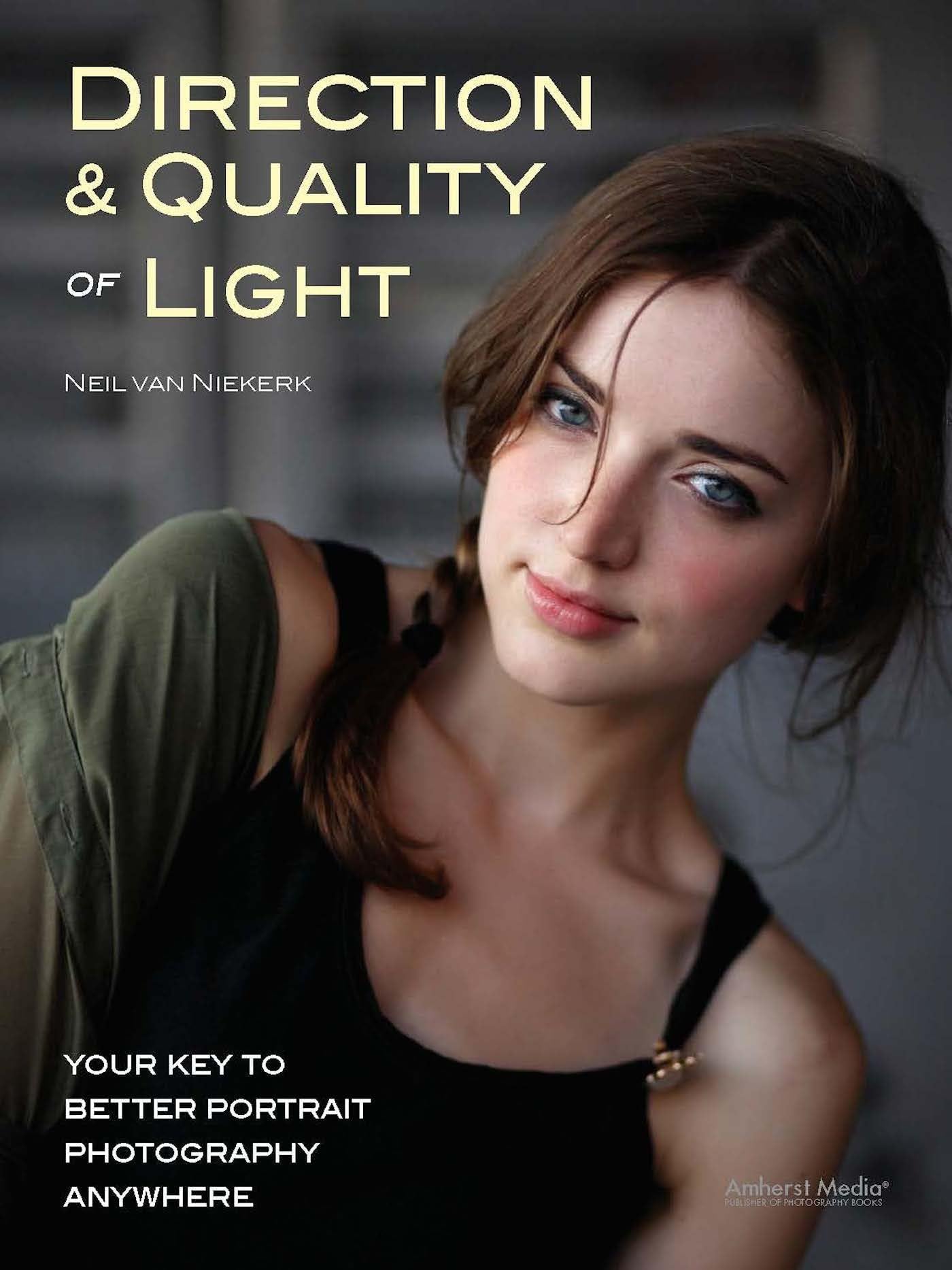
Direction & Quality of Light: Your Key to Better Portrait Photography Anywhere
Product ID: 1608328
Buy anything from 5,000+ international stores. One checkout price. No surprise fees. Join 2M+ shoppers on Desertcart.
Desertcart purchases this item on your behalf and handles shipping, customs, and support to Vietnam.
Providing readers with a study of learning how to turn poorly lit images into finely crafted, masterfully lit photographs, this guidebook instills photographers with the self-confidence to think on their feet and photograph any portrait subject anywhere. Acclaimed photographer Neil van Niekirk presents seven distinctly different lighting scenariosavailable light, exposure metering, a touch of flash, bounced on-camera flash, off-camera flash, video light, and hard sunlightto show readers how to manipulate the direction and quality of light, the subject’s and photographer’s position, and numerous other variables so as to turn a bad image into a stunning, professional-level portrait. Packed with dozens of instructional, full-color photos, this work also features 10 sample photo sessions, allowing readers the opportunity to see the seven lighting scenarios put to practice. Review: Great book! Well written and very helpful. - I have all three of Neil van Niekerk's books and they are all very helpful. This book is the newest and is focused on understanding the benefits and uses of different qualities and directions of lighting in photography. The book uses natural light, reflected light, on-camera and off-camera flash, and some of the best bounce flash I have ever seen to illustrate these ideas. There are straight-forward and complete descriptions and directions for accomplishing the presented ideas. The book is a good read cover-to-cover, but you can also just flip to a section or photo you like and the descriptions will stand on there own. It is clear that a lot of thought went into the writing, structure and layout of the book and it really pays off for the reader in a very usable and educational book. Review: High quality book, not high quality packaging - Great book, lots of good information and well packaged up for those who prefer to read a physical book then to go through Neil's website, where a lot of the information already is. My only real complaint about this book is the "build quality" is fairly bad. It feels like a lower quality binding job, with the pages not *quite* fitting together right. However there's no issue with the spine or quality of paper. Definite recommend if you're an amateur or mid-level shooter interested in getting more information about making your portraits pop, and learning to see different lighting options all around you, from natural light only to one flash to multiple flashes. The focus is not much on gear, and much more on technique and seeing light. Highly recommended.
| Best Sellers Rank | #909,637 in Books ( See Top 100 in Books ) #99 in Photography Lighting (Books) #744 in Portrait Photography |
| Customer Reviews | 4.4 out of 5 stars 260 Reviews |
M**C
Great book! Well written and very helpful.
I have all three of Neil van Niekerk's books and they are all very helpful. This book is the newest and is focused on understanding the benefits and uses of different qualities and directions of lighting in photography. The book uses natural light, reflected light, on-camera and off-camera flash, and some of the best bounce flash I have ever seen to illustrate these ideas. There are straight-forward and complete descriptions and directions for accomplishing the presented ideas. The book is a good read cover-to-cover, but you can also just flip to a section or photo you like and the descriptions will stand on there own. It is clear that a lot of thought went into the writing, structure and layout of the book and it really pays off for the reader in a very usable and educational book.
A**N
High quality book, not high quality packaging
Great book, lots of good information and well packaged up for those who prefer to read a physical book then to go through Neil's website, where a lot of the information already is. My only real complaint about this book is the "build quality" is fairly bad. It feels like a lower quality binding job, with the pages not *quite* fitting together right. However there's no issue with the spine or quality of paper. Definite recommend if you're an amateur or mid-level shooter interested in getting more information about making your portraits pop, and learning to see different lighting options all around you, from natural light only to one flash to multiple flashes. The focus is not much on gear, and much more on technique and seeing light. Highly recommended.
M**B
As good as the first two books
Just finished Neil's latest book and found it to be excellent, as were his first two books. One of the things I particularly liked about all his books is that the referenced images are generally on the same or adjacent open page. Occasionally, you have to flip one page. Makes for very easy reading . And he covers many situations such as "Available light with rim lighting", "Manual or TTL", "Separation with backlighting", etc. After a second reading this book will become a reference book just to keep his ideas fresh in my mind. The author is not "long winded" with lots of superfluous words filling the page. He gets to the point using examples (sometimes images which have been on his website -- but so what? They illustrate his lesson perfectly.) In my collection of over a dozen books, Neil's three are my favorite "go to" references when I want to reinforce some idea. I would recommend reading the first two books before this one if you are a beginner. OK to start with "Direction and Quality of Light" if you are advanced.
F**.
Best book yet on flash
I already had Neil's first two books and learned much from each of them. This book is sort of a re-cap. . .but it added a greater understanding of what we're really trying to achieve. I got a lot out of it--so much, in fact, that I also watched his two video courses on Craftsy. Neil has a better way of explaining than I've seen anywhere else, and his teaching methods are far more effective. I've never gotten much out of discussion on butterfly lighting--what does work for me is seeing what a portrait looks like without flash, and then seeing how a little fill can make a difference. Great examples, clear and cogent writing. I like books and video tutorials, and I've read and watched more than a few. I still got more out of this book than from any other writer, and added to what I'd already learned from Neil. Can you tell I liked it? And that I highly recommend it? Good. Click "Add to Cart". You won't regret it.
P**U
So much better than other hyped books.
This small book (160 pages) deals with lighting for the portrait in all its aspects. No posing techniques here, the book title is pretty accurate - It is all about light: available light vs. flash light, light modifiers, light measurement, indoor vs. outdoor light, on camera vs. off camera flash. No grand unifying theory of what makes a good picture here (phew!) but great pictures with how and why they were lit the way they were. There are regularly pull-back shots showing the setup. The first two chapters even have a few photos labeled "BAD!" and why, something I would like to see more as one learns more from mistakes than from success and it is less painful to learn from other people's mistakes, even when they are voluntary to make a point. What's great with this book is that it deals with the technical aspects without making them painful. The downside of course is that the reader is supposed to be at least somewhat knowledgeable in photography - this is not a book for the complete beginner. In a way I find it is quite complementary with the Master Lighting Guide for Portrait Photographers that details all the variants of all the poses and lighting diagrams. The master lighting guide is essentially studio while the direction and quality of light deals with on-location including some wedding or engagement pictures but all in all they go well together. What does not hurt, it is easy and friendly to read and it makes a decent coffee table book. To me a solid four-stars-and-a-half; two of his earlier books are in my Amazon shopping cart. I hope this helps. Don't hesitate to ask me questions in comments.
J**E
Not a Keeper for me.
I agree with others who chose not to "5-star" this book. It is a good book for beginners who have no experience with lighting, and I found it well thought out and with easy-to-understand explanations. But even for beginners, I thought the book was sorely missing diagrams of where the lights were placed for each shot. Photographers are by definition "visual" learners, and this seems to be a glaring omission. For a $30 MSRP book, on a subject as important as photography, I think that would have been enough to bump it up at least to a 4 star. I will not be holding on to this book for my library.
P**Y
Overall, a good tutorial
The author has shown many good examples of how proper lighting make all the difference in a bad photo, or even an OK photo, and a great photo. However, the book would have been improved with some diagrams of lighting placement and how reflected light was set up. There are several photos of the overall scene with flash placement, but there were some instances where a diagram would have been helpful. However, this is a minor point. Get this book if you want to improve lighting in your photos.
R**8
The light came on for me!
Just finished this book - one of the most helpful I've read in a while. I am relatively new to using flash and have been reading a number of books on the subject as well as browsing through sites on the web. The explanations and examples in this book finally presented things in such a way that I feel as though I had a light bulb moment - actually more than one. The book is more about technique than equipment but that is just the type of information I need at this point. Yes, some of the photos and information have been presented on Neil's website but what I found particularly helpful was having them laid out in book form, in logical progression. I really enjoy the website but I've often felt that I needed the information as I found it in this book. What may wind up being the most important thing, thanks to Neil, is that I find myself looking at and studying the effect and quality of light with nearly rapt attention as I go through my day.
D**N
This is a masterpiece, so well written and documented!
This is the best book I have read about learning the key concepts of lighting a portrait. Plenty of informations and examples of his method and the results are amazing!
S**J
Beginners Guide to Flash Photography
It's my first book on flash and light etc, so in no case I stand in a position to compare it with others. The content and flow of the concept in this book is pretty organised. I love the way author described things in detail and explained why and how he did; is pretty good. The pictures used are not extravagant in a sense; that you won't even be thinking to try it own your own. He explained all aspects of Flash photography, starting from direction, quality, intensity of light you get out of these small units, angles distance, even gels and modifiers. It's a great book for some one who is like me starting his or her flash photography. I have already ordered "One Flash! Great Photography with Just One light" will be in a position to compare once I complete reading that too. One Flash!: Great Photography with Just One Light
G**A
Superb!!!
An excellent book that will guide you to the craft of good lighting. It has already helped me to enhance my photographs. Easy to follow,and will clear-cut explanations. No BS, no complicated diagrams, no high-tech jargon...only pics and the thought process of Neil to get there.
A**K
Probably the best book on portait photography out there
The author is one of the very few talented photographers and manages to teach you how use available light as well as flash light to create effortlessly stunning photos. He give many examples on how lighting results in bad and good results.
J**T
An excellent resource for photographers
I bought this book after reading the authors first book and I was equally impressed. This is not a 'how to' book in the sense that it does not lead you through lighting set ups, but more importantly (in my opinion) it shows you a host of real life scenarios that the author has worked with in the past and identifies the key decisions he made to create the photos you are looking at. Definitely worth a read if you are interested in improving your photography techniques.
Trustpilot
1 month ago
2 weeks ago