The Road to Oxiana
Product ID: 1563518
Desertcart purchases this item on your behalf and handles shipping, customs, and support to Vietnam.
In 1933, the delightfully eccentric travel writer Robert Byron set out on a journey through the Middle East via Beirut, Jerusalem, Baghdad and Teheran to Oxiana, near the border between Afghanistan and the Soviet Union. Throughout, he kept a thoroughly captivating record of his encounters, discoveries, and frequent misadventures. His story would become a best-selling travel book throughout the English-speaking world, until the acclaim died down and it was gradually forgotten. When Paul Fussell published his own book Abroad , in 1982, he wrote that The Road to Oxiana is to the travel book what " Ulysses is to the novel between the wars, and what The Waste Land is to poetry." His statements revived the public's interest in the book, and for the first time, it was widely available in American bookstores. Now this long-overdue reprint will introduce it to a whole new generation of readers. Today, in addition to its entertainment value, The Road to Oxiana also serves as a rare account of the architectural treasures of a region now inaccessible to most Western travelers, and a nostalgic look back at a more innocent time. Review: A unique pleasure - This a very special book where text, substitutes photographs and comunicates , for us readers, the atmosphere of Old Persia and Afghanistan. The style of the prose is sensational. Lots of fun reading. Not beeing politically correct the book pass the real idea of how an educated is challenged by different cultures. Byron is a kind of cocktail of Burton, plus Paddy, plus Anna Commena with a very sharp tongue . Review: A glimpse of the past, may give insight into our own future. - This book written in the 30's is a window to times lost, a beautifully written travelogue and a historical narrative of the areas visited. Much of the architecture as described, does not exist today and so it is a A Window into a time that has past and likely will never return. This book is an opportunity to immerse yourself in a different space and time socially and politically. Many consider the middle east to be backward in recent development history, this book gives you a glimpse of what once was a significantly developing country and the social, religious, historical and political periods that shaped it into what it is today. It is always worth the time to read and immerse yourself in a time that has past and correlate that period with where we are today. As art and architecture were destroyed when political change swept the country historically , are we seeing a significant comparison to social changes taking place today.?
| Best Sellers Rank | #960,209 in Books ( See Top 100 in Books ) #19 in General Middle East Travel Guides #38 in Afghanistan Travel Guides #179 in General India Travel Guides |
| Customer Reviews | 4.3 out of 5 stars 488 Reviews |
J**S
A unique pleasure
This a very special book where text, substitutes photographs and comunicates , for us readers, the atmosphere of Old Persia and Afghanistan. The style of the prose is sensational. Lots of fun reading. Not beeing politically correct the book pass the real idea of how an educated is challenged by different cultures. Byron is a kind of cocktail of Burton, plus Paddy, plus Anna Commena with a very sharp tongue .
D**N
A glimpse of the past, may give insight into our own future.
This book written in the 30's is a window to times lost, a beautifully written travelogue and a historical narrative of the areas visited. Much of the architecture as described, does not exist today and so it is a A Window into a time that has past and likely will never return. This book is an opportunity to immerse yourself in a different space and time socially and politically. Many consider the middle east to be backward in recent development history, this book gives you a glimpse of what once was a significantly developing country and the social, religious, historical and political periods that shaped it into what it is today. It is always worth the time to read and immerse yourself in a time that has past and correlate that period with where we are today. As art and architecture were destroyed when political change swept the country historically , are we seeing a significant comparison to social changes taking place today.?
N**M
Adds to a list of works on this region
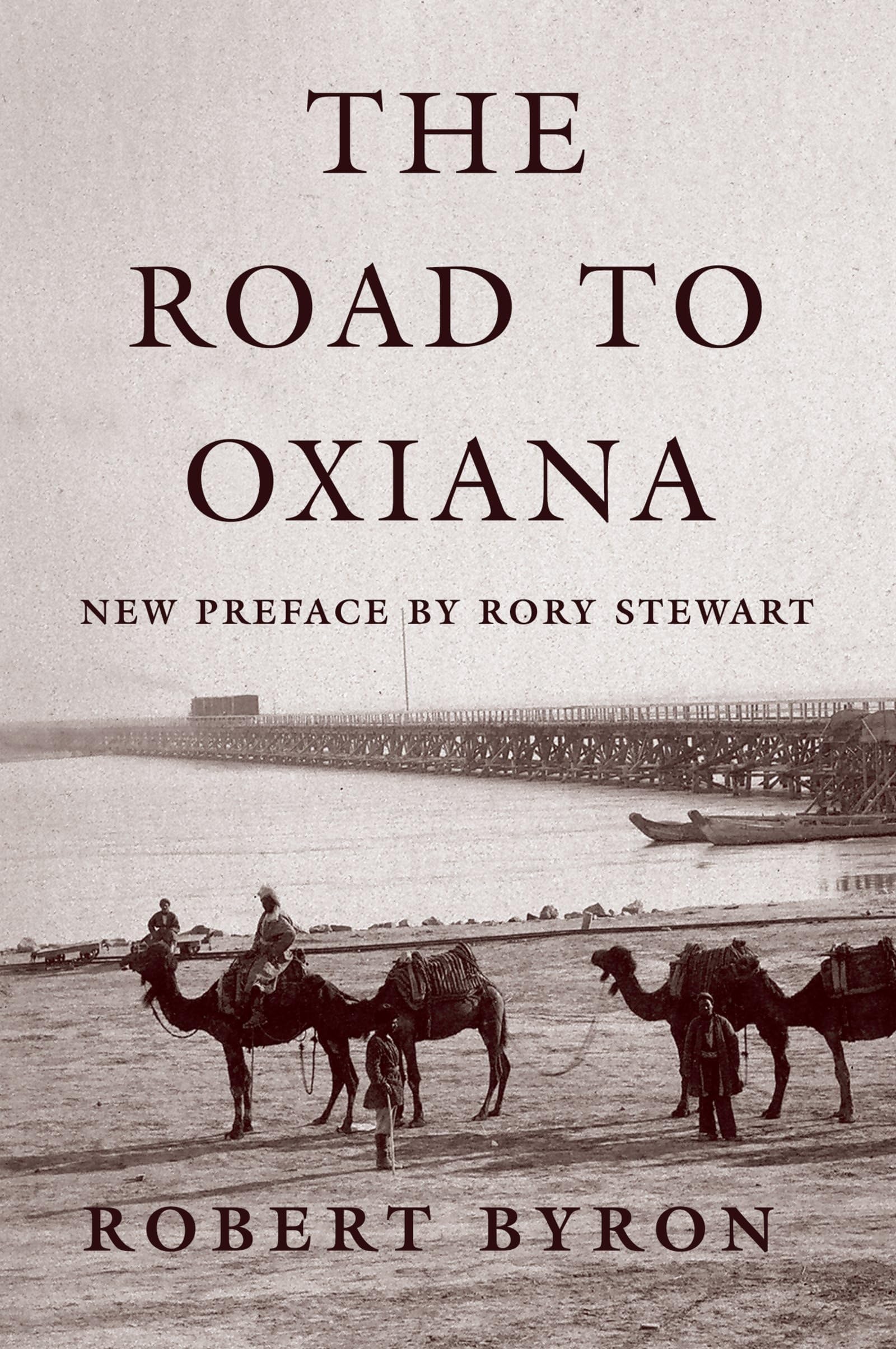
It is presumed that the reader is interested in the areas and countries that Byron visited. Byron's main interest was architecture, and if that does not interest you, then this is not a book you would enjoy. Much of the book is a kind of pre-quel to "Eastern Approaches" and "The Great Game". It heads a list of works about Russia's designs on India and all the lands in between. The maps are very clear. I don't understand what another reviewer complains about. I found them easy to read and follow on them the author's journey. The language is not dated nor quaint. It is standard English of its time, the 1930s. This is not the only book to read about Central Asia but it is part of a library for those interested in the region and its history. Reviewer MLW gave two stars claiming that this edition's maps are unclear. The Penguin Travel Library he recommends has no maps nor photographs, nor any introduction. The latest edition, with a photo of a bridge and camels on the cover, has maps, photos, the original intro by Paul Fussell and a new preface by Rory Stewart, himself a Central Asian traveler.
C**E
Strictly a travel diary
Bear in mind it is a diary of one man's travels before the world wars. Tis almost quaint.
J**M
A real treat
Robert Byron’s descriptions are so vivid that he got me interested in architecture in general and Persian and Afghan architecture in particular. Unbelievable. His insights into the interactions of different cultures and world views were thoughtful, humorous and on the mark. This book will always have relevance.
M**S
Good but a classic...70 years later - a lot has changed...
A fair amount of religious intolerance in here - interwoven with a good travel narrative. The names of so many areas in Pakistan and Afghanistan have changed - so it's hard to track down what the cities which Byron chronicled in the 1930's are NOW. His time in Iran (then Persia) is illuminating though he has to disguise the name of the Shah in conversations and writing because late Shah Reza Pahlavi's father was MORE of a tyrant on the lines of Hitler + Stalin. The back story of his sometime traveling companion as a British spy is cool. And you learn from this book - so much more about Russia's attempts for control in Afghanistan in the 1930's! Byron is a Byzantine art and architectural expert with other previous books about his travels in Greece and Russia. Byron was also gay and his "gaydar" on reading people - some times adds to the narrative. The book was cited by Brit traveler writer Sara Wheeler in another book. She has cranked out some of fave travel books. Buy a USED Copy through Amazon - I did.
W**O
Breathtaking ride into 6th century persia.....and the everybit as remote pre-WWII Iran by English brahmins
Extraordinary story by man with deep knowledge of and appreciation for architectural history.....but you don't need to share that interest to enjoy the literate description of a world long since evaporated, of travelers who actually carried "letters of introduction".....in part absurd, in part wildly entertaining......the ride, by car boat rail truck camel foot ....whatever... is worth it for the company.....
P**B
British Intellectual & Spy - A Travelogue of the Near East
Byron's travelogue through the Near East early in the twentieth century provides the serious scholar with a flawless insight of the region's cultures, art, architecture, religions, commerce, and politics. Byron's book is considered, by those who are tasked with serious and sensitive work in that region, as being a seminal work. His unique education coupled with his extraordinary capability as an observer has provided for a remarkable view of the Near East in a manner literally unequaled by the majority of Western scholars over the past almost one hundred years. As a person who lived and worked in Iran, I found his book indispensible.
M**Z
Tale of a Wonderful Journey in 1933 and 1934
Robert Byron was a young British man who travelled through Persia and Afghanistan in 1933 - 1934. This book is a very entertaining look at those countries and the difficulties of travelling in them. The Road to Oxiana is cited by subsequent travel writers such as Eric Newby in "A Short Walk in the Hindu Kush". So it is essential reading for those interested in this area.
J**O
Now that's what I call travel literature
Small wonder that Bruce Chatwin carried this book with him. I used to be a tour guide for S. Asia for 8 years and have read quite some travel books. They are all knitted more or less the same way. Byron's book is very different. R. Byron writes with a typical British aloofness that creeps up in a nicely measured way and makes this book so entertaining. It is a personal account, sometimes in your face, sometimes hilariously funny and throughout he is engaged in the subjects of his various destinations with beautiful descriptions. Even if you never intend to travel there or don't like to travel at all, this is travel writing at its best. I will read it again.
C**N
An eye opener in every way
This is a wonderful work, well worthy of the full five stars. Byron's work concerns his travels around the near east and further afield into Persia (as was) and Afghanistan in search of the true origns of Islamic art and architecture. He is keen to seek out what he sees as the more tasteful genuine article, as opposed to the more overwrought, sentimental, Alhambra-like architecture so beloved of those he dismisses as the "Omar Khayam brigade". In this respect, Byron's work is firmly in the tradition of other scholar-traveller-writers like John Ruskin. As with a book like the latter's "The Stones of Venice", you will find a lot of meticulous and learned descriptions of the buildings that Byron saw along the way. I found myself re-reading a lot of these descriptive passages, since Byron's descriptions are so careful and evocative that it really is possible to picture in your mind's eye what he saw. This is a very welcome feature of the book for me, since with a young family and the political situation being what it is, I am unlikely to be following Byron's footsteps into Iran or Afghanistan anytime soon! However, it's not just a digest of architectural wonders. The journey through these lands is just as important to this book. Having now read "The Road to Oxiana" I can clearly see why so many respected writers (Chatwin, Leigh Fermor et al) swear by it and why, in its way, the book initiated a quiet revolution in travel writing. It is written in diary form, and his personalised account of his travels and travails is very entertaining. His description of the journey with its mixture of fun and mishaps along the way serve to keep the narrative moving and to frame his descriptions of the art and architecture he goes in search of. In some passages Byron comes across as both adventurer AND aesthete, entertaining us to descriptions of his often difficult journies to some sites, and then treating us to a vivid description of what he saw when he got there. If there is a drawback then it is, as Colin Thubron is careful to note in his informative introduction, Byron's stiff and superior attitude to some of the people he encounters. To be frank, he comes across as a sneering toff more than once. Then again, those were the prevailing attitudes at the time in the 30's when Britain was still a colonial power, so you just have to shrug them off. These are lapses into small mindedness and don't detract from the whole, however. What shines out from this book is Byron's irrepressible spirit and his sheer delight in both the countries he travelled in and the Islamic art he found there.
D**.
Entertaining and Often Funny Travel Diary
A diary of travel experiences from Cyprus to India mainly focusing on Afghanistan and Persia. The book deals with the challenges of travel, Islamic architecture and observations of contemporary Afghanistan and Persia. It is written in diary form and so it is easy to read and progresses at a fairly rapid pace. I found the daily travel incidents most entertaining. Truck accidents, waiting for rains to stop, negotiating travel permits all lubricated with whatever wine Byron can get his hands on along the way. The descriptions of architecture I found hard to follow without pictures and so I often referred to the internet to take a look myself. The maps are pretty basic and provide little help on understanding the route taken. Sometimes the book gets a bit repetitive; rain, argument with local, minaret description, distain at attempts at modernisation, waiting for truck, road closed, scarcity or quality of wine, snigger at other Europeans, rain… But the quality of the writing is always engaging. I did wonder why this book got Penguin Classic status, it is good but I would see it more as a Modern Classic work.
M**Z
Ein ganz großer Autor
Byron ist ein brillanter, außerordentlich witziger Reiseschriftsteller, aber er ist auch ein Radikalromantiker und ein hochversnobter, homosexueller Brite. Er sucht (in Afghanistan) nach dem reinen, unkontaminirten Urphanömen, gibt aber keine Kriterien, warum es in Afghanistan zu finden sei, und nicht z.B. Im Iran, wo er aufbricht, oder in Indien, wo er ankommt. Iran und Indien sind "gemischt", Afghanistan ist rein. Die unterschwellige Botschaft ist immer: "Ich bin meinen Gesprächspartnern intellektuell haushoch überlegen". Das ist Byron auch tatsächlich, aber auf die Dauer geht einem soviel Snobismus doch auf die Nerven.
Trustpilot
3 weeks ago
2 days ago