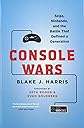
Console Wars: Sega, Nintendo, and the Battle that Defined a Generation
Product ID: 15052769
Desertcart purchases this item on your behalf and handles shipping, customs, and support to Vietnam.
Now a documentary on CBS All Access. Following the success of The Accidental Billionaires and Moneyball comes Console Wars —a mesmerizing, behind-the-scenes business thriller that chronicles how Sega, a small, scrappy gaming company led by an unlikely visionary and a team of rebels, took on the juggernaut Nintendo and revolutionized the video game industry. In 1990, Nintendo had a virtual monopoly on the video game industry. Sega, on the other hand, was just a faltering arcade company with big aspirations and even bigger personalities. But that would all change with the arrival of Tom Kalinske, a man who knew nothing about videogames and everything about fighting uphill battles. His unconventional tactics, combined with the blood, sweat and bold ideas of his renegade employees, transformed Sega and eventually led to a ruthless David-and-Goliath showdown with rival Nintendo. The battle was vicious, relentless, and highly profitable, eventually sparking a global corporate war that would be fought on several fronts: from living rooms and schoolyards to boardrooms and Congress. It was a once-in-a-lifetime, no-holds-barred conflict that pitted brother against brother, kid against adult, Sonic against Mario, and the US against Japan. Based on over two hundred interviews with former Sega and Nintendo employees, Console Wars is the underdog tale of how Kalinske miraculously turned an industry punchline into a market leader. It’s the story of how a humble family man, with an extraordinary imagination and a gift for turning problems into competitive advantages, inspired a team of underdogs to slay a giant and, as a result, birth a $60 billion dollar industry. A best book of the year: NPR, Slate, Publishers Weekly, Goodreads Review: A must read for anyone that was a console gaming fan in the early 90's, or interested in console gaming history. - A great account of the Nintendo/Sega wars of the early nineties. Though the actual story of what happened between Nintendo and Sega doesn't take that long to tell, the author provides the history of both companies and the video game industry itself. Some analysis of the video game crash of the early 80's is also provided. This gives some necessary perspective on the business and industry mindsets going into the new generation of gaming kicked off by the NES that continues to this day (including the continued sales of those games in Nintendo's Virtual Console and the Playstation Store). I will note out that the story really follows the story of Tom Kalinske, so when he leaves Sega, the story is pretty much over. This was around the time the Sega Saturn came out, so don't expect this to get into N64 and Dreamcast territory, though I'm sure the interesting industry stories don't end with Kalinske. Some of it is from Nintendo and Sony's point-of-view as well, but this is really the story of how Sega America made the Genesis and Sonic a hit, and turned Sega into a household name. What I wasn't expecting was the story of the people involved, and what a small world the industry was at the time. The author interviewed most of the original people in the book, which lends stories a lot of us were already aware of (like Nintendo being the unintentional catalyst for the Sony Playstation) a lot more depth and detail. Some of the themes of the book are still very relevant and visible today, like the cultural gulf between Japan and the US. One of the best examples was the shocking peek into what the original Japanese concept for Sonic the Hedgehog would have been without the intervention of Sega America. Also, we get a peek into some of the first attempts to use DRM-like technical controls to exercise control over a market. Then, of course, we see the first attempts to break or get around DRM. I'm really looking forward to the documentary and dramatized movie, as the one thing you really crave while reading this book are some images and video to go along with the descriptions. It would be great for someone to put together a YouTube playlist of the old commercials and footage of the gameplay mentioned in the book - at least, until the documentary comes out, which I'm sure will scratch this particular itch. A must read for any console gamers like myself that feverishly read Nintendo Power and Electronic Gaming Monthly cover-to-cover back in the late 80's and early 90's. Perhaps they are out there and I'm just not aware of them, but I'd really love to see more of these books. I'm sure there's at least a book of this size in telling Atari's story; Nintendo's constant battle for market share with much larger & well funded foes (Sony and eventually Microsoft); how the Dreamcast came to be the end of Sega's console business; how Resident Evil 4 killed the Gamecube and flooded the market with $30 used consoles; Microsoft's decision to jump into the market; How Nintendo reshaped the market again by reinventing the game controller; how the Indie market and smartphones impacted the gaming markets; and so on. So many stories to tell... Review: Seth Rogen can apparently be a co-author. Seriously, good book. - This book realllly is fantastic in my opinion. Fascinating to see and experience a book so detailed and yet still consuming, consumable. There's so many pages about the intricate business structures of the past, not just about video games, but life in general. It's a really heavy book, even so being written and printed on paperback, but trust me, it is a killer story to read. Nothing will ever be "uninteresting" about it, so to speak. 5/10 for making it such a heavy book, I wish it had some lighter elements, But about another 4.5/10 for making it so punchy and pleasing to read. Review by my 17 year old 🙂
| Best Sellers Rank | #152,867 in Books ( See Top 100 in Books ) #13 in Business Infrastructure #24 in Entertainment Industry #66 in Social Aspects of Technology |
| Customer Reviews | 4.4 out of 5 stars 3,830 Reviews |
A**N
A must read for anyone that was a console gaming fan in the early 90's, or interested in console gaming history.
A great account of the Nintendo/Sega wars of the early nineties. Though the actual story of what happened between Nintendo and Sega doesn't take that long to tell, the author provides the history of both companies and the video game industry itself. Some analysis of the video game crash of the early 80's is also provided. This gives some necessary perspective on the business and industry mindsets going into the new generation of gaming kicked off by the NES that continues to this day (including the continued sales of those games in Nintendo's Virtual Console and the Playstation Store). I will note out that the story really follows the story of Tom Kalinske, so when he leaves Sega, the story is pretty much over. This was around the time the Sega Saturn came out, so don't expect this to get into N64 and Dreamcast territory, though I'm sure the interesting industry stories don't end with Kalinske. Some of it is from Nintendo and Sony's point-of-view as well, but this is really the story of how Sega America made the Genesis and Sonic a hit, and turned Sega into a household name. What I wasn't expecting was the story of the people involved, and what a small world the industry was at the time. The author interviewed most of the original people in the book, which lends stories a lot of us were already aware of (like Nintendo being the unintentional catalyst for the Sony Playstation) a lot more depth and detail. Some of the themes of the book are still very relevant and visible today, like the cultural gulf between Japan and the US. One of the best examples was the shocking peek into what the original Japanese concept for Sonic the Hedgehog would have been without the intervention of Sega America. Also, we get a peek into some of the first attempts to use DRM-like technical controls to exercise control over a market. Then, of course, we see the first attempts to break or get around DRM. I'm really looking forward to the documentary and dramatized movie, as the one thing you really crave while reading this book are some images and video to go along with the descriptions. It would be great for someone to put together a YouTube playlist of the old commercials and footage of the gameplay mentioned in the book - at least, until the documentary comes out, which I'm sure will scratch this particular itch. A must read for any console gamers like myself that feverishly read Nintendo Power and Electronic Gaming Monthly cover-to-cover back in the late 80's and early 90's. Perhaps they are out there and I'm just not aware of them, but I'd really love to see more of these books. I'm sure there's at least a book of this size in telling Atari's story; Nintendo's constant battle for market share with much larger & well funded foes (Sony and eventually Microsoft); how the Dreamcast came to be the end of Sega's console business; how Resident Evil 4 killed the Gamecube and flooded the market with $30 used consoles; Microsoft's decision to jump into the market; How Nintendo reshaped the market again by reinventing the game controller; how the Indie market and smartphones impacted the gaming markets; and so on. So many stories to tell...
M**L
Seth Rogen can apparently be a co-author. Seriously, good book.
This book realllly is fantastic in my opinion. Fascinating to see and experience a book so detailed and yet still consuming, consumable. There's so many pages about the intricate business structures of the past, not just about video games, but life in general. It's a really heavy book, even so being written and printed on paperback, but trust me, it is a killer story to read. Nothing will ever be "uninteresting" about it, so to speak. 5/10 for making it such a heavy book, I wish it had some lighter elements, But about another 4.5/10 for making it so punchy and pleasing to read. Review by my 17 year old 🙂
K**E
I really liked this book
This book is an absolute must read for anyone who grew up during the Genesis and Super Nintendo console wars. In addition to being fascinating in the history of video games, it’s very interesting to read all of the business aspects of the American Sega corporation and their relationship with Sega of Japan and the differences in which corporations are run in the east versus the west and all the problems that causes for businesses that span both those worlds. So any aspiring business people could learn a lot from how Sega tackles problems, knowing full well they are operating a Nintendo’s shadow and growing to overthrow them with unconventional business maneuvers.
M**R
Missing history of an entire industry
Loved it. Absolutely loved it. But then again, I was a diehard Sega kid growing up. If you didn't play video games in the 90s this might not have much for you. But, if you did, this is the story of how all that business came together. The book covers a massive amount of content in a very easy-going, novel-narrative style. It covers Nintendo's entrance into the long-dead video game market, then Sega's weak early attempts to compete, and then chronicles the entire business of video games developing into the modern era. The scandals that took them to senate hearings- and the ratings system that they had to create- are huge parts of the story. Sega is the main character of the book- or rather, Sega of America President Tom Kalinske, who is given the difficult job in the first chapter and leaves it in the last. Kalinske was clearly the biggest influence on the research, because it's primarily from his point of view. Nintendo isn't a villain, mind you- plenty of the story is dedicated to the massive work they put into creating an industry that had ceased to exist after the Atari crash. Their on/off relationship with Sony and the creation of the Playstation also play a large role. In the end the villain is Sega of Japan, who seem to grow more and more resentful of Sega of America's eclipsing success while they struggled at home. The book paints a picture of a jealous, even bigoted Sega of Japan that undermines SOA at every step. How much is hard truth and how much is Kalinske's own memoirs of it is impossible to say. Even with a grain of salt for that it's a fantastic read. The stretch of time from 1985 to 1995 was chaos for video games, and this book takes that history and spins it, Mad Men or Moneyball-style, as the trials and tribulations of a small group of marketing and designing underdogs. In the course of the story Sega goes from a struggling upstart with 5% control of the games market to a powerhouse with 55%... only to lose it all just as quickly. If you ever wondered why Sega went from being on top of it all to last place, the answers are here. The fictionalized dialog can get a little awkward at times, but it doesn't detract from the whole. This is a detailed and far-reaching look at how video games went from a failed toy in the 70's to dominant media in 2000, and how influential just a handful of people were to it.
Y**E
Entertaining, but.................
I'm torn here. I liked the book and it was entertaining like a movie. But the truth is still out there. This was too biased, even if the description warned me that it was going to be. It started off at 5 stars, then lost one when I realized I wasn't going to get Japan's side, and another one when I realized the writing wasn't that good. Many times the dialogue and descriptions feel like an amateur screenplay, although there are flashes of talent a la Michael Crichton. It's shame "Console Wars" is basically a biography of Sega of America's Tom Kalinske (who is awesome, don't get me wrong) as opposed to a straight historical account of Sega vs Nintendo spanning from the early days until Dreamcast (which is not even mentioned in this book). I thought the book would have been more balanced, but Harris decided to make it from Mr. Kalinske's point of view, and makes usfeel sorry for him as an underdog who managed to make a dent in against "Goliath" (in the U.S.). Since Tom is the "good guy", we don't get to question if he was too cocky, if he was justified to be so angry at Nintendo, if he was really sincere about being concerned with video game violence, or why his employees whispered in Al Nilsen's ear that they were going to quit after Al left. The book is a "reenactment book", like the book "Washington's Spies" by Alexander Rose. It's basically a style that tells history via reconstructed (or fictional) dialogue, so it feels like a novel, or in this case a screenplay. Harris had a disclaimer about how he massaged things, but it still is jarring and took me out of the story a few times because Harris just isn't a polished writer. Some of his descriptions are corny at best, and the dialogue treats us like idiots, as it retells or re-frames the scene. If the book was organized it wouldn't have to. But even if it was, Harris likes to have "surprise" scenes- in a history book? The book is organized in a weird way and is not chronological- with tons of flashbacks which feel like double flashbacks, jumping around time, segwaying into personal scenes, focusing on scenes unrelated to the theme, and shifting POVs without revealing who is the focus is yet. It is like Harris felt forced to use the bulk of the quotes he received from the interviews he conducted. I see Harris responding to some reviews and disbelieves that he has to improve his writing skills. My advice: master the basics first, and then experiment. At its heart, it is a business book and valuable to anyone in the industry, or people involved in marketing, manufacturing, venture capitalists, corporate world, etc. Gamers into actually playing games or programmers into game design need not apply, although gamers in their 30s+ would enjoy the trip down memory lane. The book focuses on the sales and marketing of the top selling games, not the actual gameplay or why the games were popular (besides Sega choosing to market them). So awesome Genesis games like Earthworm Jim, Streets of Rage 2, Gunstar Heroes, Phantasy Star IV, Landstalker, Shinobi III, Shadowrun, Castlevania: Bloodlines, Vectorman, Flashback, Splatterhouse 3, etc didn't make the cut. We get the origin of Ecco the Dolphin, but no mention of its sequel Ecco:The Tides of Time. The focus is on the development and advertising of Sonic the Hedgehog and Joe Montana Football. Even big sellers like NBA Jam and the Genesis version of Street Fighter 2 weren't mentioned (the superior SNES version was focused on). The sales team celebrated when Sega's Mortal Kombat 1 beat the SNES version in sales and magazine reviews, and Tom framed it as the face to face battle of which system is better, but there was no discussion about how MK2 was superior for the SNES, or how Street Fighter 2 for Sega was inferior. The book was entertaining, and I couldn't put it down. So in the end, I guess that's all Harris wanted. But as I digest everything, I really wish the Japanese side of Sega, Nintendo, and Sony were more accessible so we could hear their side, which is described as villainous. Most of his sources were from the American sales team. One can't help but notice that the message of the book is that "the tortoise beats the hare, but the hare was handcuffed by racist Japanese businessmen and engineers." In conclusion, this is not a straight history book- it is a tribute to Tom Kalinske; there are even many personal scenes where Tom is with his family or helping out a dying little girl. It is not even a Genesis vs Super Nintendo 16-bit battle, most of it is Genesis vs 8-bit Nintendo. Game Gear vs Game Boy is rarely mentioned, because it doesn't fit the story. Why was Sega CD a flop? The other video game history books are more clear. So...buyer beware. After reading this, just realize you didn't get the whole story. The real title is "SEGA! The Rise and Fall" or the rather mundane "The Biography of Tom Kalinske".
Y**I
Fascinating information and absolutely worth reading; however, the authorial presence is far too strong
Console Wars largely chronicles the period between 1989 and 1995, when Sega battled Nintendo for dominance in the home console market, ending as Sony displaces Sega in the 32-bit era as Nintendo's main competitor. In a sense, it does serve as a sort of sequel to David Sheff's gold-standard account in "Game Over" of the rise of Nintendo in the 80's, which left off at the point where Sega's Genesis had just started to get a serious foothold in the market. However, the styles in which the two authors approach their subjects are very different, and it's interesting to compare them. Sheff's Game Over contained very little conversational dialogue. He wrote his book like a reporter: documenting scenes and incidents by describing the people and particulars involved, the content of what they said, and the effect of their interactions. His book was full of individual quotes, but the large majority of them were presented matter-of-factly as accounts made by the subject either directly to the author in interview, or to another source of record which Sheff was citing. In-scene "dialogue" was used sparingly, and mostly limited to short lines that reflected exactly what was known by the subject or other observers to have been said, or something very close to it. This gave Sheff's book a journalistic crackle, keeping the pace moving, the flow of information constant, and the level of authorial distance removed enough that the reader always maintained a panoramic view of the bigger picture, and didn't get bogged down in superfluous, artificial detail. In contrast, Harris's book is written like a screenplay, with full "scenes" that progress via elaborate, lengthy dialogues between "characters", while novel-esque, detailed stage directions record their precise movements and interior thoughts, all of which can only have been manufactured by the author (as he himself loosely admits in his author's note) based on the factual framework of an interaction that did occur. Where Game Over was a documentary, this book is much more a historical re-enactment. It's obvious that Harris already had a film in mind when he was writing, and the cinematically styled sharp, pithy dialogue (or at least, attempts at such), and conversational set-ups and payoffs were designed to translate easily to the eventual film. This may make the book more engaging than Sheff's reserved style for some, but I found it distracting and a little gratuitous. Irrelevant detail often gets in the way of what's interesting and entertaining about the information. That said, the information and voluminous research this book does contain is incredibly valuable, and makes for a truly rewarding read. The saga of the Sega and Nintendo battle in the US is as fascinating and provoking as any story the business world has to offer, and there's more than a little tragedy in seeing how Tom Kalinske and Sega of America were able to achieve a brilliant and improbable success, only to be cut off at their knees, in the end, by Sega of Japan. The often clumsily overwritten "reconstructed" dialogue by Harris makes me doubt I'd be interested in any fiction of his, but this particular subject matter is rich enough that my issue with his authorial indulgences is just a quibble. This is by all means a book worth reading.
J**J
Too short! But oh so good
I would have read a thousand pages of this. I laughed. I cried a little. I was angry. I knew the story from a distance, but reading about it with the detail Harris had and the storytelling was something else entirely. Absolutely brilliant. I want more!
A**S
Told more as a Novel than a Biography.
Man, I LOVED this book! It's weird because on the back cover it says, "Soon to be a major motion picture". I thought to myself, "Clever, they're making fun of other books that show this tag." However, this book IS soon to be a major motion picture! "How can they make a movie out of this biography", you might ask? Well, think of it as the same way they studios made a motion picture out of "The Accidental Millionaires". This book is told in a VERY similar format and I happen to LOVE it! It seems that Blake J. Harris (Author) has taken all the necessary information from the hundreds upon hundreds of interviews he's given and used them as a blue print to tell the story. Is this the exact way the entire scenario played out in real life? Highly doubtful. But it makes for a FAR more entertaining story than just thumbing through facts and statistics. I've read enough histories of the video game industry to distinguish between things that did, in fact, happen and some that were embellished. Even then, everything (for the most part) adds up as Harris tells it. You can tell Harris is a fan of Tom Kalinske. To be honest, after reading this, I am too! He is portrayed as the ultimate "team player" and seeing as how the story of Sega plays out, he did everything in his power to make it a success! (and did for a while) This much, we know to be true, as the same "story" is told in numerous history books. Unfortunately for Kalinske (and his successors) the "powers that be" would rather tear the company apart with their horrible ideas and underdeveloped products than do what is best. If definitely is unfortunate that with all the work the entire Sega of America team put in, Sega of Japan couldn't handle being second fiddle. Otherwise, we might be in a very different (sort of) Console War than we currently are. I, for one, am VERY MUCH looking forward to both the documentary and the feature film that are coming from this book! Hopefully they will keep the material as close to the source as possible. But I doubt that will happen, as it almost never does. Final Verdict: DEFINITELY worth reading! Even if you aren't a "gamer".
G**S
Lettura molto interessante
Ho vissuto da ragazzino la lotta Nintendo / Sega, proseguendo poi in adolescenza con l'arrivo di Sony. La lettura è veramente interessante e resa divertente da aneddoti divertenti e personaggi accattivanti. E' anche uno spaccato su marketing e brand management negli anni 90. Consigliato!
O**G
Spannend für Insider
Ich fand das Buch EXTREM spannend (wenn man sich für die Thematik interessiert). Auch wenn das mehr eine "Mockumentary" ist, deren Wahrheitsgehalt und Blickwinkel man immer hinterfragen sollte, wurde das Ziel meines Erachtens nach erreicht: eine kurzweilige, spannende Retrospektive des Sega/Nintendo "Krieges" zu bieten, mit Details, die man so noch nicht wusste... Hochinteressant mit welchen "Dirty Tricks" da gearbeitet wurde im Marketing.. ich hab mir auf Youtube die passenden SEGA Werbespots herausgesucht nachdem ich über sie im Buch gelesen hatte, mit dem HIntergrund der Entstehung war das extrem unterhaltsam... Z.B. der Spot mit dem Dragster (im Buch irrtümlich "Formula 1 car" genannt) und dem beworbenen "Blast Processing Feature" des MegaDrive. Aus der Not geboren als Nintendo mit dem "Mode 7" reüssierte suchten die Marketing Leute von SEGA verzweifelt nach einem MegaDrive Feature, was das Super Nintendo nicht hatte.. und fanden in den Hardware-Specs die Mögichkeit eines vorübergehend zu aktivierenden "Turbo-Modus" der MegaDrive Hardware... nannten es kreativ "Blast Processing" und brachten es mit Sonic in Verbindung. In Wirklichkeit spielte dieser Modus kaum eine Rolle wenn überhaupt... Aber das Marketing war glücklich.. :P Es sollte aber im Hinterkopf behalten werden, dass das ganze Buch hauptsächlich den US-Markt zu dieser Zeit wiedergibt, Europa wird seltenst erwähnt.. maximal wenn Entwickler eine Rolle spielen, aber kaum als Absatzmarkt.
9**9
Very long but worth reading
1. Offers insights into differences in management styles between Japan and the US It was very interesting to witness firsthand how two companies (a US subsidiary and a Japanese parent) which supposedly have the common goal in mind act differently. It applies to both Sega and Nintendo. Instead of harnessing the opportunities offered by having people from diverse backgrounds on the team, they practically killed each other in silence. 2. Offers insights into the difficulties that a latecomer faces in the market Sega came in late and Sony came later than Sega. However, at the end of the day, only Sega seems to have left behind. You would get the idea why this happened by reading this book and how to overcome it.
K**2
Great read for all Sega and Nintendo 16-bit fans
As a massive Nintendo fan in the early 90s I approached this book with some trepidation. After all, the book was about how Nintendo's Japanese rivals Sega turned from also-ran into world-leaders during the exciting times at the dwan of the 16-bit era. I needant have worried, however as the book is an increadibly fascinating insight into how the US videogame industry developed at breakneck speed. It tells the story of a collection of American executives pushing back against the conservative nature and cautious approach of Sega Japan (still typical for Japanese companies to this day). While Nintendo attempted to exploit their near monopoloy at the end of the 80s, Sega US grew by spotting the gaps Nintendo left, advertising to make fun of Nintendo and looking to work in partnership with those who also disliked Nintendo's control. From making the most of their new mascot, to guerilla marketing approaches to get the US retail giants such as Toy R Us and Walmart onside. For Nintendo fans such as myself, there is still plenty of information about the history of Nintendo and, indeed, how they came to dominate the 8-bit market and establish such draconian terms on their partners. This was actually a bit of a downer for me to see how oppressive and dictorial Nintendo were to their so-called partners, turning on them at the drop of a hat - perhaps illustrated best when Nintendo abandoned Sony for Philips to develop a CD-drive addon. The first Sony knew about this when Nintendo announced it at E3! Also surprising is how little most of the executives knew (or cared) about video games. Written in a way where you always want to read another chapter the book reads very well. As anyone who was into their 8 and 16-bit consoles in the UK will know, Nintendo treated Europe very much as a 2nd class society (long delays for game releases - if they were released at all - which were unoptimised for the region and very high prices) and sadly the book doesn't touch on this market, focussing on the the US market. From my memory of the time, the SNES was clearly the better console although the Mega Drive had some fantastic games but as the book shows - it's not always how good something is, it's about how it is marketed.
L**M
Fantastic!
Excellent book! It tells a story from a very important period in current history. Even those who don't like video games can't deny their relevance today. This book recounts the behind-the-scenes story of an era that defined the current video game industry, from the rise of Nintendo, the rise and fall of Sega, and the beginning of the Sony PlayStation. I think it's an interesting book for video game fans, electronics enthusiasts, marketing professionals, or even just curious readers.
Trustpilot
1 day ago
2 weeks ago