Buy anything from 5,000+ international stores. One checkout price. No surprise fees. Join 2M+ shoppers on Desertcart.
Desertcart purchases this item on your behalf and handles shipping, customs, and support to Vietnam.
📸 Elevate your vision — zoom, stabilize, and capture like a pro!
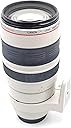
The Canon EF 100-400mm f/4.5-5.6L IS USM is a professional-grade telephoto zoom lens designed for Canon SLR cameras. Featuring a versatile 100-400mm focal range, dual-mode image stabilization, and premium fluorite and Super UD glass elements, it delivers sharp, stable images from wildlife to sports photography. Compatible with Canon extenders and equipped with essential accessories, this lens balances reach, clarity, and reliability in a compact, durable package.
| ASIN | B00007GQLS |
| Best Sellers Rank | #290 in SLR Camera Lenses |
| Brand | Canon |
| Built-In Media | Manufacturer Items |
| Camera Lens | Canon EF 100-400mm f/4.5-5.6L is USM Telephoto Zoom Lens for Canon SLR Cameras |
| Camera Lens Description | Canon EF 100-400mm f/4.5-5.6L is USM Telephoto Zoom Lens for Canon SLR Cameras |
| Color | Black |
| Compatible Camera Mount | Canon EF |
| Compatible Devices | DSLR Camera |
| Compatible Mountings | Canon EF |
| Customer Reviews | 4.5 out of 5 stars 618 Reviews |
| Exposure Control Type | Automatic |
| Focal Length Description | EF Mount 100-400 L Lens |
| Focus Type | Auto Focus |
| Global Trade Identification Number | 00082966214042 |
| Image stabilization | Optical |
| Item Weight | 1380 Grams |
| Lens | Telephoto |
| Lens Coating Description | Air Sphere Coating |
| Lens Design | Zoom |
| Lens Fixed Focal Length | 100 Millimeters |
| Lens Mount | Canon EF |
| Lens Type | Telephoto |
| Manufacturer | Canon Cameras US |
| Manufacturer Part Number | 2577A002 |
| Maximum Focal Length | 400 Millimeters |
| Media Type | ProductImage |
| Minimum Aperture | 4.5 f |
| Minimum Focal Length | 100 |
| Model Name | 2577A002 |
| Model Number | 2577A002 |
| Number of Diaphragm Blades | 5 |
| Photo Filter Size | 77 Millimeters |
| Real Angle Of View | 24 Degrees |
| UPC | 132017923321 163121143008 082966214042 172302679236 |
| Unit Count | 1.0 Count |
| Warranty Description | 1 year limited |
| Water Resistance Level | Not Water Resistant |
| Zoom Ratio | 4.0:1 |
I**A
Great Quality for Wildlife Photography; Arrived in Perfect Condition
Excellent lens for shooting wildlife without having to get super close and scaring the animal/bird. The level is detail is really good. It takes a little bit longer to focus, so it's not as quick to catch moving objects compared to my macro lens, but the stability is better. Comes with a lens hood and carrying case, so you don't need to worry about buying those separately, which is a plus. I was worried about ordering a lens online, but given that EF lenses are being phased out and harder to come by in stores, online is really the only way to get your hands on one these days. To my relief, the lens was packaged and insulated very well and arrived in perfect condition. It still takes me a bit of trial and error to get the lens lined up and twisted onto my camera every time I attach it, but it fits perfectly on my Canon Rebel T5 body. It is a bit heavy to carry but with the carrying case and strap it's not bad. Worth every dollar.
D**E
A great lens for nature and wildlife photography
I love this lens! I first rented one for a trip to Alaska, and it took wonderful pictures under less than ideal situations - on moving buses, boats, and even from an ocean kayak in light swell. I finally broke down and bought one recently. Image stabilization is superb. Prior to focusing one can see the image shaking through the camera's (T4i in my case) viewfinder, but the image stabilizes almost instantly with a half-depress of the shutter button. This is not to say one will not ever get blurry shots, but this lens does an amazing job even at 400mm without a tripod/monopod. Images are very crisp in the 100-300 mm range, but can be a little "soft" at 400mm. Still, I regularly look at my photos on a 27" monitor, and I am very pleased with the image quality, even (especially!) at full lens extension. I have not tried to print any of my photos, so I can not address print quality. This is not the fastest lens in the world, but it does not suck either. Putting a circular polarizer on it almost guarantees an ISO bump unless you are shooting in very sunny conditions. With just a UV filter on the lens last weekend, I was able to shoot 1/640, f/4.5, ISO 100, 400mm under completely overcast conditions and got many very clean pictures, including moving seals and birds in flight. The zoom function is a little unusual - it is a push/pull system that takes a little getting used to. It's quick and easy to change focal lengths if one leaves the locking ring a little loose. Within half an hour of my first using the lens I was changing focal lengths quickly and with little thought. The lens is a little heavy, but this is to be expected given what the lens does. I would not recommend hanging it around your neck for extended periods of time. Overall I have been very happy with the overall performance of this lens. That being said, I highly recommend renting this lens and trying it out before buying it. There are a number of very good online-companies (not sure if Amazon will let me post URLs) that rent this lens for relatively cheap (~$60 for a week, plus ~$25 shipping).
N**R
Amazing clarity over entire zoom range, wide open to about f11
Bought this lens used from Japan. Risky but paid off. Lens shows no evidence of ever having been used. AF is slower than most but accurate. Didn't see much difference in AF speed or accuracy between AF min focus distance settings, 1.8m vs 6.5m. Lens is almost as sharp wide open (f4.5 @ 100mm - f5.6 @ 400mm) as it is stopped down to its sweet spot around f7.1. Images become soft after f11 but I rarely use such narrow apertures on long lenses. Some complain about the sliding zoom collar. I don't agree. It's easy to get used to and works smoothly. The slide friction ring is easy to set so that the lens doesn't collapse when pointing up or down. Some advice: Read the manual! There are some things that are counter intuitive such as the need to turn off IS when on a tripod. Also, the difference between IS Mode 1 (for still object shooting) and IS Mode 2 (for moving object vertically or horizontially but not both). The newer EF 100-400L II lens has three IS Modes. The third mode is useful for objects in motion both horizontially, vertically or at any angle. Useful, but is it worth an additional $500? Is also useful to shoot in AI-AF and HS shutter. Pick through the pictures later to select the bes ones. The lens is heavy, about 3lbs. You will need stamina to shoot a day-long session. On the other hand, you get a lot of high quality glass packed into that 3lbs. Zoom range on my 90D crop sensor body is 160mm-640mm, serious wildlife shooting territory. Can't wait to try it out in our local mountains, perhaps a practice session at the zoo first. Highly recommend this L quality lens, especially if you can capture a good example on the used market. Used prices at this time are about $750+tax+shipping for a well cared-for lens.
G**T
The greatest Zoo and Event Lens ever made bar none!!
Verdict: If you need 100-400mm on a Canon EOS camera, buy it! This is your best bet!! If you need 300mm or 400mm and are on a budget, buy it! If you need a Zoo or air show lens this is it, buy it! You won't be disappointed!! 4-27-2009 I just got back from photographing the World Premiere of X-Men Origins: Wolverine and once again the 100-400 IS L lens was awesome. I ended up mainly using two lenses the Canon 24-70 F/2.8 L zoom and Canon 100-400 IS L zoom lens with most photos taken with the 100-400. When you have only one chance to get Hugh Jackman riding by on his Harley you want to make sure you have reliable quick focusing equipment. Plus a lot of times you just can't get any closer to the action like at a World Movie Premiere, it's times like that when you absolutly need a zoom and the 100-400 IS L is one of the best! [...] 01-03-09 Canon 5D Mark II Update: Canon 100-400 F/4.5 - F/5.6 IS L lens. This is the second most used lens in my 5D Mark II arsenal. This lens was my biggest surprise and is not only tied for second place with the Canon 135mm F/2 for sharpness but is amazingly sharp wide open. It's a monster of clarity at F/7.1 like it never was on my Canon 40D. It also becomes useable on the 5D Mark II in wider shot situations where on the 40D it was only usable as a longer lens. Sporting the longest zoom range of any Canon zoom this lens has to be without doubt the finest Zoo lens ever made. You can frame almost any animal in almost any exhibit perfectly. This is also my lens of choice for taking photos of people at events and aircraft at air shows with the 5D Mark II and is the King of versatility on a full-framed sensor camera. This is my sharpest and clearest zoom lens by a long shot (no pun intended. It's as close to the you are there feeling of the 85mm F/1.2 lI lens as any zoom lens I have. After an extensive battery of tests both hand held and tripod mounted I have come to the following shocking conclusions. The Canon 100-400 L zoom is almost as sharp at F/8 as my Canon 85mm F/1.2 at F4 and that's saying something!!! Slightly sharper at F/8 as my Canon 70-200 F/2.8 and that's saying something to!!! I may have a very sharp copy and I hear there are soft copies out there. Make sure and buy yours here at Amazon.com where you can return the lens if its not as sharp as you thought. Pros: Super Sharp! Very versatile! Great Contrast Good bang for the buck 100-400mm SWEET! This is the perfect Zoo lens This is the perfect Air Show Zoo lens This is the perfect Renaissance Festival lens Attracts a lot of attention, you will be asked if you are a pro Image stabilizer lets you get away with crazy like shutter speeds Sweet Bokeh at subject filling close range and at all ranges on full frame sensor camera Raw photos respond well to sharpening and contrast / colors in Canon Digital Photo professional Cons: Can be heavy for the uninitiated! Does draw dust into your camera when zoomed! Old style image stabilizer must turn off on tripod Zoom locking ring is attached to the manual focus ring. No weather proofing, a strange thing for an out door lens Attracts a lot of attention, you will be asked if you are a pro Pulls dust into lens around the zoom ring when zooming in and out Slow auto focus compared to other L lens, slower then all of them except my Canon 85mm F/1.2 L II Strange black hole if you take a photo when jerking the lens to track a bird Lens sometimes seems to slow cameras response when taking a photo On cropped sensor cameras only strange variable looking Bokeh at some distances especially when stopped down and in sunlight with contrasting lines like branches. Wonder bokeh no full frame camera (5D Mark II) I gave it only 4 Stars because of the crazy way the zoom friction and manual focus rings are together and lack of weather sealing and variable Bokeh. It takes a dedicated photographer familiar with the lens to get consistent because of the variable Bokeh. Separate the manual focus and zoom friction rings, give it weather sealing, updated IS and great Bokeh at all settings and ranges and I would have given it 5 stars! Introduction: Longer range and versatility that's what I needed for my Canon 40D. What good is a prime if you don't get the shot at all? I mean I love my Canon 135mm F/2 it has the best Bokeh in the world along with my 85mm F/1.2 but it's a little short for birding even on a 40D and after renting a Canon EF 500mm f/4L IS you know what the meaning of heavy (8.5 pounds) and specialized mean. Plus there's nothing like having a zoom, take time to change out that lens during a renaissance festival and you just may miss a once in a lifetime shot. My 70-200 F/2.8 L is a great lens but the zoom range is way too short at times like these. I want something with much more zoom capability. I wanted something I could take to the zoo and gets shots both near and far and the same at air shows and the renaissance festival and maybe even a football or soccer game or rodeo and all without a time consuming dust introducing lens change. At the festival you can go from a knight and damsel group portrait shot to a close up of a bird of prey flying by in a second and without changing lens. At an air show you can be shooting the crowd waiting in line to board a C5 Galaxy cargo plane and in the same minute swing up and get an F-16 cockpit shot as it roars by. On a cropped camera you are at 640mm and into serious birding territory on a full framed hey you still have 100-400. First shots: OK, I must have gotten a really good sample because after sharpening the Raw files in Canon Digital Photo Professional (DPP) this lens is sharp at all zooms and very sharp indeed stopped down to 7.1 between 300 and 375mm. No complaints there that's for sure!! It's very close to my Canon 70-200mm F/2.8 in it's sweet spot. Zoos: WOW!!! I visited the Phoenix Zoo this last Saturday with my Canon 40D and this new Canon 100-400 IS L zoom and all I can think of is wow!! Where have you been all of my life? With a zoom range of 160 to 640mm when mounted on my Canon 40D you can't go wrong. And with the image stabilizer IS you can literaly stick this camera in auto ISO and walk through the entire zoo with just one lens and get great closeup shots of everything. Need a portrait of that Tiger while he's walking the back wall as far away as he can get? No problem, zoom out to 400mm which equals 640mm, here kitty kitty kitty. And how about the Flamingo's right up next to the fence and you want the whole group, just zoom back to 100mm and bingo! I wonder why I hadn't purchased this lens from the start. No dust educing, time eating lens changes required, just go through every exhibit with the one lens picking off animals one by one or in groups. It's like shooting fish in a barrel, yeee haaaa!!! Notes: Seems sharpest at 375mm and F/7.1 and F/8 Variable Bokeh, can be the best or worst depending on use (see Bokeh below) Air (and dust) seems to enter and exit around zoom ring as you zoom (NOT into and out of the camera sensor as some would have you believe). Review: This lens takes some getting used to, it's different: longer, more complicated, push pull zoom and IS make it a little more complicated then the other lenses I have. The first few shots I took with it were rather disappointing but then I started finding the groove for this long-range photographic weapon and when used in that scope you can score some really fantastic jaw dropping photos. Overall my Canon 70-200 F/2.8 seems to make a slightly more pleasing photo at times and at other times the 100-400 does. The 70-200 as more consistently pleasing Bokeh. But the 100-400 200mm longer. The physical size when the 100-400 is at 100mm is very close indeed and the weight feels close to the same in the hand with the 70-200 feeling slightly lighter. The strange thing I find too is the zoom locking ring and manual focus ring are attached to each other and change position as you zoom in and out. This makes for a little confusion when reaching for it at first as you never know where it is when quickly reaching for it while keeping your eyes in the viewfinder. That and if it's tight at all you have to take both hands to release the tension and move the zoom where you want. The Groove: Make sure you have the IS in the ON position Shoot with plenty of light and hold her steady Shoot between 300mm and 375mm at F/7.1 or F/8 Make sure focus limiter switch is in the correct position Shoot in Raw and process in Digital Photo Professional (DPP) Don't be afraid to push the sharpness and color way up in DPP as needed Practice Practice Practice if you are shooting digital then you can practice plenty. Image Stabilizer (IS): I have taken HAND HELD SHOTS at 1/10s and 1/6s even zoomed out to 400mm of the neighbors house and car down the street and they came out so well you can read the license plate! I set my 40D to 3200 ISO and wide open aperture then simply propped my elbows on top of the trash can and took some night shots to see what this lens could do. I couldn't do it every shot only about 1 out of 5 to get my breathing and the timing of the shot right but the fact that I could pull these shots off at all is incredible!!! To get consistent shots I in better lighting conditions I have found with my elbows propped I can consistently pull off 1/30 second at 400mm which works out to 640mm on a 40D! With un-propped arms I could pull of 1/60 second at 400mm. This alone should be a good reason to buy this lens. Bokeh: On full frame cameras like the Canon 5D Mark II the Bokeh is great. At close range it's almost as good as any lens I have. Well except for maybe the Canon 85mm F/1.2 II L. But over all it's great. But, if you are using this lens on a cropped sensor then be sure to read the next paragraph. How could one lens have such fantastic Bokeh in one shot and such strange horrible Bokeh in the next? Up close with frame filling subjects near wide open aperture the Bokeh is a dream, but shoot at further distances with a cropped sensor camera like a Rebel or Canon 40D/50D etc with branches as a background stopped down so you can see some detail there are weird lines around each item. Shooting aircraft or birds in flight this is no problem as the background is just sky, but distant birds in trees with some leaves and limbs out of focus and the photos can look very strange. Lens Vignetting (Light Fall-off) Light fall off in the corner of your photos or vignetting is no longer a problem for any Canon lens on the newer Canon Digital Cameras like the Canon Rebel XTi, XSi, 40D/50D, 5D Mark II as the Vignetting can be corrected automatically in-camera and with Raw photos in Digital Photo Professional (DPP). You can even adjust the amount of correction to your photos as needed with Raw photos in DPP, sweet!!! In flight tips: Shooting in-flight birds and planes with this lens then follow these tips. Shoot in bright light Set minimum focus switch to 6.5 meters Turn Off IS if you have enough light, the auto focus seems a little faster without it Set Auto Focus Mode to AI Servo and Drive mode to maximum frames per second Set exposure compensation to +2/3 stop especially for darker birds or bird will be underexposed Make sure shutter speed will be at least 1/500s or faster set aperture and or ISO as needed I usually end up on Auto ISO on my 40D Pre-focus on something similar to the distance of the target bird or plane Pull zoom back to 100mm to ease acquirement of target bird then zoom as needed towards 400mm while tracking Start shooting as soon as a decent focus and composition of the bird is acquired (DON'T wait for the perfect composition) If needed try looking over the top of the camera and down the top of the lens barrel and try to acquire the bird first then look through the lens. Once acquired hold down the shutter and keep firing off photos as you never know which shot will be a keeper. Push / Pull Zoom This is a love / hate affair because I love the way I can quickly zoom from 100 - 400mm very rapidly, but... The friction ring to adjust the tension of zooming is attached to the manual focus ring. This means you can't simply reach forward and grasp the friction ring and adjust it with one hand. No you must hold the lens with two hands one holding the focus ring and the other the friction ring and then adjust. The friction ring and manual focus rings both move back and forth with the front part of the lens when you zoom. What this means is when you are in the heat of battle you can't always reach forward by feel and do a manual focus as the distance out on the zoom where the focus ring is located is highly variable. I don't know if it's possible but if it were I would have Canon redesign the zoom ring and the focus ring separate. This would allow me to reach up and adjust the friction ring by touch without having to hold the manual focus ring to keep both from just turning. And to adjust the manual focus without tightening up or loosing the friction ring. Anyway the whole process takes a little while to get used to especially for those of use coming from say a 70-200 F/2.8 zoom where I can always just adjust the zoom of the lens a little with no thought and without taking my eyes off the subject from the viewfinder. Uses: Any outdoor photography where you need a wide focal range in a really short amount of time and can't always get really close to your subject but need a close up of it. Zoo's, Air Shows, Renaissance Festivals, Rodeos, Football, Baseball, Soccer I can think of lot's of tests in the coming weeks for this lens and I intend to hit every one of them. Verdict: If you need a zoom with more reach then your 70-200 then this is your best option. Try it and you just might like it. Updates: As usual I will be coming back to this post and giving updates on my use of this lens. I have Canon a 5D Mark II on order and will update with how this lens works on a full frame body. Should be a whole another world. 11-04-2008 Update: I have found that by taking the tripod mount off the lens is much more comfortable to hold and you can get to the zoom friction lock ring and the manual focus ring much easier. The IS on this lens makes a tripod an option not mandatory and when out photographing wild life hand holding is much easier. 11-05-2008 Update: I put all my longer lenses up against the Canon 100-400 in a battery of tests both hand held and tripod mounted and was amazed at the results. At F/8 where it's sharpest Zoomed to 135mm and 200mm it's as sharp as my Canon 135mm F/2 prime and my Canon 70-200 F/2.8 zoom. And it has better contrast then the 135mm F/2. Both the 135mm and 70-200 have better Bokeh though but I was surprised how useful the 100-400 with IS can be in low light as long as the subject is motionless. I have found with practice and bracing I can consistently get good sharp photos at 400mm at 1/30 second and have scored a few shots as slow as 1/6 second by bracing both elbows putting the camera on high speed and shooting 6 shot bursts. One or two of the middle shots are always sharp. Simply amazing!! So if anyone is telling you this lens is worthless on a darker day or at sunrise or sunset they just don't know this lens. I have found even getting pretty sloppy you can get consistent shots at 400mm at 1/200 second. Next earl morning shoot at the bird sanctuary this 100-400 is the lens I am bringing. 11-07-2008 Update: I have found that you can actually rotate the tripod mount up 180 degrees so that it is facing upward and out of your way but still have it on the lens. Could be handy if you want to have the mount with you but not in the way when using the lens. 11-12-2008 Update: The more I use this lens and get used to it the more I love it. I can't see myself without it now. I am totally used to the push / pull zoom and now actually like it better. 12-2-2008 Update: Found this interesting information and thought I would pass along. The Canon 100-400mm F/4.5-5.6 L IS also has fluorite and Super UD-glass. Fluorite has very low dispersion so the 100-400 exhibits less chromatic aberration than if it were made of ordinary glass. The fluorite lens element aligns the points of focus of the three primary spectral colors of red, green and blue to meet at one point for ideal correction of chromatic aberration. Also included is UD-glass, which is a special type of optical glass whose properties nearly match those of Fluorite. Bottom line on the fluorite and Super UD-glass, you get the best possible image even though you get a huge 100-400mm zoom range! 1-30-2009 Update: I just bought a new Zoo membership and took my daughter with me on my second visit to the zoo. She brought another lens along and quickly wanted to borrow the 100-400. There was no going back she didn't want to give it back and clicked off one perfect photo after another including the Male Baboon photo I posted with the photos here. I am so sold. Can hardly wait to try this lens at the Renaissance festival next weekend. 5-26-2009 100-400 update: So I came back from the Riparian Bird Preserve yesterday where it was rather dusty and I noticed that my sensor and mirror box were full of dust. I decided to do a test on my 100-400 lens and sure enough it does pump dust into the camera body. If you turn the zoom friction ring all the way loose and zoom in and out with the bottom end cap off there is no resistance. If you put the bottom end cap on tightly and zoom you can feel resistance. Then if you loosen the end cap just a little you can actually feel air being sucked in and out around the end cap as you zoom in and out. Thank God for my FIrefly digital sensor cleaning system! Be forewarned if you own this lens you will need to take care in dusty environments. 6-27-2009 Still very in love with this lens. You can see a lot the photos I have taken with it at a web site called flickr. They won't allow me to put a link here anymore but you can go to flickr and search for my name Grant Brummett then look through the photos. I used this lens for the majority of the photos in my Wolverine X-Men movie premiere set. Lenses I currently own: Canon EF-S 17-55 F/2.8 IS Ultra sharp, great colors, great low light, poor zoom action Canon EF-S 18-55mm f/3.5-5.6 Rebel XTi Kit lens Muddy, slow, pile of junk Canon EF 17-40mm f/4 L Fantastic colors, sharp zoomed 17 to 24mm, ultra smooth zoom action, light weight Canon EF 24-70mm f/2.8 L Fantastic colors and contrast, sharp zoomed 40 to 70mm, zoom a little stiff at first, heavy, repair prone! Canon EF 50mm f/1.8 II Good budget portrait lens, light weight, disposable, sharp from F/2.5 Canon EF 85mm F/1.2 L II The best portrait lens for female and children clients, buttery smooth Bokeh, heavy and expensive it shares sharpness with 135mm Canon EF 135mm F/2.0 L The best portrait lens for males and tied with Canon 85mm F 1/.2 for sharpest lens I own, buttery smooth Bokeh Canon EF 70-200mm f/2.8 L fantastic colors, sharp for a zoom, very versatile ego boosting and attention getting and heavy! My favorite zoom lens!!! Canon EF 100-400mm f4.5-5.6L great IS, super colors, sharp for a zoom, extremely versatile, variable Bokeh, even more ego boosting and attention getting when extended and 400mm reach, will pump dust into your camera body. My next lens purchase I'm saving for right now: _Canon EF 300mm F/2.8 IS L the finest lens ever
N**7
Attack of the monster lens grrrrrrr
First, I just want to say... I waited most of my life to get to the point where I could take professional quality pictures. Now that I am there, it is indeed everything I wanted it to be. I'm loving this. :-) This lens came to me because I accidentally dropped my 75mm-300mm non-IS non USM lens in the Gulf of Mexico while shooting the sunset at Lover's Key State Park, Florida. Some would argue that I probably did this on purpose just because I was sick of the poor quality of that lens, and although I do share your sentiments, I assure I did NOT do that on purpose. It *was* funny in its own way, but after realizing just how much damage was done to the internals and realizing I'd have to replace it, I was in fact quite horrified. I will quickly say this for that lens - it CAN yield good pictures, IF you know how to work it. Keep your aperture around F13 and stick to bright light, and it will produce... BUT It is NOT a pro lens, and it will NEVER be a pro lens. I took over a week to convince myself to put down the huge money for this "L" telephoto lens, and it took me about that long again before I was sure I'd done the right thing. I am sure now, more or less, but the painful expense still haunts me. That's one thing you have to get over if you want to take exceptional pictures - good images do in fact require good optics, and good optics COST. That's how it is currently, and you have to deal with it or do without. The plus side is the resale value on an L lens is HIGH if you treat it right, so if one day you need your money back out of it, you can get most of it back just fine. When I finally got my new lens, I was immediately shocked by the size and weight. Unless you've seen or held one before, you're going to be intimidated. Honestly though, on my first long outing, I came to find that it is NOT that bad, honestly. Make sure that your shoulder strap is wide, and you won't be bothered by it that much. I keep my camera crossed over to my other shoulder like an ammo belt, and the camera and lens lay nicely against my hip, even when I am walking fast. I can very quickly grab the camera, slide it up to my eye, hit the power slider, and shoot within seconds. The birdies never see it coming, pow. Now, I should add here that my combo is a Canon Digital Rebel XT and of course my new 100mm - 400mm L F5.6 IS USM. The first time I shot at all with this, I was disappointed and worried that I made a big mistake. Yes, I was making a mistake, but not in the purchase, just with what to expect from the lens' behavior compared to the 75-300mm that predeceased it. This is NOT that lens by any stretch, and the major differences combined with a mild concussion from a whoops at my workplace led me to bad assumptions and generally poor thinking on how to use it for a given scene. 1) Aperture on this lens does not behave like aperture on that 75-300. With that cheaper lens, aperture has a dramatic effect on sharpness. Not nearly as much with this lens. 2) The extra focal length means that any motion in the image can create blur if your shutter isn't fast enough. Make sure you've got lots of light if you are shooting moving objects. 3) IS only corrects for camera shake, NOT for subject motion. Don't go into a dimly lit scene expecting IS to save you with moving things in the frame, it won't work. Open the aperture as far as you dare, keep your ISO fairly high, kick the IS on to reduce your own movements, and then just take a LOT of shots. Not understanding or appreciating this simple fact of photography cost me a lot of good shots that first time out, and today when I go back I will definitely be better prepared. 4) Learn to treat the lens as if it is the main component of the camera. Don't go trying to attach/remove/adjust the lens as if the camera is your anchor... Believe me, this thing makes my Rebel XT feel like a toy, and if you misjudge the weight of this lens, it could slip out of your hand and really embarrass you. Respect the lens, definitely. No, I have NOT dropped my lens yet... are you kidding??? $1400!! Now that that is all out of the way, let me tell you why I will die before I ever let my new lens go: The images, omg... I never knew I could take such amazing pictures with my Rebel XT and honestly now I know I won't replace the camera body with anything better until the shutter dies in it. After I got my head better around shutter speed and lighting, the good images were simply incredibly good. Even with a Bower 2x Teleconverter, the better images are way better than even the 75mm-300mm could do. It's the contrast, color depth, and sharpness... this is a professional level lens and my God does it show, and I don't have to stop down to F13 to get good sharpness. :-) The IS is a wonderful tool, believe me. If you can get your subject to hold still, and you have reasonably stable hands, you can pull off great pictures at 1/30th of a second shutter time. I'm serious. It's more in what is moving in your scene than how steady you are, so long as you don't try for senselessly long exposure times. I love the IS and I am SO glad I held out for a lens that has it. The USM autofocus is just... wow... After so long of shooting with a lens with no USM, this is like having my cake with a double shot of apricot brandy with a little umbrella in it. When I go shooting at the beach, I am there primarily to shoot the wildlife (sea birds). When I'd shoot a bird in flight, I would take many exposures in hopes that one would turn out and be a good shot. This time out, I did that same thing with the new lens and I was amazed to find that I was getting intact sets of images of each bird I did this with. One or two of the first shots would be a touch out, maybe, but several would be in sharp focus. The AF keeps up fine with moving targets, and this is something totally new to me. The focus motor is fast, silent, and tack accurate, MILES beyond the old cheapie I sank in the ocean. Detect a bit of sarcasm there? :-) The zoom range leaves a hole for me between my kit 18mm-55mm lens (yes I know, I have a crap lens for wide angle... you can help me fund another L-glass lens any time you like), but honestly I haven't missed it yet. I adore the long focal length of this lens and if there's a softness to the 400mm end then I haven't really seen it yet. In fact, I'm looking at a test shot I took today using the 2x extender and the new lens for a combined FL of 800mm... scary huh... and I am seeing great sharpness, surprisingly enough. Had the target been out of the shadows and in the sun, I'd say I could have pulled off a really good picture from it. Not bad for a 300' distant shot of a cute girl in a strongly shadowed stairwell at combined 800mm, 1/800th of a second (F8.0!) exposure time FREE HANDED. It's amazing what you can do with this lens when you really try. So... I've babbled enough, although I could go on all day. Here's the pros and cons. Pros: Very solidly built, feels like a tank shell. Amazing image quality Fast USM focus IS is GREAT when thought out beforehand Manual focus ring is right there when you need it Sliding focus rather than rotating is actually quite nice Tension ring for focus is a great touch Very nice very solid tripod ring with bearings! How cool is that? VERY nice carry case... they really did do a nice thing with that. Cons: Heavy... wow heavy. Weighs like a tank shell too... But, it's a PRO lens, what do you want? Ok so it IS white... actually beige white, mine is. Believe me, if you still care about the color a week after using it heavily, you are spoiled and should shoot with an old Digital Rebel 300D plus 18-55mm kit lens ONLY until you regain your sense of perspective. It took me ONE DAY to forgive it for being white. ;-) It's BIG. Its so big that you will likely have to reconsider your entire outfit and how you carry everything around in the field. I find personally that the size of the thing is actually a bigger deal to me than the weight, surprisingly enough. If you have a Rebel XT or similar, the camera does look a little silly stuck to it, but here again WHO CARES... the images omg!! Sometimes you can forget that you are balancing the lens with a hand under the focuser, and accidentally knock your shot out of focus. Also, since the focus and zoom tension rings move as one, it's easy enough to de-tense the zoom while focusing. It's a learning process, and not all that terrible really. Canon, honestly... almost $1400US for a lens and no UV filter for the front. Maybe this is me being nitpicky but really... what would it cost them to provide you this very basic protection for your very expensive lens? Just be sure not to forget to get one... and make sure you remember this is 77MM threading, not 58 or anything else! One last comment: If you are like I was, and struggling to make a tough decision... perhaps this will help. This is a Black Oystercatcher on the beach at Lover's Key, shot at full 400mm from about 40+ feet or so away in terrible light and free handed - no tripod. Note the tiny water droplets on the feathers. Before I got this lens, I would have told you I wish I could do pictures like this one. Now I not only can, I AM. :-) ISO 200, F5.6, 400mm FL, 1/640 sec. [...] Make like N**e and just do it! :-) Edit: Update Jan 7, 2012 - Some months back, a strange thing happened to my lens. At least I thought it was strange until I read others' comments about the very same thing happening to them. The tension ring began to bind on me, making tensing the zoom difficult to impossible to do right. Then it happened - tiny bearings began to fall out. I tried to fix the problem myself but it proved to be way beyond my abilities. I ended up removing all the bearings, which of course defeated the tension ring entirely. To fix this would be very expensive, so I just go around with it as is. I still love my "secret weapon" gigantic tank-shell L-glass lens, how could I not, but I am less than impressed with the fact that this is a KNOWN problem with these lenses and Canon apparently couldn't see this coming enough to jump on the problem quickly so that it would fade into myth and people like me would have been spared the horror of over a hundred tiny ball bearings falling out of the lens. Long and short of it? GREAT lens... not so great job on the tension ring mechanism! I would expect better from $1400+ worth of optical hardware. Another Edit: Update March 6, 2013 - I decided to blow a lot of money and get myself a Canon T2i to replace my Rebel XT that shot the picture of the Oyster Catcher in this review. Thus is how I discovered the difference between 8 megapixels and 18. With the 8 megapixel sensor of the Canon Rebel XT, my photos with this beast of a lens were always very sharp unless I messed up the focus, and I never questioned just how sharp the lens actually was. With the much larger 18 megapixel sensor of the T2i, all of a sudden I'm looking at my pictures and thinking, "What the hell! None of these are razor sharp! Is my lens dying?!" Only recently did the epiphany hit me and I realized that what I was seeing was the greater resolution of the camera sensor exposing my weaknesses in fine focus. Oh... ok... so that's what reality is like? I never knew because I never had such resolution. I'm pleased to say that I still love my lens, and I had better for all the money I put into it, but reality is reality and with a much larger resolution to work with, you simply HAVE to experiment with your camera settings or get over it and accept some soft edges. I took a LOT of pictures last month, at the beach and other places, and I learned firsthand that aperture is everything. Keep it wide open to grab light, and you pay with loss of sharpness and a razor thin depth of field will drive you crazy at times. Keep your aperture tight, and you maximize your sharpness but you lose a lot of light. Sounds like it sucks, right? Well, yes, it does... but it's reality and it's part of real photography. In a lot of ways, this revelation has been very good for me and has added considerably to the richness of the hobby. [...] FL:400mm, ISO:1600, F-Stop:F/10, Shutter Speed:1/3200 second. In retrospect I should have shot at a slower shutter speed with 800 ISO for less noise. It's still not a bad shot. :-) NR417
M**R
Fast Becoming My Favorite Lens
I have several Canon "L" lenses, but this one beats them all in sharpness. I've taken this lens to the zoo (could be the perfect zoo lens) and even 70-100 ft. away images are tack sharp and bokeh is beautiful. It's true that is not a fast lens with its max aperture of 4.5-5.6 but in sunny conditions you can safely hand-hold and still get great sharpness thanks to the really good IS. In close-ups of the animals even at quite some distance, you can clearly see every strand of hair. It was between this lens and the Canon EF 70-200mm f/2.8L IS USM Telephoto Zoom Lens for Canon SLR Cameras since I had budgeted a set amount. I sacrificed in speed and gained in range. The 400mm range is great, especially on a full-frame camera like my 5D. The push-pull zoom design was new to me, but now I actually like it better than zoom rings. It's a lot faster & operates very smoothly, I wish all my zooms were like this. I have not experienced the dust issues some people say you get with push-pull design. It is a touch softer at 400mm than it is at 380mm as another reviewer pointed out, so I just zoom all the way and pull back a notch for perfect sharpness. This lens is money well spent and if it had a faster aperture, I'd keep it on the camera all the time. UPDATE 5/14/10: I have had this lens over a year now and still think it's a fantastic investment. Even a year later I have not experienced the "dust pump" problem some others have stated, and regularly use it outdoors. Looking inside the camera end of the lens, you can see it's solid there, so I don't know how this is happening. Also, I've recently upgraded to the Canon EOS 5D Mark II 21.1MP Full Frame CMOS Digital SLR Camera (Body Only) which still has high IQ even at ISO 1000, so the slow aperture of this lens is less of an issue. It's still not the greatest low-light lens, but it seems camera manufacturers are addressing that problem from another angle. I will say the bokeh is excellent, but not as smooth as the Canon EF 70-200mm f/2.8L USM Telephoto Zoom Lens for Canon SLR Cameras , so when I'm really going for a buttery out-of-focus background, I turn to that lens. I initially bought the 100-400mm primarily for wildlife, but find myself using it for landscapes/sunrises/sunsets more and more. The color, clarity and contrast are brilliant. One of the best photo gear purchases I've made.
A**.
A Superb Piece of Glass and Engineering
First a plug for Amazon where I typically buy almost all of my gear. Great prices, excellent, courteous and fast customer service and if you have Amazon PRIME shipping, you get it either in 2 days with FREE shipping or overnight if you really need it fast at only $3.99 shipping (often near end of the week, that goes down to only $1.99 for one-day shipping!). PRIME is the way to go, it's paid for itself several times over in our household and we'll renew it every year. I purchased my 100-400 from Amazon and added it to my other L lenses purchased there, the Canon 24-105 L IS and the Canon 17-40mm L. I recently gave it a workout shooting handheld shots (on my Canon 5D) of a practice session of a 20 crew rowing team. Many shots were while the boat was moving and rocking and quickly changing direction. I was firing off many shots consecutively using the IS #1 position (IS in both vertical and horizontal). Bottom line is that the images I brought home blew me away with high contrast, deep saturated colors and very sharp detail in images. Even at 300% mag on screen, the images still retain detail. Out of over 350 shots, only one was out of focus and that shot was my error. Focus is precise and fast and having seen every shot in focus, I know I can trust the AF on this lens. The moment you see your first results from this lens, the investment price becomes no concern at all and worth every penny. The first prints made yielded a lot of "WOW" from viewers as the prints are tack sharp and needed little level or other adjustments in Photoshop. if you are shooting to get the best results you can possibly achieve, then premium optics are the only way to assure you have that opportunity to get those results.. The push-pull zoom is not a problem to get used to as I had thought it might be. You quickly feel comfortable using this lens even due to it's greater size and weight. The weigh in fact seems to help steady it in your hands (along with IS assisting of course). I never really felt it was too heavy. If your fully engrossed in your shooting, you'll not be distracted by the way this lens works in your hands, not at all. In a world of "you get what you pay for", the Canon 100-400 will not disappoint you at all. A superb piece of glass. I love it!! It is going to get a lot of use.
T**R
IS function failed after 3 photography events
I bought this lens in June 2010, but only used it for 3 events in the one and half years. During the San Diego air show Oct. 2011, the image in the view find suddenly jumped up and down. The aperture value flicked between 00 and 5.6. There was click noise when the image jumped. But sometimes this problem was gone for a while and then it came back sporadically. When the IS was off, such problem was more pronounced. When IS was on, the problem lasted a few seconds and the lens became normal. The camera once gave an ERROR 01 message "communication between camera and lens is faulty,please clean the lens contact". After I thoroughly cleaned the lens mount electrical contacts, the problem was still there. After online searching, I found that many others shared the same problem and the IS (image stabilizer) failure inside Canon 100-400L caused the problem. I was surprised that the IS only last 3 events of light use. I am not a professional photographer and only use the lens 2 or 3 times a year. Most of time, the lens just sits on the shelf. The Canon repair fee is $269 for this lens, quite expensive for me if considering I only used it for 3 events. Since Canon warrant is only one year and the repair is expensive, I suggest that if you get a Canon lens, you'd better use it intensively in the first year to expose the potential problems of the Canon product. For me, originally I thought this was a L class lens and it could last many years for professional use and even last longer for me because I was not a heavy user. Obviously, I was wrong about the reliability of Canon L class lens. By the way, I never dropped the lens or stoke it against any tough objects.
M**U
affidabile
prodotto integro
C**R
Qualite du produit
Tres satisfait. Longue attente avant la livraison. Tres satisfait. Cependant longue attente pour la livraison.
F**K
Great lens
Always been a great lens
D**R
Gute Qualität
Gute Qualität, wie zugesagt
P**A
Brilliant piece of kit.
Well made.
Trustpilot
3 weeks ago
2 months ago