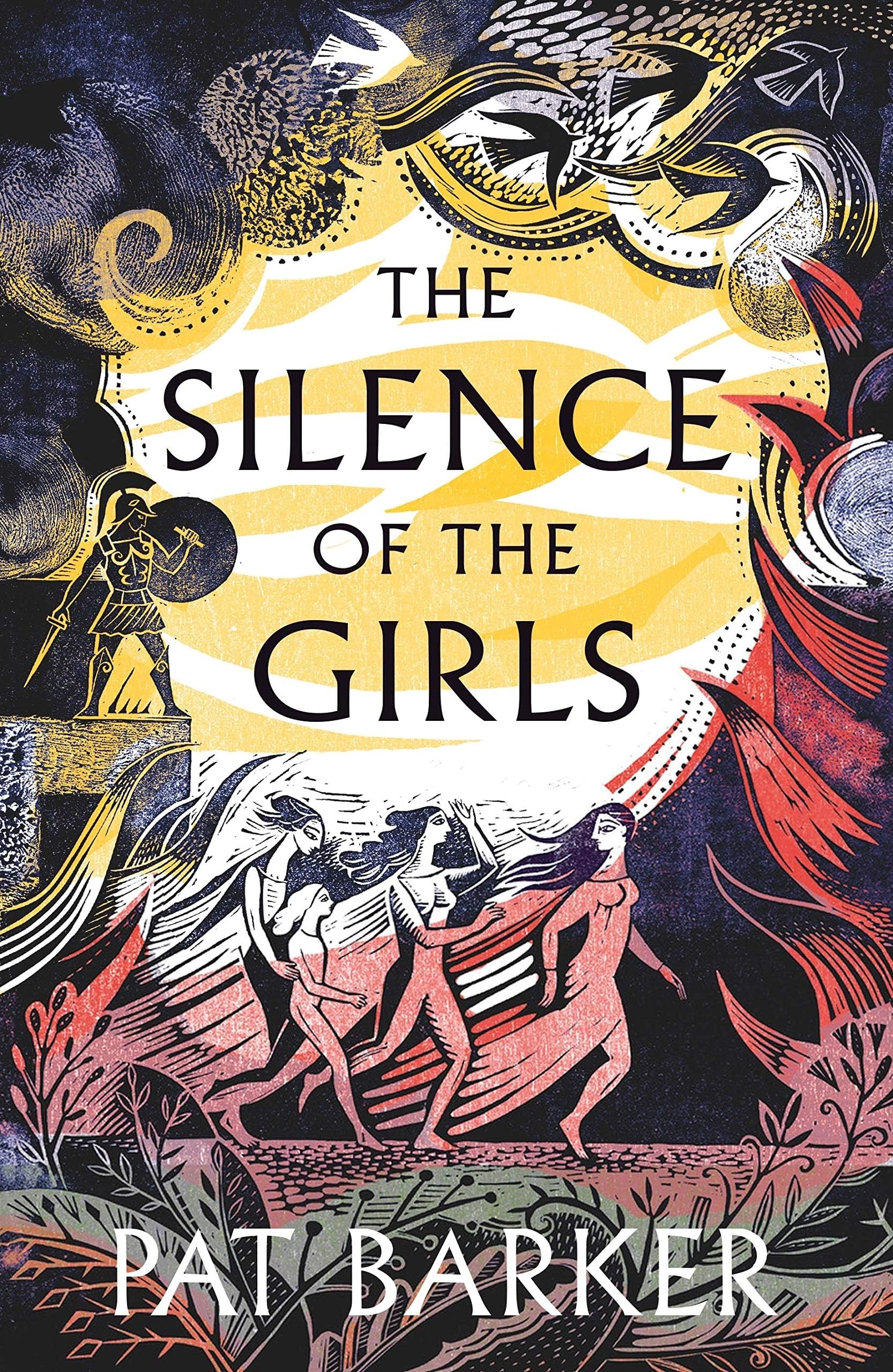
The silence of the girls
Product ID: 110237446
Buy anything from 5,000+ international stores. One checkout price. No surprise fees. Join 2M+ shoppers on Desertcart.
Desertcart purchases this item on your behalf and handles shipping, customs, and support to Vietnam.
desertcart.com: The silence of the girls: 9780241983201: Barker, Pat: Books Review: A Retelling of the Iliad from Briseis' point of view - I didn't even remember Briseis from the Iliad. Why is that? Because 1) I read it decades ago, and 2) Homer includes Briseis only as the instigation of the quarrel between Agamemnon and Achilles. Briseis is given to Achilles as a war prize, and when Agamemnon takes her from Achilles, Achilles retaliates by refusing to fight. For Homer, who only mentions Briseis 3 times, she is a pawn to urge the quarrel forward. The Silence of the Girls, however, gives voice to all the women who have been captured and enslaved either as concubines or slave labor. Here, we have Briseis's version of her capture, enslavement as a concubine and her observations of the war, of Achilles and Patroclus and Agamemnon, and of the other captured women. The story is dark, as war stories generally are, but it is compulsively readable, perhaps because Briseis and the women knew what to expect and because the narrative keeps an observational distance. Do you need to have read the Iliad? No. Read it as a retelling from another point of view. In its way, it is a story of all wars with violence, death, and abuses of every kind. A different time, different cultures, but as current as Ukraine and the Middle East with different weapons. Recommended. I immediately got the next book in this trilogy by Pat Barker Review: A Worthy Read, Yet Not A Stand-out - Having read the works of Margaret Atwood and Madeline Miller, I may be a bit impaired/biased in my critical thinking (which is no longer truly critical thinking, then), yet telling the woman's side of the epic tales of Greek mythology has been done before and done far better. Although, I did enjoy Pat Barker's novel, it just does not stand up in the light of the works that have gone before it. I was very pleased with how Barker painted Brisies, and she paced the story well. There are moments in this book that truly shine, yet her usage of "We-ll," and her habit of using a phrase verbatim in other parts of the book were an irritant and in my opinion, lazy writing. So, why would I even give it 4 stars? Barker delve deeper into the day-to-day life of the fallen women in the Trojan war. She demonstrates what it truly means to be a slave. It is not merely a title, it is a state of mind that is at once abhorrent and, oddly a balm at times. She speaks to the true strength of women, the ones who endure rather than choose a swift death. She demonstrates the intricacies of relationships between the slaves and conquerors, as well as exploring the relationship of Kings and princes fighting in a war under the leadership of a frankly terrible man and King. We see Achilles and the ever loving Patroclus set in a different light, and the tale told anew in different aspects. Because these stories have withstood millennia, yet the details are conflicting and murky, we are both fascinated and repulsed by how they behaved and lived, falsely thinking that we are better than they. I am no misanthrope, but I do not see much difference in the world of the 21st century and the world of ancient Greece. Women are still the lesser, women still have to fight harder to win respect, women are still raped, women are still very much under the thumb of men. And war is the same now, yet we see it from our televisions and nobody goes to the battlefields to see the young men and women rallied to do the bidding of old men and women in the interests that are often contrary to their own and they died for this, are permanently maimed for this, and are left with the traumatic experiences marking their minds, souls and futures. Where I really think Pat Barker needed to have focused on to better the book is to decide whether or not the gods play a part actively or as a part of ancient Grecian life. In the book she does hem and haw about it, never truly commiting one way or the other. Brisies has dialogue with herself in which she sighs to her self saying "God only knows", when
| Best Sellers Rank | #40,815 in Books ( See Top 100 in Books ) #12 in Ancient History Fiction (Books) #79 in Feminist Theory (Books) #202 in Sociology Reference |
| Customer Reviews | 4.2 out of 5 stars 15,051 Reviews |
K**R
A Retelling of the Iliad from Briseis' point of view
I didn't even remember Briseis from the Iliad. Why is that? Because 1) I read it decades ago, and 2) Homer includes Briseis only as the instigation of the quarrel between Agamemnon and Achilles. Briseis is given to Achilles as a war prize, and when Agamemnon takes her from Achilles, Achilles retaliates by refusing to fight. For Homer, who only mentions Briseis 3 times, she is a pawn to urge the quarrel forward. The Silence of the Girls, however, gives voice to all the women who have been captured and enslaved either as concubines or slave labor. Here, we have Briseis's version of her capture, enslavement as a concubine and her observations of the war, of Achilles and Patroclus and Agamemnon, and of the other captured women. The story is dark, as war stories generally are, but it is compulsively readable, perhaps because Briseis and the women knew what to expect and because the narrative keeps an observational distance. Do you need to have read the Iliad? No. Read it as a retelling from another point of view. In its way, it is a story of all wars with violence, death, and abuses of every kind. A different time, different cultures, but as current as Ukraine and the Middle East with different weapons. Recommended. I immediately got the next book in this trilogy by Pat Barker
B**E
A Worthy Read, Yet Not A Stand-out
Having read the works of Margaret Atwood and Madeline Miller, I may be a bit impaired/biased in my critical thinking (which is no longer truly critical thinking, then), yet telling the woman's side of the epic tales of Greek mythology has been done before and done far better. Although, I did enjoy Pat Barker's novel, it just does not stand up in the light of the works that have gone before it. I was very pleased with how Barker painted Brisies, and she paced the story well. There are moments in this book that truly shine, yet her usage of "We-ll," and her habit of using a phrase verbatim in other parts of the book were an irritant and in my opinion, lazy writing. So, why would I even give it 4 stars? Barker delve deeper into the day-to-day life of the fallen women in the Trojan war. She demonstrates what it truly means to be a slave. It is not merely a title, it is a state of mind that is at once abhorrent and, oddly a balm at times. She speaks to the true strength of women, the ones who endure rather than choose a swift death. She demonstrates the intricacies of relationships between the slaves and conquerors, as well as exploring the relationship of Kings and princes fighting in a war under the leadership of a frankly terrible man and King. We see Achilles and the ever loving Patroclus set in a different light, and the tale told anew in different aspects. Because these stories have withstood millennia, yet the details are conflicting and murky, we are both fascinated and repulsed by how they behaved and lived, falsely thinking that we are better than they. I am no misanthrope, but I do not see much difference in the world of the 21st century and the world of ancient Greece. Women are still the lesser, women still have to fight harder to win respect, women are still raped, women are still very much under the thumb of men. And war is the same now, yet we see it from our televisions and nobody goes to the battlefields to see the young men and women rallied to do the bidding of old men and women in the interests that are often contrary to their own and they died for this, are permanently maimed for this, and are left with the traumatic experiences marking their minds, souls and futures. Where I really think Pat Barker needed to have focused on to better the book is to decide whether or not the gods play a part actively or as a part of ancient Grecian life. In the book she does hem and haw about it, never truly commiting one way or the other. Brisies has dialogue with herself in which she sighs to her self saying "God only knows", when
S**N
My last read of 2018 - will go on my top reads of the year list.
I am a sucker for anything having to do with Greek mythology and I am also a fan of this author’s novels, so I was really looking forward to reading this book. I was not disappointed. I’ve read the Iliad and the Odyssey and have read many stories and seen many movies that retell those stories. When I was young I thought the Odyssey was the more interesting of the two with the many tales of monsters and evil sorceresses. It was only when I was older did I really appreciate the Iliad and how deeply the story resonates still in modern times. What this book does - which is remarkable both in its execution and in its originality - is have us view the story of the the Trojan War from the viewpoint of the women involved. Most of the time the story is narrated from the point of view of Briseis, the princess given as a war prize to Achilles. (Occasionally we get a few short chapters from Achilles point-of -view.) When we read the story from Briseis and witness what we do from her eyes, this story will be changed for you forever. At least it was for me. This is not the retelling of a classic book with a modern feminist viewpoint coming in as an anachronism; that makes me a little crazy. Instead we see what life was like in that time not just for the men, but for the women too. As awful as it was for the men, the horrors for the women was even worse. Forced to witness the slaughter of their husbands and children then given to the victors as either war brides (if they’re lucky) or else given to the soldiers, the women suffer unimaginable atrocities. You are always aware of this when you read books and stories - that the women suffer - but you’re so used to getting lost in the heroic and adventurous tales such as those of Achilles and Hector that you can forget about what’s happening just out of view. This book makes us look. For me, one of the signs of a good book is whether or not I want to pick it up again. This absolutely passed that test. I loved this book and when I read the last page I experienced that “reader’s high” that you get when you’ve really read something that has moved you. Highly recommended.
M**S
Great Subject, Just Ok Writing
Wow, an excellent idea to write a novel from the prospective of a Trojan Woman who could seamlessly tie many facets of Homer's "Iliad" together in a compelling and enlightening way. The author stuck pure good with this concept. So many books and movies have covered the masculine side of this conflict with only a nod to how Helen must have felt or been perceived the Greeks and the Trojans. The foil of Briseis, a Trojan Princess turned slave of Achilles, allows the author to cover a great deal of ground ranging from the sack of a Trojan city, a friendship with Helen, to the stand off between Agamemnon and Achilles over Briseis. Such great potential for a compelling novel to shed light on the overlooked women of this conflict. Unfortunately the author falls short in achieving this lofty goal. While at times the author is imaginative and brilliant with the inclusion of mythology into the storyline without the suspension of reality, at others she suffers from a stumbling shift between first and third person narrative. At random and seemingly odd times Briseis addresses the reader as if he or she was actively questioning her actions and motives. "You wouldn't know because you were never a slave..." I assume this is designed to draw out empathy from the reader, but it fails because it does not fit within the flow of the narrative. Writing irregularities aside, it is worth your time to read this novel. While it may not reach its full potential, it does breathe fresh life into a tragic story and attempts to give meaning and background to the women who suffered from and helped to shape this clash of civilizations.
A**S
Good read
I love the story of Achilles so I really loved reading about the story from a different perspective. It’s an easy read but this book does not hold back. Ensure you read any warnings about this book before you begin! I will definitely recommend this book to people who appreciate a different retelling of carrying Greek myths/stories.
S**S
One of Important New Takes on Iliad
Makes a nice literary doublet with Madeline Miller’s Song of Achilles, focalized through Patroclus. This new novel is focalized through Briseis and so we get a feminist take on Iliadic materials. In Miller’s novel, Achilles comes across as a sensitive sort, subject to rages, of course. Here, he is more a violent brute. I prefer him in Miller’s depiction. Nevertheless, The Silence of the Girls provides an interesting viewpoint that makes you ponder. I was thinking: the Greek tragedians interpreted mythological stories (avoiding the main plots from the two Homeric epics) according to their own times and sensibilities - they didn’t change the major events of the standard plots, just added new interpretations. And this is what both Miller and Barker accomplish: they are true to the myths - it’s not WHAT happens, it is HOW an WHY it happens. As a university professor of classical Geeek literature, I highly recommend both books.
M**D
wonderful
This book was utterly fantastic. I heard audio of the first few lines on TikTok and knew I had to read this book. and I don’t regret it. Brisies was a strong woman who endured so much. Her story breaks my heart, she and all the women of Trojan war deserved better. She’s often reduced to being Achilles’ slave, all the women were reduced to slaves, but she was more. She was a human, someone who loved and grieved. She was a person and they tried to take that from her. I just want to give her so many hugs.
K**Y
Life of Briseis as slave girl to Achilles
Greek myths, especially ones involving warfare are depicted primarily from the male perspective. This story departs from the usual recounting of the exploits of Achilles during the Trojan War in that Briseis is the central character. We see much of the protracted battle between the Greeks and the Trojans play out through her capture as Achilles’s war prize. The relationship triangle is explored among Achilles, Patroclus, and Briseis even though jealousy isn’t a primary factor. As Briseis is a slave, she adopts a realistic attitude of acquiescence to her servitude to survive. She bears witness to the unbreakable bond between Achilles and Patroclus and develops a strange sort of understanding of the anger that drives Achilles. Patroclus becomes her friend and treats her with unexpected but appreciated kindness. The day-to-day lives of the women slaves are described in excruciating detail. All the way from harem girls providing pleasure to women tending wounded soldiers, their existence alternates between hard labor, boredom, loneliness, pain, and terror. Briseis is one of the fortunate ones. As the prize of Achilles, she is given greater respect than most of the captured women, many of whom were former wives of Trojan aristocrats. Pat Barker’s writing puts you in the middle of the action. The story is immediate and unflinching. You smell the campfires, see the wounded men, and feel the sadness of the captured women. I offer a cautionary note that there are plenty of violent, brutal, and adult situations that some readers may not like.
Trustpilot
1 month ago
2 days ago